
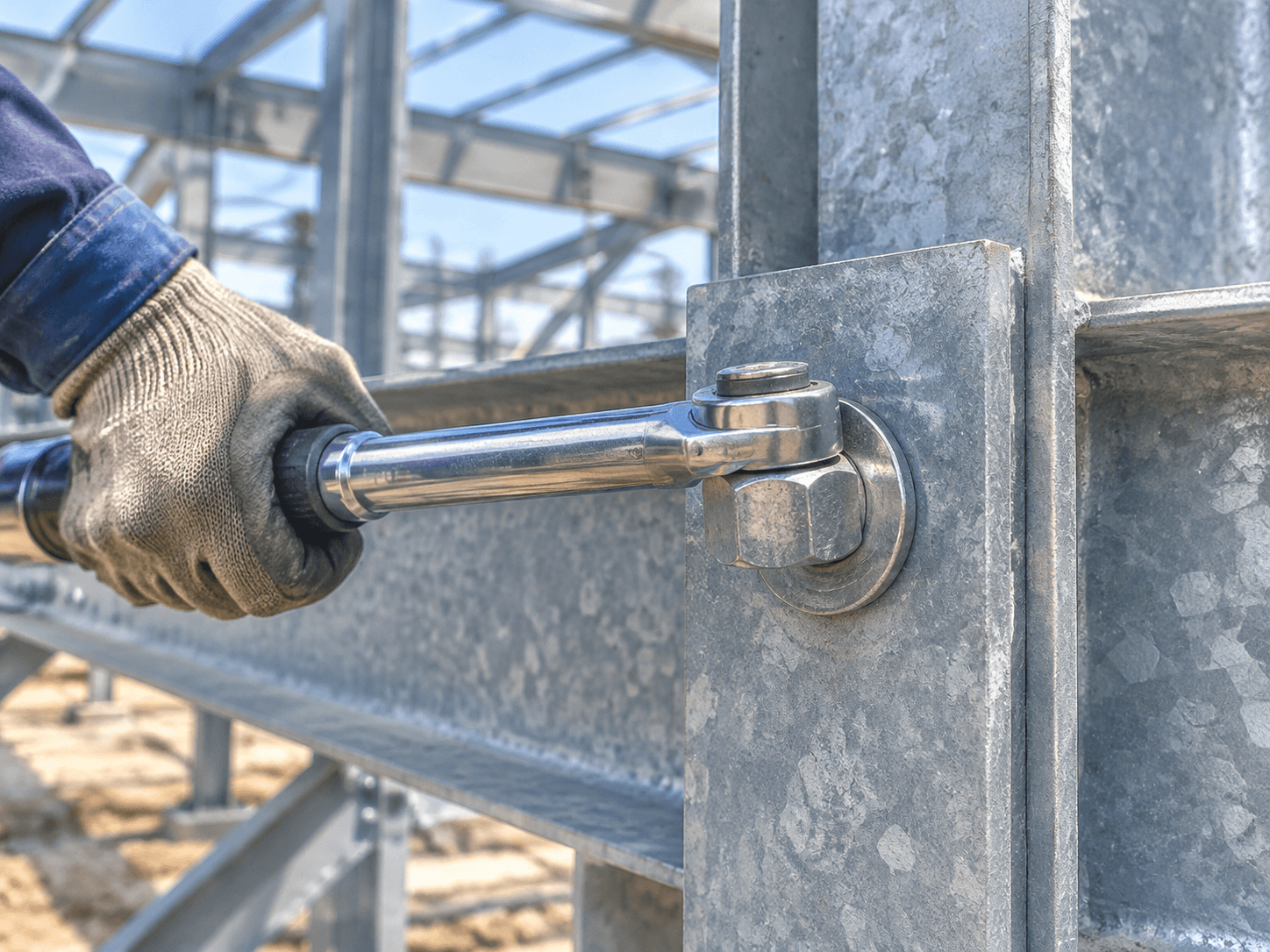
الصواميل السداسية مقابل الصواميل ذات الحافة مقابل صواميل القفل — كيف تختار للتطبيقات الصناعية؟

Han Congming
الكاتبلدينا خبرة في تصنيع وبيع البراغي والمثبتات، وندير منشأة إنتاج خاصة بنا بقدرة إنتاجية مستقرة على نطاق واسع. نحن متخصصون في براغي الحفر الذاتي، وبراغي الجدران الجافة، وبراغي ألواح الخشب، والبراغي الميكانيكية، والمسامير، والمثبتات المخصصة لتطبيقات البناء والصناعة.
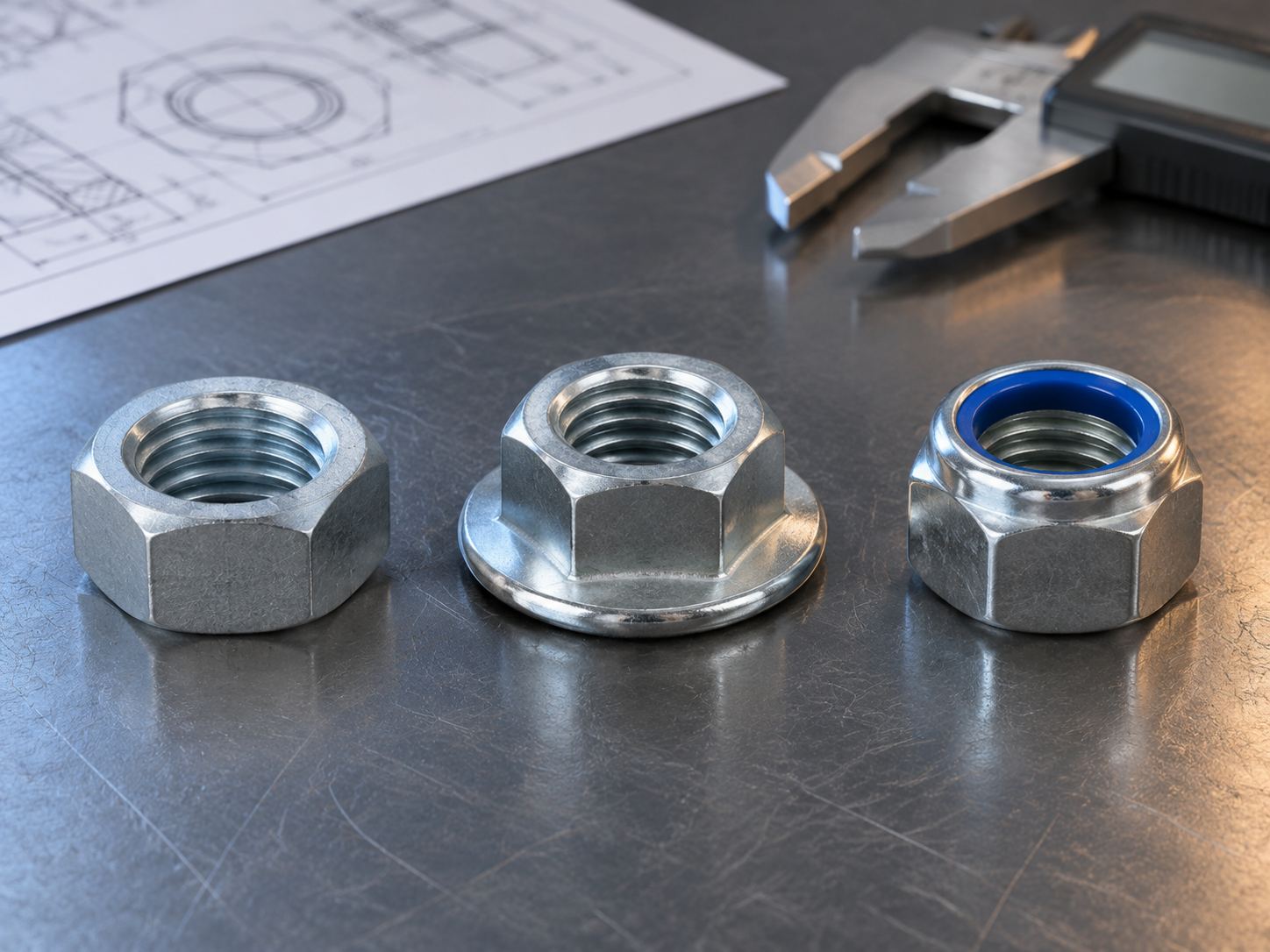
choose the nut from the joint, not from the catalogue heading. A hex nut is the general-purpose baseline when the mating surface is hard, flat, and strong enough to take the clamp load. A flange nut is the better choice when the joint needs a built-in bearing area — thin sheet, soft material, a slotted hole, or a coated surface. A lock nut belongs in a joint where vibration or dynamic load is the dominant risk, and the insert type should then be selected by temperature, chemical exposure, and serviceability.
That order matters. In industrial purchasing, these three products are often presented as interchangeable “nut options.” They are not. They change the bearing area, the friction condition, the installation torque, the tolerance to surface damage, and the way the joint behaves after thousands of load cycles.
This article explains where each type fits, where it should not be used, and what to put in an RFQ so the supplier and the installer are working from the same assumption.
Start with the joint, not the nut
A nut does more than hold a bolt in place. It is the part that turns bolt tension into clamp load across the joint. If the nut face is too small for the material, the surface deforms and the clamp load drops. If the nut is free-spinning in a vibrating assembly, it can back off. If a nylon insert is used above its temperature limit, the locking function can disappear.
So the first question is not “hex, flange, or lock?” It is:
- What is the clamped material, and how much bearing pressure can it take?
- Is the hole round, slotted, or oversized?
- Is the joint subject to vibration, reversing load, or thermal cycling?
- What is the service temperature?
- Will the joint be adjusted, rebuilt, or inspected?
- What tool access and outer dimensions are available?
The answers usually narrow the choice to one family before price is discussed.
The functional differences that matter
| Feature | Hex nut | Flange nut | Nylon-insert lock nut | All-metal lock nut |
|---|---|---|---|---|
| Bearing surface | Standard nut face; often used with a separate washer | Integrated flange acts as a washer | Standard nut face | Standard nut face |
| Main advantage | Simple, compact, widely available, easy to replace | Spreads load over a larger area; saves a washer in some joints | Resists vibration while remaining free-spinning until seated | Resists vibration without a polymer insert; better for heat |
| Typical limitation | Needs a washer on soft, thin, or slotted surfaces | Flange diameter and height can interfere with tight spaces | Temperature limited by the insert; chemical compatibility matters | Prevailing torque can make assembly and adjustment less convenient |
| Reusability | Generally reusable if undamaged | Generally reusable if the flange is not damaged | Reuse only if the prevailing torque remains within specification | Reuse only if the locking feature and torque remain within specification |
| Best fit | General machinery, maintenance, structural assemblies with the correct washer and specification | Sheet metal, brackets, enclosures, slotted connections, coated surfaces | Conveyors, pumps, motors, automotive, general vibration | High-temperature, harsh-environment, and heavy-duty vibration |
The table is a starting point, not a specification. The governing standard, property class, coating, and joint design still have to be checked.
Hex nuts: the general-purpose baseline
The hex nut is the default because it is efficient. Six sides give a good range of wrench positions, the height provides thread engagement, and the shape is easy to inspect and replace. It is also the easiest nut to combine with a hardened washer when the joint needs a larger bearing area or a surface that protects the base material.
Where a hex nut is usually the right choice
- General machinery and equipment assembly. Pumps, gearboxes, frames, guards, and brackets often use hex nuts because the joint has a machined or rigid mating surface and the nut can be tightened with a standard wrench.
- Maintenance and repair. A hex nut is easy to source, easy to remove, and easy to match to an existing bolt. That matters when a plant is replacing a failed fastener rather than designing a new assembly.
- Joints that specify a separate washer. A hex nut plus a properly selected flat washer can provide a larger and harder bearing surface than many integrated flanges. This is useful on slotted holes, castings, and materials that need a hardened washer under the nut.
- Higher-temperature or chemical-exposed joints. With the correct material and coating, an all-metal hex nut avoids the temperature and chemical limits of a polymer insert. The bolt, nut, and washer still have to be treated as a system.
- Structural connections designed as a matched set. High-strength structural bolting uses a controlled bolt, nut, and washer assembly under the governing structural standard. A generic DIN 934 nut should not be substituted into a structural bolted connection just because the thread fits.
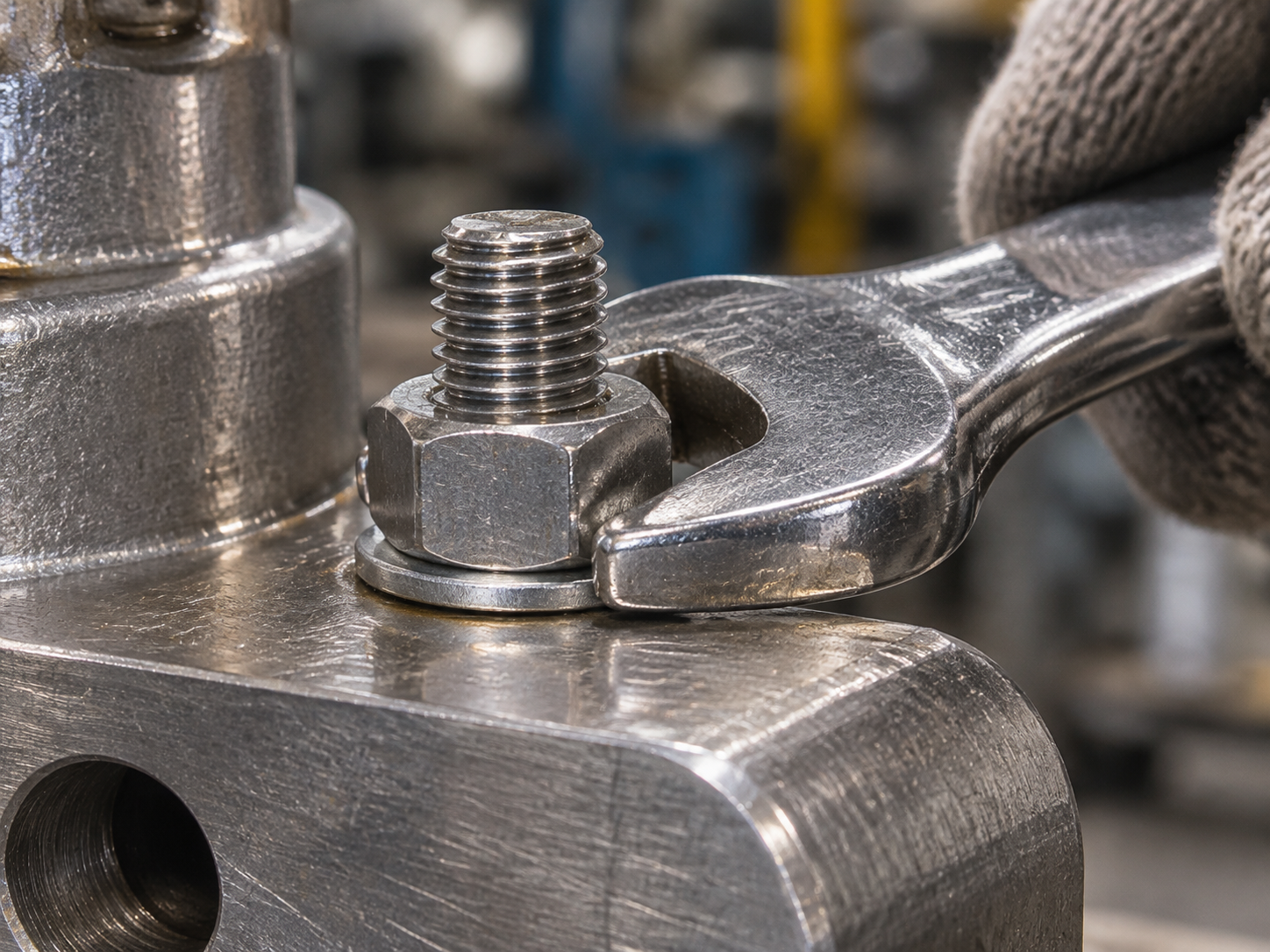
Where a hex nut needs a washer
The standard hex nut face is relatively small. On thin sheet, aluminium, plastic, composite, or a slotted hole, the nut can sink into the material or produce an uneven clamp load. A flat washer spreads the load and protects the surface. In a slotted connection, the washer also bridges the slot so the nut does not pull into the opening.
The washer is not automatically a fix for a weak joint. If the sheet is too thin, the joint may need a backing plate, a larger flange, or a different connection design rather than a bigger washer.
Where a hex nut is the wrong default
- A thin sheet with no washer and no backing.
- A slotted hole where the nut can drop into the slot.
- A vibrating joint that relies only on torque to stay tight.
- A structural connection that requires a specific bolted assembly standard.
Flange nuts: a bearing surface built into the nut
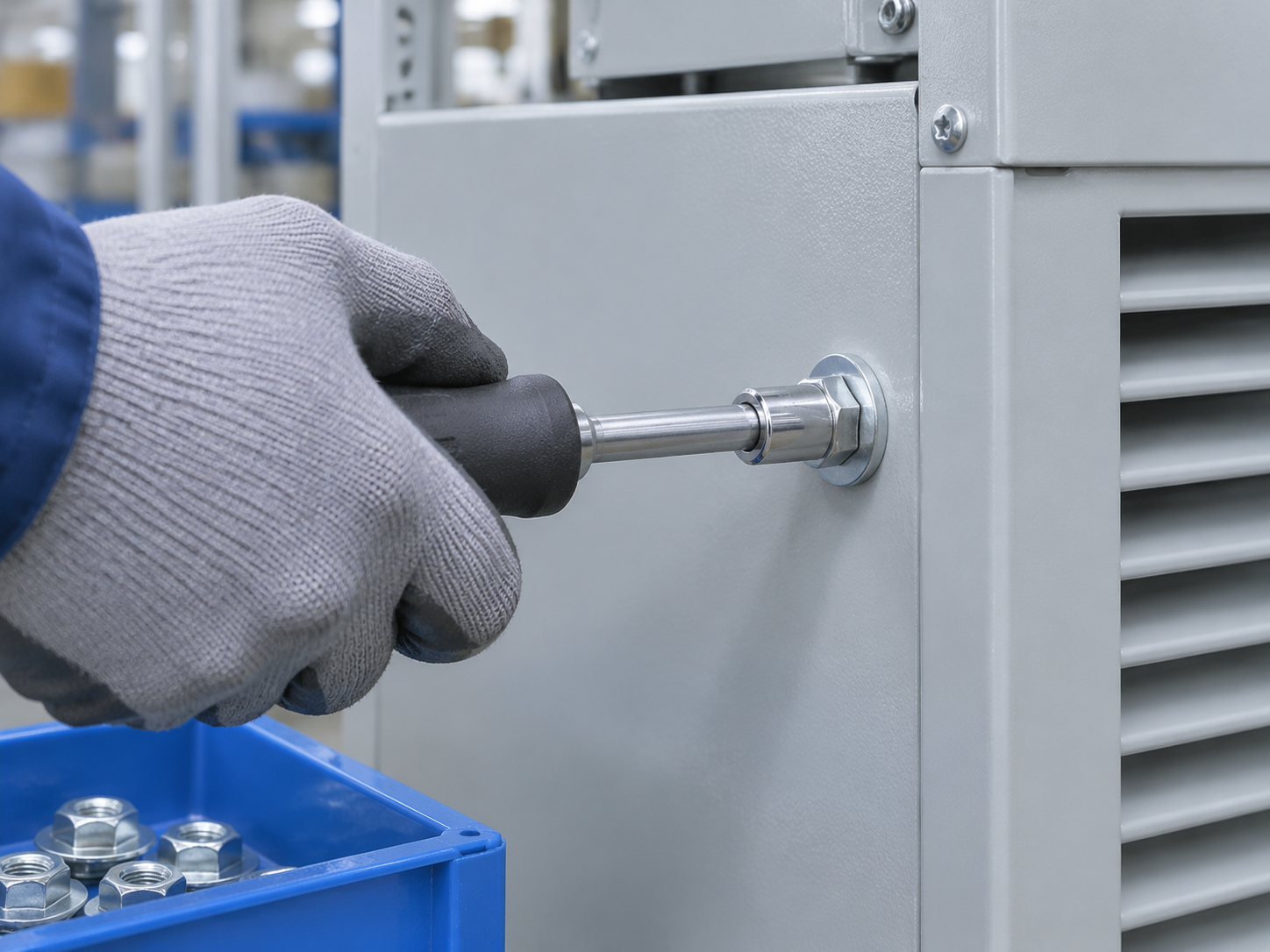
A flange nut has a wide flange at one end that acts as an integrated washer. The flange distributes pressure over the part being secured, reducing the chance of damage and making the joint less likely to loosen because of an uneven surface.
That makes the flange nut a practical choice wherever the joint is thin, soft, coated, or difficult to assemble with a separate washer.
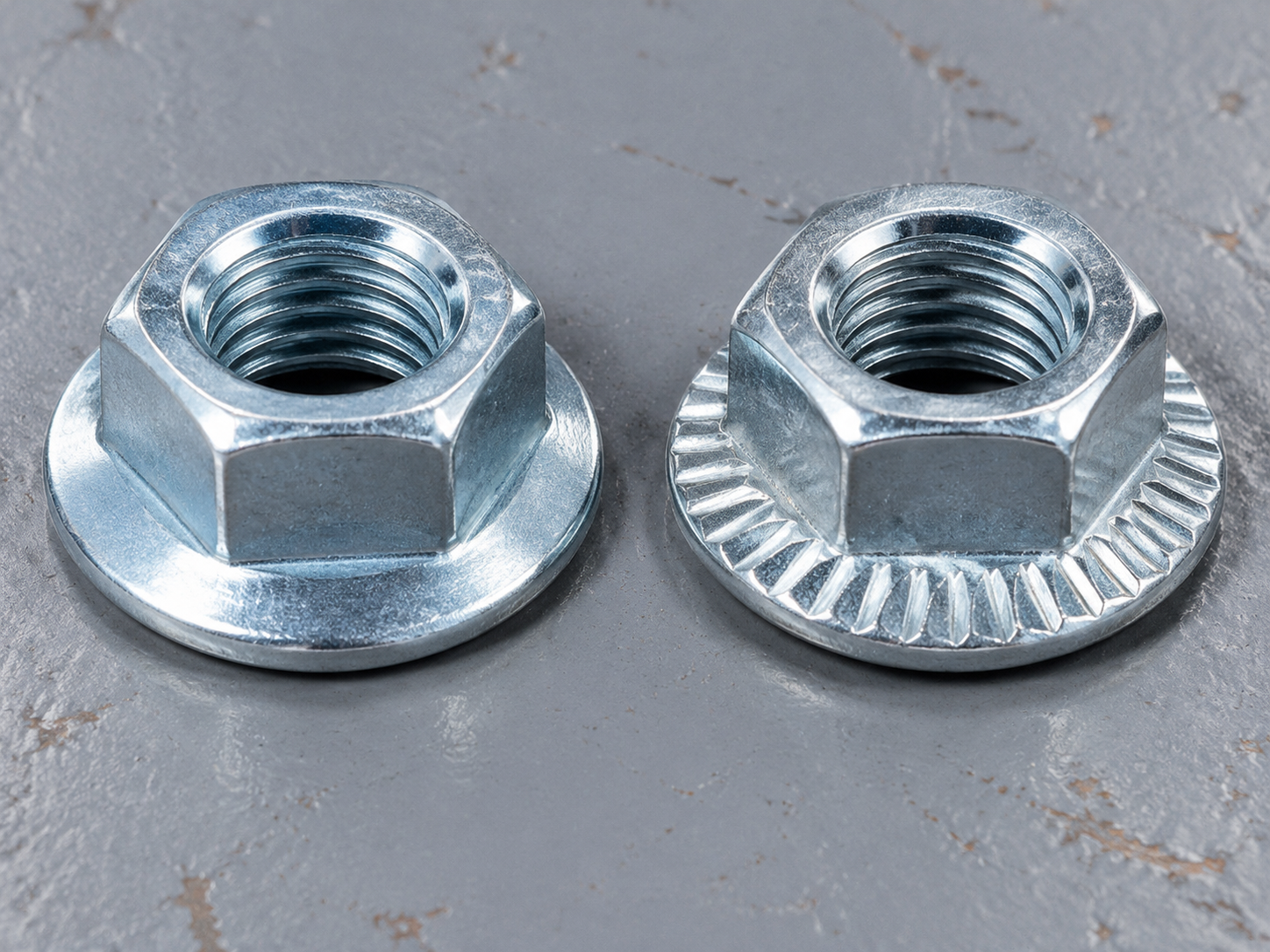
Smooth flange vs serrated flange
A smooth flange is the safer choice for painted, plated, polished, or sealed surfaces. It spreads the load without cutting into the coating. It is common in enclosures, HVAC equipment, appliances, furniture, and visible assemblies.
A serrated flange has angled teeth that provide a locking action. The serrations resist rotation in the loosening direction and add vibration resistance. The trade-off is surface damage: a serrated flange should not be used on a surface that must not be scratched, and it should not be used with a flat washer under the flange. The teeth need to bear on the actual mating surface to work as intended.
Industrial applications where flange nuts fit well
- Sheet-metal enclosures and electrical panels. The flange spreads the clamp load on thin steel and reduces the need for a separate washer in a crowded enclosure.
- HVAC and air-handling equipment. Flange nuts are useful on brackets, panels, fan housings, and adjustable connections where the mating surface is thin or coated.
- Automotive and transport equipment. Flange nuts are widely used on brackets, chassis components, and subassemblies where a built-in bearing area simplifies assembly.
- Furniture and appliance assemblies. A smooth flange gives a clean bearing surface on painted or laminated parts.
- Solar mounting and light steel structures. The flange can bridge a slotted rail or bracket and spread load on thin galvanized sections. Corrosion compatibility between nut, bolt, and rail still has to be checked.
- Adjustable and slotted connections. The larger flange covers more of the slot and gives the nut a more stable seat than a standard hex nut.
Limits of flange nuts
A flange nut is not a universal replacement for a hex nut plus a hardened washer. The integrated flange has a fixed diameter and thickness. In a high-preload joint, a separate hardened washer may still be required by the specification. The flange also adds height and diameter, which can matter in a recessed pocket or near an edge.
On a soft material, the larger flange helps, but it does not make the material stronger. If the clamp load is high enough to crush the sheet, the joint needs a backing plate or a different design.
Lock nuts: solve loosening, not overload
A lock nut resists loosening under vibration and torque. It does that by creating prevailing torque — resistance that must be overcome during installation before the nut seats — or by a mechanical locking feature that engages as the nut is tightened.
The important point is that a lock nut is not a stronger nut in the load-bearing sense. It does not compensate for a bolt that is too small, a joint that is too flexible, or an installation torque that was never achieved. It protects the clamp load that the joint already has.
Nylon-insert lock nuts
A nylon-insert lock nut, often called a nyloc nut, has a nylon collar at the end of the nut. The collar's inside diameter is slightly smaller than the bolt's major diameter. As the nut is tightened, the nylon deforms elastically over the threads and creates radial pressure and friction.
This is a good solution for general industrial vibration because the nut spins freely until it reaches the insert, then develops prevailing torque. It is common on conveyors, pumps, motors, fans, brackets, and automotive assemblies.
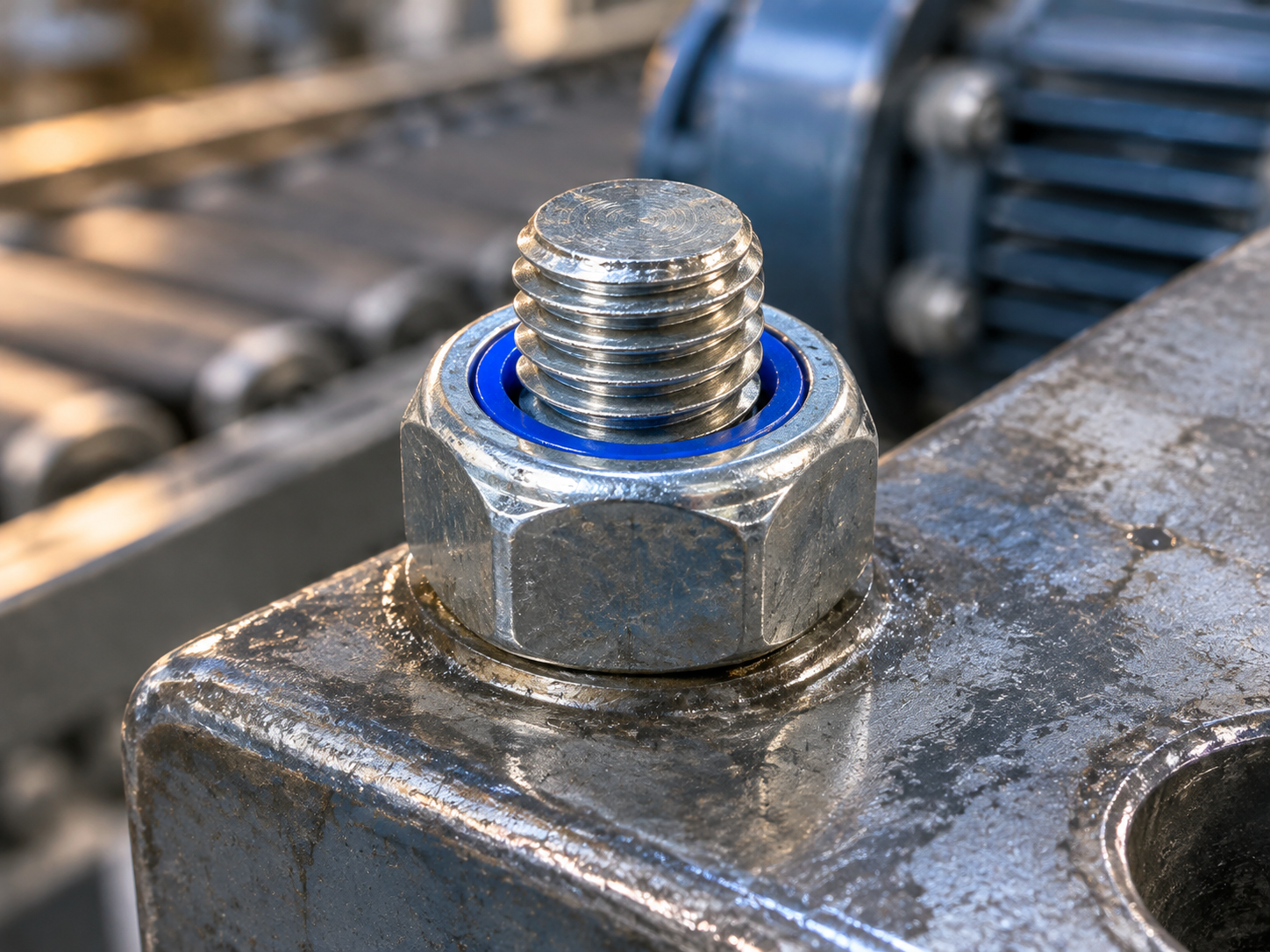
The limitation is temperature. Nylon-insert nuts typically retain their locking ability up to about 120°C (250°F). Above that, the insert can soften or degrade. Chemical exposure, washdown, and certain solvents also need to be checked against the insert material. Reuse is debated: some specifications allow it if the prevailing torque is still within range, while critical applications may require replacement. The safe approach is to follow the governing standard or the customer's maintenance procedure, not to assume the nut can be reused indefinitely.
DIN 985 is a common thin nylon-insert lock nut; DIN 982 is a thicker pattern with more body height. The thicker nut can be useful where more thread engagement or a stronger nut body is needed, but the joint design and standard still govern.
All-metal lock nuts
An all-metal lock nut uses a deformed thread section, a split beam, or another steel locking feature instead of a polymer insert. It is the better choice when the service temperature is too high for nylon, when the joint is exposed to oils or chemicals that attack the insert, or when a more robust locking feature is required.
DIN 980 is a common all-metal prevailing torque lock nut. It is used in machinery, exhaust systems, high-temperature equipment, and other joints where a nylon insert is not suitable.

The trade-off is installation feel. The nut develops prevailing torque earlier, so it may be harder to spin on by hand, and the installer has to distinguish locking resistance from thread damage. Reuse should follow the specification because the locking feature can lose effectiveness after repeated cycles.
Mechanical wedge and patented lock nuts
Some lock nuts use a mechanical wedge or cam action rather than friction from a polymer or a deformed thread. A two-piece design can create a positive interlock as the mating surfaces are tightened. These products are aimed at high-vibration machinery, safety-related connections, and joints where a loosened nut would create expensive downtime.
ScrewTrade's current range includes the BENCHI Never Loosen Nut, a patented M16 anti-loosening nut that uses a top-and-bottom tapered concave-convex structure. The supplier describes a two-piece male/female nut design, high-strength alloy steel, and vibration testing to GB/T 10431-2008. Those are supplier-stated product claims; a project should still request the current test report, drawing, torque procedure, and material certificate before approving the nut for a safety-related joint.
The practical value of any mechanical lock nut is the same: it should be selected because the joint has a vibration or dynamic-load problem that a standard nut does not solve, not because “locking” sounds stronger on a data sheet.
Industrial application matrix
| Industrial application | Typical choice | Why | What to verify |
|---|---|---|---|
| General machinery frames, guards, brackets | Hex nut, often with a flat washer | Simple, serviceable, good tool access | Property class, thread engagement, washer hardness |
| Steel structures and PEB secondary members | Hex nut with the specified washer, or a flange nut on secondary brackets | The primary structure follows the structural bolting standard; secondary connections may use flange nuts | Governing standard, bolt/nut match, coating system, torque procedure |
| Metal roofing and wall cladding accessories | Flange nut or hex nut with washer, depending on the bracket | Thin panels and brackets need load spreading; exposed connections need corrosion resistance | Coating compatibility, flange diameter, edge distance, galvanic pair |
| HVAC, electrical panels, control cabinets | Smooth flange nut | Built-in bearing area on thin sheet; protects paint and labels | Flange diameter, panel thickness, vibration, grounding requirements |
| Conveyors, material handling, fans | Nylon-insert lock nut or all-metal lock nut | Repeated vibration and dynamic load | Temperature, reusability, prevailing torque, access for inspection |
| Pumps, motors, compressors | All-metal or nylon-insert lock nut, depending on temperature | Vibration plus heat; some joints are rebuilt | Service temperature, lubricant, chemical exposure, torque |
| Automotive and transport | Flange nut and nylon-insert lock nut | High-volume assembly, vibration, thin brackets | OEM standard, coating, torque, reusability |
| Solar mounting and light steel | Flange nut or lock nut with corrosion-resistant coating | Slotted rails, thin sections, outdoor exposure | Galvanic compatibility, wind load, coating, sealer compatibility |
| Food processing and washdown | Stainless hex or smooth flange nut; lock nut if vibration | Hygiene, corrosion, cleaning chemicals | 304/316 grade, insert chemical resistance, crevice corrosion |
| High-temperature exhaust, boilers, engines | All-metal lock nut or hex nut with the specified high-temperature fastener | Nylon inserts are not suitable | Temperature rating, material grade, galling, torque |
| Thin plastic, composite, or soft metal | Smooth flange nut, often with a backing washer or plate | Load spreading without cutting the surface | Clamp load limit, flange diameter, creep, backing support |
A seven-question selection sequence
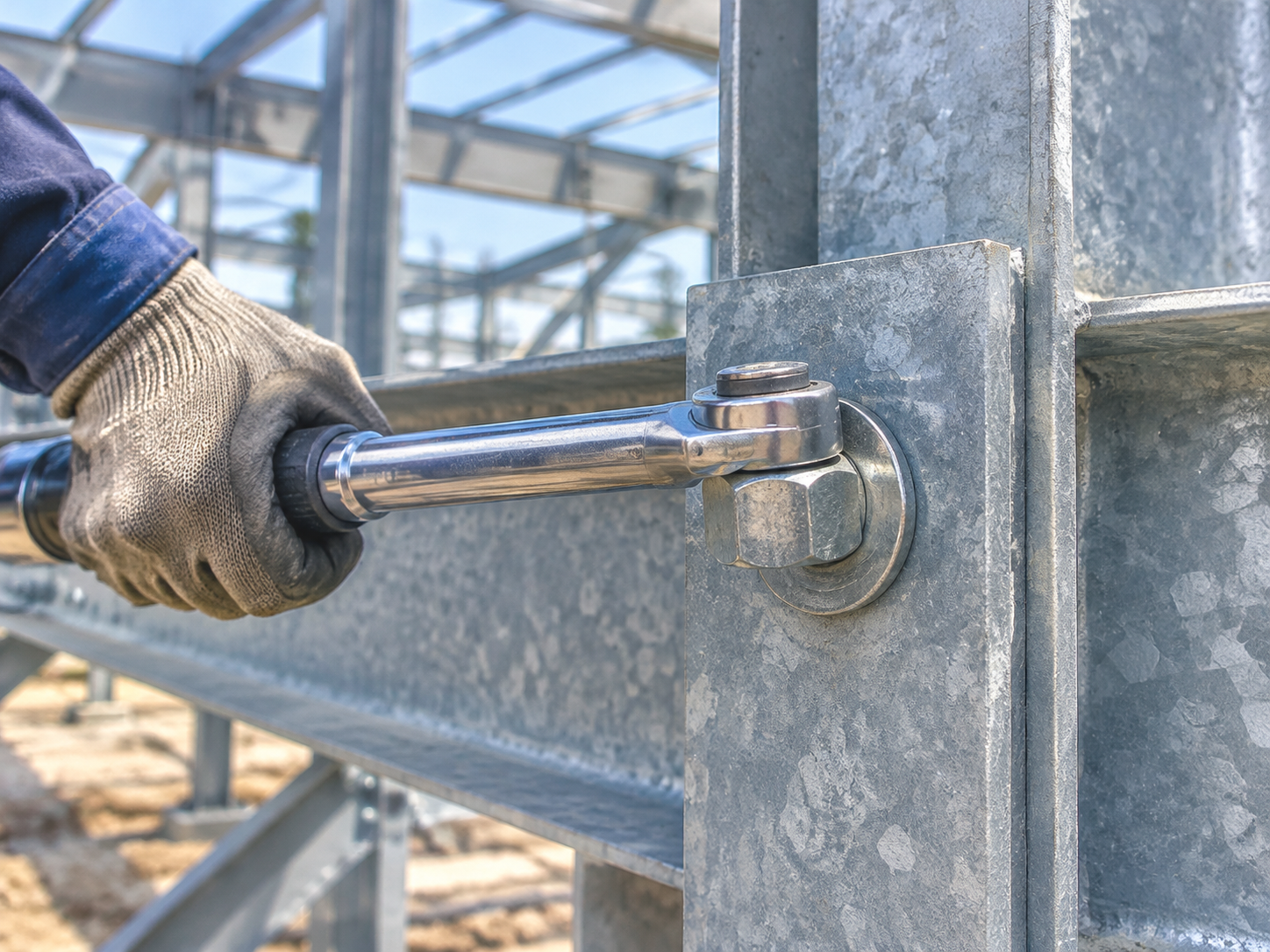
Use this sequence in a design review or an RFQ. It prevents the common mistake of choosing a nut by habit and then trying to make the joint work.
- What is the required clamp load? Start from the bolt and joint design, not from the nut. The nut must be compatible with the bolt property class and the governing standard.
- What is the mating surface? Hard and flat favors a hex nut. Thin, soft, coated, or slotted favors a flange nut or a hex nut with a proper washer.
- Is vibration or dynamic load dominant? If yes, move to a lock nut. If no, a standard nut with correct preload may be sufficient.
- What is the service temperature? Above roughly 120°C, a nylon-insert nut is usually the wrong choice. Use an all-metal lock nut or a suitable high-temperature solution.
- What is the corrosion and chemical environment? Match the nut material and coating to the bolt, the clamped material, and the cleaning regime. Avoid creating a galvanic couple that attacks the fastener or the structure.
- Will the joint be adjusted, rebuilt, or inspected? A free-spinning nut is easier to service. A lock nut with high prevailing torque may slow adjustment. Reuse rules matter in maintenance-heavy plants.
- What evidence is required? Ask for the standard, property class, material certificate, coating specification, test report, and torque procedure. A product photo is not a specification.
Installation details that decide the result
Even the right nut can fail if the installation is wrong. These are the details worth putting into the work instruction.
- Thread engagement. The nut should engage the full useful thread length required by the standard. Soft materials may need more engagement or a threaded insert. Do not count threads that are damaged, painted, or incomplete.
- Torque. Tighten to the specified torque or tension, not to “feel.” Lubrication changes the torque-tension relationship, especially on stainless steel and zinc-coated fasteners.
- Washers. Use a hardened washer where the specification calls for one. Do not put a flat washer under a serrated flange nut; the serrations need to contact the mating surface.
- Stainless galling. Stainless nuts and bolts can seize during tightening. Use a suitable lubricant or anti-seize where permitted, control speed, and avoid reusing a seized pair.
- Lock nut seating. For a nylon-insert nut, make sure the insert engages the thread and is not damaged by a burr or a painted thread. For an all-metal lock nut, confirm that the prevailing torque is from the locking feature, not from cross-threading.
- Surface protection. A serrated flange can cut through paint or plating. If the coating is part of the corrosion protection, use a smooth flange or a washer instead.
- Inspection. Check the first assembly of each joint type. Confirm nut height, flange contact, thread protrusion, and the absence of cracking or deformation in the sheet.
RFQ checklist for industrial nut buyers
| RFQ item | What to state |
|---|---|
| Application | The joint, equipment, or building assembly, not just “industrial use” |
| Standard | DIN 934, DIN 6923 / DIN EN 1661, DIN 982, DIN 985, DIN 980, or the customer's drawing |
| Thread | Metric or inch size, pitch, and tolerance class |
| Property class | The required nut class and the matching bolt class |
| Material | Carbon steel, stainless steel grade, or other specified material |
| Coating | Zinc, hot-dip galvanized, zinc-nickel, stainless passivation, or the project coating system |
| Bearing surface | Hex face, smooth flange, serrated flange, or washer required |
| Locking method | Nylon insert, all-metal prevailing torque, or mechanical wedge |
| Temperature | Maximum continuous and peak temperature |
| Environment | Indoor, outdoor, coastal, washdown, chemical, or high-temperature |
| Reusability | Whether the joint will be adjusted or rebuilt |
| Evidence | Material certificate, dimensional report, coating thickness, torque test, vibration test, or PPAP as applicable |
| Packaging | Bulk, small box, labelled carton, or project-specific pack |
Bottom line
For most industrial joints, the decision is simpler than the catalogue suggests:
- Use a hex nut when the surface is hard and flat, the joint is accessible, and a separate washer can be specified where needed. It is the most flexible baseline.
- Use a flange nut when the joint needs a larger bearing area without adding a separate washer — thin sheet, soft material, slotted holes, and coated surfaces. Choose smooth or serrated based on whether surface damage is acceptable.
- Use a lock nut only when vibration or dynamic load is the reason the joint might loosen. Then choose nylon-insert for moderate temperature and easier service, all-metal for heat and harsh environments, and a mechanical wedge design for high-vibration, high-consequence joints.
The nut is a small part of the bill of materials, but it controls how the joint behaves after installation. Specify the joint first, the nut second, and the evidence third. That is the difference between a fastener that is merely the right size and one that is right for the application.
Related News
Other news you might be interested in

خريطة الطلب على أدوات التثبيت لعام 2027: مراكز البيانات والطاقة والمشاريع الصناعية
توقعات أدوات التثبيت لعام 2027 ليست انتعاشًا واسعًا. إنها خريطة لقطاعات مشاريع محددة—وأقوى القطاعات هي مراكز البيانات والطاقة وأعمال صناعية مختارة. الاتجاه واضح بالفعل في نتائج الشركات في أواخر عام 2026. أعلنت شركة هيلتي عن نمو مبيعاتها بالعملة المحلية بنسبة 5.9% في الأشهر الثمانية الأولى من عام 2026، مع نمو مزدوج الرقم في الأمريكتين وآسيا والمحيط الهادئ، بينما وصفت البناء التقليدي بأنه ضعيف. ارتفعت مبيعات LISI في قطاع الطيران بنسبة 14.3% في الأشهر التسعة الأولى، لكن مبيعاتها في قطاع السيارات انخفضت بنسبة 5.2%. نمت مبيعات بوسارد في الربع الثالث بنسبة 12%، بفضل الطلب على مراكز البيانات في الأمريكتين وتوسع أشباه الموصلات والإلكترونيات في آسيا.

ما هو المسمار ثنائي المعدن ولماذا يحتاج السقف المصنوع من الألمنيوم إليه؟
المسمار ثنائي المعدن هو قفل واحد مصنوع من معدنين بمهام مختلفة. في التسقيف، البناء الشائع هو رأس وجسم من الفولاذ المقاوم للصدأ مع نقطة حفر وجزء ملولب من الفولاذ الكربوني المقوى. الجزء المصنوع من الفولاذ المقاوم للصدأ يقاوم التآكل على السقف المكشوف؛ النقطة المقواة تحفر في العارضة الفولاذية أو الركيزة أو الإطار. غالبًا ما يتطلب التسقيف بالألمنيوم هذا المزيج عندما يتم تثبيت لوح ألمنيوم مباشرة على هيكل فولاذي سفلي، لأن اللوح ناعم ومقاوم للتآكل، لكن المسمار لا يزال يتعين عليه حفر الفولاذ وتحمل الطقس. المسمار ثنائي المعدن ليس ضمانًا: يجب تحديد درجة الفولاذ المقاوم للصدأ، وقدرة النقطة، والطلاء، والحلقة، وتفاصيل الألمنيوم إلى الفولاذ.
Want to know more?
Get in touch with us for more information about our services and products.