

Tren Industri Pengikat 2026: Apa yang Menjadi Fokus Pasar Pengikat, dan Bagaimana Pemilihan Pengikat Berubah?

Han Congming
PenulisKami berpengalaman dalam produksi dan penjualan sekrup serta pengencang, dengan fasilitas produksi sendiri dan kapasitas produksi skala besar yang stabil. Kami adalah spesialis sekrup bor mandiri, sekrup drywall, sekrup papan partikel, sekrup mesin, baut, dan pengencang khusus untuk aplikasi konstruksi dan industri.
In 2026, the fastener industry is focusing not only on product prices and specifications, but also on demand shifts, supply lead times, connection reliability, and quality verification. Market data has a defined geographic and sample scope: the North American distributor survey cited below should not be treated as a picture of the entire global market, and the solar research focuses on utility-scale PV structures rather than every application.

How Should We Read the 2026 Fastener Market Signals?
What Are Industry Indicators Telling Us About Demand, Sales, and Expectations?
In September 2026, the North American Fastener Distributor Index (FDI) rose to 66.6, above the 50-point expansion benchmark. The Forward-Looking Indicator (FLI) increased to 63.6. The report also noted stronger sales indicators, but these reflect a survey of North American distributors—not synchronized growth across every global market segment.
What Changes Are Buyers Facing in Supplier Lead Times, Inventory, and Prices?
The same report showed an increase in the supplier-delivery index, with 56% of respondents reporting slower supplier deliveries or longer lead times. It also cited freight costs, tariffs, and supply constraints. As a result, buyers need to consider not only price, but also supplier lead times, inventory planning, and supply reliability.
How Can We Distinguish Short-Term Market Fluctuations from Long-Term Industry Trends?
A single monthly index may be affected by seasonality and changes in the sample, so it cannot by itself establish a long-term trend. Assessing fastener industry trends in 2026 requires looking at several months of data, changes in end-use applications, and actual company orders—not just one month’s performance.
Which Applications Are Influencing Fastener Demand?
Are Data Center Projects Increasing Demand and Putting Pressure on Supply Capacity?
Respondents in the North American FDI report identified data center projects as a source of demand and noted pressure on supply capacity. This is a market signal worth monitoring, but it does not by itself prove that global data center construction is driving growth in the same fastener categories everywhere.
Why Do PV Mounting Structures Require Reliable Connections, Consistent Installation, and Field Quality Control?
Utility-scale PV mounting structures rely on bolted connections. A 2026 Berkeley Lab study found that friction, tool performance, installation methods, and incomplete fastener specification information can all contribute to inconsistent preload and connection performance. This shows that connection reliability depends not only on the fastener itself, but also on installation and field quality control. (Berkeley Lab study)
How Should Fastener Selection Adapt to Different Substrates in Metal Roofing, Sandwich Panels, and Light-Gauge Steel Construction?
These applications have different requirements for substrate thickness, connection design, sealing, and environmental exposure. Discussions of metal roofing screws, sandwich panel screws, or fasteners for light-gauge steel should focus on the conditions of each application rather than present any one product as a universal solution.
How Do Vibration, Sealing, and Maintenance Requirements Affect Fastener Selection in HVAC and Industrial Equipment?
In HVAC ductwork and industrial equipment, factors such as vibration, sealing, and maintenance access may affect fastener selection. Articles should explain how these considerations apply to specific use cases and avoid treating different operating conditions as interchangeable.
Is Fastener Selection Shifting from Choosing a Product to Evaluating the Entire Connection System?

Why Is It Not Enough to Select a Product by Its Name—Screw, Bolt, or Nut?
A product name identifies a category, but it does not establish whether the connection is suitable. Fastener selection also needs to account for the substrate, loads, environment, installation method, and consequences of failure.
How Do the Substrate, Material Thickness, and Connection Design Affect Fastener Selection?
Substrate material and thickness affect thread engagement, drilling capability, and connection design. Different configurations—such as lap joints, through-fastening, and bracket connections—also have different requirements. The connection should be defined before the product type and size are selected.
How Should Loads, Vibration, and Connection-Failure Risks Be Included in the Evaluation?
Selection should account for relevant tensile, shear, pull-out, and vibration requirements, while distinguishing the performance of an individual fastener from the performance of the complete connection. Actual connection capacity is also affected by installation and structural conditions.
Why Are Installation Tools and Procedures Part of Fastener Selection?
Tool performance and installation consistency can affect connection results. The PV connection study notes that torque-only control may be affected by differences in friction, tools, and installation procedures. Installation torque should therefore be understood in the context of the connection design and verification method—not as a universal, stand-alone guarantee. (Berkeley Lab study)
How Can Buyers Match Fastener Types to Specific Applications?
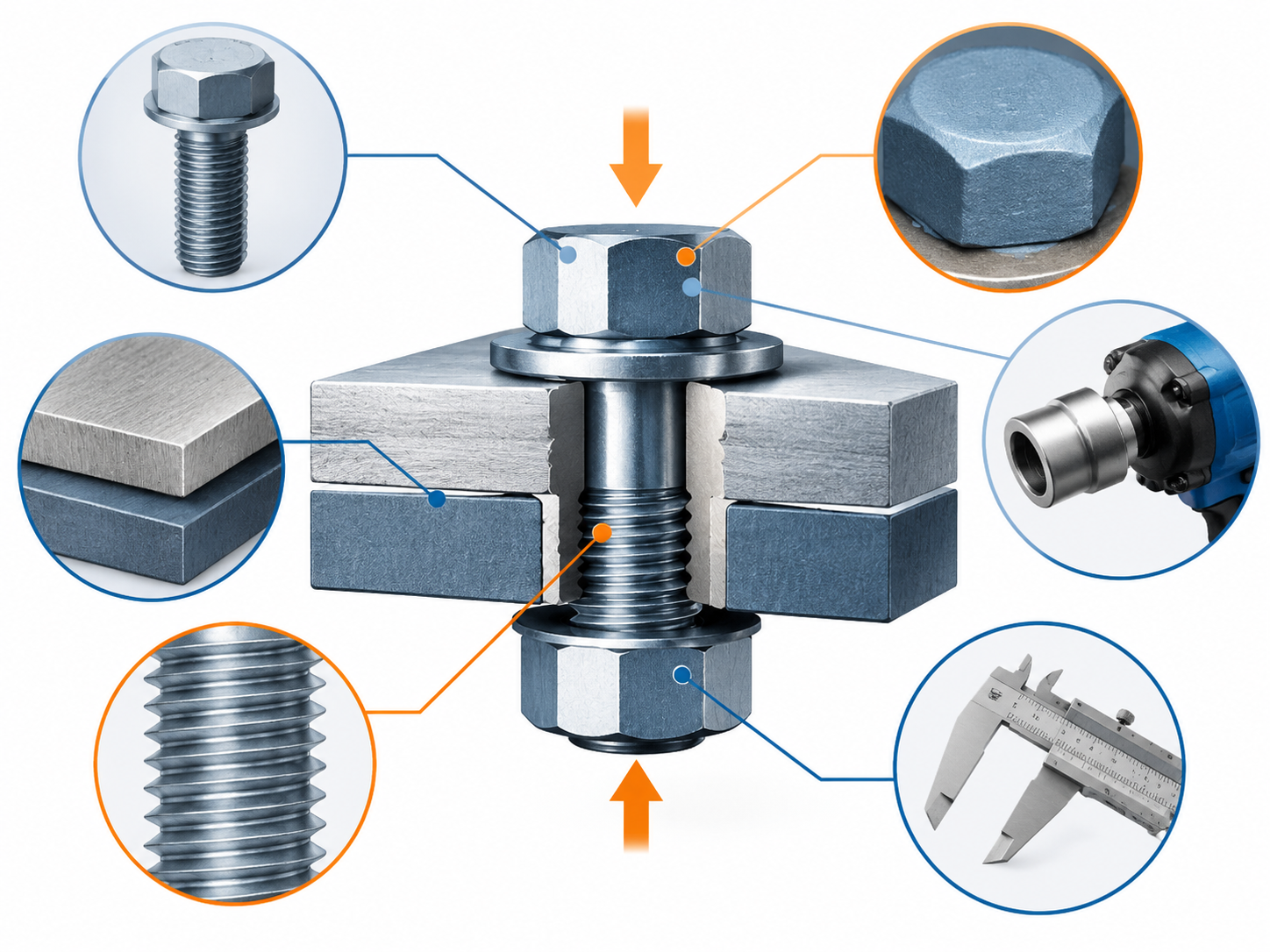
Self-Drilling Screws vs. Self-Tapping Screws: Which Connection Conditions Suit Each Type?
Self-drilling screws and self-tapping screws should be distinguished according to the substrate, connection method, and whether a pre-drilled hole is required. Buyers should verify the product specifications against the actual application rather than relying on the product name alone.
How Should Drill Points, Threads, Diameter, and Length Match the Substrate and Material Thickness?
Drill-point selection should account for the materials and thicknesses to be penetrated. Thread type, diameter, and length should match the substrate and connection design. Specifications should be confirmed against product documentation and applicable design requirements.
How Can Roofing Screws and Washers Meet Both Fastening and Sealing Requirements?
Metal roofing screws may need to provide both fastening and sealing. When EPDM washers are used, buyers should consider the washer configuration, installation condition, and roofing-system requirements. A washer alone does not guarantee leak prevention.
What Else Should Be Considered When Selecting Bolts, Nuts, Washers, and Anchor Bolts for Structural Connections?
Bolts and nuts, washers, and anchor bolts are different connection components and should be selected according to the connection design, materials, loads, and installation conditions. For structural applications, specifications should be confirmed against the project design and applicable requirements.
How Should Buyers Evaluate Materials, Coatings, and Service Environments?
What Should Guide the Selection of Carbon Steel, Stainless Steel, and Other Materials?
Material selection should consider strength, corrosive conditions, contact materials, and cost. Labels such as “stainless steel” or “high strength” do not establish suitability for every environment.
How Should Zinc Plating, Ruspert, and Dacromet Be Compared for Different Environments?
When comparing zinc plating, Ruspert coating, and Dacromet coating, buyers should verify the specific product, coating system, test method, and supplier documentation. Performance should not be ranked solely by coating name.
How Do Corrosion-Resistance Requirements Differ in Coastal, Humid, and Industrial Environments?
Corrosive agents, exposure levels, and maintenance conditions vary by environment. Requirements for corrosion-resistant fasteners should be based on actual service conditions and evaluated alongside material and coating information.
What Can Salt Spray Testing Show—and What Can It Not Show?
Salt spray testing can provide a basis for testing or comparing product performance under specific test conditions, but its results should not be directly converted into a real-world service-life estimate. Actual service life is also affected by installation, the environment, and maintenance.
Why Are Quality Documents and Traceability Part of Supplier Evaluation?
What Do Specification Sheets, Material Certificates, and Inspection Records Each Verify?
Specification sheets confirm product parameters, while material certificates and inspection records help verify materials or inspection results. Buyers should confirm that the documents correspond to the product, batch, and order—not merely that documents exist.
How Can Buyers Confirm Consistency Between Samples, Production Batches, and Mass-Produced Products?
Before purchasing, buyers should agree on sample approval, production acceptance, and batch identification procedures. Fastener traceability helps connect products with relevant records; it should be supported by a real process rather than used only as a marketing term.
What Information Should Buyers Check in Batch Traceability and Pre-Shipment Inspection?
Relevant information may include product specifications, batch identification, inspection items, sampling or acceptance requirements, and shipping records. The details should be agreed according to the product’s risk and order requirements.
How Should Buyers Verify the Scope of a Supplier’s Claimed Standards or Certifications?
Buyers should check the standard or certification name, applicable product, version, test scope, and validity. Claims that a product complies with a standard should be supported by relevant evidence; citing a commonly used standard name is not a substitute for verification.
How Can Buyers Evaluate Suppliers and Delivery Risks?
What Product and Application Information Should Be Prepared Before Requesting a Quote?
Prepare the product type, material, dimensions, finish, quantity, application, substrate, and environmental requirements. A clear fastener RFQ can reduce misunderstandings when suppliers prepare a quotation.
How Should Buyers Evaluate a Supplier’s Product Capabilities, Quality Processes, and Lead Times?
When evaluating a fastener supplier, buyers can review its product range, specification-confirmation process, quality documentation, and communication about lead times. Supplier claims should still be verified through samples, documentation, or actual performance.
How Should Drawings, Samples, and Tolerances Be Confirmed for Custom or OEM Projects?
For custom fasteners and OEM fasteners, confirm the drawing revision, material, dimensions, tolerances, finish, inspection requirements, and packaging before production. Keep a record of any changes.
Why Should Buyers Consider Quality Risk, Freight, and Lead Time When Comparing Quotes?
Quotation comparisons should confirm that product specifications are equivalent and that lead times, freight, and quality risks are manageable. Unit price is only one part of the purchasing decision and cannot replace an evaluation of total cost and supply reliability.
The 2026 Fastener Selection Checklist: From Defining Requirements to Confirming an Order
Step 1: Describe the Application, Substrate, and Connection Location
Record the structure or equipment in which the fastener will be used, the materials being joined, and the installation location and access conditions.
Step 2: Confirm Loads, Environment, and Expected Service Conditions
Define the relevant loads, vibration, corrosion exposure, sealing requirements, and maintenance conditions. Have an engineer confirm the design requirements when necessary.
Step 3: Specify Fastener Type, Material, Dimensions, and Finish
Select the product category and parameters based on the application, then verify the material and coating documentation. A broad product name is not a substitute for a confirmed specification.
Step 4: Confirm Installation Procedures, Test Basis, and Quality Documents
Confirm the tools, installation procedure, acceptance method, and required quality records. For higher-risk connections, arrange testing or professional evaluation according to project requirements.
Step 5: Evaluate Samples, Batch Consistency, Lead Times, and Total Cost
Before placing an order, confirm that samples and production specifications match, verify the delivery plan and documentation requirements, and evaluate purchasing cost alongside quality risks.
Conclusion: How Can Market Trends Lead to More Reliable Fastener Decisions?

Market Perspective: Consider Demand, Supply Capacity, and Lead Times Together
The 2026 North American distributor survey showed stronger demand signals while also pointing to delivery and supply-capacity concerns. This conclusion should remain within the scope of the market covered by the report. (NFDA September 2026 FDI Report)
Engineering Perspective: Move from Individual Product Parameters to Application Conditions and Connection Reliability
Industry research highlights that connection reliability depends not only on fastener specifications, but also on design, tools, installation, and quality control. (Berkeley Lab study)
Purchasing Perspective: Match Specifications and Quality Evidence with Supplier Capabilities
Frequently Asked Questions (FAQ)
Which Indicators Should Buyers Use to Assess 2026 Fastener Market Trends?
Consider indicators such as demand, prices, inventory, deliveries, and outlook in the Fastener Distributor Index (FDI), while noting the survey’s geographic and sample scope.
Why Should Buyers Consider Both the Substrate and Installation Method When Selecting Fasteners?
The substrate affects penetration and thread-engagement conditions, while tools and installation procedures may affect connection performance. Both should be evaluated for the specific application.
What Is the Difference Between Self-Drilling Screws and Self-Tapping Screws?
Their thread-forming and installation methods may differ. The distinction should be confirmed against the product design and technical documentation, then evaluated in terms of the substrate, thickness, and whether a pre-drilled hole is needed.
How Should Buyers Select Fasteners for Metal Roofing or Light-Gauge Steel Structures?
First confirm the substrate, material thickness, connection design, sealing requirements, and environment. Then verify the fastener type, dimensions, drill point, and washer configuration.
Can Salt Spray Testing Represent a Fastener’s Actual Corrosion-Resistance Service Life?
Not by itself. Salt spray results correspond to specific test conditions and do not directly represent service life in every real-world environment.
What Information Should Buyers Provide When Requesting Custom Fasteners?
Typically, buyers should provide drawings or specifications, material, dimensions, tolerances, finish, application conditions, quantity, inspection requirements, and packaging requirements. The exact list should be confirmed for each project.
Related News
Other news you might be interested in

Mengapa Sekrup Bor Sendiri Gagal Mengebor: Daftar Periksa Substrat dan Pemasangan
Ketika sekrup bor sendiri berputar melawan baja tanpa membuat kemajuan, keputusan pembelian menjadi mendesak: haruskah pemasang mengubah pengaturan alat, haruskah pembeli memesan sekrup yang berbeda, atau haruskah pemasok menyelidiki batch tersebut?Diagnosis yang berguna dimulai dengan mengidentifikasi dengan tepat di mana pengeboran berhenti. Catat material pada titik tersebut, periksa sekrup yang dipilih terhadap rakitan, lalu bandingkan kondisi pemasangan. Pendekatan ini memberikan pembeli dasar yang lebih jelas untuk memutuskan apa yang harus diubah dan bukti apa yang harus diminta.

Sekrup Self-Drilling Bor Massal: Daftar Periksa RFQ untuk Importir dan Distributor AS
Saat mencari sekrup self-drilling bor massal, harga satuan hanya berguna jika Anda tahu persis apa yang tercakup di dalamnya. Dua penawaran mungkin tampak menggambarkan produk yang sama tetapi berbeda dalam dimensi, lapisan, kemasan, atau kondisi pengiriman. Bagi importir dan distributor AS yang mengelola beberapa SKU, perbedaan tersebut dapat menyulitkan perbandingan pemasok. Permintaan penawaran yang jelas—RFQ—membantu pemasok memahami kebutuhan Anda dan memberi tim purchasing Anda dasar yang konsisten untuk meninjau penawaran mereka. Daftar periksa ini menjelaskan apa yang perlu disertakan, detail apa yang perlu dikonfirmasi, dan cara mengubah pertanyaan awal menjadi spesifikasi yang dapat ditinjau oleh pembeli dan pemasok.
Want to know more?
Get in touch with us for more information about our services and products.