

Что такое биметаллический саморез и зачем он нужен для алюминиевой кровли?

Han Congming
АвторМы обладаем опытом производства и продаж винтов и крепежных изделий, располагаем собственным производственным предприятием со стабильными крупносерийными мощностями. Мы специализируемся на самосверлящих винтах, винтах для гипсокартона, винтах для ДСП, машинных винтах, болтах и индивидуальных крепежных изделиях для строительства и промышленности.
a bi-metal screw is one fastener made from two metals with different jobs. In roofing, the common construction is a stainless steel head and body with a hardened carbon steel drill point and lead thread. The stainless section resists corrosion on the exposed roof; the hardened point drills the steel purlin, girt or frame. Aluminum roofing often calls for this combination when an aluminum panel is fixed directly to a steel substructure, because the panel is soft and corrosion-resistant, but the screw still has to drill steel and survive the weather. Bi-metal is not a guarantee: the stainless grade, point capacity, coating, washer and aluminum-to-steel detail still have to be specified.
Aluminum roofing is often described as a corrosion-resistant system. That is true of the panel, but it does not describe the whole connection. The screw that holds the panel to the structure has to perform two different jobs in two different places. At the exposed head, it has to resist rain, salt, condensation and UV. At the drill point, it has to cut through the aluminum sheet and then through the steel beneath it.
A single material rarely does both jobs equally well. That is the gap a bi-metal screw is designed to fill. The useful question is not “Is bi-metal better?” It is “Does this joint need a hard steel drill point and a corrosion-resistant exposed body at the same time?”
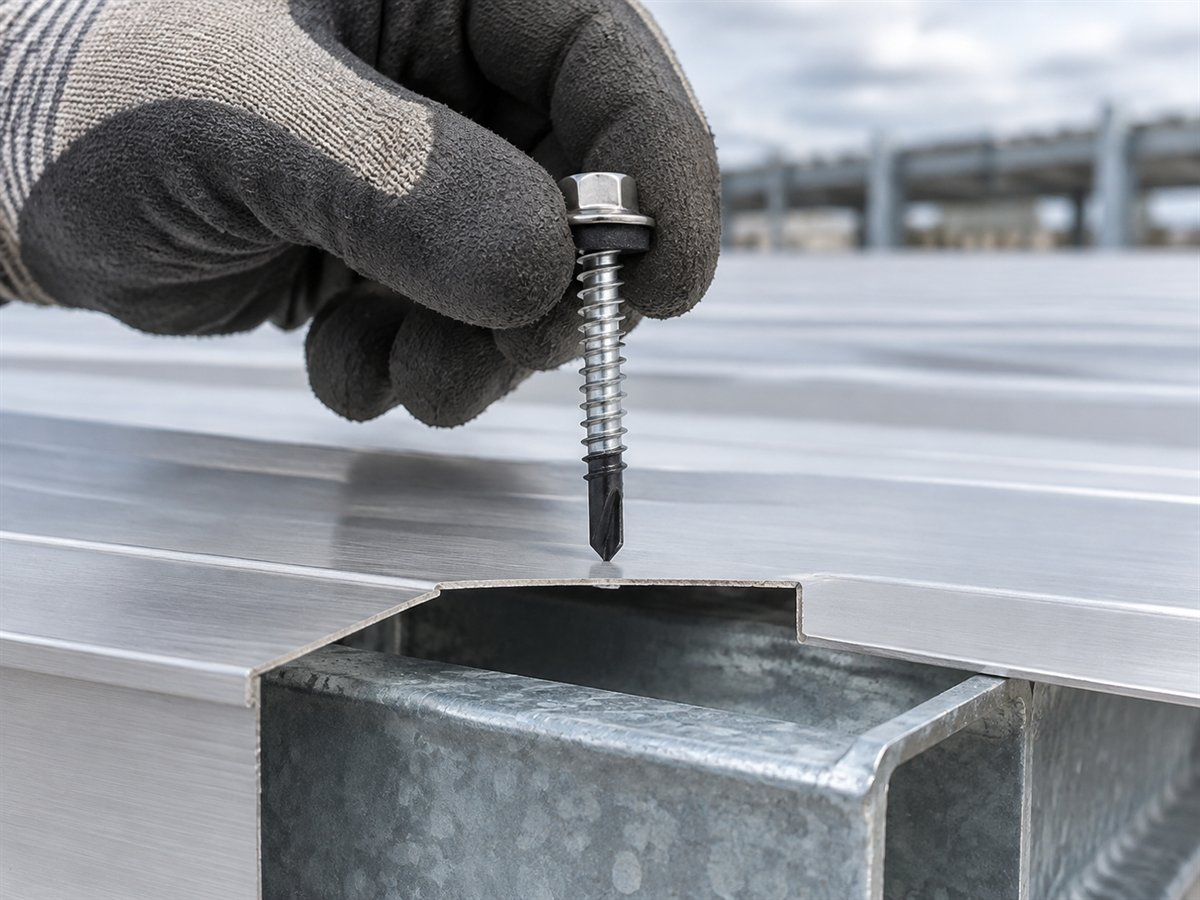
What a bi-metal screw actually is
A bi-metal self-drilling screw is a construction, not a stainless steel grade. The term describes a screw that uses two metals, joined into one component, with each metal doing a different job. It is not a single standardized product category, and the details vary by supplier.
In a common roofing design, the upper section — the head, the shank and the exposed body — is stainless steel. The lower section, where the drill point and part of the lead thread are formed, is carbon steel. The carbon steel can be hardened so that it will drill steel; the stainless upper section gives the exposed part of the fastener a higher corrosion margin. The two sections are joined, often by welding, before the point and thread are finished.
| Screw section | Common material | Primary job |
|---|---|---|
| Head and exposed body | Stainless steel, commonly 304 or 316 | Corrosion resistance and a clean exposed finish |
| Drill point and lead thread | Hardened carbon steel | Drill and tap the steel substrate |
| Transition zone | Weld and local heat treatment | Join the two materials and harden the drilling end |
| Sealing washer | EPDM or another specified elastomer | Seal the panel penetration, not to replace the joint design |
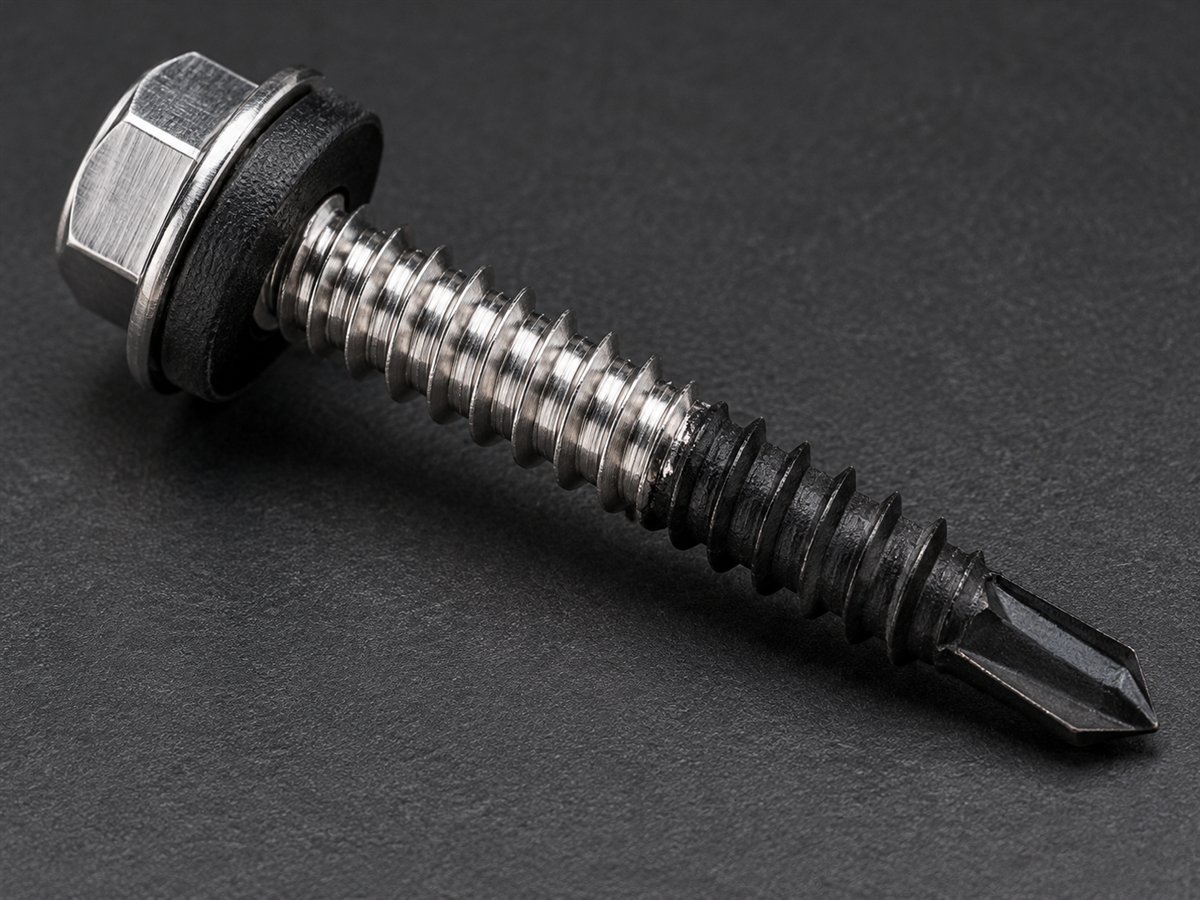
That is the logic of the product. It is also why the name alone is not a specification. Two suppliers can both sell a “bi-metal screw” while using different stainless grades, different point designs, different weld controls, different coatings and different washers. One may be intended for light-gauge steel; another may be intended for a thicker purlin. One may protect the point and weld zone; another may leave them bare.
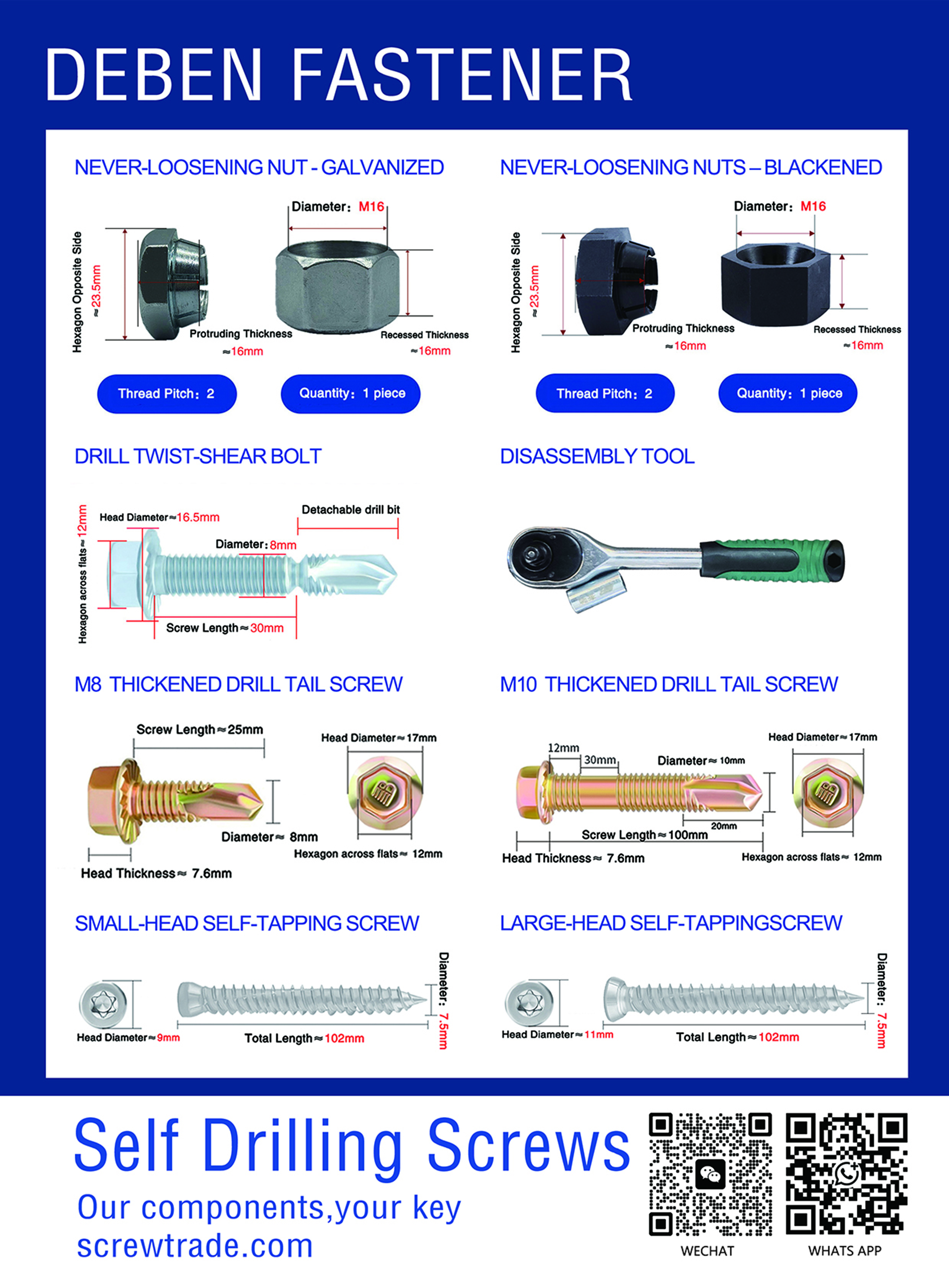
ScrewTrade’s bi-metal product family is listed with carbon steel and stainless steel material options, a 4.0–12.0 mm diameter range and a 16–150 mm length range, with the exact combination confirmed by item. That is a product-family description, not a statement that every size uses the same stainless grade or drill point. The material map has to be confirmed for the exact SKU.
What it is not
A bi-metal screw is not:
- a solid stainless steel screw;
- a carbon steel screw with a decorative stainless cap;
- a screw that is automatically “rust-proof”;
- a substitute for a structural bolt, weld or engineered connection;
- a universal answer for every aluminum roofing detail.
Some suppliers use “bi-metal” to describe a stainless body with a hardened point. Others may use a different material transition. The only reliable approach is to ask for the actual material map: which grade is used for the head and body, which material forms the point, how the two are joined, how the point is hardened, and what coating or passivation covers the finished part.
Why aluminum roofing is a different fastener problem
Aluminum is lightweight, strong for its weight, corrosion-resistant and durable in building applications. Those properties are why aluminum panels are used on industrial buildings, warehouses, commercial roofs, canopies, façades and solar arrays. They are also why the fastener cannot be chosen from a generic “metal roofing screw” list.
The panel is soft; the substrate is not
An aluminum roofing sheet is relatively soft compared with a steel purlin or girt. Drilling through the aluminum sheet is not usually the hard part. The hard part is what comes next: the screw must continue through the panel, through any insulation or spacer, and into the steel structure with enough point hardness and thread engagement to form a reliable connection.
This is where a single-material stainless screw can fall short. A 304 or 316 screw may offer good corrosion resistance, but its ability to drill steel depends on the point design, hardness and heat treatment — not on the word “stainless” on the box. A conventional stainless screw may be intended for tapping into pre-drilled or thin materials, not for drilling a steel purlin.
The reverse problem is just as common. A coated carbon steel screw can drill the steel, but its exposed head and body depend on the coating for protection. If the coating is damaged at the head, thread, point or cut edge, corrosion can start. On an aluminum roof, that corrosion can become a visible stain and a maintenance issue, not just a fastener problem.
The exposed side is a weather surface
On an exposed-fastener aluminum roof, the screw head and washer sit on the weather side of the panel. They are exposed to rain, UV, condensation, airborne salt, industrial pollutants and repeated wetting and drying. The fastener is not a hidden structural component; it is part of the roof surface.
That changes the priority. A screw that is strong enough to drill the purlin but rusts at the head is not a successful roofing fastener. A screw that resists corrosion but cannot drill the purlin is not a successful roofing fastener either. The connection needs both properties in the same installed assembly.
Aluminum moves, and it forms galvanic couples
Aluminum panels move as the roof heats and cools. The panel system has to accommodate that movement through its hole details, washers, clips or standing-seam design. The screw should not be asked to clamp the panel so rigidly that the movement has nowhere to go.
Aluminum also forms galvanic couples with other metals. When aluminum is electrically connected to stainless steel or carbon steel and the joint is regularly bridged by moisture, the aluminum can behave as the anode and corrode. The screw material, the panel material, the washer, the cut hole edge and the drainage path are all part of that electrical and chemical system.
A bi-metal screw can improve the corrosion resistance of the exposed fastener body. It does not remove the aluminum-to-steel couple, and it does not make the joint maintenance-free.
The fastener is part of the waterproofing detail
On an exposed-fastener roof, the screw is also a penetration. The EPDM washer has to seat evenly on the panel, compress enough to seal, and avoid over-compression that splits, extrudes or permanently deforms the rubber. The panel must not be dimpled or crushed around the hole. The screw must be perpendicular enough that the washer sits flat.
These are installation details, but they influence the specification. A washer that is too small, too hard, too thick or incorrectly seated can leak even when the screw body is corrosion-resistant. A screw that is too long can leave the point exposed below the panel or damage the structure; a screw that is too short can leave too few threads engaged in the purlin.
Why a single-material screw often falls short
There is no single material that is best at every part of an aluminum roofing connection. The table below shows the trade-offs a buyer is actually managing; the same comparison is developed in more detail in our 304/410/bi-metal guide.
| Fastener option | Drilling into steel | Corrosion resistance at the exposed head/body | Where it can fit | What to watch |
|---|---|---|---|---|
| 304 stainless steel | Depends on the point design and hardness; do not assume from the grade | Generally good in many outdoor environments | Exposed connections where a suitable drill point and thread are available | Point capability, galling, cost; confirm it can drill the actual steel thickness |
| 410 stainless steel | Can be hardened for drilling | Lower corrosion margin than 304 in many environments | Applications where hardness is needed and the exposure is moderate | Tea staining or corrosion in coastal or aggressive conditions; confirm coating and grade |
| Coated carbon steel | Generally good drilling performance | Depends on the coating system and coverage | Cost-sensitive, controlled exposures, painted or protected details | Cut edges, point, thread roots and coating damage can become corrosion sites |
| Bi-metal, stainless body + hardened carbon point | Designed to combine steel drilling with a stainless exposed body | Depends on stainless grade, point protection and weld zone | Aluminum panel to steel purlin, exposed roofing, dissimilar-metal connections | Not a grade; point/weld quality and coating still need evidence |
| Aluminum screw | Not intended for drilling structural steel | Aluminum itself is corrosion-resistant but soft | Aluminum-to-aluminum or light-duty non-structural details | Low strength, thread wear, galvanic behavior with other metals |
The table is deliberately not a ranking. A coated carbon steel screw can be the correct choice for a dry, protected interior assembly. A 304 screw can be the correct choice when the point and thread are designed for the substrate. A bi-metal screw can be the correct choice when the joint genuinely needs both a stainless exposed body and a hardened steel-drilling point.
The mistake is to choose a material name first and then look for a product that fits the name. The better sequence is to define the joint first, then select the construction.
Where bi-metal is the right choice — and where it is not
“Aluminum roofing” is not one connection. The fastener decision changes with the panel, the substrate and the roof system.
| Roof assembly | Is bi-metal a strong candidate? | What to confirm |
|---|---|---|
| Aluminum panel direct-fastened to a steel purlin, girt or frame, exposed | Yes, often | Point capacity for the steel thickness, stainless grade, thread engagement, washer, coating and isolation detail |
| Aluminum panel to an aluminum frame or extrusion | Not automatically | Thread engagement in aluminum, galvanic couple, screw strength and the system manufacturer’s fastener specification |
| Aluminum panel to wood | No, usually not the right family | Use a wood screw or Type 17 screw with the correct washer and embedment; bi-metal is for steel drilling |
| Aluminum standing-seam roof with concealed clips | Depends on the clip connection | The panel face is not penetrated; the fastener is at the clip-to-purlin connection and must follow the system design |
| Aluminum-zinc coated steel panel (Galvalume) | Not because it is “aluminum” | This is a coated steel panel, not an aluminum panel; specify for the actual coated steel substrate |
| Coastal or high-chloride aluminum roof | Possibly, with a higher grade | 316 body may be appropriate; confirm point material, washer and project exposure requirements |
| Aluminum solar rail or mounting rail to steel purlin | Often relevant | Galvanic isolation, wind uplift, rail thickness, point capacity and the module clamp design |
| Dry, protected interior aluminum assembly | Often unnecessary | A coated carbon steel or suitable stainless fastener may be sufficient; do not over-specify |
The first row is the case most buyers are asking about. An aluminum roof panel is on the outside; a steel purlin or girt is on the inside; the screw passes through the panel and into the steel. The aluminum sheet is easy to penetrate, but the steel is not. The exposed head needs to resist the weather. That is a genuine two-material problem.
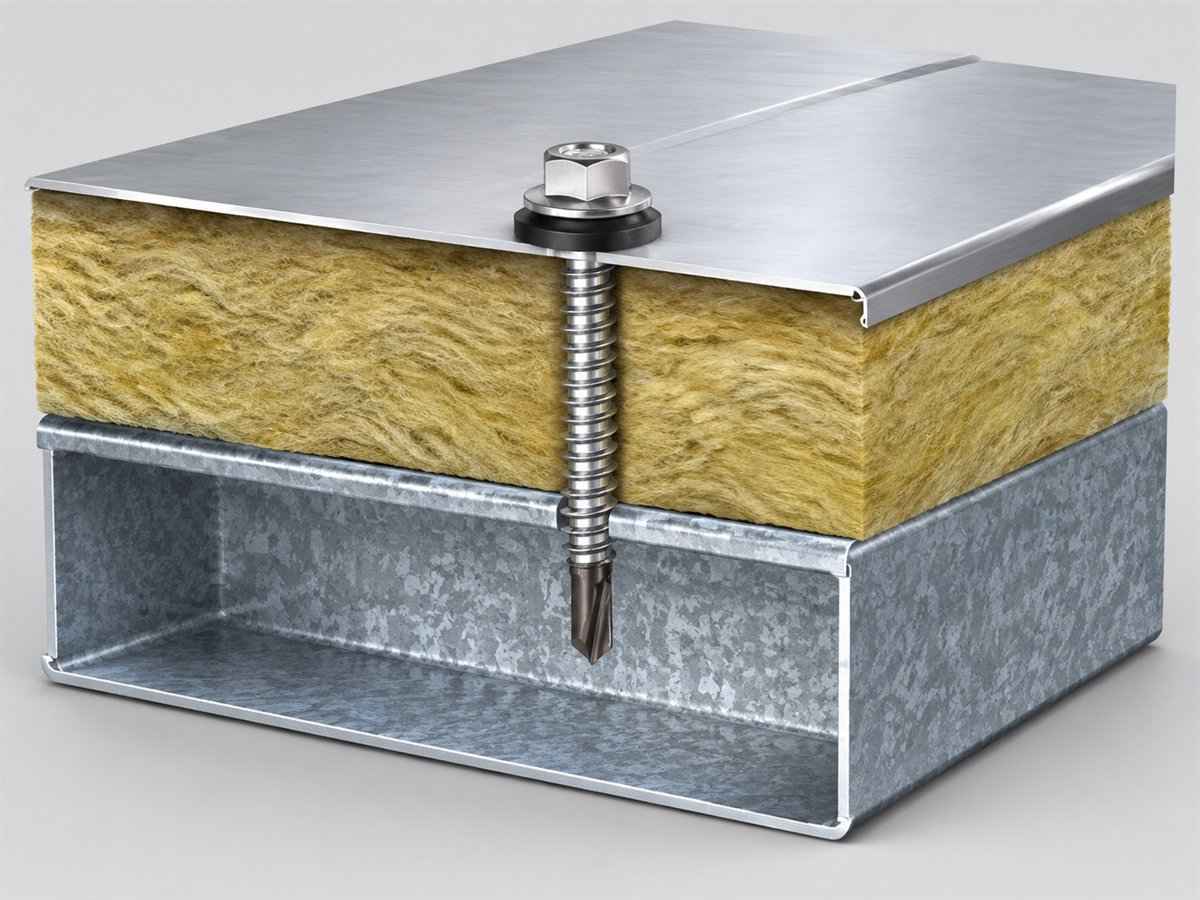
Fastener manufacturers make dedicated dissimilar-metal screw families for exactly this kind of aluminum-to-steel connection. The existence of the family is not the specification, however. The point, thread, length, washer and material grades still have to match the actual stack.
The second row is where many specifications go wrong. Aluminum is soft. A screw that works well in a steel purlin may strip or pull out of an aluminum extrusion. The thread, diameter and engagement length have to match the aluminum member, not just the panel. A bi-metal screw may still be used, but it is not automatically the best fastener for an aluminum-to-aluminum joint.
The fourth row is another common confusion. A standing-seam aluminum roof may have no exposed screws through the panel face at all. The fasteners are hidden at the clips, and the clip-to-purlin connection may use a different screw, coating and isolation detail. The panel system manufacturer’s installation instructions govern that connection.
The fifth row is a naming problem. “Aluminum roofing” is sometimes used loosely for aluminum-zinc coated steel. That material has a steel core and a metallic coating; it is magnetic, and its fastener requirements are different from those of a solid aluminum panel. A magnet can help distinguish the two in the field, but the project documents should be the final reference.
The galvanic corrosion question
The most important correction to make about bi-metal screws is this: they do not eliminate galvanic corrosion.
Galvanic corrosion requires three things: two metals with different corrosion potentials, direct metal-to-metal electrical contact, and a conductive electrolyte that connects them on a regular basis. On an aluminum roof, the aluminum panel and the stainless fastener can satisfy all three when rainwater, condensation or salt-laden moisture bridges the joint.
Aluminum is anodic relative to stainless steel. When the two are coupled in the presence of an electrolyte, the aluminum can corrode at a higher rate than it would on its own. The severity depends on the metal pair, the relative exposed areas, the conductivity of the water, how long the joint stays wet, and whether the aluminum has a protective coating or oxide film.
The area ratio matters. A small stainless fastener in a large aluminum panel is a relatively favorable geometry compared with a large stainless surface coupled to a small aluminum area. But a favorable ratio does not remove the risk at cut holes, scratches, crevices, trapped water and coating damage. Those local conditions can dominate the result.
An EPDM sealing washer is not a guarantee of electrical isolation. It seals the top of the hole, but the screw thread and the cut edge of the aluminum sheet may still make metallic contact. The washer is there to keep water out of the penetration; it is not a substitute for an engineered isolation detail.
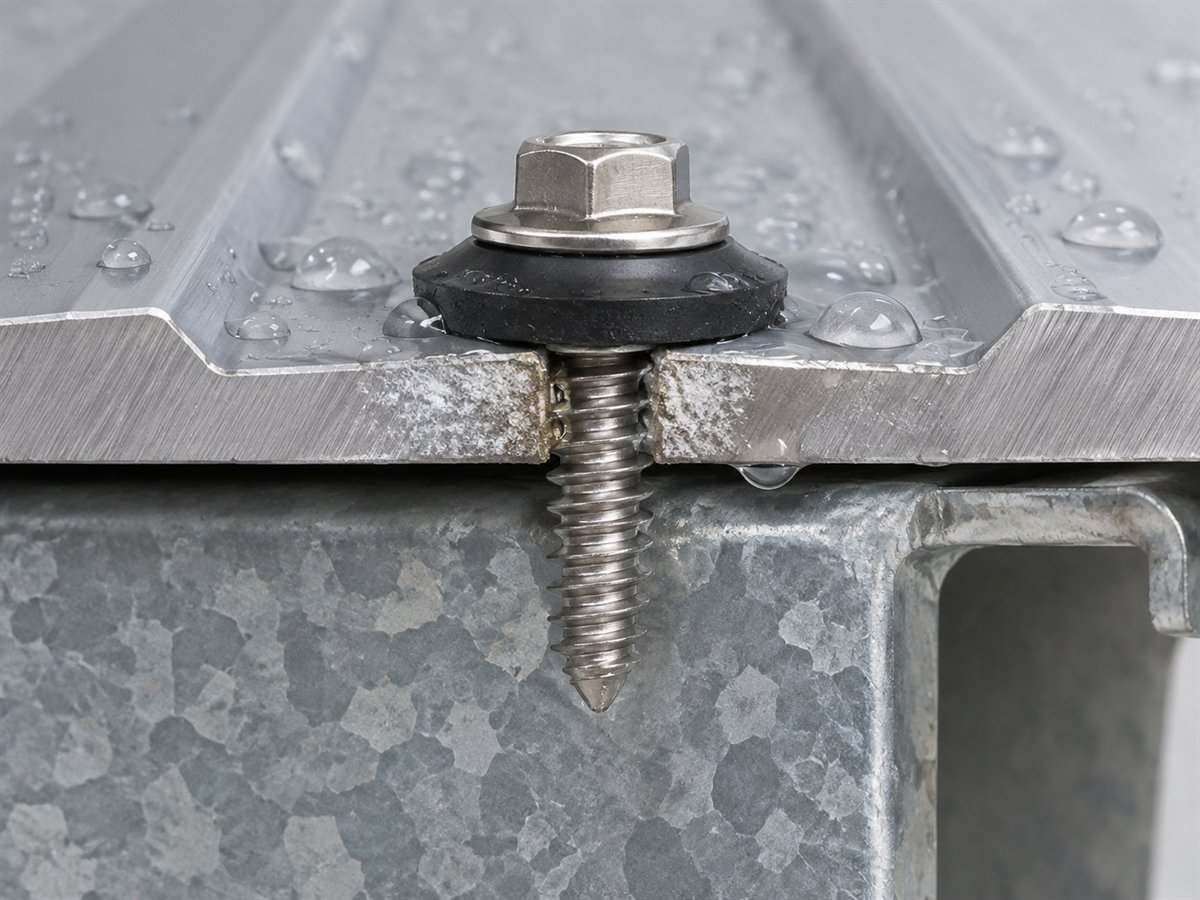
The practical response is a joint-level one:
- keep the aluminum and steel surfaces drained and avoid trapped water;
- seal or coat cut edges and scratches according to the panel manufacturer’s instructions;
- use an isolating washer, bushing or coating where the project requires electrical separation;
- specify the fastener material to suit the exposure, not just the panel;
- have the project engineer or roof-system manufacturer confirm the mixed-metal detail.
In other words, the bi-metal screw improves the fastener’s exposed-body corrosion resistance. The aluminum-to-steel joint still needs a design.
What to put in the RFQ
An RFQ that says “bi-metal self-drilling screws, 1,000 pieces” gives the supplier almost nothing to quote against. The following information is what separates a comparable quotation from a catalog guess.
| RFQ item | What to state |
|---|---|
| Panel | Aluminum alloy or trade description, temper, thickness, coating or finish, profile |
| Substrate | Steel purlin, girt, deck or frame; material, grade and thickness at the drill point |
| Stack | Total thickness to be drilled, including panel, insulation, spacer and steel |
| Screw size | Diameter, length, head style, drive type |
| Drill point | Point type or number, stated capacity for the steel thickness |
| Thread | Self-drilling or self-tapping, thread pitch, engagement length in the substrate |
| Stainless body | 304, 316 or another grade; confirm which part is stainless |
| Point and weld | Carbon steel grade, hardness, weld/heat treatment, protection of the point and weld zone |
| Finish | Coating system, coating thickness, coverage on head, body, thread and point |
| Washer | EPDM or other elastomer, diameter, thickness, bonded or loose, compression target |
| Evidence | Material certificate, dimensional report, coating report, salt-spray report, batch traceability |
| Installation | Tool type, torque or depth-control method, acceptance criteria for washer compression and panel condition |
The salt-spray report deserves its own note. ASTM B117 and ISO 9227 are useful comparative tests, but they are not a service-life prediction. A higher number of test hours does not prove that a screw will last a certain number of years on a roof. Ask for the report for the exact product, finish and test conditions, and treat it as one piece of evidence rather than a warranty.
A useful one-line specification looks like this:
Bi-metal self-drilling screw, [diameter] × [length], [head style], stainless steel body in [304/316] grade, hardened carbon steel drill point with stated capacity for [steel thickness], [coating system], bonded EPDM washer [diameter], supplied with material certificate, coating report, salt-spray report and batch traceability, and approved on a trial assembly of the actual panel and purlin.
The brackets are not a weakness. They show which values the buyer and supplier still have to lock.
Installation rules that protect the aluminum roof
The best screw can still fail if it is installed like a generic self-tapping screw. Aluminum is easy to deform, and a roofing washer needs a specific seating condition.
- Use a depth-controlled screwgun or clutch setting. The goal is a flush, evenly compressed washer, not a screw driven until the panel dimples.
- Keep the tool perpendicular to the panel. An angled screw lifts one side of the washer and creates a leak path.
- Stop before the panel deforms. A crushed panel around the hole may not recover, and the washer may not seal against a distorted surface.
- Do not over-compress the EPDM washer. More compression is not better once the rubber is deformed, split or extruded.
- Check the first fastener and the last fastener. A setup that works on the first screw can drift as the tool heats, the battery changes or the operator changes.
- Clear metal shavings. Aluminum and steel chips can stain the roof, block drainage or become a corrosion site.
- Replace damaged screws. Do not reuse a screw with a damaged coating, deformed washer or worn point.
- Repair cut edges and scratches. Follow the panel and fastener coating instructions; a touch-up pen is not a substitute for the specified coating system.
- Follow the panel manufacturer’s hole and movement details. Do not enlarge or slot holes unless the system design calls for it.
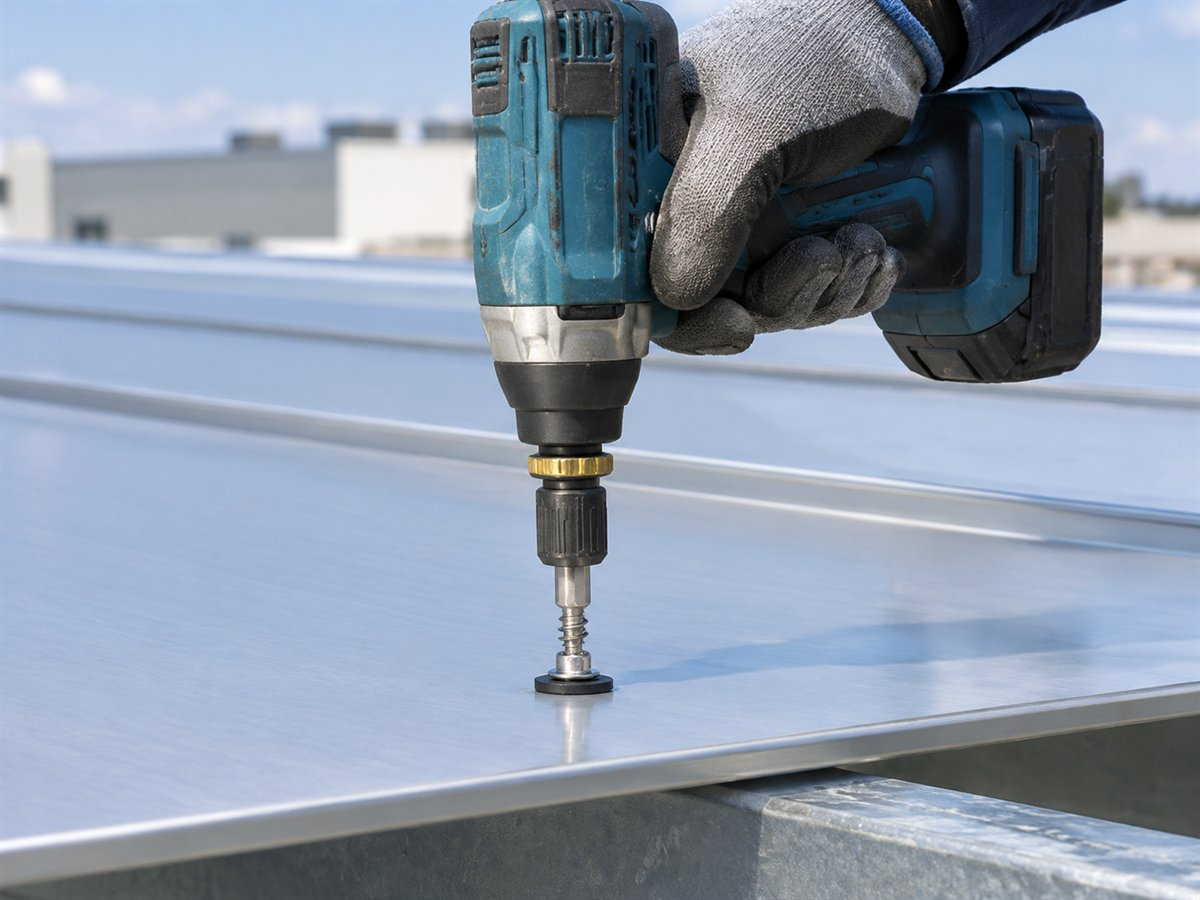
For aluminum, the installation check is not only “Is the screw tight?” It is “Is the washer seated, is the panel flat, is the screw perpendicular, and is the joint still able to perform as designed?”
How to approve a sample before the bulk order
Catalog data is not a trial. A sample approval should use the actual panel and the actual substrate, or a representative stack with the same materials and thicknesses.
- Drill the real stack. Confirm that the point penetrates the aluminum sheet and the steel substrate without excessive pressure, walking or heat.
- Check the thread engagement. The screw should form threads in the steel, not spin or strip. The engagement length should match the design.
- Check the seating. The washer should compress evenly; the panel should not dimple, crack or distort.
- Check the transition zone. On a welded bi-metal screw, the weld and heat treatment are quality-critical. Ask how the supplier controls them.
- Check the coating. Confirm coverage on the head, body, thread, point and weld zone, not just a coating name on the certificate.
- Review the evidence. Material certificate, dimensional report, coating thickness, salt-spray report and batch traceability should refer to the same product and finish.
- Run a small installation trial. Use the production tool, the production operator and the production access condition. Record the tool setting and the acceptance criteria.
A sample that drills well but leaves a distorted panel is not approved. A sample that seats well but shows bare metal at the point or weld is not approved either. The trial has to test the whole connection, not just the drill.
FAQ
Is a bi-metal screw the same as a stainless steel screw?
No. A solid stainless screw is made from one material. A bi-metal screw combines a stainless section with a different material, usually a hardened carbon steel drill point. The corrosion resistance and drilling behavior depend on both parts and on how they are joined.
Does aluminum roofing always need a bi-metal screw?
No. It depends on the assembly. An aluminum panel direct-fastened to a steel purlin or frame is a strong candidate for a bi-metal screw because the fastener must drill steel and remain exposed. An aluminum panel fixed to wood, an aluminum extrusion with a different thread requirement, or a concealed standing-seam clip may need a different fastener. The panel system and the joint design come first.
Will a bi-metal screw prevent galvanic corrosion?
No. It changes the material at the exposed part of the fastener, but aluminum and stainless steel can still form a galvanic couple when moisture connects them. The joint still needs drainage, coating, isolation where required and project review.
Can I use a bi-metal screw in an aluminum purlin?
It may be possible, but do not assume it. Aluminum is softer than steel, and the thread engagement, diameter and length have to suit the aluminum member. A screw designed for a steel purlin may strip or pull out of an aluminum section. Confirm the connection with the system designer.
Should I choose 304 or 316?
304 is a common starting point for many outdoor aluminum roofing details. 316 generally provides a higher corrosion margin in chloride-rich or coastal environments, but it is not automatically required everywhere. The exposure, the project specification, the washer and the rest of the joint determine the choice. Confirm the grade for the exact item rather than treating “stainless” as a single category.
Does the EPDM washer isolate the screw from the aluminum?
Not necessarily. The washer seals the top of the penetration, but the screw thread and the cut edge of the panel may still make metallic contact. If electrical isolation is required, use the isolation detail specified by the project engineer or panel manufacturer; do not assume a sealing washer performs that function.
Can I install the screw with an impact driver?
Follow the fastener and panel manufacturer’s instructions. The more important issue is depth control. Aluminum is easy to deform, and an impact driver can overdrive the screw before the operator notices. A depth-controlled screwgun or a carefully set clutch is usually easier to control.
How do I verify what the supplier is claiming?
Ask for the material map, the drill-point capacity, the stainless grade, the coating specification, the salt-spray report for the exact finish, and a trial on the actual panel and substrate. Check that the documents refer to the same product and batch. A catalog photo or a “bi-metal” label is not enough.
Conclusion: the joint decides, not the label
A bi-metal screw is a useful solution to a specific problem: an exposed connection that must drill steel and still present a corrosion-resistant face to the weather. Aluminum roofing creates that problem when an aluminum panel is fixed directly to a steel purlin, girt or frame. The aluminum sheet is soft and corrosion-resistant; the steel beneath it is the hard part; the exposed head is the weather part.
That does not make bi-metal a universal roofing screw. It does not make the joint immune to galvanic corrosion. It does not remove the need for the correct washer, hole detail, installation depth or project review. It is one construction choice that has to be matched to the actual panel, substrate and exposure.
The practical rule is simple: define the full stack, define the exposure, then ask the supplier to prove the screw against that stack. If the answer is a material map, a point capacity, a coating specification and a trial on the real assembly, the “bi-metal” label has something behind it.
If you are specifying an aluminum roofing connection, send ScrewTrade the panel type and thickness, the purlin or frame material and thickness, the exposure, the washer requirement and the expected quantity. We can help confirm whether a bi-metal self-drilling screw is the right family and which dimensions need to be locked before quotation or sampling.
Related News
Other news you might be interested in

Карта спроса на крепеж в 2027 году: центры обработки данных, энергетика и промышленные проекты
Прогноз по крепежу на 2027 год — это не широкое восстановление. Это карта проектных ниш — и самые сильные ниши — это центры обработки данных, энергетика и отдельные промышленные работы. Направление уже видно в результатах компаний за конец 2026 года. Hilti сообщила о росте продаж в местной валюте на 5,9% за первые восемь месяцев 2026 года, с двузначным ростом в Америке и Азиатско-Тихоокеанском регионе, при этом описав традиционное строительство как слабое. Продажи LISI в аэрокосмической отрасли выросли на 14,3% за первые девять месяцев, но продажи в автомобильной отрасли упали на 5,2%. Продажи Bossard в третьем квартале выросли на 12%, чему способствовал спрос на центры обработки данных в Америке и расширение полупроводниковой и электронной промышленности в Азии.
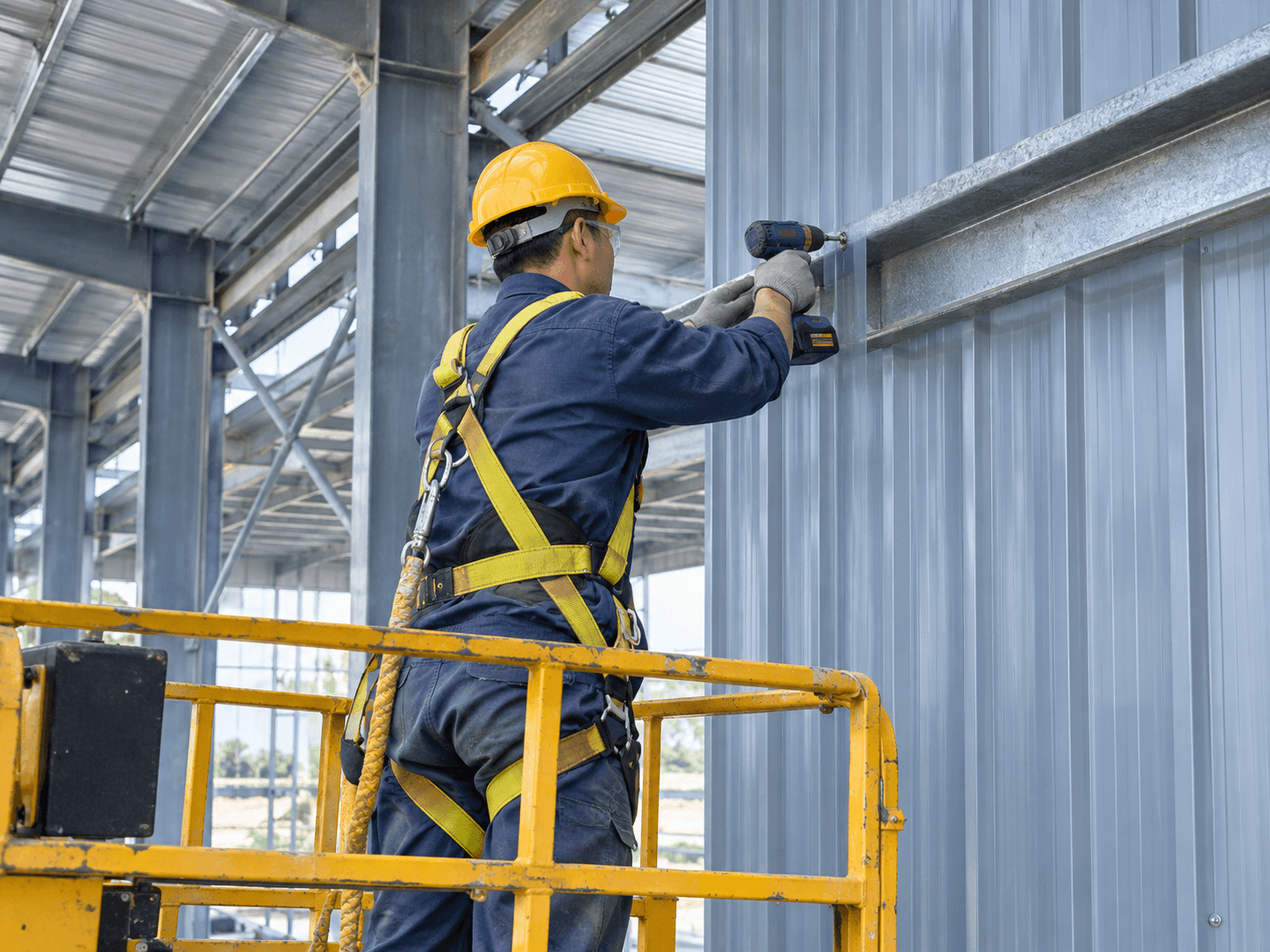
Почему винты с шестигранной головкой и шайбой являются предпочтительным выбором для стальных конструкций?
Стальные конструкции скрепляются иерархией соединений: основные элементы каркаса, рассчитанные на момент и сдвиг, второстепенные элементы, несущие обшивку, и тысячи мелких креплений, которые удерживают панели, кронштейны и инженерные системы. Винты с шестигранной головкой и шайбой в основном относятся к третьей группе, а также находятся на границе второй. Поэтому они повсеместно встречаются на стальных объектах, но при этом не являются универсальным конструкционным крепежом.
Want to know more?
Get in touch with us for more information about our services and products.