
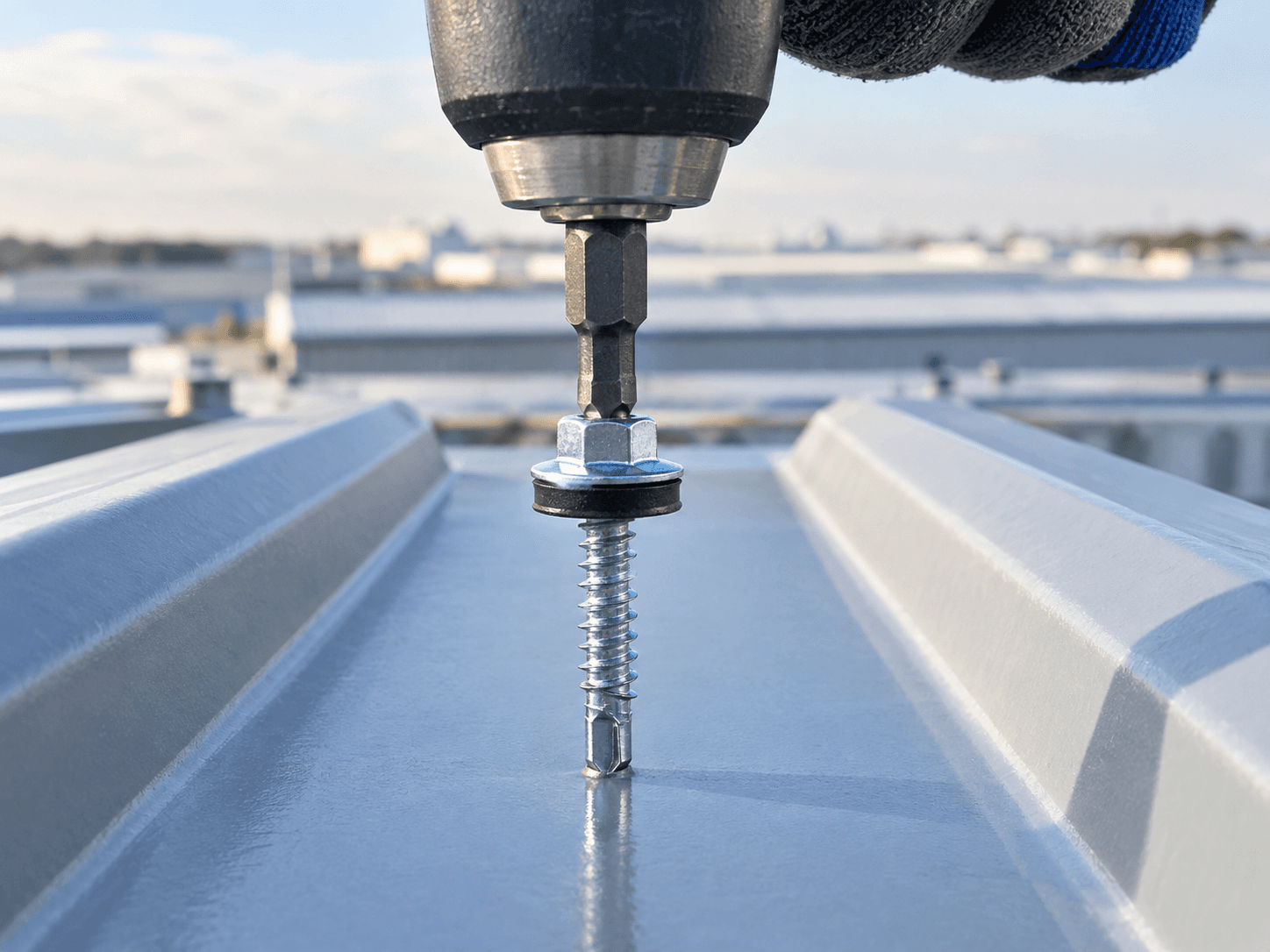
Is a Bigger EPDM Washer Always Better for Metal Roofing Screws?

Han Congming
AuthorWith experience in screw and fastener manufacturing and sales, we operate our own production facility with stable large-scale capacity. We are specialists in self-drilling screws, drywall screws, chipboard screws, machine screws, bolts, and customized fasteners for construction and industrial applications.
A larger EPDM washer looks like an easy upgrade. There is more rubber, a wider bearing surface and apparently more protection around the fastener. In metal roofing, however, the biggest washer in a supplier's catalogue is not automatically the most watertight choice.
Sealing is not controlled by outer diameter alone. It depends on the complete washer assembly, the screw head, the panel profile, the compression achieved during installation and whether the washer remains in continuous contact with the intended surface. A large washer can solve one problem and create another if it does not match the fixing location.
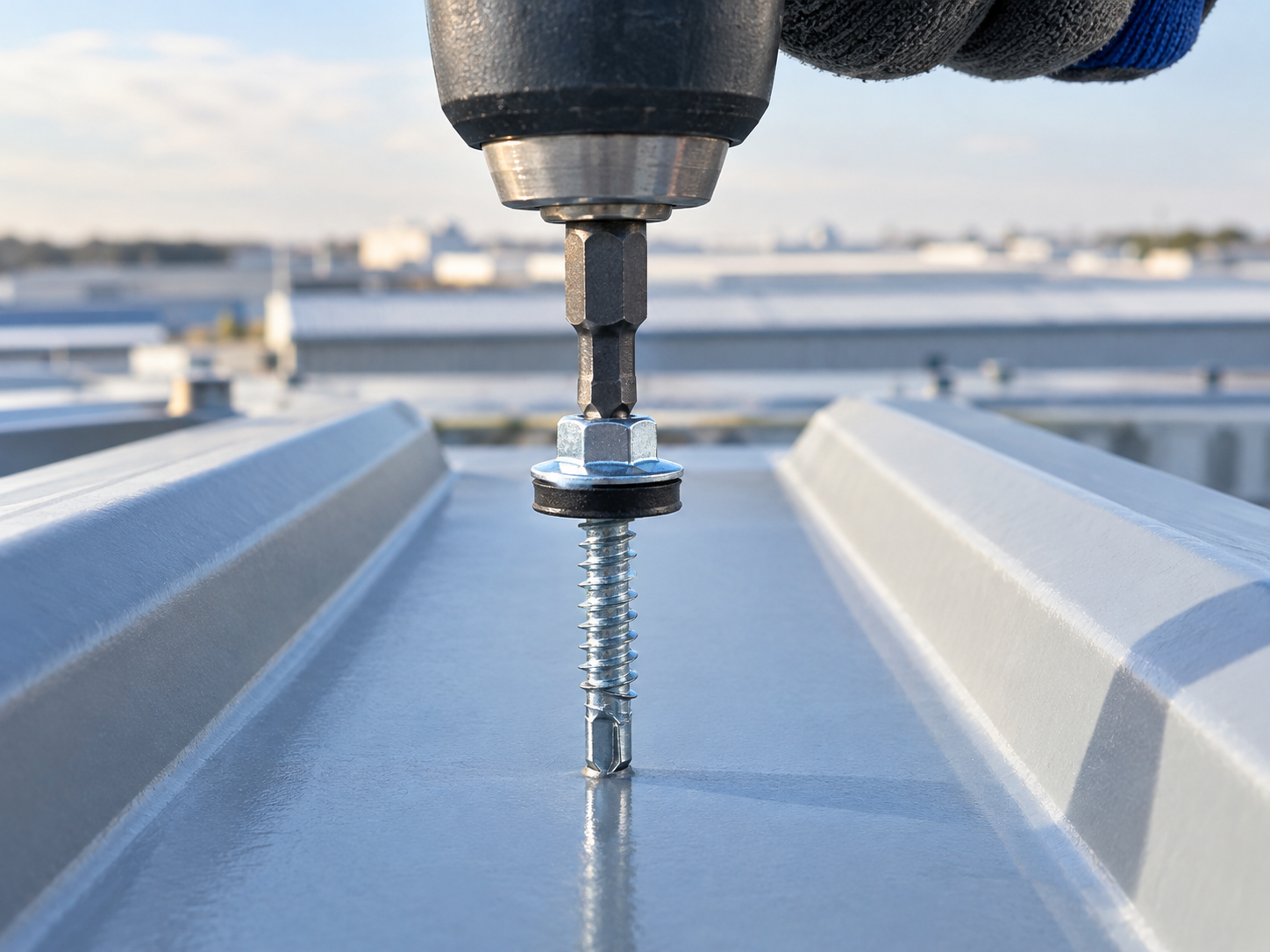
The practical answer is therefore not "always choose larger" or "always choose smaller." Choose the washer assembly that seats correctly on the actual panel, fits the screw and head, compresses evenly under the specified installation method, and matches the exposure conditions of the roof.
What Does an EPDM Roofing Washer Actually Do?
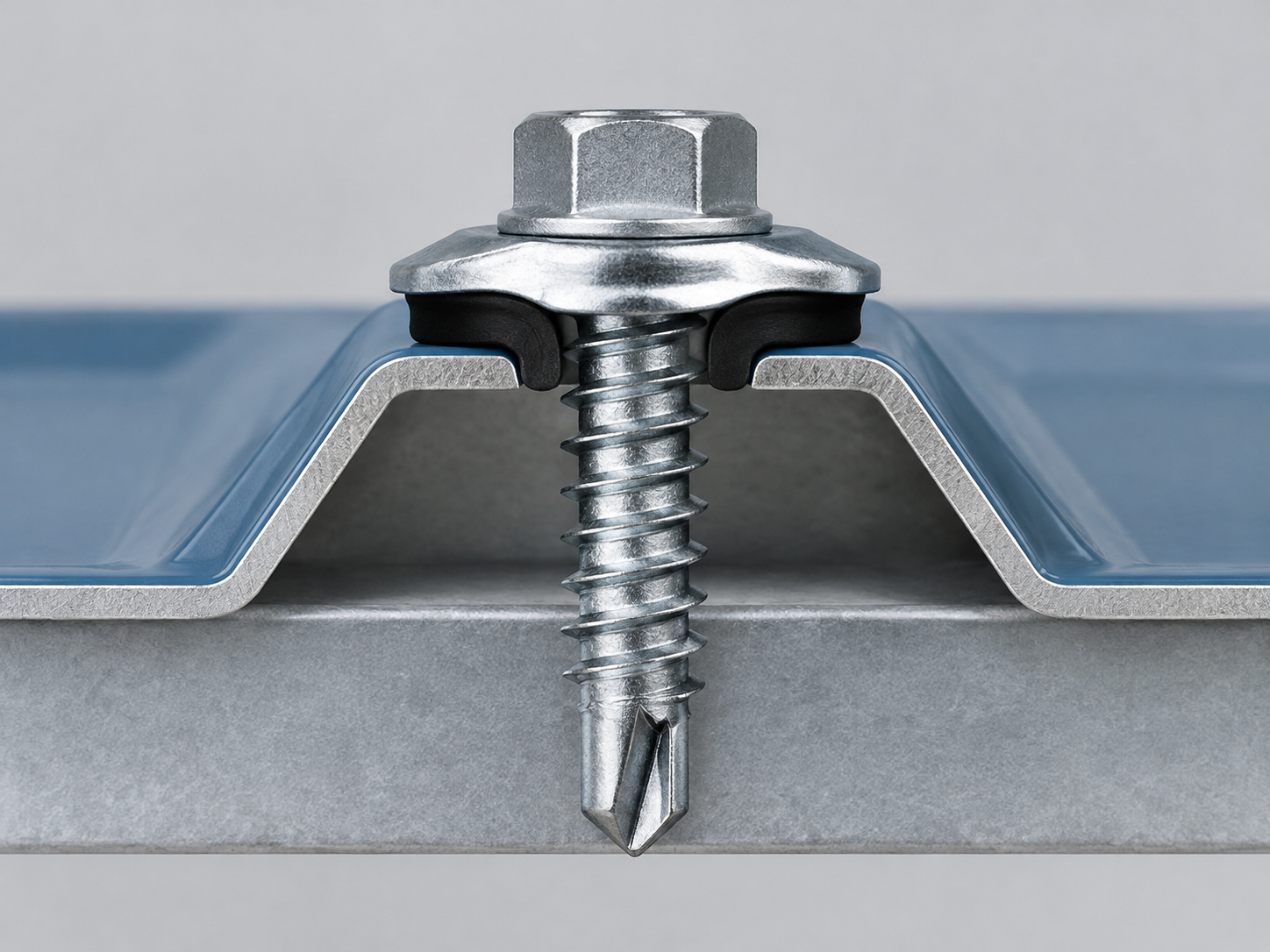
A typical bonded roofing washer combines a metal backing washer with an EPDM sealing layer. Each part has a different job.
The metal backing washer gives the screw head a stable bearing surface and distributes clamping force into the panel. Its diameter, thickness and stiffness affect how that load reaches the sheet. If the backing washer is too thin or bends excessively, the EPDM layer may compress unevenly even when the screw looks tight.
The EPDM layer conforms to small irregularities around the fastener hole and forms the sealing interface. The material must remain flexible enough to follow normal panel movement and environmental exposure, while still recovering after compression. Its thickness, hardness and compound matter, not simply its colour or the word "EPDM."
The assembly also has to fit the screw. The washer's inside diameter and its relationship to the screw shank, head and any under-head features affect how it centres and seals. A washer can look large from above while providing poor contact underneath.
For this reason, an EPDM roofing washer should be evaluated as part of the self-drilling roofing screw assembly, not as an independent rubber accessory.
When Can a Larger EPDM Washer Help?
A larger washer is not automatically better, but there are legitimate reasons to use one.
It may provide a wider bearing area where the panel and fastener design allow it. It may offer more coverage around a particular fixing location, or better suit a screw head and panel profile that were developed as a complete assembly. A larger metal backing can also spread installation load over a wider area, which may be useful on a comparatively soft or thin facing if the panel manufacturer permits it.
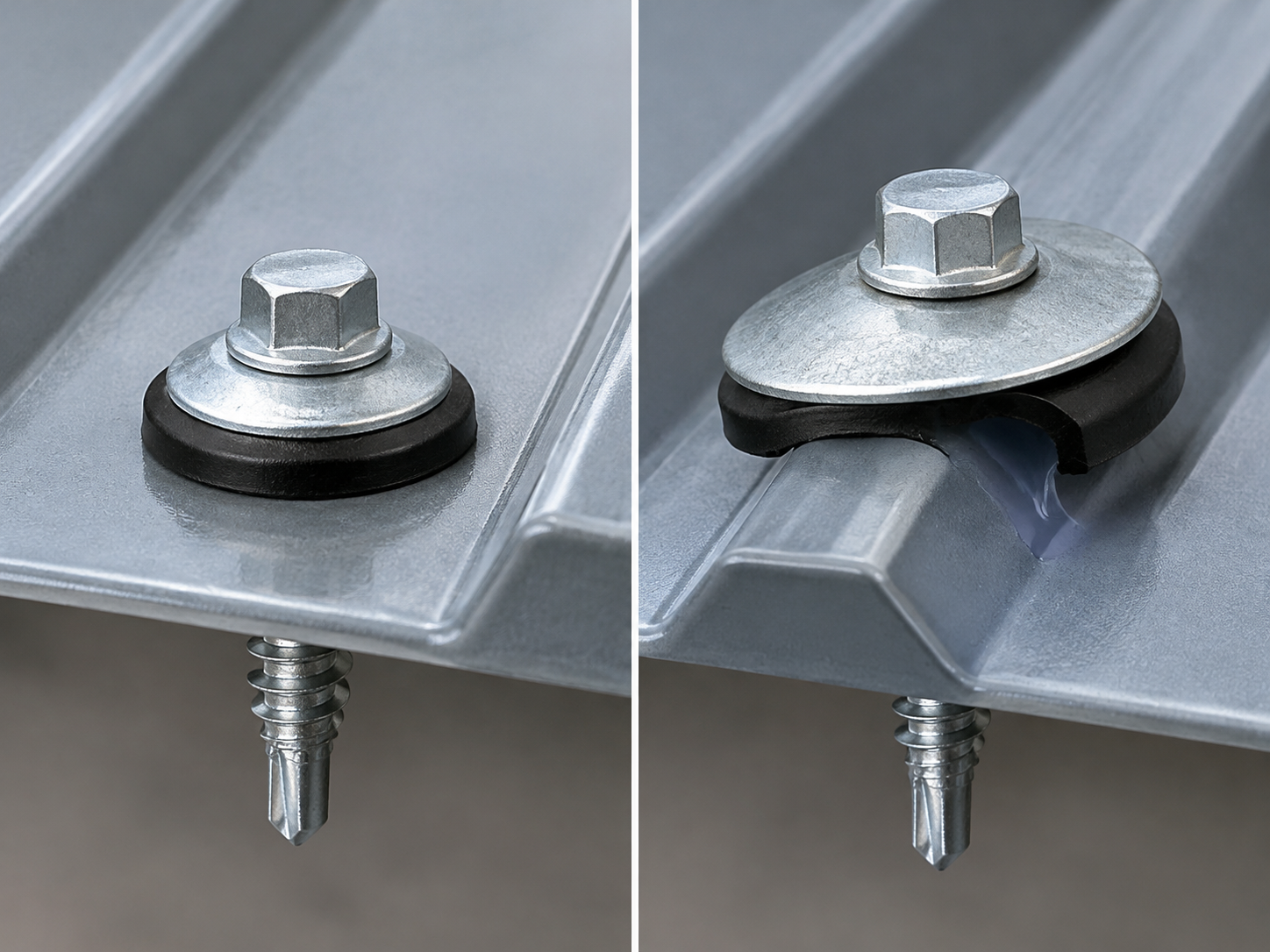
These benefits depend on the full geometry. A wider washer must still sit on the intended bearing surface. If the panel has a narrow flat pan, a sharp rib, a curved profile or a raised seam beside the fixing point, increasing the diameter can move the washer edge onto a different part of the profile.
The useful question is not:
"How large is the washer?"
It is:
"Does this washer assembly have full, stable contact with the surface it is designed to seal?"
Why Can a Bigger Washer Still Leak?
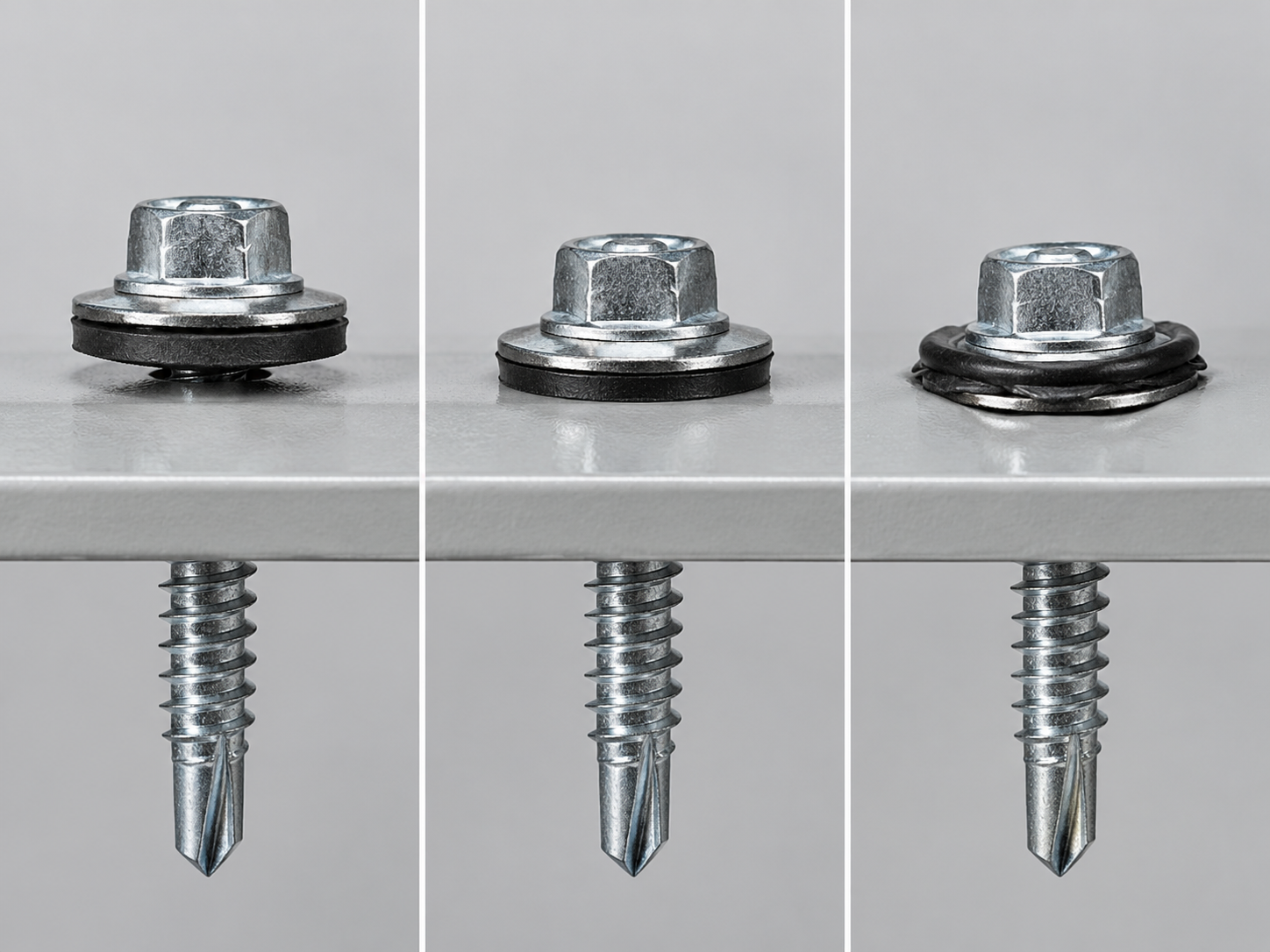
1. It may sit outside the flat bearing area
Profiled metal panels are not flat plates. They have ribs, pans, stiffeners, laps and changes in slope. A washer that fits comfortably inside one flat area can overlap a rib or bridge a valley when the panel or fixing location changes.
That can leave one side of the washer with less contact than the other. Water does not need a large opening; a narrow path under an unseated edge can be enough. A larger washer may even make this more likely if it extends beyond the area the panel designer intended the fastener to clamp.
2. Diameter does not define compression
The EPDM layer must compress enough to maintain continuous contact, but not so much that it is crushed, splits or loses recovery. A large washer with a hard, thin or unevenly bonded EPDM layer is not more watertight than a smaller assembly that compresses correctly.
The metal backing, EPDM thickness, material hardness and bonding method all affect the result. So does the screw head. A washer needs support from the head and backing; it cannot be judged in isolation.
3. A wider washer can encourage over-driving
Installers often associate a larger washer with a stronger seal. That can lead to the screw being driven too far. The EPDM may bulge excessively, the backing washer may dish, or the panel may dimple around the fixing.
Over-compression is not a more secure version of correct compression. It can damage the sealing layer and distort the panel surface. Under-compression creates the opposite problem: the washer never establishes uniform contact. The target is controlled seating, not the tightest possible screw.
EJOT Middle East similarly notes that a sealing washer can be too loose, too tight or installed at an angle, and any of these conditions can compromise tightness . The exact installation setting should still come from the fastener and panel-system instructions, not from a universal torque figure.
4. Screw angle and hole quality still matter
An inclined screw compresses one side of the washer more than the other. A damaged or oversized hole can leave insufficient material around the seal. Debris trapped under the washer can create a local gap.
Changing to a larger washer does not correct any of these conditions. In fact, a wide washer can make an angled installation look acceptable from above while the sealing face remains uneven underneath.
5. The backing material may be the weak point
A larger washer may use a different metal backing, coating or thickness. If that backing corrodes, deforms or creates an incompatible contact with the panel coating, the assembly can fail even though the EPDM itself remains intact.
The washer is part of a corrosion system that includes the screw, backing washer, panel and local environment. Material compatibility should be checked for the actual exposed assembly, especially on coastal, industrial or high-humidity projects.
Hot, dusty and coastal service conditions add another reason not to choose by diameter alone. UV exposure, repeated thermal movement and airborne material can make an unstable seat more noticeable over time, but a wider washer does not correct an uneven bearing surface or inadequate compression. The assembly still has to suit the panel and the environment in which it is installed.
Why 16 mm, 19 mm and 22 mm Cannot Be Ranked by Number Alone
Roofing fastener catalogues may list washers with outer diameters such as 16 mm, 19 mm or 22 mm. Those figures describe one dimension, not a sealing grade.
A 19 mm washer is not automatically better than a 16 mm washer if its EPDM layer is harder, its backing is less stable or its shape does not match the panel. A 16 mm assembly developed for a particular head and profile may seal more reliably than a wider washer selected only because it looked more substantial.
Nor should a larger washer be used to compensate for a wrong screw or a damaged hole. If the fastener pitch, thread, drill point or hole size is unsuitable, the connection already has a different problem. The washer cannot turn an incorrect fixing into the intended assembly.
Use the dimensions to understand compatibility, not to create a ranking:
| Check | Why it matters |
|---|---|
| Washer outside diameter | Must fit the intended bearing surface and panel geometry |
| Washer inside diameter | Must centre and seal correctly around the screw |
| Metal backing material and thickness | Supports the EPDM and distributes clamping load |
| EPDM thickness and hardness | Influence compliance, compression and recovery |
| Bonding method | Affects whether the seal stays in position during driving |
| Screw head shape and diameter | Determines how load is transferred into the washer |
| Panel profile at the fixing point | Defines the actual surface the washer must seal against |
Start With the Panel, Not the Washer Size
The selection sequence should begin with the connection:
- Identify the exact panel profile, material, thickness and fixing location.
- Confirm the panel manufacturer's specified fastener and washer assembly.
- Match the screw diameter, length, drill point, head and under-head geometry.
- Check the washer drawing: outside and inside diameter, metal backing, EPDM thickness, hardness and bonding.
- Confirm the environmental exposure and required corrosion system.
- Establish the installation method, tool control and inspection condition.
- Trial the assembly on the actual panel and support before approving a batch.
This is also the safer way to compare two suppliers. Two washers may both be described as "EPDM bonded" while differing in backing thickness, rubber compound, dimensions and seating behaviour.
The existing metal roofing screw specification checklist applies the same principle: define the complete component and installation condition before comparing price or making a substitution.
What Does a Correctly Seated Washer Look Like?
A correctly installed washer should make continuous contact around the fastener and show controlled compression. The appearance varies with the product, so the acceptance condition should be agreed with the panel and fastener supplier.
In a trial, inspect:
- Whether the washer is seated for the full circumference, not only on one side.
- Whether the EPDM is compressed evenly without severe bulging, tearing or separation.
- Whether the metal backing remains stable and does not dish excessively.
- Whether the panel is dimpled, distorted or damaged around the fixing.
- Whether the screw has entered perpendicular to the intended bearing surface.
- Whether the hole remains within the specified condition.
- Whether the washer and screw remain correctly assembled after driving.
Repeat the trial on each relevant panel profile and fixing location. A result from a flat pan does not automatically apply to a rib, lap or edge fixing. Use the specified tool and production-intent settings, and record the combination that passed.
No single photograph, torque setting or compression percentage can replace a product-specific trial. The screw, washer and panel are a system; the approved trial must represent that system.
When the Washer Is Not the Cause of the Leak
A leak near a fastener is not proof that the washer is too small.
Water may enter through a lap, an end seal, a flashing, a damaged panel, an unsealed penetration or a gap beside the fixing. It may travel laterally and appear at a screw some distance from the real opening. Condensation or trapped moisture can complicate the diagnosis further.
Before changing the washer, record:
- The exact leak location and whether it follows rain, wind direction or a particular roof area.
- The panel profile, lap arrangement and fixing position.
- Whether the screw is straight and correctly seated.
- The washer condition, panel deformation and any trapped debris.
- The batch and product references for the installed screw and washer.
- Whether flashings, closures, sealant and other interfaces were completed as specified.
Replacing washers without identifying the path of water may simply move the leak to the next weak point.
Questions to Ask Before Approving a Washer
A useful RFQ does not stop at "EPDM washer." Ask the supplier to identify:
- The exact washer assembly and its relationship to the proposed screw SKU.
- Outside diameter and tolerance.
- Inside diameter and fit to the screw.
- Metal backing material, thickness and coating.
- EPDM thickness, hardness or grade, where specified.
- Bonding or assembly method.
- Recommended panel profiles or fixing conditions, if established.
- Available compression, ageing, UV, ozone, temperature or corrosion evidence, with the test conditions and tested SKU.
- Packaging, batch identification and traceability.
- Any limits on substitution between washer sizes or backing materials.
Reports should be linked to the actual product and test conditions. A salt-spray result, for example, does not prove sealing performance, and a UV-resistant EPDM compound does not automatically make every washer geometry suitable for every panel.
Conclusion: Choose the Right Assembly, Not the Largest Washer
A bigger EPDM washer is not always better for metal roofing screws. It may provide more bearing area in one assembly, but it can also sit poorly on a profiled panel, compress unevenly or hide an installation error.
The reliable choice is the complete washer and screw assembly that matches the panel, head, hole, exposure and installation method. Its acceptance should be based on verified dimensions, correct compression and a representative trial, not on the assumption that more rubber must mean more protection.
If you are comparing EPDM sealing washers for self-drilling screws, send ScrewTrade the panel profile, fixing location, screw size, head type, exposure conditions, target quantity and any approved sample or drawing. The assembly can then be reviewed against the actual connection instead of being selected by washer diameter alone.
Related News
Other news you might be interested in
The 2027 Fastener Demand Map: Data Centers, Energy and Industrial Projects
The 2027 fastener outlook is not a broad recovery. It is a map of project pockets—and the strongest pockets are data centers, energy and selected industrial work.The direction is already visible in late-2026 company results. Hilti reported local-currency sales growth of 5.9% in the first eight months of 2026, with double-digit growth in the Americas and Asia Pacific, while describing traditional construction as soft. LISI’s aerospace sales rose 14.3% in the first nine months, but its automotive sales fell 5.2%. Bossard’s third-quarter sales grew 12%, helped by data-center demand in the Americas and semiconductor and electronics expansion in Asia.
What Is a Bi-Metal Screw and Why Does Aluminum Roofing Need One?
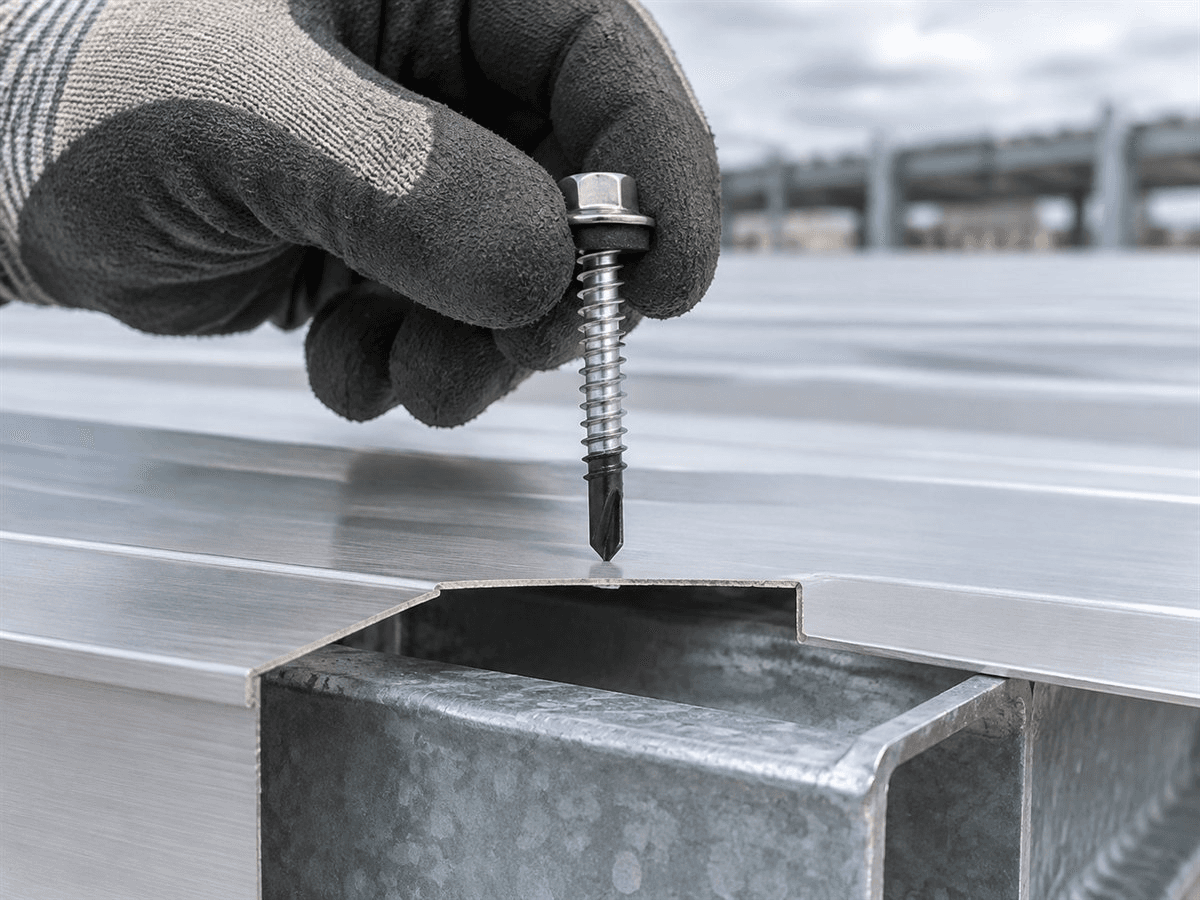
a bi-metal screw is one fastener made from two metals with different jobs. In roofing, the common construction is a stainless steel head and body with a hardened carbon steel drill point and lead thread. The stainless section resists corrosion on the exposed roof; the hardened point drills the steel purlin, girt or frame. Aluminum roofing often calls for this combination when an aluminum panel is fixed directly to a steel substructure, because the panel is soft and corrosion-resistant, but the screw still has to drill steel and survive the weather. Bi-metal is not a guarantee: the stainless grade, point capacity, coating, washer and aluminum-to-steel detail still have to be specified.
Want to know more?
Get in touch with us for more information about our services and products.