
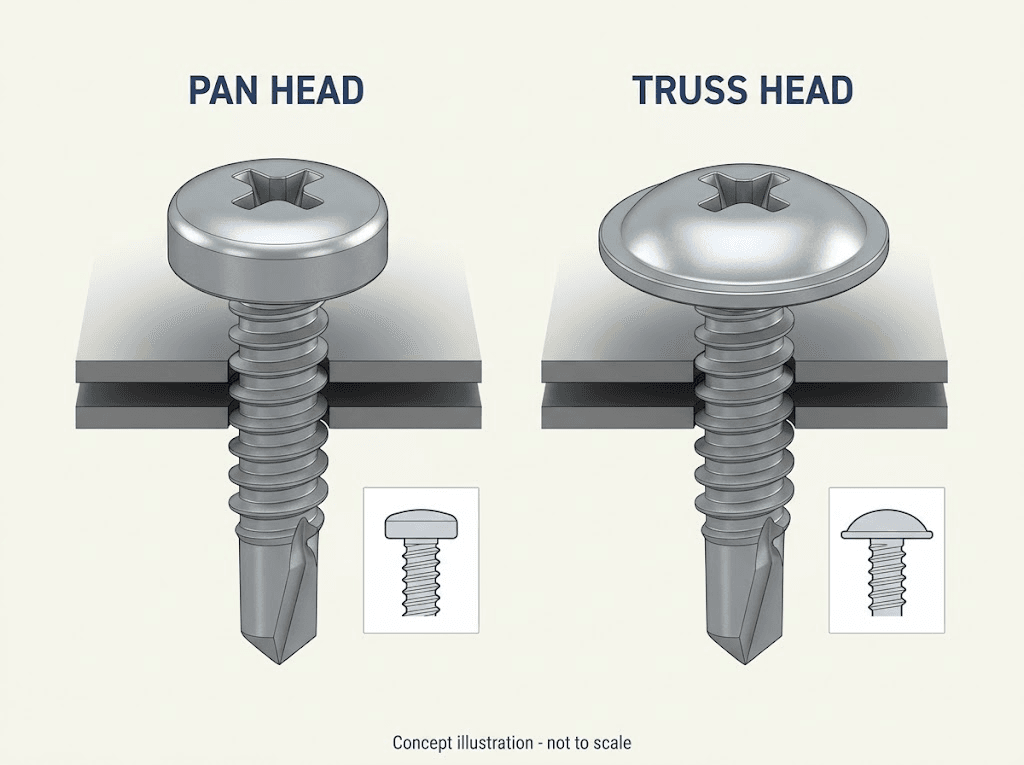
Pan Head vs. Truss Head Self-Drilling Screws: Choosing the Head for Sheet-Metal Assemblies

Han Congming
AuthorWith experience in screw and fastener manufacturing and sales, we operate our own production facility with stable large-scale capacity. We are specialists in self-drilling screws, drywall screws, chipboard screws, machine screws, bolts, and customized fasteners for construction and industrial applications.
Two self drilling screws can have the same nominal diameter and length, but have different ways of fitting with sheet metal components. One head can comfortably sit next to the folded edge, while the other head overlaps with it. A screw that passes through the panel may still interfere with the cover installed above it.
For buyers who compare flat head and Truss head self drilling screws, the useful question is: which head is suitable for the joint, bears on the expected surface, and leaves room for assembly and service? Answer this question before approving substitutes or placing bulk orders.
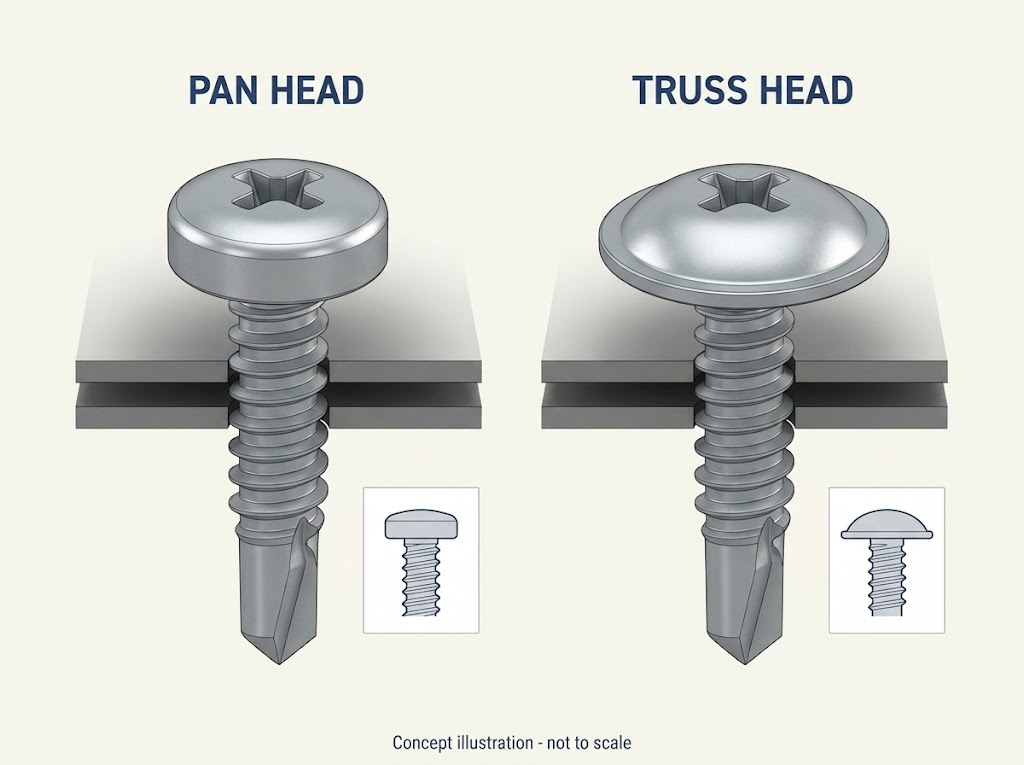
What is the difference between Pan and Truss?
The pot head usually has a circular or slightly dome shaped top, a clear edge, and a flat support surface. The Truss head usually has a wider, lower margin shape. Its wider footprint can provide a larger load-bearing area on the connecting components. These are general shape descriptions; Compare the actual head size of the proposed project.
| Comparison | Pan head | Truss head |
|---|---|---|
| General form | Rounded top, flat underside | Broad, shallow dome |
| Fit to check | Head diameter and height | Full head footprint and height |
| Specification basis | Actual product drawing | Actual drawing and identified truss variant |
The sinking head also has no intention of disappearing into the matching groove. If the assembly requires a flush surface, check the specified fastening arrangement instead of assuming that the low profile Truss head will be flush.
Also, the shape of the head should be separated from the driving and point shapes. Phillips discovered a driver groove; Pan and Truss describe external heads. The self drilling name is related to the characteristics of the drilling hole. Just by name alone cannot prove these three points.
When is it worth considering Pan Tou?
When the space around the fastening position of the component is limited and the proposed pan head is suitable for that space, start with the pan head self tapping screw.
Consider a shell panel with screws located near the folding circuit. Check if the entire bottom surface of the head can be placed on the expected surface without touching any bends. Then check the gap above it while installing the fitting cover. The compact footprint only partially solves the matching problem.
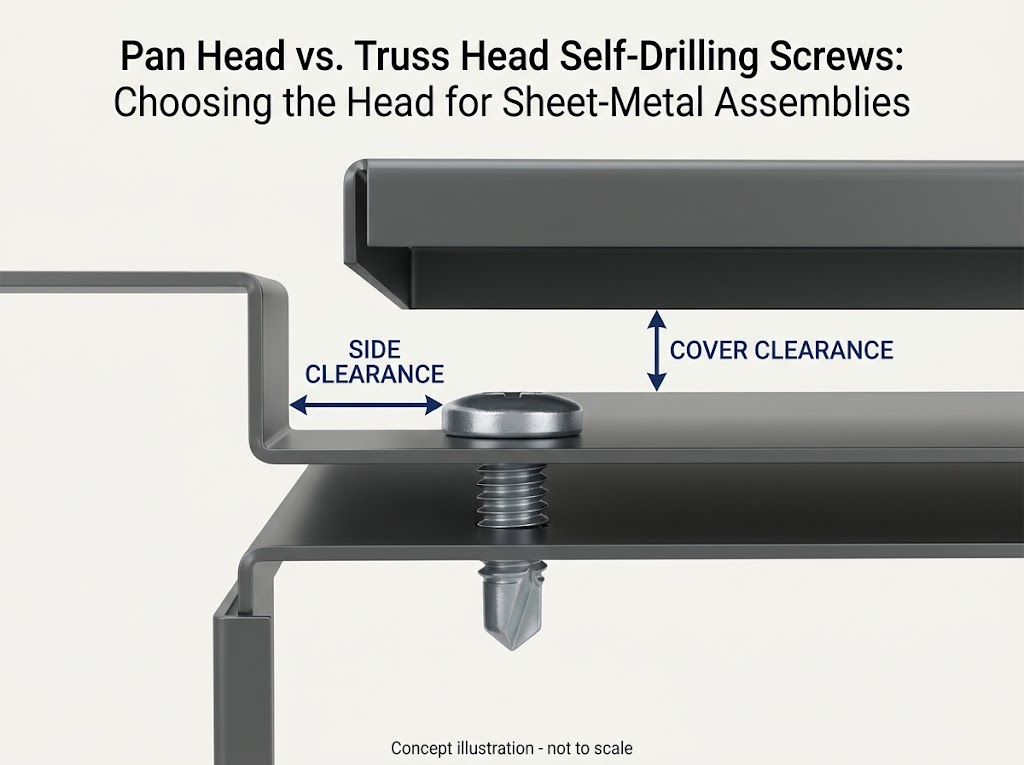
For the selected project, inquire about the head diameter, maximum head height, and driving information. Use these dimensions to inspect the assembled product, including any tool access restrictions. These checks provide a clearer basis for selection than the gimbal in the approved catalog photos.
When is Truss worth considering?
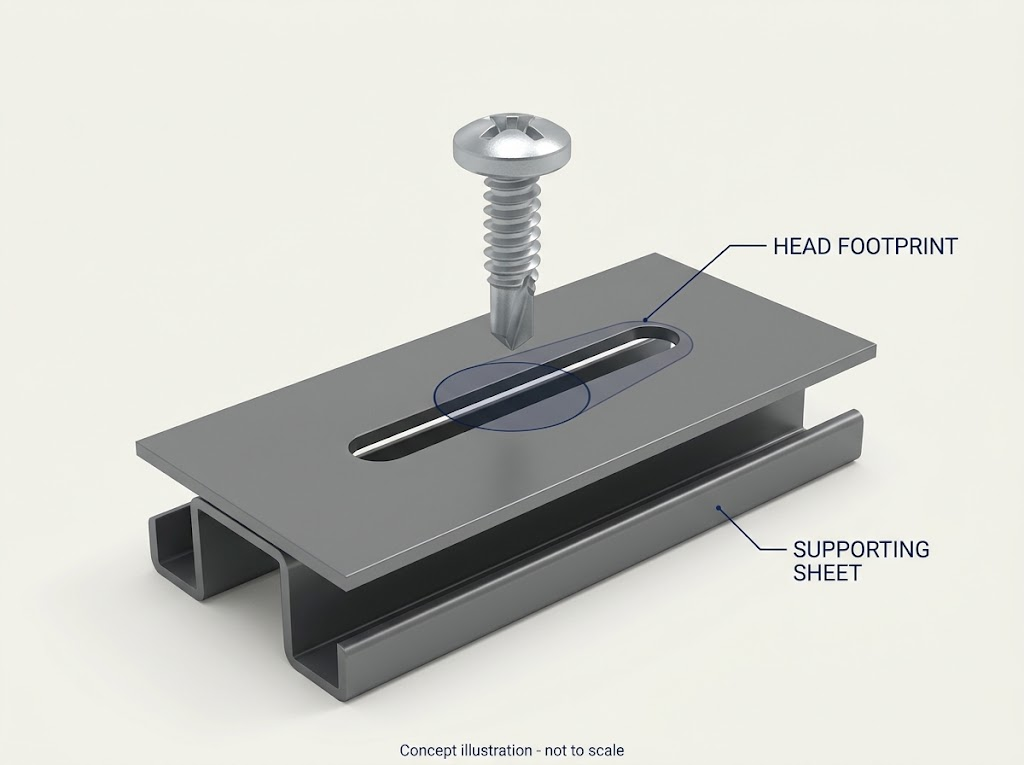
Consider the Truss head self drilling screw when a wider head area is useful and the components have enough space. The wider and lower profile form is usually related to the fastening of metal plates.
For example, a thin cover plate may have enough space to accommodate a wider head, while another design places screws next to ribs or grooves. In the second scenario, a wider head may conflict with the surrounding geometric shape. Check the actual parts instead of treating the Truss head as an automatic upgrade.
When the fastener passes through the clearance hole or groove, compare the opening with the actual bearing footprint on the head. Please ask the technical review personnel to confirm the required support and allowed movement. Head covering itself cannot establish an acceptable connection.
If the quotation indicates the modification of Truss head, obtain the drawing of the project. Manufacturers classify it as a specific head style; Don't assume its size matches another item simply sold as a Truss Head.
A wider head does not establish a stronger connection
Separate the two decisions: whether the head is suitable for connecting the components, and whether the complete fastening meets the connection requirements.
The wider profile of the Truss head does not create higher pull out, shear, or overall connection ratings. When performance is part of the specifications, it is required to provide relevant product or connection data. Actual screw, material, thickness, and joint arrangement are required, not just the head name.
Similarly, changing the drill bit cannot determine whether it is suitable for steel. ITW Buildex identifies drill bit types, drill tips, drilling and tapping capabilities, and maximum accessory thickness as separate product areas. When checking the self drilling screws of the metal plate, please independently match these parameters.
If the proposed alternative also changes the thread, point, material, or finish, please record these differences. This is no longer just a comparison of head shape.
Compare the proposed project with the conference
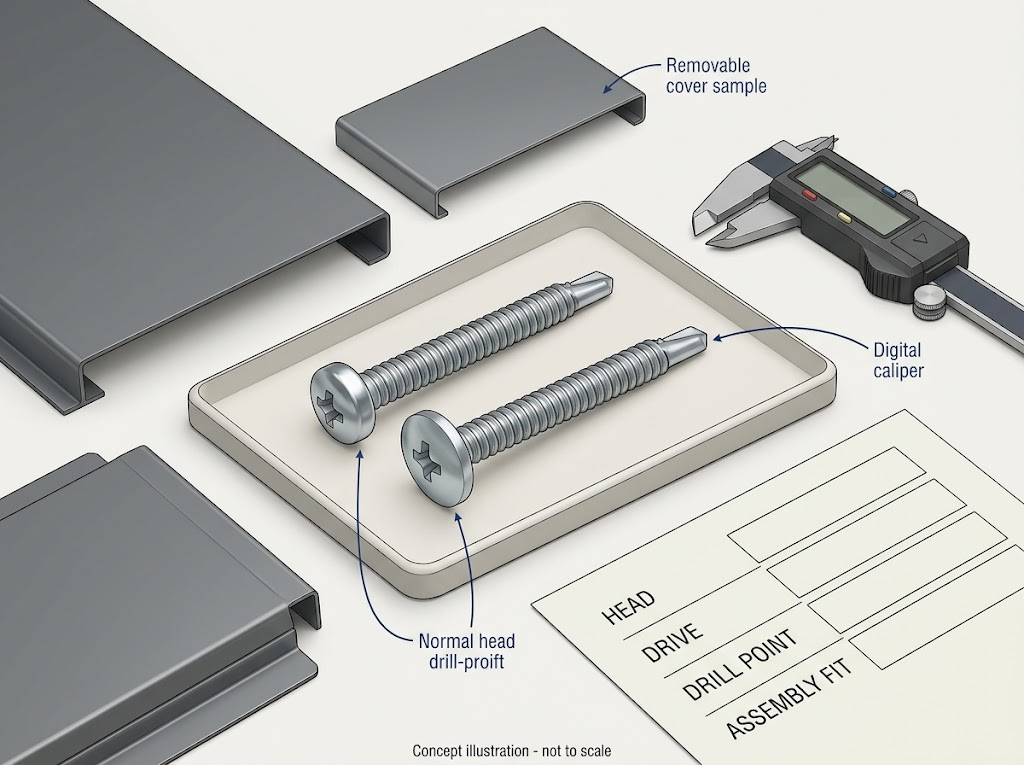
Use a short comparison table to determine the exact translation and Truss candidates.
| Check | What to record |
|---|---|
| Head envelope | Actual head diameter and maximum height from the product drawing |
| Seating surface | Hole or slot geometry, nearby bends, ribs and available bearing surface |
| Installed clearance | Space to adjacent parts, covers and moving components |
| Tool access | Specified drive, matching bit and access during installation or removal |
| Steel-side fastening | Screw diameter, thread, drill point and documented substrate range |
| Approval reference | Supplier part number, drawing revision and any required connection evidence |
If sample coordination inspection is required, please use the expected sheet metal parts and proposed fasteners. Check the headstock, contact with surrounding structures, cover gaps, and tool channels. Record project references and any observed interferences.
Keep the purpose clear: This will check if the assembly is suitable. It cannot replace the required performance evidence, nor can it be determined that every screw with the same head label is interchangeable.
Specify the header you need, not just the name
A useful survey may say:
Please provide a quotation for self drilling screws for the attached sheet metal components. This icon identifies the available headspace, hole geometry, and material thickness. Please provide the proposed part number, head size, driver, drill tip, and application information, and identify any differences from our reference project.
For duplicate orders, retain approved project and drawing references. If the supplier proposes to replace the head, please conduct a review based on the same assembly requirements before accepting the replacement.
Send ScrewTrade your assembly drawings or clear photos, material and thickness details, required head clearances, and size quantities. Ask what kind of flat head or Truss head self drilling screw configuration is available, and ask for corresponding size and application information before confirming the order.
Related News
Other news you might be interested in
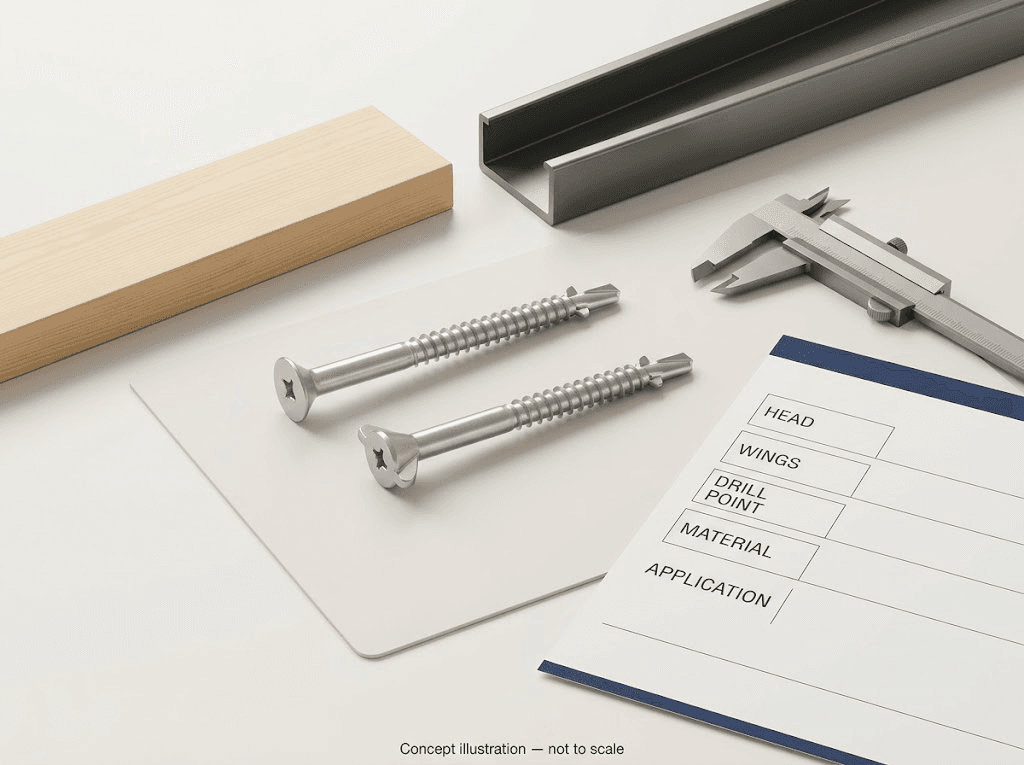
Winged Self-Drilling Screws for Wood-to-Steel: When Do You Need Them?
A screw can pass through a timber board and drill into steel without producing the connection you intended. If the threads engage the timber before the steel has been drilled and tapped, the board may not pull down tightly against the frame. Choosing another screw with the same diameter and a longer body does not necessarily address that problem.Winged self-drilling screws are one option for suitable wood-to-steel connections. Their wings create clearance through the timber before the screw engages the steel. The buying decision is whether that clearance is appropriate for your assembly—and whether the particular fastener is designed for the materials and thicknesses involved.
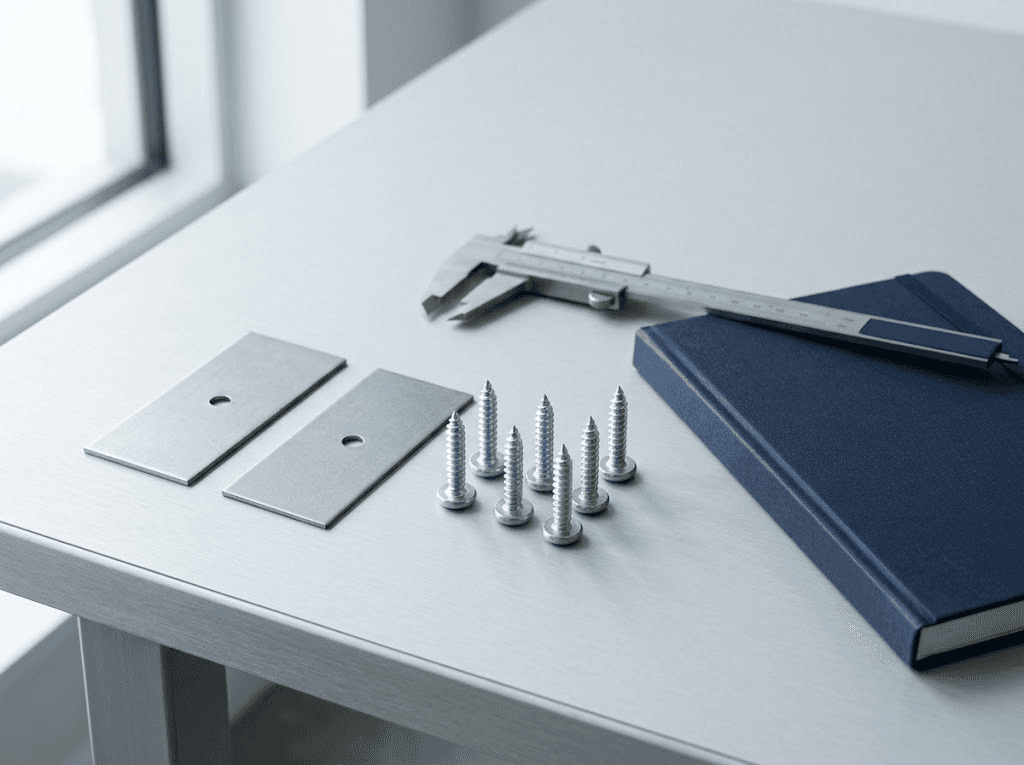
Self-Tapping Screws for Metal: A Pilot-Hole and Trial-Assembly Checklist
A self-tapping screw for metal is not fully specified by its diameter and length. Before placing a production order, the buyer needs to know whether the proposed screw, prepared hole, sheet material, and installation process work together.That becomes especially important when a sample is difficult to drive, a screw spins before the parts are clamped, or two suppliers recommend different pilot-hole sizes. The next step is to establish what each recommendation assumes and test the proposed combination under agreed conditions.This checklist helps purchasing, engineering, and quality teams prepare the application details, compare supplier recommendations, and record a trial assembly before approving bulk supply.
Want to know more?
Get in touch with us for more information about our services and products.