
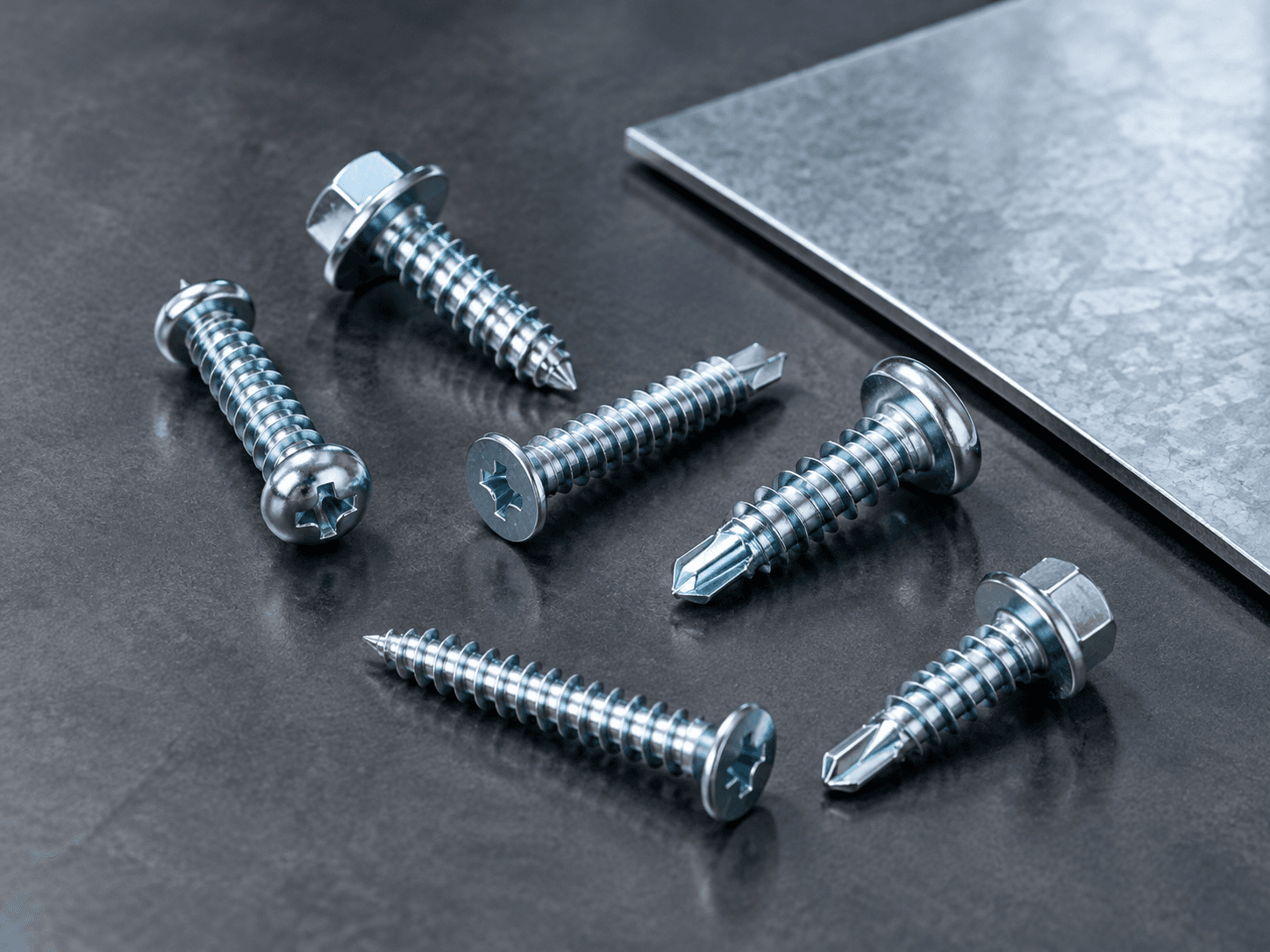
Self-Tapping Is a Category, Not a Specification

Han Congming
AuthorWith experience in screw and fastener manufacturing and sales, we operate our own production facility with stable large-scale capacity. We are specialists in self-drilling screws, drywall screws, chipboard screws, machine screws, bolts, and customized fasteners for construction and industrial applications.
How Thread-Forming, Thread-Cutting and Self-Drilling Screws Behave in Thin Steel
A typical request might read: "I need self-tapping screws for 1.2 mm steel."
The description sounds complete. It identifies a product family, a material and a thickness. It does not yet identify the joint. It does not say whether the screw will drill its own hole or enter a prepared one, whether it will form or cut a thread, how much material will remain engaged, or what installation method will be used.
Those details decide whether the screw clamps the assembly or spins, enlarges the hole, distorts the sheet and leaves the buyer with a sample that looked correct on paper but failed on the line.
That is why "self-tapping" is a category, not a specification. The term is useful, but it is not specific enough to approve a screw for a thin-steel joint.
The Question Behind the Product Name
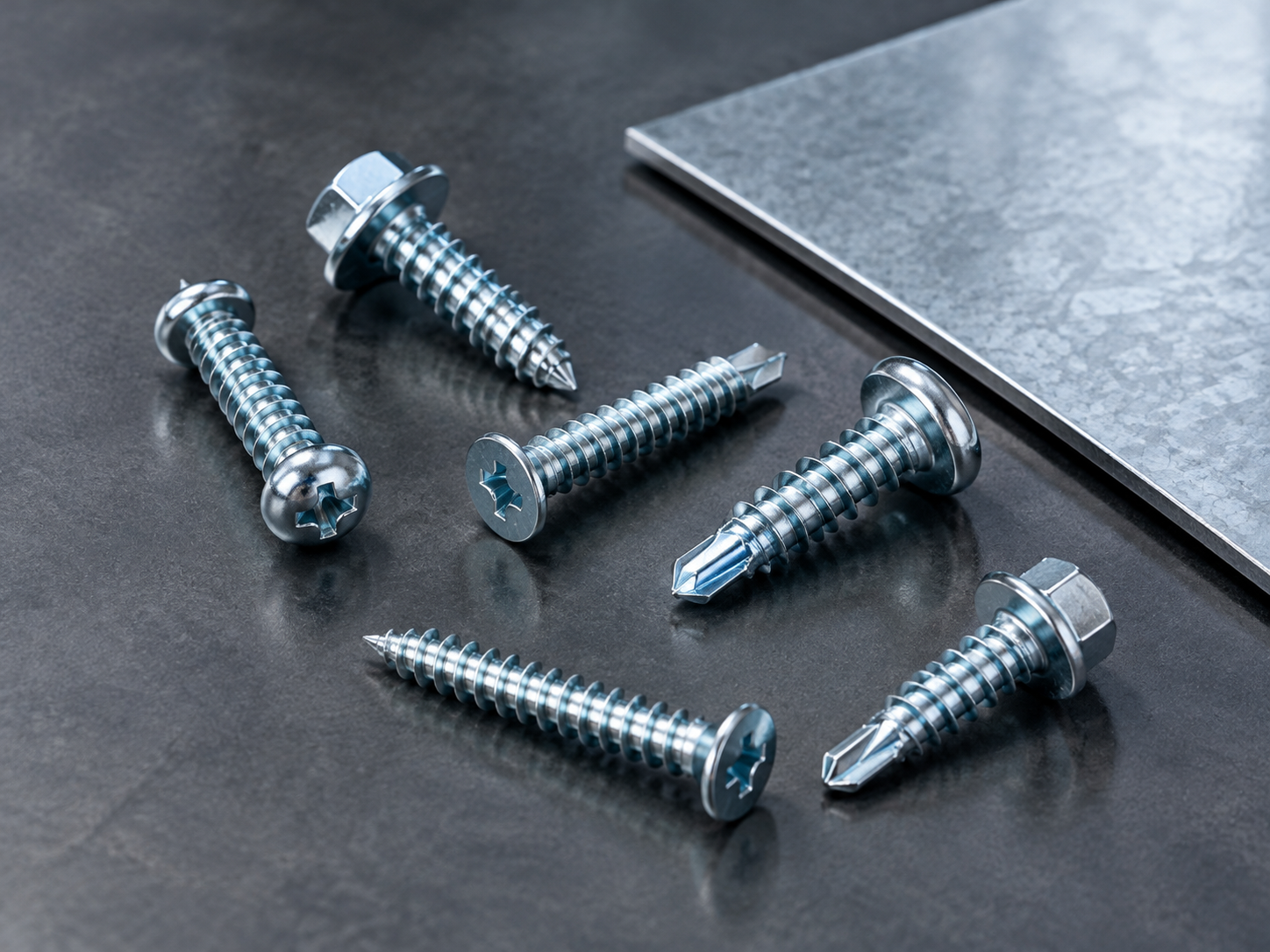
In everyday fastener language, "self-tapping screw" is often used as an umbrella term. It may appear in a catalog heading, a buyer's email, a customs description or a workshop conversation. Sometimes it refers to a screw that forms a thread in a prepared hole. Sometimes it is used for a self-drilling screw that creates its own hole first. The same label can therefore sit above products that behave very differently during installation.
The distinction is not academic. A screw that creates a thread by displacing metal needs a different starting condition from one that cuts a thread. A self-drilling screw has to manage the drilling stage before the thread can do useful work. If the screw is selected by name alone, the buyer may never ask which of these mechanisms is being supplied.
For a thin-steel assembly, the practical question is not simply:
Which self-tapping screw should I order?
It is:
Will this screw create or enter a hole of the right size, form a usable thread, and clamp the joint without stripping, enlarging the hole or distorting the sheet?
That question requires more than a category name. It requires a defined screw, a defined hole and a defined assembly.
Three Ways to Create a Threaded Joint
The terminology used across catalogs and industries is not perfectly uniform. Even so, three mechanisms are worth separating when a thin-steel joint is being reviewed.
Thread-forming screws
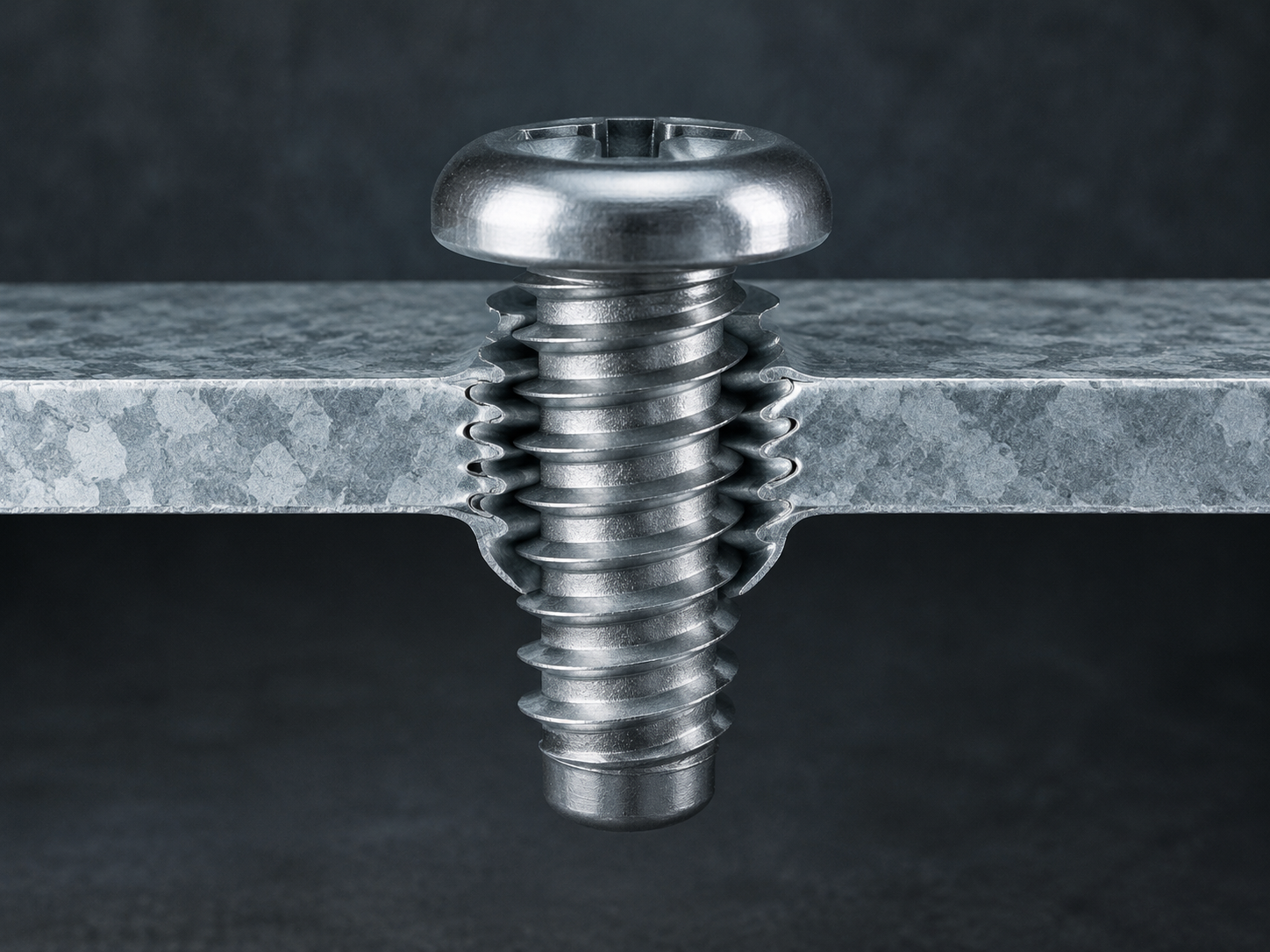
A thread-forming screw creates the mating thread by displacing material in the receiving sheet. In thin-sheet metal applications, it normally starts in a prepared hole. The screw does not simply pass through; its thread geometry presses and reforms the material around it.
That forming action is the source of both its advantage and its risk. If the hole, material and thread geometry work together, the screw can produce a tight connection without cutting chips. If the prepared hole is wrong, the sheet is too thin for the selected thread, or the installation is poorly controlled, the same action can enlarge the hole, raise material around the joint or leave too little thread engagement.
Calling this a "self-tapping screw" does not tell the buyer which thread form is being used, what starting hole it expects or how the joint will behave after repeated assembly.
Thread-cutting screws
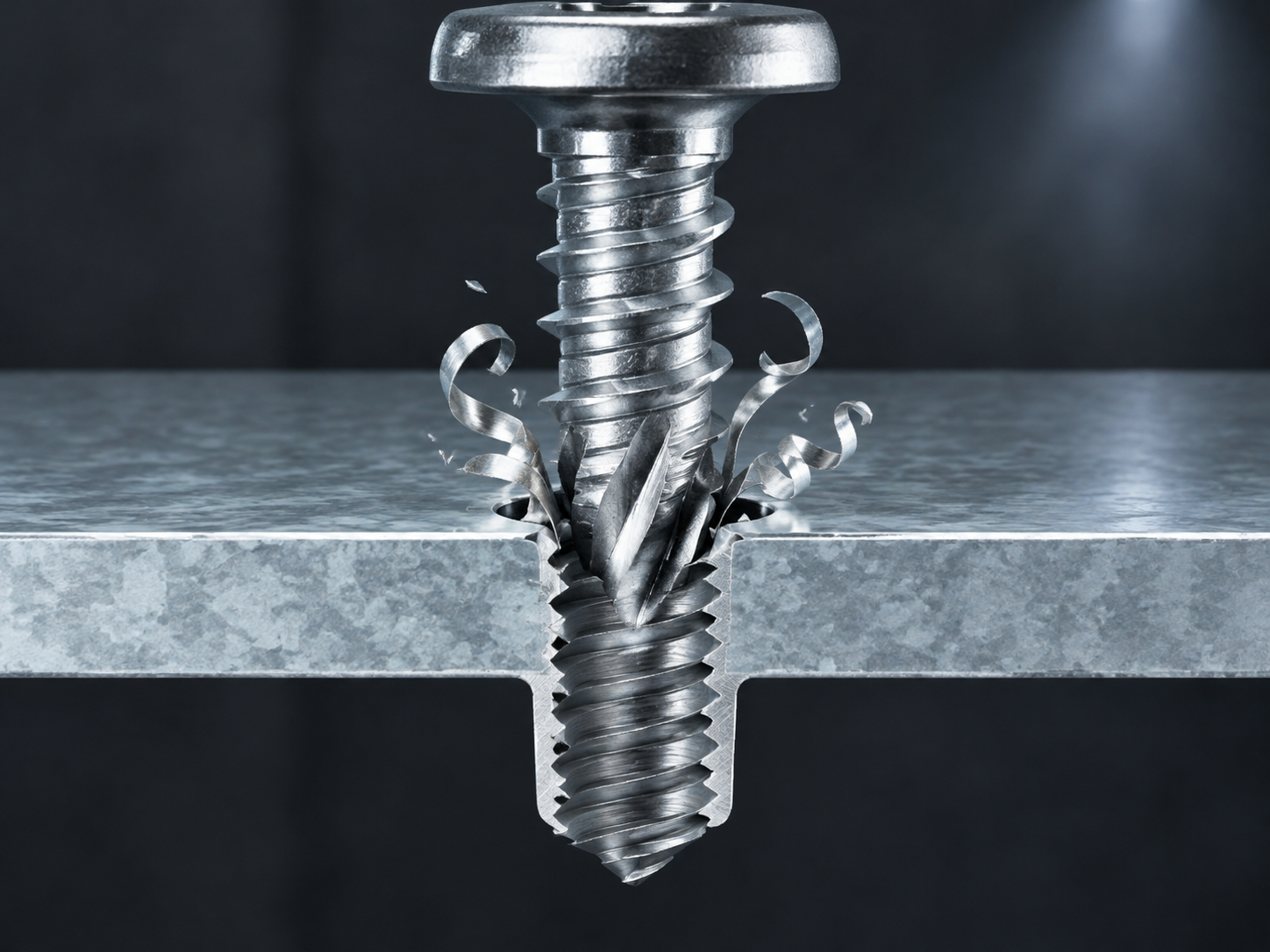
A thread-cutting screw removes material as it forms the mating thread, using cutting edges or flutes in its design. It also generally works from a prepared hole in thin-sheet metal. The distinction matters because the screw is not relying on the same displacement behavior as a thread-forming design.
That difference can affect chip formation, installation feel, hole condition and the way a stripped joint looks after failure. It also affects how the screw should be specified. A buyer who substitutes a thread-cutting product for a thread-forming product solely because both are sold as "self-tapping" has not demonstrated that the joint is equivalent.
Self-drilling screws
A self-drilling screw has a point designed to drill a hole in a suitable substrate before its thread engages. In the right application, it removes a separate drilling step. That convenience can also hide a second selection problem: the drill point has to suit the material and thickness, and the thread still has to produce adequate engagement in the receiving material.
The point and the thread are related, but they are not the same decision. A point that can penetrate a certain steel thickness does not automatically prove that the thread will clamp the assembly correctly. Nor does a thread that works in a prepared hole prove that the same screw can drill the intended sheet.
This is where the language becomes especially misleading. Self-drilling describes how the hole may be created. It does not describe the complete thread-forming or thread-cutting behavior that follows, and it does not replace the joint specification.
The Standards Separate Features Too
International standards help define individual parts of the product. ISO 1478 covers tapping screw threads, while ISO 2702 covers mechanical and physical properties for heat-treated steel tapping screws. Those standards are necessary references, but neither one is a complete application specification for a particular sheet, hole and assembly.
A thread standard can define thread geometry; it cannot know whether the buyer's punched hole is producing the intended engagement. A property standard can define mechanical requirements; it cannot decide whether the selected point is appropriate for the actual steel stack. The missing link is the joint.
This is why two products can both meet a set of dimensional requirements and still perform differently. The buyer has to connect the standard, the product drawing and the application rather than treating a category label as the final answer.
Why the Same Screw Can Spin, Strip or Distort the Sheet
In a thin-steel joint, the material available for thread engagement is limited. A small change in hole size, thread geometry, sheet thickness or installation control can therefore change the result.
A screw that spins before the parts are clamped may be described as "too small" or "too soft." Sometimes the more useful observation is that too little material is engaging the thread. The hole may be too large, the thread may not match the prepared opening, the sheet may have deformed, or the screw may have reached the end of its useful clamping range. Increasing the tool setting is not a diagnosis. It can turn a marginal joint into a damaged one.
A panel that bulges around the fastener may be showing the result of displaced material, insufficient support, a hole condition that does not suit the screw, or installation force that is too high. The fastener may be part of the cause, but the visible screw alone does not explain the joint.
A joint that strips during removal or refitting raises another question: the first installation may have produced a usable thread, but the assembly may not have been specified for repeated service. "Self-tapping" does not mean "equally suitable for every number of assembly cycles." If maintenance access matters, that requirement belongs in the selection review.
These are different failure modes. They should not be collapsed into one instruction to "use a better screw."
A Diameter and Length Are Not a Product Definition
Two screws can share a nominal diameter and length and still differ in major diameter, thread pitch, thread form, point geometry, head bearing area, material and coating. For a thin-sheet joint, those differences can affect starting behavior, engagement, clamping and the condition of the sheet after installation.
That is why a buyer should not treat a nominal size as a substitute approval. The same applies to a pilot-hole chart. A chart can be a useful starting point for the product and material it was written for, but its recommended hole size should not be transferred to another supplier's screw without confirming that the screw design and application assumptions are equivalent.
EJOT's SHEETtracs guidance illustrates the point: its pre-hole recommendation is calculated from the materials and sheet thicknesses being joined, and its tightening recommendation also considers screw surface conditions. The published recommendation belongs to that fastening system. It is not a universal hole chart for every self-tapping screw.
Point Strength Is Not the Same as Joint Quality
Self-drilling screws make the distinction especially clear. EJOT's assembly guidance notes that a screw with higher drilling performance is intended for greater component thickness. If that point is used in a thinner application, the drill point and resulting hole can become too large, leaving insufficient flank coverage and reducing resistance to unintended loosening.
In other words, a more aggressive point is not automatically a better point. It may solve penetration in one stack and create a poorer connection in another. The buyer should not ask only, "Will it go through?" The next question is, "What kind of hole does it leave, and what thread engagement remains?"
The same principle applies to installation. A tool that drives the screw quickly can still produce a poor joint if the screw is misaligned, the clutch or depth control is unsuitable, or the operator continues driving after the head has seated. Tool settings and installation instructions must be tied to the exact product and assembly, not inferred from a generic category.
What Actually Needs to Be Specified
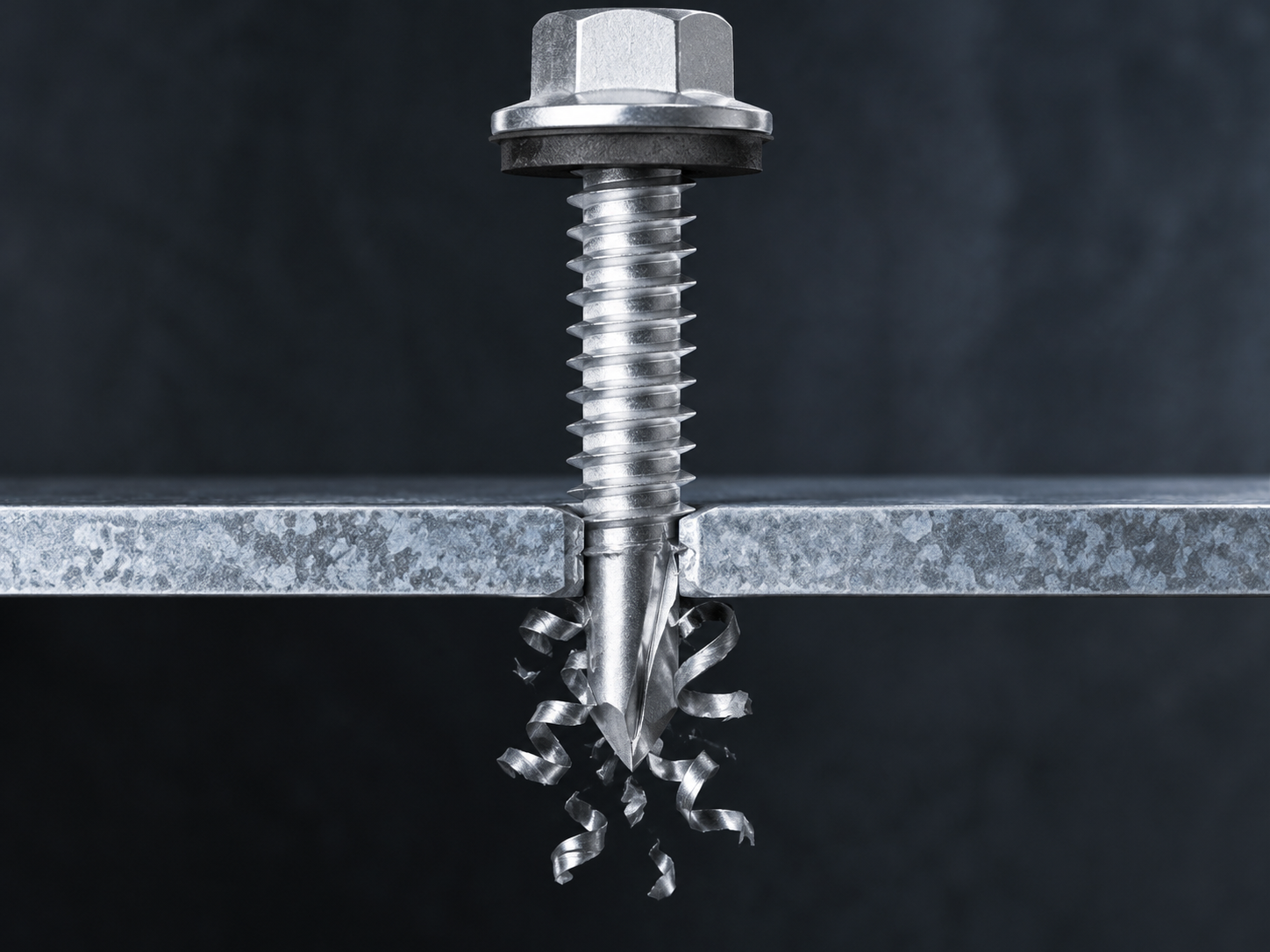
For a thin-steel joint, the useful specification starts with the receiving material and works outward.
First, identify the material and thickness of every layer. Record whether the screw will pass through a clearance layer, clamp a gap, or form its thread in a particular sheet. A total stack thickness alone can hide which layer is doing the work.
Second, define how the hole will be made. Is it punched, drilled, pierced or created by the screw's own point? Record the finished hole condition, not only the tool diameter. Burrs, taper and deformation can matter.
Third, identify the screw's thread mechanism and geometry. Ask for the exact item or drawing, not only the family name. Confirm the point, thread, nominal and major diameter, pitch, length, head and drive where they affect the joint.
Fourth, define the installation method. The tool, drive, alignment, support behind the sheet and any agreed control method should match the product being evaluated. A sample that only works with an uncontrolled hand tool is not yet a production specification.
Fifth, state the service condition. Will the joint be exposed to vibration, weather, repeated removal, or a safety-related load? Those requirements may call for technical review beyond a basic dimensional match.
None of these fields is made unnecessary by the phrase "self-tapping." Each one narrows the category into something that can be quoted, sampled and accepted.
The Buyer's Conversation With the Supplier
The most useful supplier conversation does not begin with a request to recommend "the best self-tapping screw." It begins with a drawing or clear description of the joint, the material and thickness of each layer, the hole preparation, the intended tool and the current sample or specification.
The supplier should be able to identify the exact product being offered and explain:
- whether it forms or cuts the mating thread, or creates its own hole with a drill point;
- what starting-hole condition the recommendation assumes;
- which material and thickness range the recommendation covers;
- how the point and thread are intended to work together;
- what installation guidance applies to that item;
- which claims are supported by product-specific data and which still require trial approval.
If those answers are missing, the buyer does not yet have enough information to treat two quotations as equivalent. A lower price or a familiar product name does not close that gap.
A Better Way to Read the Category
"Self-tapping" remains a useful way to describe a broad family of screws that create their own mating thread. It becomes a poor specification when it is used to skip the questions that determine whether the connection will work.
The next time a thin-steel application is described only as "self-tapping," slow the decision down enough to separate four things: the material being joined, the hole being used, the thread being formed or cut, and the installation method being repeated. That is the information that turns a catalog category into a manufacturable, inspectable joint.
For a closer look at prepared-hole trials, read Self-Tapping Screws for Metal: A Pilot-Hole and Trial-Assembly Checklist. For the drilling side of the decision, see Self-Drilling Screw Drill Point Chart: Matching Screw Points to Steel Thickness.
If you are evaluating a self-tapping or self-drilling screw for a specific metal joint, send the drawing or cross-section, the material and thickness of each layer, the hole condition, the current screw reference and the installation method through the ScrewTrade contact page. The useful next step is to confirm the exact product and application conditions, not to choose a label.
Frequently Asked Questions
Are self-tapping and self-drilling screws the same?
No. Self-tapping is a broad commercial term for screws that create a mating thread. Self-drilling screws have a point designed to drill their own hole. A self-drilling screw may still have a particular thread design, and the word "self-tapping" alone does not tell you what that design is.
Do self-tapping screws for metal need a pilot hole?
It depends on the screw design. Thread-forming and thread-cutting screws commonly work from a prepared hole in thin-sheet metal. Self-drilling screws are intended to create their own hole. The specific product data and installation instructions determine the starting condition.
Which type is better for thin steel?
There is no universal answer from the category name. The decision depends on sheet thickness and material, hole preparation, thread engagement, clamping requirements, installation control and service conditions. A screw that works in one thin-steel joint may be unsuitable in another.
Can I replace one self-tapping screw with another of the same diameter and length?
Not without confirming the thread, point, material, head, coating and application assumptions. Nominal diameter and length do not describe the complete fastening behavior, and a substitution should be treated as a new product decision rather than a naming exercise.
Related News
Other news you might be interested in

The 2027 Fastener Demand Map: Data Centers, Energy and Industrial Projects
The 2027 fastener outlook is not a broad recovery. It is a map of project pockets—and the strongest pockets are data centers, energy and selected industrial work.The direction is already visible in late-2026 company results. Hilti reported local-currency sales growth of 5.9% in the first eight months of 2026, with double-digit growth in the Americas and Asia Pacific, while describing traditional construction as soft. LISI’s aerospace sales rose 14.3% in the first nine months, but its automotive sales fell 5.2%. Bossard’s third-quarter sales grew 12%, helped by data-center demand in the Americas and semiconductor and electronics expansion in Asia.
What Is a Bi-Metal Screw and Why Does Aluminum Roofing Need One?
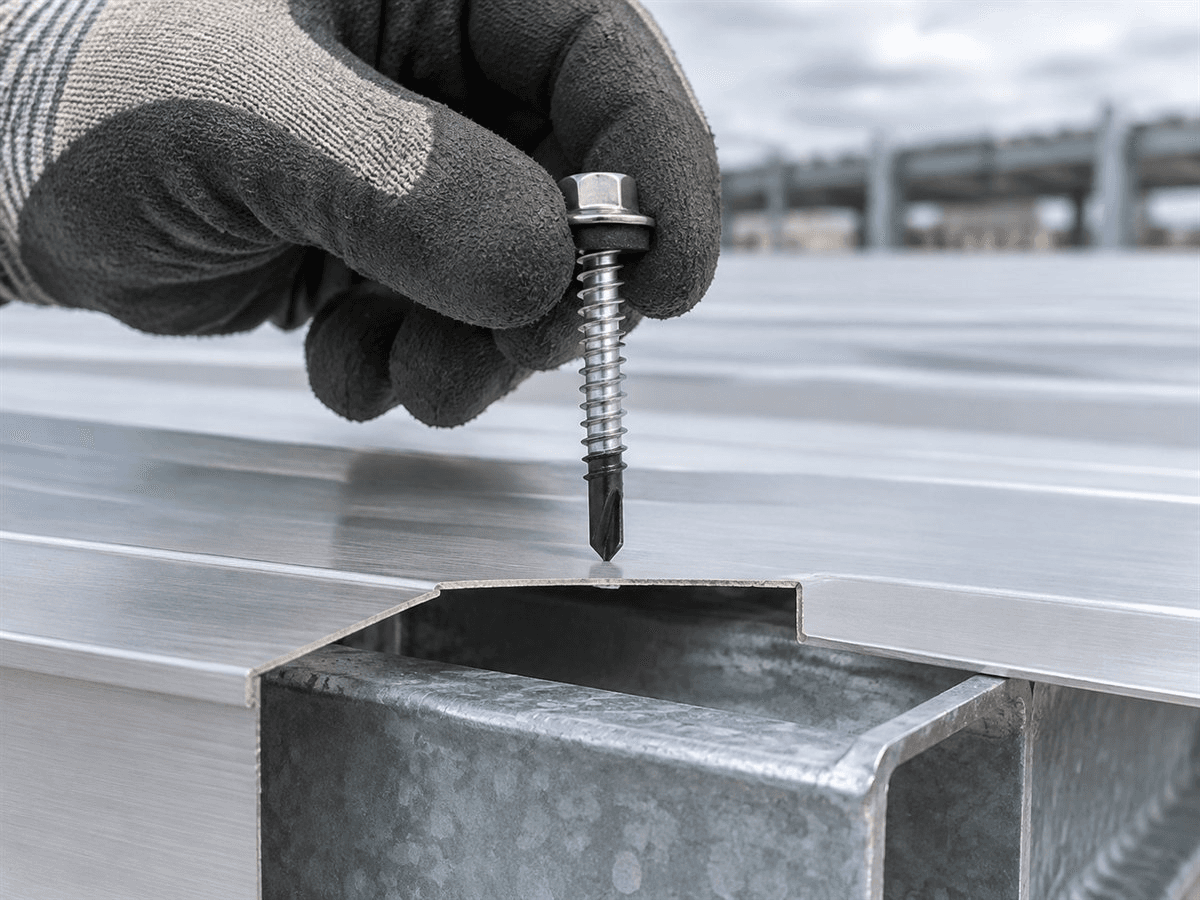
a bi-metal screw is one fastener made from two metals with different jobs. In roofing, the common construction is a stainless steel head and body with a hardened carbon steel drill point and lead thread. The stainless section resists corrosion on the exposed roof; the hardened point drills the steel purlin, girt or frame. Aluminum roofing often calls for this combination when an aluminum panel is fixed directly to a steel substructure, because the panel is soft and corrosion-resistant, but the screw still has to drill steel and survive the weather. Bi-metal is not a guarantee: the stainless grade, point capacity, coating, washer and aluminum-to-steel detail still have to be specified.
Want to know more?
Get in touch with us for more information about our services and products.