
Strategic Sourcing of Self-Drilling Screws: Mitigating Risks, Ensuring Compliance, and Maximizing ROI for Global Manufacturers

Han Congming
AuthorWith experience in screw and fastener manufacturing and sales, we operate our own production facility with stable large-scale capacity. We are specialists in self-drilling screws, drywall screws, chipboard screws, machine screws, bolts, and customized fasteners for construction and industrial applications.
Introduction: The Growing Complexity of Fastener Sourcing
With the industrial fasteners market projected to reach $161.8 billion by 2034, sustained demand from construction, automotive, and renewable energy puts a spotlight on component reliability. The self-drilling screw plays a pivotal role—but sourcing it becomes more challenging as applications scale. B2B buyers face inconsistent batch quality, supply chain disruptions, and compliance gaps that surface when fasteners deviate from ISO fastener standards or DIN 7504. Even specialists in mature clusters (brass manufacturers near Noida, for instance) grapple with material purity and coating adhesion—risks that directly mirror those in self-drilling screw supply chains. This article outlines a strategic framework to balance cost, quality, and reliability in fastener procurement, equipping importers, distributors, and OEMs to turn sourcing into a competitive advantage.
Why Self-Drilling Screw Quality Is a Non-Negotiable Cost Driver
Self-drilling screws—commonly called tek screws or drill point screws—eliminate pre-drilling, dramatically cutting labour time. That advantage collapses the moment the drill point fails. A single subpar batch of metal to metal screws can trigger assembly line shutdowns, warranty claims, and erosion of customer trust. Typical failures include point breakage from inadequate heat treatment, insufficient case hardness, and coating delamination that yields red rust early in salt spray tests. For roofing screws requiring Ruspert coated or HDG finishes, the coating system must deliver long-term corrosion protection—Ruspert coatings regularly surpass 1,000 hours in salt spray testing and are critical for exposed metal building envelopes. Treating quality as a verification step, not an assumption, is the most effective way to protect your downstream cost structure.
Key Technical Specifications for B2B Self-Drilling Screw Sourcing
Drill point selection is critical: a #5 point penetrates steel up to 0.5″ thick, while a #3 suits thinner gauges and wood to metal applications. Over‑specifying wastes cost; under‑specifying invites field failure. For dimensional and mechanical consistency, always cross‑reference supplier data with the relevant ISO fastener standard—for example, ISO 10642 governs hexagon head screws and ensures interchangeability. Our team can assist with specification matching, guiding you to the correct point rating, thread geometry, and finish.
Material and coating decisions directly shape installed cost. Carbon steel screws with zinc plated or yellow zinc finishes work well indoors and in mild conditions; stainless steel screws (grades 304 or 410) extend service life outdoors and in corrosive settings. Logistics matter as much as specs: when planning a bulk screw order, verify lead times, MOQ, OEM screw packaging capabilities, and whether the supplier offers mixed container loading (LCL/FCL) to move multiple SKUs cost‑effectively. These details turn a transactional purchase into a scalable supply partnership for a screw distributor or wholesaler.
Product Portfolio for High-Volume, High-Reliability Supply
Predictable procurement demands a portfolio engineered for repeatable performance, not mere commodity availability. The Hexagon Head Self Drilling Screw ensures batch‑to‑batch consistency in steel‑to‑steel fastening—vital when you're deploying thousands of units across construction sites. For roofing and cladding, where corrosion resistance is mandatory, the Ruspert Hex Washer Head Self Drilling Screw delivers a stable installation window and controlled procurement cost, ideal for a screw importer servicing regional distribution. Where aesthetics and seal integrity count, PVC Hex Cap Self-Drilling Screws provide weather resistance and reliable driving without callbacks.
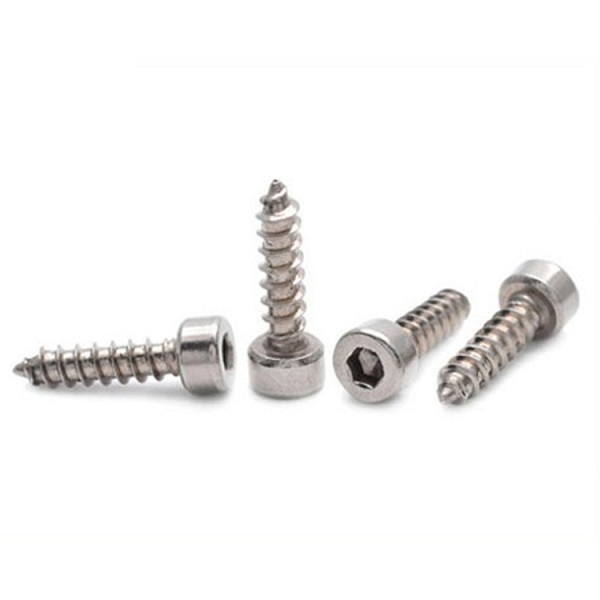
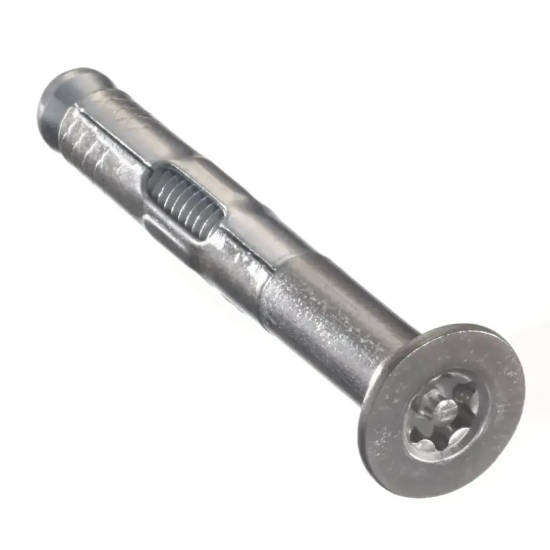
Beyond self‑drillers, complementary anchors raise the value of your total offering. The Stainless Steel Countersunk Sleeve Anchor securely fastens concrete and masonry, backed by complete export documentation that meets global contractor expectations. For equipment OEMs, the Stainless Steel Hexagon Socket Cylindrical Head (STS) combines high tensile strength with streamlined assembly. The Countersunk Sleeve Anchor Yellow Zinc Plated balances durability and scalability, supporting demanding schedules and large‑contract supply for professional distribution. Each product reinforces a sourcing strategy where technical integrity and inventory velocity work hand in hand.
Mitigating Supply Chain Risks Through Strategic Sourcing
Relying on a single China fastener supplier for your entire B2B screw sourcing program exposes you to geopolitical tariffs, raw material swings, and logistics disruptions. For high‑frequency SKUs, qualify at least two capable producers per category—one specialist in carbon steel screws and another with proven stainless steel capability. This builds resilience without duplicating overhead. Alongside diversification, mandate export documentation: certificates of origin, material test reports, and packing lists that satisfy customs requirements prevent costly port delays.
Verification goes beyond paperwork. Our process embeds integrated production and QC in every run, making cold heading, thread rolling, and heat treatment records auditable. We routinely supply performance testing reports—72‑hour salt spray and tensile data included—so you know batch characteristics before the container arrives. Multi‑supplier qualification combined with transparent quality evidence upgrades mixed container loading from a cost tactic to a strategic lever, lowering per‑unit freight while sustaining technical confidence across every SKU.
Maximizing ROI: Leveraging Data and Long-Term Partnerships
The industrial fasteners market is headed from $88.39 billion in 2023 to over $130 billion by 2031. Buyers who lock in reliable supply now gain price insulation during upward cycles. Companies that invest in technical qualification—auditing drill point geometry and tensile strengths—routinely cut field failure rates by up to 30%, dramatically lowering total cost of ownership. Those savings compound when procurement moves from spot buys to structured agreements with a fastener manufacturer that can rationalize SKUs and secure priority allocation during peak construction seasons.
Our long‑term partnership model embeds price stability in bulk screw orders, OEM screw packaging with your branding, and customized labeling for every channel. Backed by proven delivery execution, we help screw distributor partners and OEMs shorten planning cycles and minimize inventory buffers. Whether your need is for hex washer head screws, roofing screws, or mixed containers of self‑tapping screws and anchors, our data‑driven model aligns every material, coating, and lead time decision with your margin and growth goals.
Conclusion: Partner with a Supplier That Treats Quality as a Standard
Selecting a self‑drilling screw supplier is not a price decision—it's a choice about predictability, compliance, and long‑term partnership. Our capabilities include ISO‑compliant production, Ruspert and HDG coating systems, and flexible export logistics tailored to your inventory model (FCL or LCL). Whether you're placing your next bulk screw order or testing stainless steel and metal‑to‑metal screws in your application, we make it straightforward to move forward with confidence.
Contact us now to discuss your requirements and request performance samples. Let's turn sourcing complexity into consistent, compliant supply—starting today.
Related News
Other news you might be interested in

The 2027 Fastener Demand Map: Data Centers, Energy and Industrial Projects
The 2027 fastener outlook is not a broad recovery. It is a map of project pockets—and the strongest pockets are data centers, energy and selected industrial work.The direction is already visible in late-2026 company results. Hilti reported local-currency sales growth of 5.9% in the first eight months of 2026, with double-digit growth in the Americas and Asia Pacific, while describing traditional construction as soft. LISI’s aerospace sales rose 14.3% in the first nine months, but its automotive sales fell 5.2%. Bossard’s third-quarter sales grew 12%, helped by data-center demand in the Americas and semiconductor and electronics expansion in Asia.

What Is a Bi-Metal Screw and Why Does Aluminum Roofing Need One?
a bi-metal screw is one fastener made from two metals with different jobs. In roofing, the common construction is a stainless steel head and body with a hardened carbon steel drill point and lead thread. The stainless section resists corrosion on the exposed roof; the hardened point drills the steel purlin, girt or frame. Aluminum roofing often calls for this combination when an aluminum panel is fixed directly to a steel substructure, because the panel is soft and corrosion-resistant, but the screw still has to drill steel and survive the weather. Bi-metal is not a guarantee: the stainless grade, point capacity, coating, washer and aluminum-to-steel detail still have to be specified.
Want to know more?
Get in touch with us for more information about our services and products.