
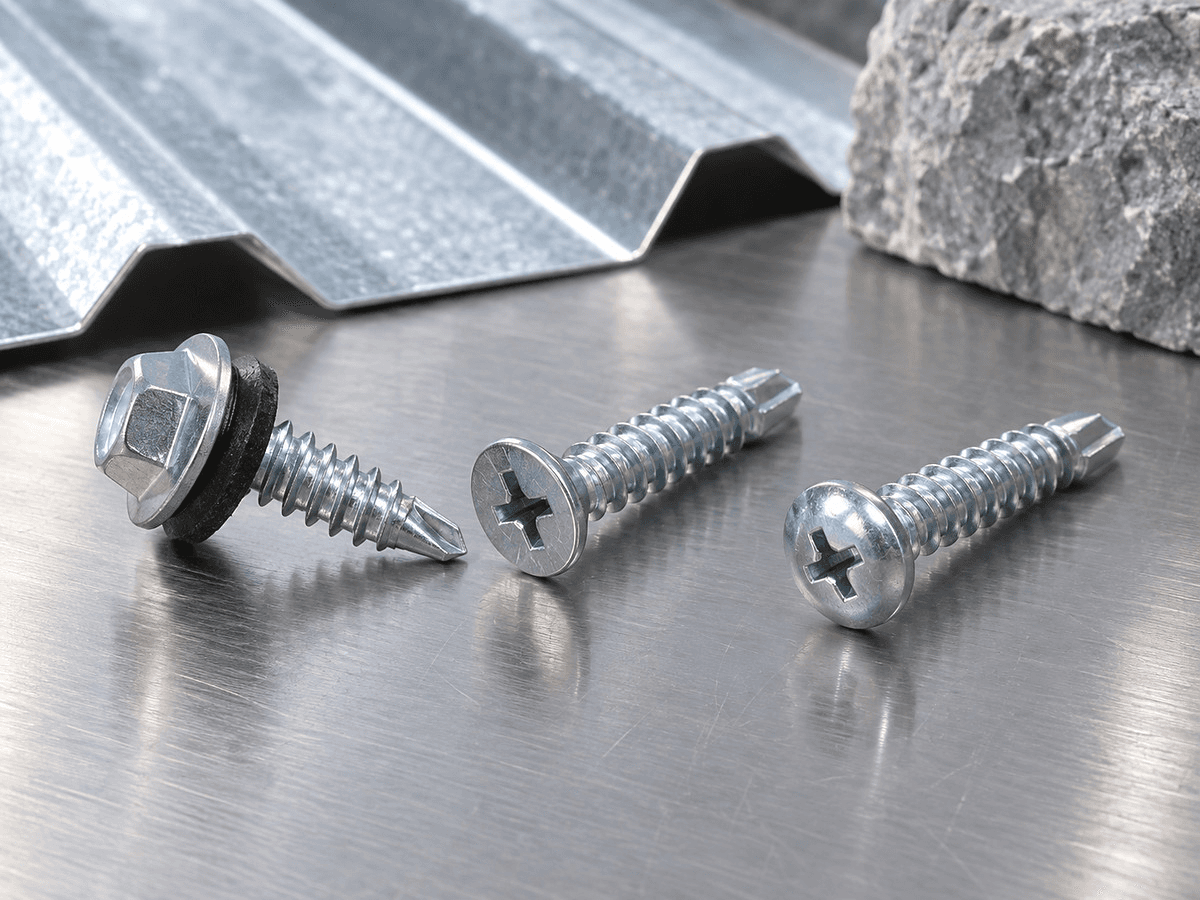
410, 304, atau 316? Memilih Sekrup Self-Tapping Baja Tahan Karat Berdasarkan Aplikasi

Han Congming
PenulisKami berpengalaman dalam produksi dan penjualan sekrup serta pengencang, dengan fasilitas produksi sendiri dan kapasitas produksi skala besar yang stabil. Kami adalah spesialis sekrup bor mandiri, sekrup drywall, sekrup papan partikel, sekrup mesin, baut, dan pengencang khusus untuk aplikasi konstruksi dan industri.
Most buyers start with the grade name. They ask whether 410 is strong enough, whether 304 is good enough for outdoor use, or whether 316 is worth the extra cost.
Those are reasonable questions, but they are not the first decision. A stainless steel self-tapping screw has to do two jobs at once: form or cut a usable thread, and survive the environment around the joint. The best grade for one job is not automatically the best grade for the other.
Grade 410 is a martensitic stainless steel that can be hardened. Grades 304 and 316 are austenitic stainless steels that cannot be hardened by heat treatment. They are different families, not three steps on the same ladder. A 410 screw may be the practical choice for a dry indoor metal assembly, while a 316 screw may be the minimum sensible choice for a coastal façade. Reversing those choices can create either unnecessary cost or a corrosion callback.
This guide separates the grades, then matches them to the applications buyers actually quote: metal roofing, steel framing, HVAC, architectural metal, food and pharmaceutical equipment, coastal projects, solar mounting, wood structures, and general indoor assemblies.
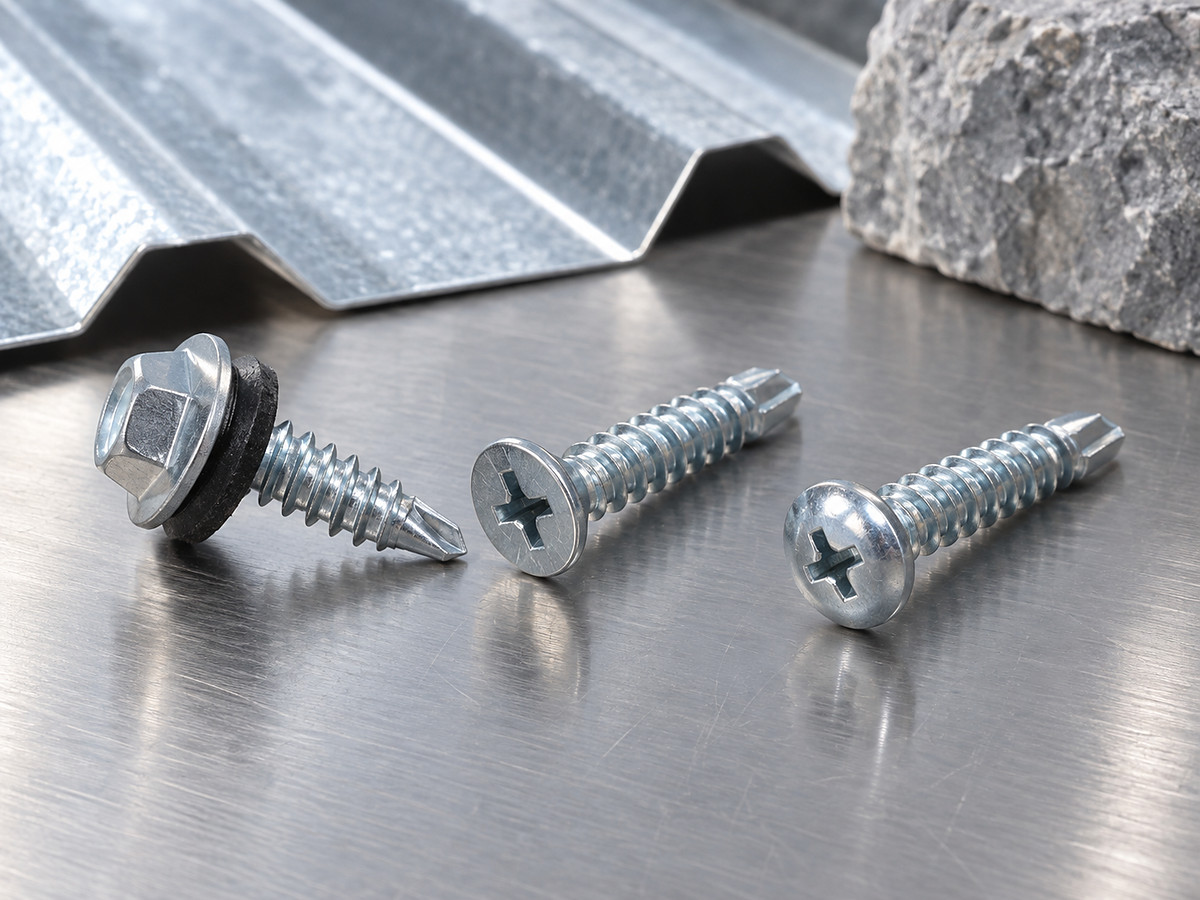
Short answer
| Application | Start with | Why | Confirm before ordering |
|---|---|---|---|
| Dry indoor metal assembly, thread-forming or thread-cutting into sheet steel, cost-sensitive | 410 | Hardenable martensitic grade; adequate corrosion resistance in controlled environments | Point/thread design, substrate thickness, coating, and whether moisture or chemicals will be present |
| General outdoor and inland architectural metal, HVAC, food equipment, kitchen equipment | 304 | Good general corrosion resistance; widely used for metal roofing, HVAC components, food processing, and kitchen equipment | Chloride exposure, cleaning chemicals, crevices, passivation, and washer material |
| Coastal, marine, swimming pool, wastewater, chemical, pharmaceutical, or frequent washdown | 316 | Molybdenum addition improves resistance to chlorides compared with 304 | Temperature, chloride concentration, crevice details, maintenance, and whether a higher alloy is needed |
| Wood, decking, fencing, playgrounds | 304 or 316 | Corrosion resistance plus a wood-appropriate thread | Wood species, preservative treatment, moisture, and coastal exposure |
| Aluminum or dissimilar-metal assembly | 304 or 316, with isolation | Stainless fasteners can form a galvanic couple with aluminum or coated steel | Washer, coating, drainage, contact area, and project engineer approval |
The table is a starting point, not an approval. The exact screw, head, washer, substrate, and installation method still decide whether the joint works.
First, separate the grade from the screw type
The phrase “self-tapping screw” is used loosely in catalogs and purchase orders. Sometimes it means a screw that forms a thread in a prepared hole. Sometimes it means a thread-cutting screw. Sometimes it is used for a self-drilling screw that makes its own hole before the thread engages.
That ambiguity matters because the grade and the screw mechanism solve different problems.
- Grade 410 is chosen mainly for hardness. It is martensitic, magnetic, heat-treatable, and has limited weldability. It is commonly used for fasteners and hardware where strength or wear resistance matters, but its corrosion resistance is lower than that of 304 or 316.
- Grade 304 is austenitic, cannot be hardened by heat treatment, and is non-magnetic in the annealed condition. It offers good general corrosion resistance and is widely used for metal roofing, HVAC components, food equipment, kitchen equipment, and architectural metal.
- Grade 316 is also austenitic, but contains molybdenum. That addition improves resistance to chlorides. It is used for seawater components, swimming pool equipment, chemical processing, pharmaceutical equipment, food processing, water treatment, and other aggressive environments.
In the fastener trade, 304 is commonly called A2 and 316 is commonly called A4. Those designations come from the ISO 3506 system for stainless steel fasteners. Grade 410 is not an A2 or A4 grade. If a drawing specifies A4, a 304 screw is not a substitute. If a drawing specifies 410 for hardness, a 316 screw is not automatically equivalent either.
If the assembly is welded, ask whether 316L is required. Its lower carbon content is intended to reduce sensitization risk, but a standard 316 fastener is not automatically 316L. Confirm the grade on the certificate, not only the A4 label.
Two practical warnings follow.
First, do not use a magnet to identify the grade. Grade 410 is magnetic, but 304 and 316 are non-magnetic only in the annealed condition; cold working can make them slightly magnetic. A magnet test cannot distinguish 304 from 316, and it cannot confirm heat treatment or corrosion resistance.
Second, the same grade name does not mean the same product. Two 304 self-tapping screws can have different thread forms, points, head bearing areas, washers, surface finishes, and heat treatments. The grade is one line in the specification, not the whole specification.
If the application is a thin-steel joint and the hole condition is still unclear, the separate guide Self-Tapping Is a Category, Not a Specification explains thread-forming, thread-cutting, and self-drilling behavior in more detail.
The three grades at a glance
Grade 410: hardness first, corrosion second
Grade 410 is a martensitic stainless steel with about 11.5–13.5% chromium. It can be hardened and tempered, which is why it appears in fasteners, pump shafts, turbine blades, cutlery, and other products where hardness or wear resistance is useful.
For a self-tapping screw, that hardness can help the thread form or cut into metal. It can also help the point or lead thread survive installation. The trade-off is corrosion resistance. Grade 410 has adequate corrosion resistance for many controlled applications, but it is not in the same class as 304 or 316 in wet, chloride-rich, or chemically aggressive service.
Grade 410 is also magnetic and has limited weldability. It is a poor choice for a welded stainless assembly, and it should not be treated as an outdoor equivalent simply because it is called stainless.
Use 410 when: the screw needs hardness for the substrate, the exposure is dry or mild, the joint can be protected or inspected, and the total cost of a corrosion-resistant grade is not justified.
Avoid 410 when: the joint is coastal, permanently wet, exposed to de-icing salts, washed with chlorides, buried, or required to last in an inaccessible crevice.
Grade 304: the general-purpose corrosion choice
Grade 304 is an austenitic stainless steel, often called 18/8 because of its chromium and nickel content. It offers good corrosion resistance in many atmospheric, humid, and general outdoor environments. It cannot be heat treated for higher hardness, but it can be strengthened by cold working.
Grade 304 is a common starting point for metal roofing, wall cladding, HVAC components, gutters and downspouts, food processing equipment, kitchen equipment, sinks, signs, street furniture, and architectural metal. It is also widely used for self-tapping screws in thinner sheet, softer metals, wood, and plastic when the thread and point suit the material.
The limitation is chlorides. Grade 304 can suffer pitting and crevice corrosion in warm, chloride-rich conditions, including coastal air, salt spray, swimming pool areas, some cleaning chemicals, and de-icing salts. “304” does not mean “coastal grade.”
Use 304 when: the environment is general inland atmosphere, indoor humidity, food service, HVAC, or architectural metal with normal cleaning, and the chloride level is low to moderate.
Avoid 304 when: the joint is in a splash zone, near the sea, exposed to warm chlorides, cleaned with chloride-containing agents, or designed as a long-life inaccessible crevice.
Grade 316: chloride resistance, not a universal answer
Grade 316 is an austenitic stainless steel with molybdenum, typically in the range of about 2.25–3.0%. The molybdenum improves resistance to pitting and crevice corrosion in chloride environments. Grade 316 is used for seawater components, swimming pool equipment, chemical processing equipment, pharmaceutical processing equipment, food processing equipment, water treatment equipment, and metal roofing in aggressive locations.
Grade 316 is not “seawater-proof.” Even 316 fasteners can suffer crevice corrosion under a head, under a washer, or in a tight lap joint on a coastal structure. Warm seawater, stagnant water, chloride deposits, and poor drainage are more aggressive than a clean, rain-washed surface. In severe cases, a higher-alloy stainless steel or a different joint design may be needed.
Grade 316 is softer than hardened 410. It can work-harden, but it is not a heat-treatable grade. That affects thread forming and galling. A 316 self-tapping screw may work well in a pre-drilled hole in thin sheet, a softer metal, wood, or plastic, but it may not be the best choice for cutting a thread into a hard, thick steel section. The point and thread have to suit the substrate.
Use 316 when: the application is coastal, marine, swimming pool, wastewater, chemical, pharmaceutical, food washdown, or otherwise chloride-rich, and the joint can be designed and maintained appropriately.
Do not assume 316 when: the only issue is a poor detail, trapped water, an incompatible washer, or a missing isolation layer. A higher grade does not fix a bad joint.
Quick comparison
| Grade | Family | Corrosion resistance | Hardness | Magnetism | Typical self-tapping role |
|---|---|---|---|---|---|
| 410 | Martensitic | Adequate in mild/controlled conditions; lower than 304 and 316 | Heat-treatable; can be hardened | Magnetic | Hardness-led thread forming or cutting in metal; dry or protected assemblies |
| 304 | Austenitic (A2) | Good general corrosion resistance | Not heat-treatable; work-hardens | Non-magnetic when annealed | General outdoor, architectural, HVAC, food equipment, wood, and sheet metal |
| 316 | Austenitic (A4) | Better chloride resistance than 304 | Not heat-treatable; work-hardens | Non-magnetic when annealed | Coastal, marine, pool, chemical, pharmaceutical, washdown, and aggressive environments |
Use this sequence when the grade choice is still open: exposure and service life → substrate and thickness → screw mechanism → grade → head and washer → trial assembly. It prevents the grade name from deciding the application before the joint is understood.
Choose by application
Metal roofing and wall cladding
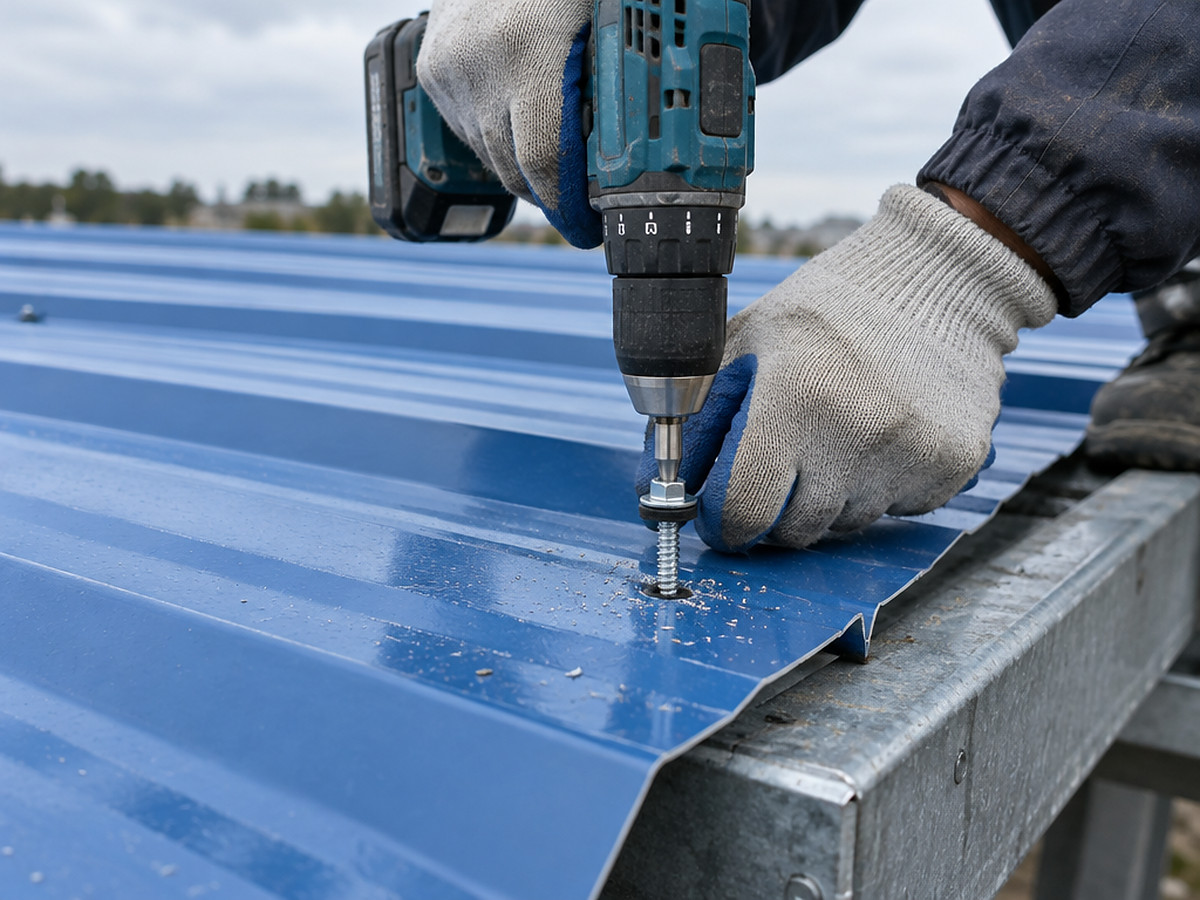
Metal roofing is where the grade decision is most often distorted by the word “stainless.” A roofing screw has to do several things: penetrate or engage the panel and purlin, compress the washer, seal the hole, and survive years of rain, sun, thermal movement, and possibly coastal air.
Grade 410 is often used in self-drilling and thread-cutting screws because it can be hardened. That hardness helps the point or thread work in steel. In a dry, inland, well-detailed roof, a coated 410 screw can be a practical choice. But 410 is a corrosion compromise. The point, thread, cut edges, and any damaged coating are potential initiation sites, and a coastal roof is not the place to test that compromise.
Grade 304 is a better starting point for general exterior roofing and cladding where the environment is inland or lightly aggressive. It offers good general corrosion resistance and is widely used for metal roofing components. It is still not a coastal grade, and it can suffer crevice corrosion under a washer or in a lap if water remains trapped.
Grade 316 is the starting point for coastal, marine, swimming pool, and industrial roofs. For a self-drilling roofing screw, however, a 316 body alone may not provide the drill-point hardness needed for steel. A bi-metal construction, a hardened point, or a different screw mechanism may be needed. If the screw is self-tapping into a pre-drilled hole, the thread and point still have to suit the panel and purlin.
The washer is part of the material decision. An EPDM sealing washer with a stainless, aluminum, or galvanized steel backing can change the galvanic couple and the sealing behavior. A sealing washer is not automatically an isolation washer. Confirm the backing material, compression behavior, and compatibility with the panel coating.
Confirm before ordering: panel material and coating, purlin material and thickness, total steel thickness, roof pitch and drainage, coastal or industrial exposure, washer type and backing, installation torque, and the panel manufacturer’s fastener requirements.
Steel framing, purlins, and light structural connections
For light steel framing and purlins, the screw often has to drill or tap into steel that is thicker or harder than a roofing panel. Grade 410’s hardenability is useful here, but the screw is still a fastener, not a structural bolt. Load path, shear, bearing, pull-out, spacing, and code requirements have to be reviewed separately.
Grade 304 or 316 may be appropriate where the framing is exposed to moisture, washdown, or coastal air, but the thread and point must be matched to the steel thickness. A corrosion-resistant grade with an unsuitable point can fail during installation; a hardenable grade with inadequate corrosion protection can fail in service. Neither outcome is solved by changing only the grade name.
Confirm before ordering: steel grade and tensile strength, thickness of each layer, number of layers, required thread engagement, design load, code or engineer approval, and installation tool.
HVAC ductwork and sheet-metal enclosures
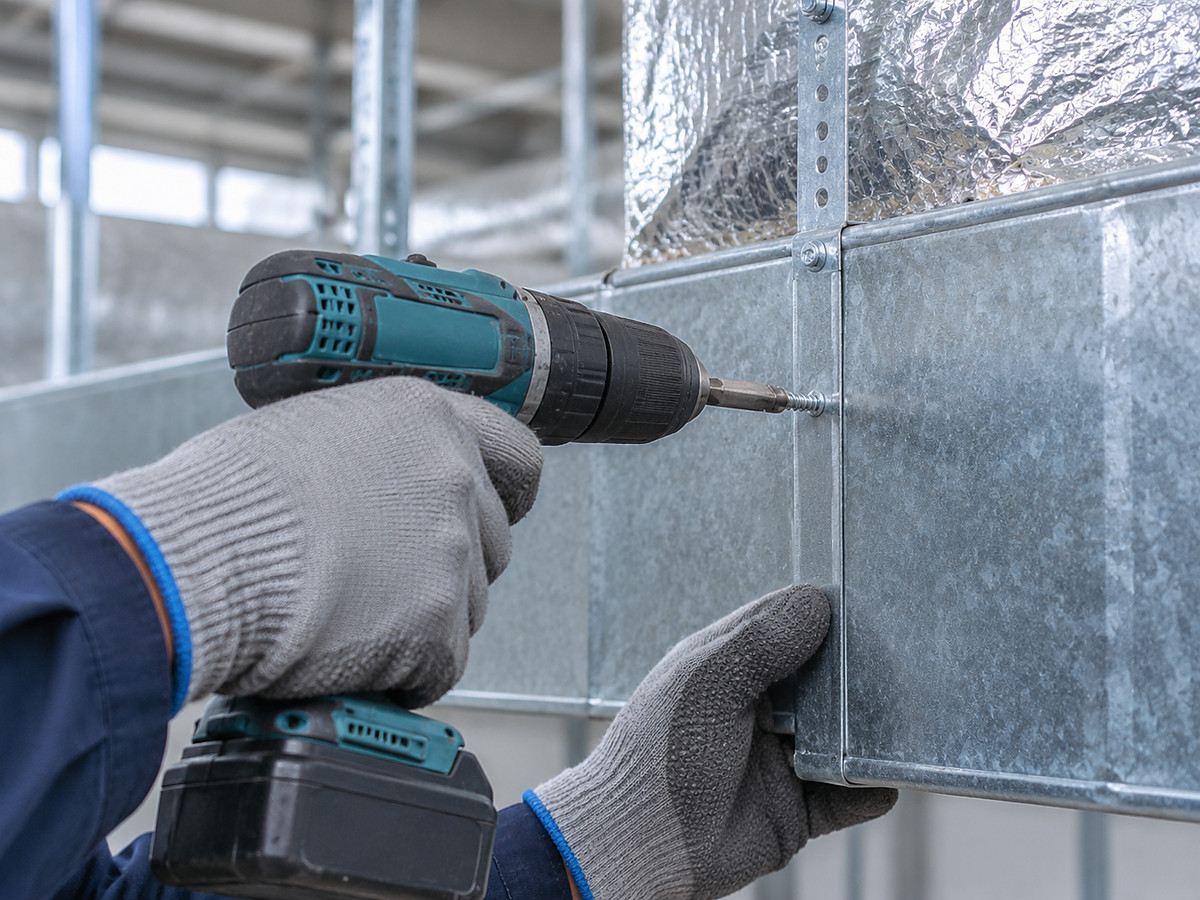
HVAC ductwork ranges from dry, protected indoor systems to humid, chemical, food-processing, and outdoor installations. The material choice should follow that range.
Grade 304 is a common starting point for ductwork, HVAC components, and sheet-metal enclosures where humidity, condensation, or general cleanliness matters. Grade 316 is the better starting point for food processing, pharmaceutical, chemical, coastal, or washdown environments. Grade 410 can be cost-effective in dry, protected assemblies where hardness or thread-forming performance is the main requirement, but it is not the grade to specify for a wet air-handling unit or a coastal rooftop unit.
Aluminum ductwork and aluminum-facing panels introduce a galvanic couple. Stainless fasteners in aluminum can cause the aluminum to corrode when moisture bridges the joint. An isolation washer, a coated fastener, a different material pair, or a drainage detail may be needed. The selection should be reviewed with the duct system designer, not decided from the screw catalog alone.
Confirm before ordering: duct material, insulation, sealant, hanger type, indoor/outdoor location, cleaning chemicals, fire or smoke requirements, and whether the fastener will be exposed to conditioned air.
Architectural facades, railings, canopies, and signage
Visible architectural metal puts appearance and corrosion in the same decision. A rust stain on a façade is a performance problem even if the screw has not lost structural capacity.
Grade 304 is a common choice for inland architectural metal, railings, canopies, and signage. Grade 316 is the better starting point for coastal, marine, heavily polluted, or de-icing-salt environments, and for projects with a long maintenance-free expectation. The surface finish, passivation, and cleaning regime matter as much as the grade.
Head style affects the visual result. A countersunk head gives a flush finish but requires a matching countersink and can damage the coating if over-driven. A pan or hex washer head is more forgiving but stands proud of the surface. Stainless-on-stainless assembly can gall, especially with powered drivers, so lubrication, driving speed, and tool control belong in the installation method.
Confirm before ordering: visible or concealed location, required finish, color matching, cleaning chemicals, coastal or pollution exposure, head style, countersink detail, and galling controls.
Food, beverage, pharmaceutical, and commercial kitchens
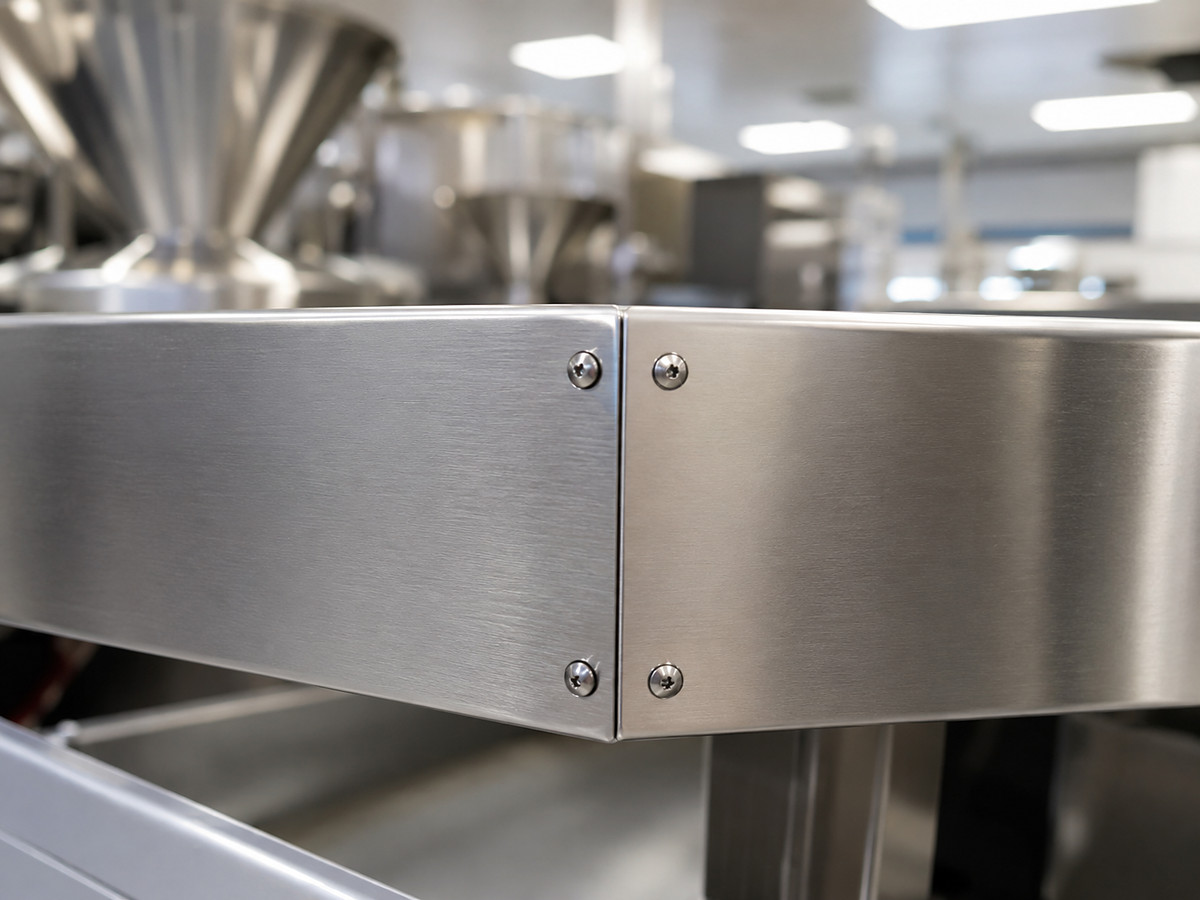
Grade 304 is the general starting point for food processing equipment, kitchen equipment, sinks, counters, and many commercial kitchen assemblies. Grade 316 is the better starting point where chlorides, sanitizers, brines, seawater, or aggressive washdown chemicals are present, and it is widely used in pharmaceutical and chemical processing equipment.
The grade alone does not make a joint hygienic. Food and pharmaceutical equipment also depends on cleanability, surface finish, crevice design, drainage, and the absence of trapped product. A 316 screw in a poorly designed crevice can still create a cleaning problem. A 304 screw in a dry, cleanable, low-chloride area may be entirely adequate.
If the project has a hygiene standard, FDA or NSF requirement, or a customer-specific cleaning protocol, that requirement should be stated in the RFQ. Do not treat “304” or “316” as a substitute for the standard.
Confirm before ordering: cleaning chemicals and concentration, temperature, washdown frequency, product contact, hygiene standard, surface finish, and whether the fastener is in a product-contact or non-product-contact zone.
Coastal, marine, swimming pool, and wastewater
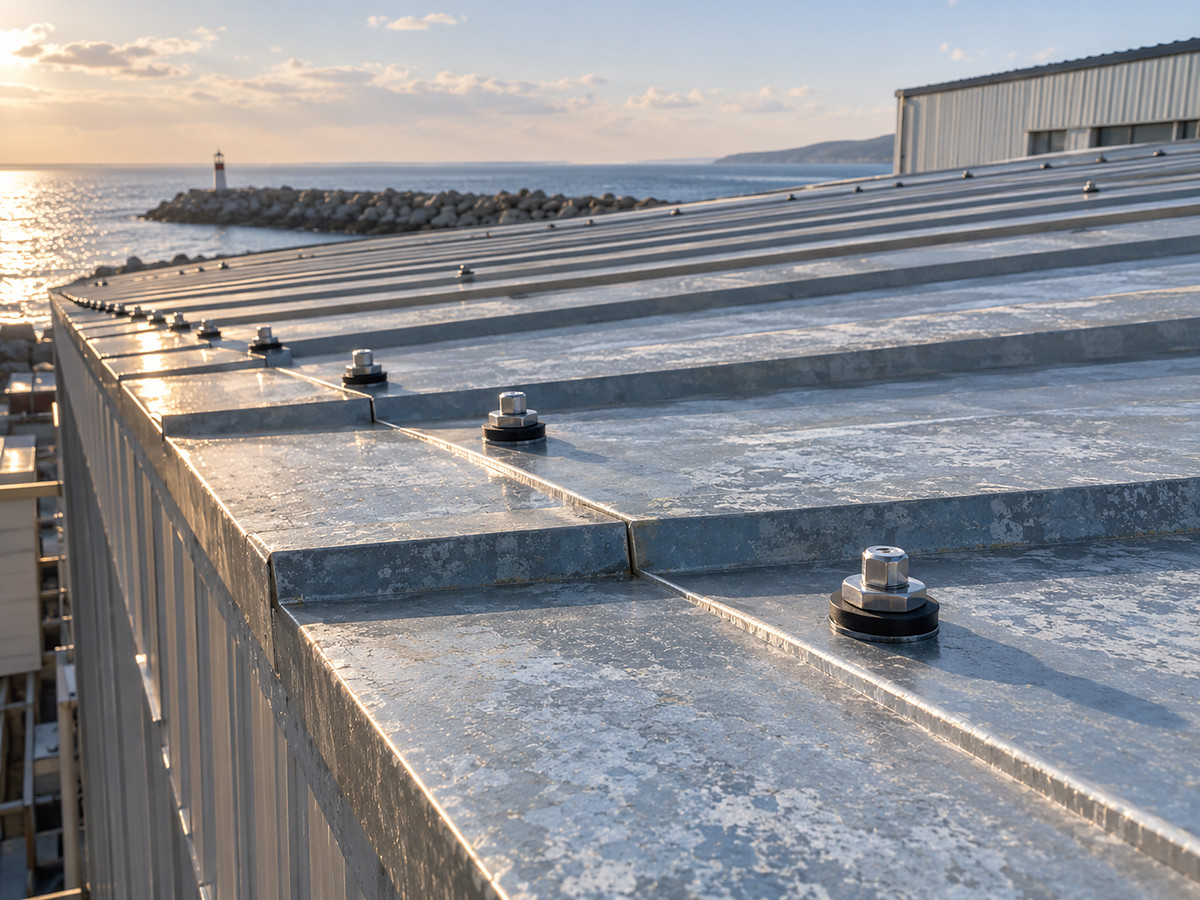
This is the application where grade discipline matters most.
Grade 316 is the minimum starting point for coastal and marine exposure, swimming pool equipment, wastewater treatment, and similar chloride-rich environments. It is not a guarantee. Even 316 can suffer crevice corrosion under a fastener head, under a washer, or in a tight lap on a coastal structure. Warm seawater, stagnant water, chloride deposits, and poor drainage increase the risk. In severe or safety-critical service, a higher-alloy stainless steel or a different joint design should be evaluated.
Grade 304 is generally not the right choice for a splash zone, a sea-front façade, a pool hall, or a wastewater plant. It may perform in a sheltered inland location with low chloride exposure, but that is a project-specific judgment, not a default.
Grade 410 should not be used as the corrosion-resistant choice in these environments. Its hardenability does not compensate for its lower corrosion resistance.
Confirm before ordering: distance from the sea, splash and wave exposure, chloride concentration, temperature, drainage, crevice geometry, maintenance regime, washer material, and whether the project specification requires a higher alloy.
Solar mounting and outdoor equipment

Solar mounting combines stainless fasteners with aluminum rails, galvanized steel, roof membranes, and long service-life expectations. The galvanic couple is a central issue. A stainless screw in an aluminum rail can corrode the aluminum when moisture is present, especially in coastal or high-humidity locations.
Grade 304 is a common starting point for inland solar mounting, and grade 316 is the better starting point for coastal, marine, or high-chloride sites. Grade 410 is not the default for a coastal solar array. The washer, coating, isolation layer, and drainage detail should be reviewed as part of the mounting system.
Thermal cycling, wind load, roof movement, and installation torque also matter. A screw that is correct for the grade but wrong for the clamp thickness or torque can loosen, strip, or damage the rail.
Confirm before ordering: rail and bracket material, roof type, wind and snow load, coastal exposure, isolation method, torque specification, and the mounting system manufacturer’s approved fastener.
Wood, decking, fencing, and playgrounds
Stainless self-tapping screws are widely used in wood because they resist the corrosion that affects zinc-coated screws in wet or treated wood. Grade 304 is a common choice for general exterior wood, decking, fencing, and playground equipment. Grade 316 is the better choice for coastal, marine, or high-moisture applications, and for wood treated with aggressive preservatives.
Grade 410 is not the right default for wet wood or treated wood. The corrosion risk is unnecessary when 304 or 316 is available, and the wood environment does not usually need 410’s hardness.
The wood preservative matters. Some treatments are more aggressive to fasteners than others, and the project specification or wood supplier may require a specific stainless grade or coating. Do not mix stainless screws with galvanized connectors in a wet, acidic wood assembly without reviewing the galvanic couple.
Confirm before ordering: wood species, preservative treatment, moisture exposure, coastal location, connector material, embedment depth, and code or supplier requirements.
General indoor assembly, appliances, and electrical enclosures
Grade 410 is often the cost-effective choice for dry indoor assemblies where the screw needs hardness or wear resistance and the corrosion risk is low. It is used in fasteners and hardware, and it can be appropriate for appliances, electrical enclosures, and protected equipment.
Grade 304 is the better choice where indoor humidity, condensation, cleaning, or food service is present. Grade 316 is usually unnecessary indoors unless the equipment sees chlorides, aggressive sanitizers, or a specific chemical process.
Confirm before ordering: indoor humidity, cleaning agents, condensation, vibration, electrical bonding or grounding, and whether the fastener is accessible for maintenance.
Head, drive, thread, and washer also follow the application
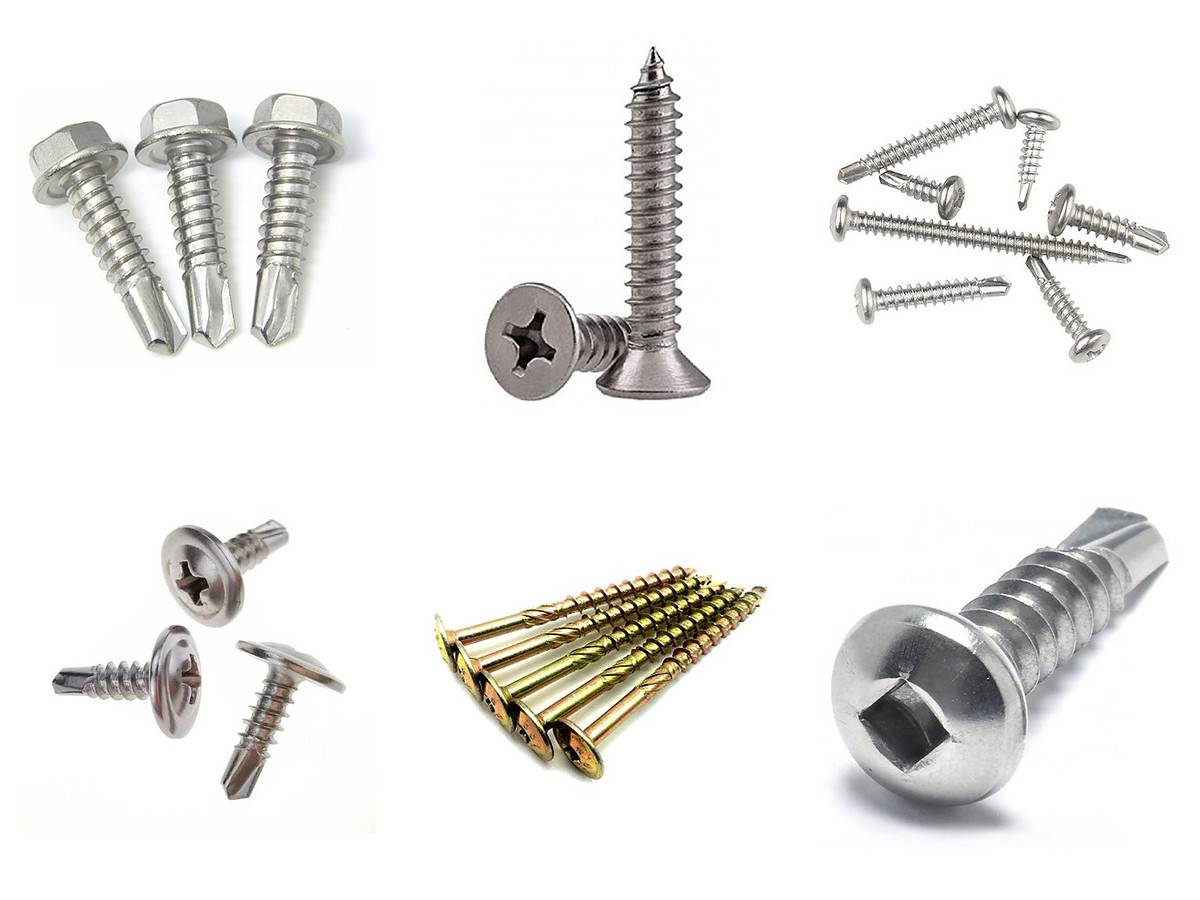
The grade is only one part of the screw. The catalog is organized by head style for a reason: the head, drive, thread, and washer determine how the fastener behaves in the joint.
| Feature | Best suited to | Why it matters | Watch for |
|---|---|---|---|
| Hex washer head | Metal roofing, cladding, general exterior | Large bearing area, good torque transmission, common with EPDM washers | Washer seating, over-driving, and backing-material corrosion |
| Countersunk (CSK) head | Flush architectural finishes, panels, door and window sections | Sits flush when the countersink matches | Coating damage, wrong countersink angle, and reduced bearing area |
| Pan head | Sheet metal, ductwork, appliances, general assembly | Rounded head with a practical bearing area | Strip-out in thin sheet and interference with moving parts |
| Truss head | Thin sheet, duct, panels needing a wider bearing area | Larger bearing surface than a pan head | Clearance and appearance |
| Straw hat / large flat head | Thin sheet, soft materials, insulation, light panels | Spreads load over a larger area | Head clearance and compression of soft material |
| Square drive / Torx | High-torque assemblies, production lines | Reduces cam-out and improves driver engagement | Tool availability and operator training |
| Fine thread | Metal sheet, thin-wall sections | More threads per unit length; good engagement in thin material | Cross-threading and strip-out if the hole is wrong |
| Coarse thread | Wood, plastic, softer materials | Faster engagement and more material between threads | Over-torque and splitting in wood |
| EPDM bonded washer | Roofing, cladding, exterior sealing | Seals the hole and accommodates minor surface irregularity | Compression, aging, and compatibility with the panel coating |
| Stainless / aluminum / galvanized backing | Matching the panel and exposure | The backing affects the galvanic couple and the sealing load | Dissimilar-metal contact and coating damage |
The ScrewTrade catalog reflects this application logic:
| Catalog family | Typical application fit | Grade note |
|---|---|---|
| SS 304 Self Drilling Screw | General exterior metal roofing, cladding, HVAC, and sheet-metal assemblies | 304; confirm chloride exposure and washer |
| 410 Stainless Steel Hex Head SDS | Roofing, cladding, steel framing, and general exterior metal | 410; hardness-led, lower corrosion resistance |
| 410 Stainless Steel CSK Head STS | Flush metal assemblies where a countersunk head is required | 410; confirm thread type and substrate |
| 410 Pan / Truss / Phillips CSK / Square Groove Pan SDS | Sheet metal, duct, panels, and light assemblies | 410; head style follows clearance and bearing needs |
| Self Tapping Screw Hex Flange Head | General sheet-metal and assembly work | Carbon steel or stainless steel options |
| DIN 7981 Pan Head Self Tapping Screw | General sheet metal, appliances, and light assemblies | Carbon steel or stainless steel options |
| Straw Hat Head Self Tapping Screw | Thin sheet, soft panels, and light materials | Carbon steel or stainless steel options |
| Wood Screw Hex Head Self Tapping Screw | Wood structures, decking, and general wood fastening | Carbon steel or stainless steel options |
That range is useful because it lets a buyer match the head to the joint instead of forcing one head style across every application. It does not mean every head style is stocked in every grade. If the project requires 316, confirm the exact model, thread, point, and available material rather than assuming that a 304 page is also available in A4.
Installation details that decide performance
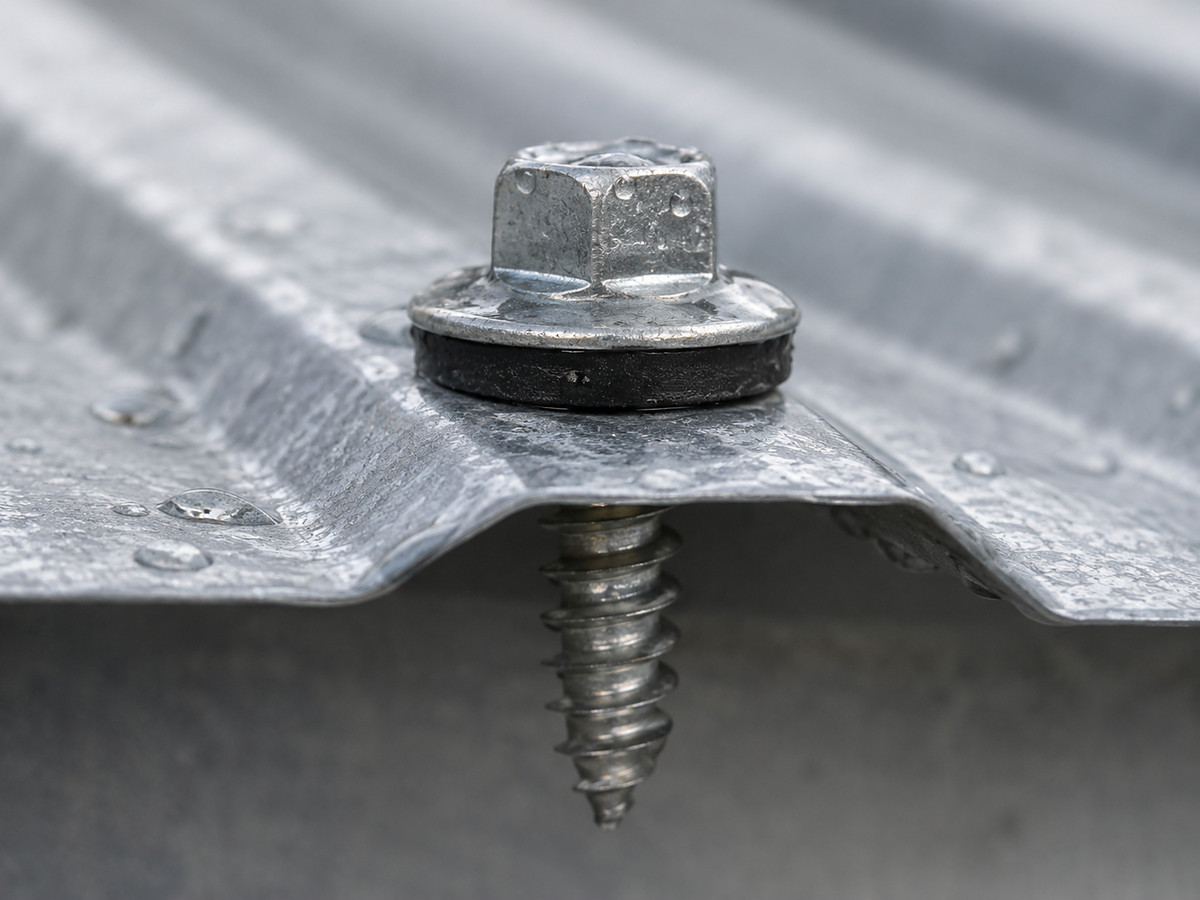
Material selection can be correct and the installation can still fail. These details belong in the approval:
- Pilot hole and thread engagement. A self-tapping screw that forms or cuts a thread usually needs a prepared hole sized for the material, thickness, and thread. A hole that is too large reduces engagement; a hole that is too small can distort the sheet or damage the screw. Confirm the hole condition, not only the drill diameter.
- Clamping and gap control. In metal assemblies, the layers must be held together during installation. A gap can let the screw spin, strip, or deform the sheet before the joint is tight.
- Torque and strip-out. More torque is not better. Over-driving can damage the thread, deform the sheet, crush the washer, or damage the coating. Use a controlled tool and a trial assembly to set the limit.
- Galling. Stainless-on-stainless assembly can gall, especially with high speed and high pressure. Use a suitable lubricant, control the driving speed, and use the correct driver bit. Galling can seize the screw or damage the thread.
- Passivation and cleanliness. Stainless steel relies on a passive surface film. Iron contamination, carbon steel brushes, grinding dust, and embedded debris can cause rust staining. Clean and passivate where the specification requires it.
- Galvanic isolation. Stainless fasteners in aluminum, galvanized steel, or carbon steel can create a galvanic couple when moisture is present. A sealing washer is not automatically an isolation washer. Review the contact area, drainage, coating, and washer material.
- Coating damage. A scratched or damaged coating on a 410 screw can become a corrosion initiation point. Touch-up, rework, and handling instructions should be agreed before installation.
- Trial assembly. Approve the screw on the actual materials, thicknesses, hole condition, tool, and torque. A warehouse “looks right” check is not a trial.
RFQ checklist
A useful RFQ lets the supplier quote a defined screw, not a generic grade.
| RFQ item | What to state |
|---|---|
| Application | Roofing, cladding, framing, HVAC, façade, food equipment, coastal, solar, wood, or other |
| Location and exposure | Indoor, sheltered, direct weather, coastal, marine, pool, chemical, washdown, or de-icing salt |
| Substrate | Material, grade, tensile strength, and thickness of every layer |
| Screw type | Self-tapping (thread-forming or thread-cutting) or self-drilling; existing model or drawing |
| Grade | 410, 304, 316, or the project specification; state A2/A4 if applicable |
| Head and drive | Hex washer, CSK, pan, truss, straw hat, square, Torx, or other |
| Thread and point | Fine or coarse thread; point type; pilot hole or self-drilling |
| Washer | EPDM, bonded or unbonded, backing material, dimensions, and sealing requirement |
| Coating or finish | Coating system, color, thickness or class, passivation, and touch-up requirement |
| Installation | Tool, torque, speed, access, and trial-assembly method |
| Evidence | Material certificate, heat lot, dimensional report, coating report, salt-spray method, and sample |
| Packaging and quantity | Unit pack, labels, mixed-SKU rules, carton marks, destination, and order quantity |
If a field is unknown, say so. A short technical conversation is better than filling the RFQ with assumptions that later become a rejected lot.
Common mistakes
“316 is always the best.” Grade 316 offers better chloride resistance than 304, but it costs more, is not heat-treatable, and can still suffer crevice corrosion. It is not automatically the best choice for a dry indoor assembly or a hardness-driven metal joint.
“410 is stainless, so it will not rust.” Grade 410 is stainless, but its corrosion resistance is lower than 304 or 316. It is a hardness-led grade, not a coastal or chemical-service grade.
“A magnet tells me the grade.” Grade 410 is magnetic, but cold-worked 304 and 316 can also be slightly magnetic. A magnet test is not a grade certificate.
“The same grade means the same screw.” Thread, point, head, washer, heat treatment, coating, and test scope can differ between two products with the same grade name.
“The washer only seals.” The washer also affects bearing pressure, galvanic contact, and installation damage. A sealing washer is not automatically an isolation washer.
“A bigger screw fixes strip-out.” Strip-out is usually a joint problem: hole size, sheet thickness, thread engagement, clamping, or torque. A larger screw can make the damage worse.
Frequently asked questions
Is 410 or 304 better for self-tapping screws?
It depends on the substrate and the exposure. Grade 410 is the hardness-led choice for thread forming or cutting into metal, especially in dry or protected assemblies. Grade 304 is the corrosion-led choice for general outdoor, architectural, HVAC, food equipment, and sheet-metal applications where chlorides are low to moderate. Neither grade is universally better.
Can I use 304 stainless screws in a coastal area?
Grade 304 is generally not the right choice for a splash zone, sea-front façade, pool hall, or wastewater plant. It may be acceptable in a sheltered inland location with low chloride exposure, but that should be a project-specific decision. Grade 316 is the more common starting point for coastal work, and even 316 requires attention to crevices and maintenance.
Is 316 stainless steel seawater-proof?
No. Grade 316 has better chloride resistance than 304 because of its molybdenum content, but it can still suffer pitting and crevice corrosion in warm seawater, stagnant water, or tight joints. Severe or safety-critical service may require a higher-alloy stainless steel or a different joint design.
Are 410 stainless screws magnetic?
Yes. Grade 410 is martensitic and magnetic. Grades 304 and 316 are non-magnetic in the annealed condition, but cold working can make them slightly magnetic. Do not use magnetism alone to identify a grade.
What does A2 or A4 mean?
In the fastener trade, A2 generally refers to 304-type stainless steel and A4 generally refers to 316-type stainless steel. These designations are used in the ISO 3506 system for stainless steel fasteners. Confirm the applicable product standard and property class for the exact self-tapping screw, because tapping screws also have their own dimensional standards.
Can I use stainless self-tapping screws with aluminum?
Stainless steel and aluminum can form a galvanic couple when moisture is present. The joint may need an isolation washer, a coating, a different material pair, or a drainage detail. A sealing washer does not necessarily isolate the metals. Review the assembly with the project engineer.
Do self-tapping screws need a pilot hole?
Thread-forming and thread-cutting self-tapping screws commonly work from a prepared hole in metal. Self-drilling screws are intended to make their own hole. The specific product data and installation instructions determine the starting condition, and the hole size should be confirmed for the actual material and thickness.
Which grade should I use for treated wood?
Grade 304 is a common choice for general exterior wood, and grade 316 is the better choice for coastal, high-moisture, or aggressive preservative environments. Confirm the wood treatment, moisture exposure, connector material, and any code or supplier requirement. Grade 410 is not the default for wet or treated wood.
Send the application, not just the grade
The fastest way to choose between 410, 304, and 316 is to describe the joint:
- what is being fixed to what;
- the material and thickness of each layer;
- the indoor, outdoor, coastal, chemical, or washdown exposure;
- the expected service life and maintenance access;
- the head, drive, thread, point, and washer requirements;
- the installation tool and torque control;
- the existing drawing, sample, or approved product.
The ScrewTrade range includes 304 and 410 stainless screw families and a broad selection of self-tapping head styles. If the project requires 316, the exact model and material can be reviewed against the application rather than assumed from a grade label.
Send your application details or RFQ with a drawing, photo, or existing sample reference.
Related News
Other news you might be interested in

Peta Permintaan Pengencang 2027: Pusat Data, Energi, dan Proyek Industri
Prospek pengencang 2027 bukanlah pemulihan yang luas. Ini adalah peta kantong-kantong proyek—dan kantong terkuat adalah pusat data, energi, dan pekerjaan industri tertentu. Arahnya sudah terlihat dari hasil perusahaan pada akhir tahun 2026. Hilti melaporkan pertumbuhan penjualan mata uang lokal sebesar 5,9% dalam delapan bulan pertama tahun 2026, dengan pertumbuhan dua digit di Amerika dan Asia Pasifik, sementara menggambarkan konstruksi tradisional sebagai lemah. Penjualan kedirgantaraan LISI naik 14,3% dalam sembilan bulan pertama, tetapi penjualan otomotifnya turun 5,2%. Penjualan kuartal ketiga Bossard tumbuh 12%, didukung oleh permintaan pusat data di Amerika dan ekspansi semikonduktor serta elektronik di Asia.

Apa itu Sekrup Bi-Logam dan Mengapa Atap Aluminium Membutuhkannya?
Sekrup bi-logam adalah satu pengikat yang terbuat dari dua logam dengan fungsi berbeda. Dalam atap, konstruksi umumnya adalah kepala dan badan baja tahan karat dengan titik bor baja karbon keras dan ulir pemimpin. Bagian baja tahan karat menahan korosi pada atap yang terbuka; titik yang dikeraskan mengebor purlin baja, girt, atau rangka. Atap aluminium sering membutuhkan kombinasi ini ketika panel aluminium dipasang langsung ke substruktur baja, karena panelnya lembut dan tahan korosi, tetapi sekrupnya tetap harus mengebor baja dan bertahan dari cuaca. Bi-logam bukan jaminan: kelas baja tahan karat, kapasitas titik, lapisan, ring, dan detail aluminium-ke-baja masih harus ditentukan.
Want to know more?
Get in touch with us for more information about our services and products.