
Atap Berdiri vs. Atap Logam dengan Pengikat Ekspos: Di Mana Sekrup Bor Sendiri Sebenarnya Digunakan?

Han Congming
PenulisKami berpengalaman dalam produksi dan penjualan sekrup serta pengencang, dengan fasilitas produksi sendiri dan kapasitas produksi skala besar yang stabil. Kami adalah spesialis sekrup bor mandiri, sekrup drywall, sekrup papan partikel, sekrup mesin, baut, dan pengencang khusus untuk aplikasi konstruksi dan industri.
Metal roofing is growing in the United States. The Metal Construction Association’s 2026 market study forecasts about 4.775 billion square feet of U.S. metal roofing shipments in 2026, rising to 4.876 billion square feet in 2027 and more than 5.4 billion square feet by 2030. The same public summary says standing seam accounts for more than 60% of all metal roofing area across residential and nonresidential construction.
It is tempting to turn those numbers into a self-drilling screw forecast: more roof area, more screws. The roofing market does not work that way.
A square foot of standing seam and a square foot of exposed-fastener panel do not use the same connection. One system usually keeps the panel face intact and hides the attachment. The other sends a screw through the panel, with the head and sealing washer exposed to weather. The difference changes the screw, the washer, the spacing, the installation method, and the number of fastening points.
That is the practical question behind standing seam vs. exposed-fastener metal roofing: where do self-drilling screws actually belong, and what should a distributor or contractor specify before comparing prices?
Key takeaways
- Metal roofing shipments are measured in area, not in fastener units.
- Standing seam is primarily a concealed-fastener system; exposed-fastener panels use through-panel screws and sealing washers.
- Screw demand depends on the panel profile, substrate, purlin spacing, wind zone, and whether the job is new, retrofit, or repair.
- “Metal roofing screw” is not a specification. The connection, substrate, and installation guide decide the assembly.
The market signal is real, but it measures area
The public MCA figures point to steady growth, not a boom:
| U.S. metal roofing shipments | Public forecast |
|---|---|
| 2026 | About 4.775 billion sq ft |
| 2027 | About 4.876 billion sq ft |
| 2030 | More than 5.4 billion sq ft |
Using the public numbers, 2027 is about 2.1% above 2026. The 2030 floor implies roughly 13% cumulative growth from 2026, or about 3.1% compound annual growth over that four-year period. Those are calculations from the published figures, not a substitute for the full MCA study.
The same body of research adds two important details:
- Standing seam represents more than 60% of U.S. metal roofing area.
- Residential replacement is expected to account for about 96% of residential metal roofing activity through 2030.
Roofing Contractor’s summary of the MCA/FMI research also notes that residential metal roofing is forecast to reach roughly 16% of the total U.S. residential roofing market within four years.
Those are useful demand signals. They are not a screw forecast.
First, shipments are not installed area. Panels can move through distribution and sit in inventory before installation. A shipment figure also does not tell you how many projects were delayed, redesigned, or cancelled.
Second, area is not fastener count. A standing seam panel and an exposed-fastener panel can cover the same roof area with very different attachment details.
Third, this is U.S. market data. It does not describe the Middle East, Southeast Asia, South Africa, or any other market where panel systems, wind requirements, and distribution channels may differ.
The full MCA study is also a paid/member resource. This article uses the public summary and trade-press excerpts. That is enough to identify a direction, but not enough to calculate a precise screw market.
Two roof systems create two different fastener paths
The most important split in metal roofing is not the color, the panel width, or the finish. It is how the panel is attached.
Standing seam: the panel face stays intact
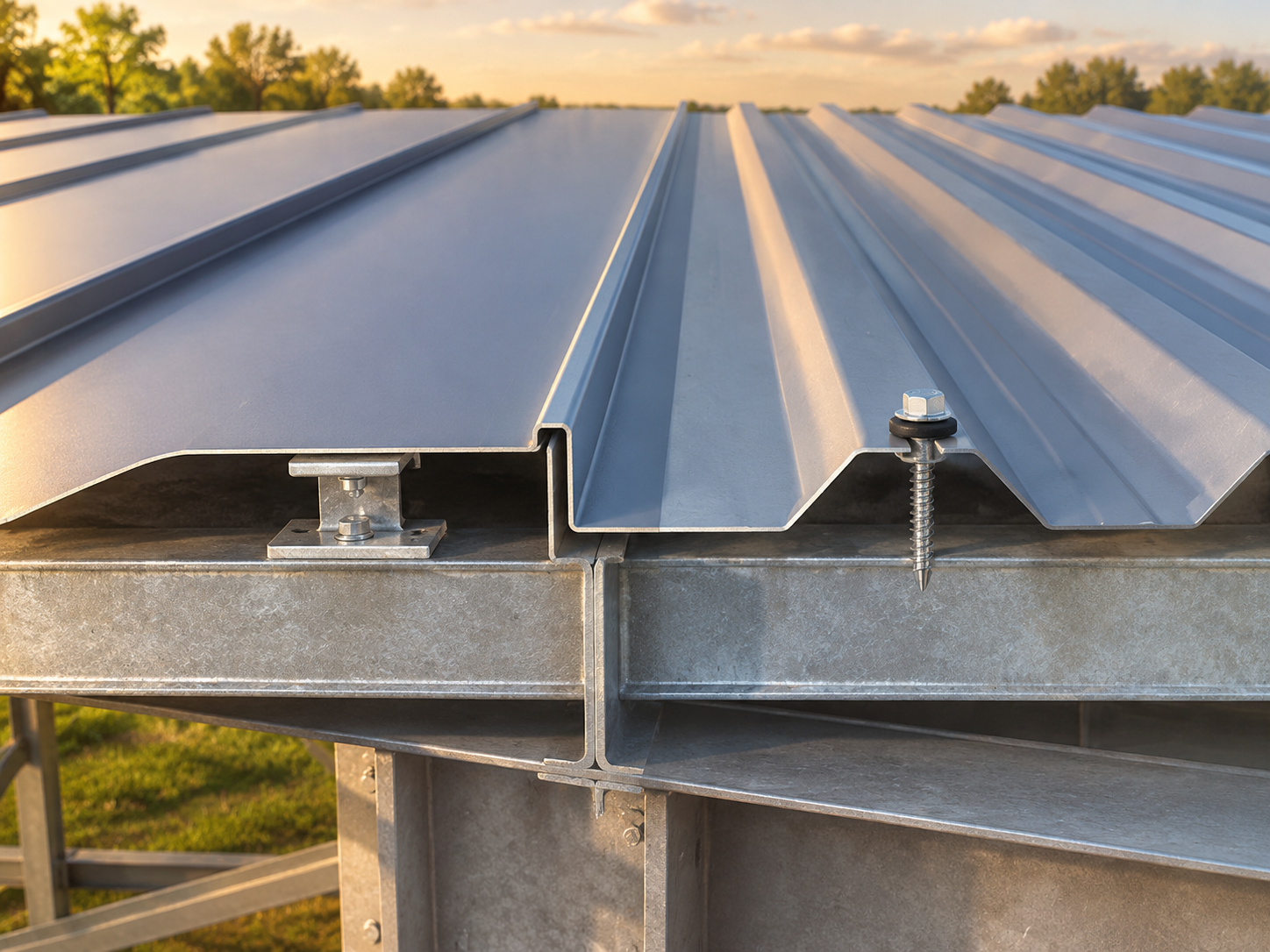
Most standing seam systems are concealed-fastener systems. The panel is held by clips or a fastening flange, and the next panel or seam covers the attachment.
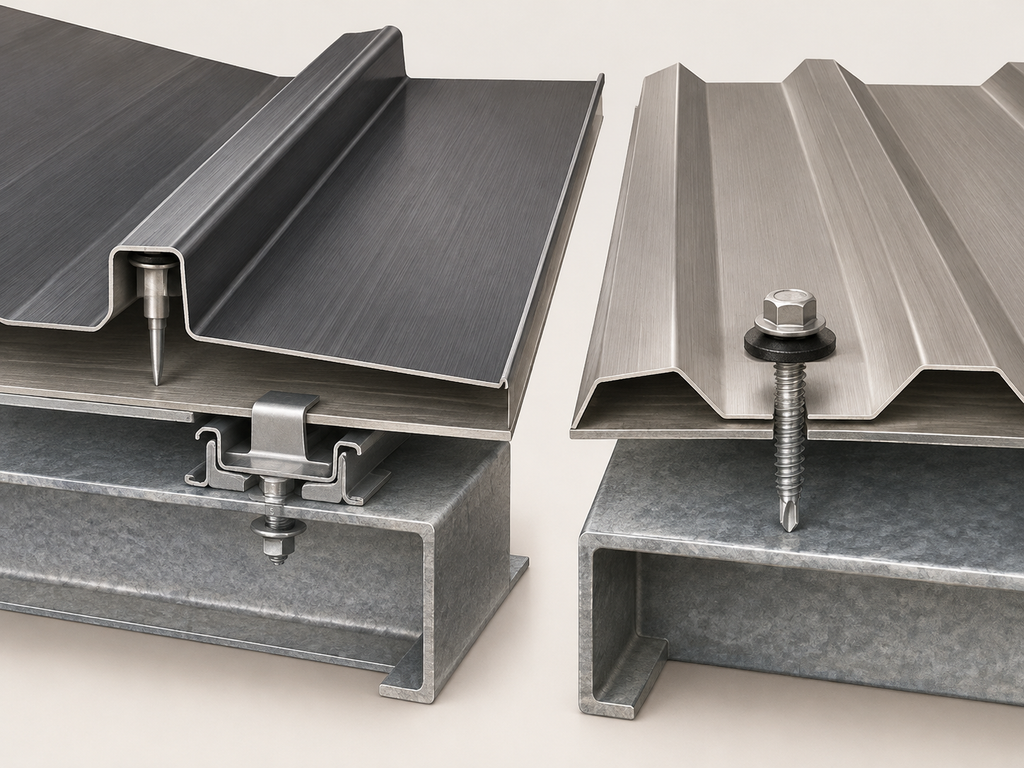
- In a clip system, clips are attached to the deck or purlin. The panel engages the clip, and the seam is formed or snapped over it. The clip can allow the panel to move with temperature changes.
- In a nail-flange system, the panel has an integrated flange that is fastened to the deck. The next panel locks over the flange, hiding the fasteners under the seam.
The exact details vary by manufacturer. The common point is that the roof panel is not penetrated across its field area in the same way as an exposed-fastener roof.
That does not mean a standing seam roof has no screws. It means the screws are usually structural or concealed attachment fasteners, not exposed roofing screws with a sealing washer sitting on the panel face. A clip screw and an exposed panel screw are not interchangeable.
Exposed fastener: the screw is part of the weather surface
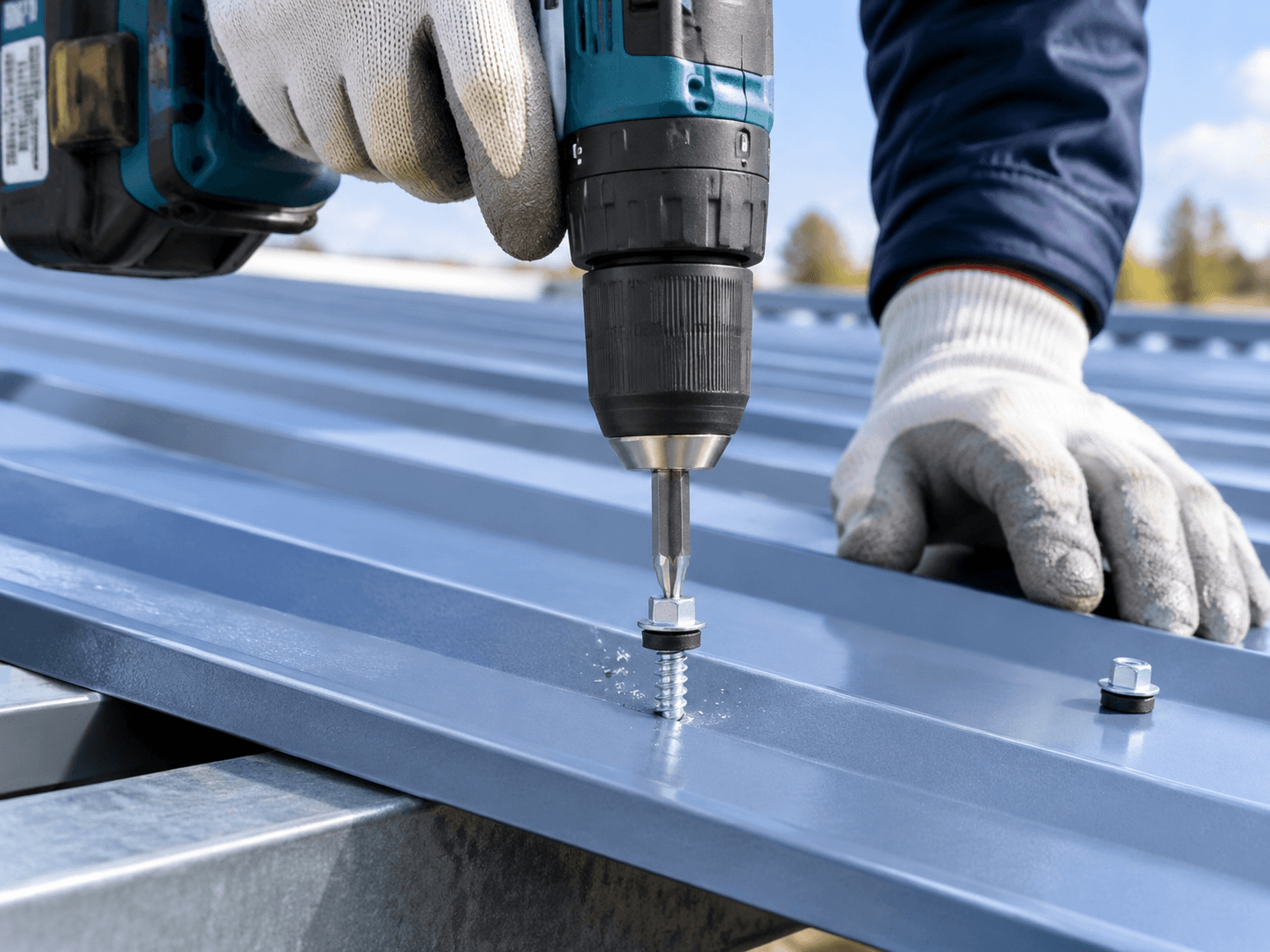
In an exposed-fastener system, the screw is driven through the panel and into the purlin, deck, or other substrate. The screw head and sealing washer remain visible and exposed to rain, sun, and temperature movement.
Common examples include R-panels, PBR panels, 5V crimp panels, corrugated panels, and some metal shingles or through-fastened profiles. The exact fastener location and spacing are part of the panel manufacturer’s tested installation requirements.
This is where self-drilling screws for metal roofing are most visible and where metal roofing screws with bonded sealing washers are most directly used. The two main exposed-panel families are metal-to-wood roofing screws and metal-to-metal roofing screws. The screw must drill or form the hole, develop the required attachment into the substrate, and compress the washer enough to seal the penetration without crushing it.
If you are comparing the two systems at a product level, start with the complete guide to metal roofing self-drilling screws. The rest of this article focuses on where the fastener actually goes.
Where self-drilling screws actually appear
The table below is a practical map, not a universal installation specification. Panel manufacturers publish the approved fastener, spacing, and installation details for their own systems.
| Roof condition | Typical fastener role | Sealing washer | What controls the choice |
|---|---|---|---|
| Exposed panel to steel purlin | Through-panel self-drilling screw | Usually a bonded sealing or EPDM washer | Steel thickness, drill point, thread, length, and specified spacing |
| Exposed panel to wood purlin | Metal-to-wood roofing screw | Usually a bonded sealing washer | Wood density and condition, embedment, length, and thread |
| Standing seam clip or flange | Concealed structural fastener | Usually no exposed-panel washer | Clip or flange design, substrate, and manufacturer’s fastener |
| Trim, flashing, and accessories | Stitch or attachment screw | Depends on the detail | Clamping thickness, sealing detail, and dissimilar-metal contact |
| Retrofit sub-purlin or metal-over-metal | Structural attachment | Per system design | Existing roof profile, sub-purlin, length, coating, and project engineering |
| Repair or replacement | Match the existing assembly | Usually yes on exposed roofs | Existing screw, washer, panel, and substrate condition |
Exposed panel to steel
This is the classic self-drilling application. The screw must pass through the panel and drill into a steel purlin or framing member. The drill point must suit the total metal thickness, and the thread and length must develop the required engagement.
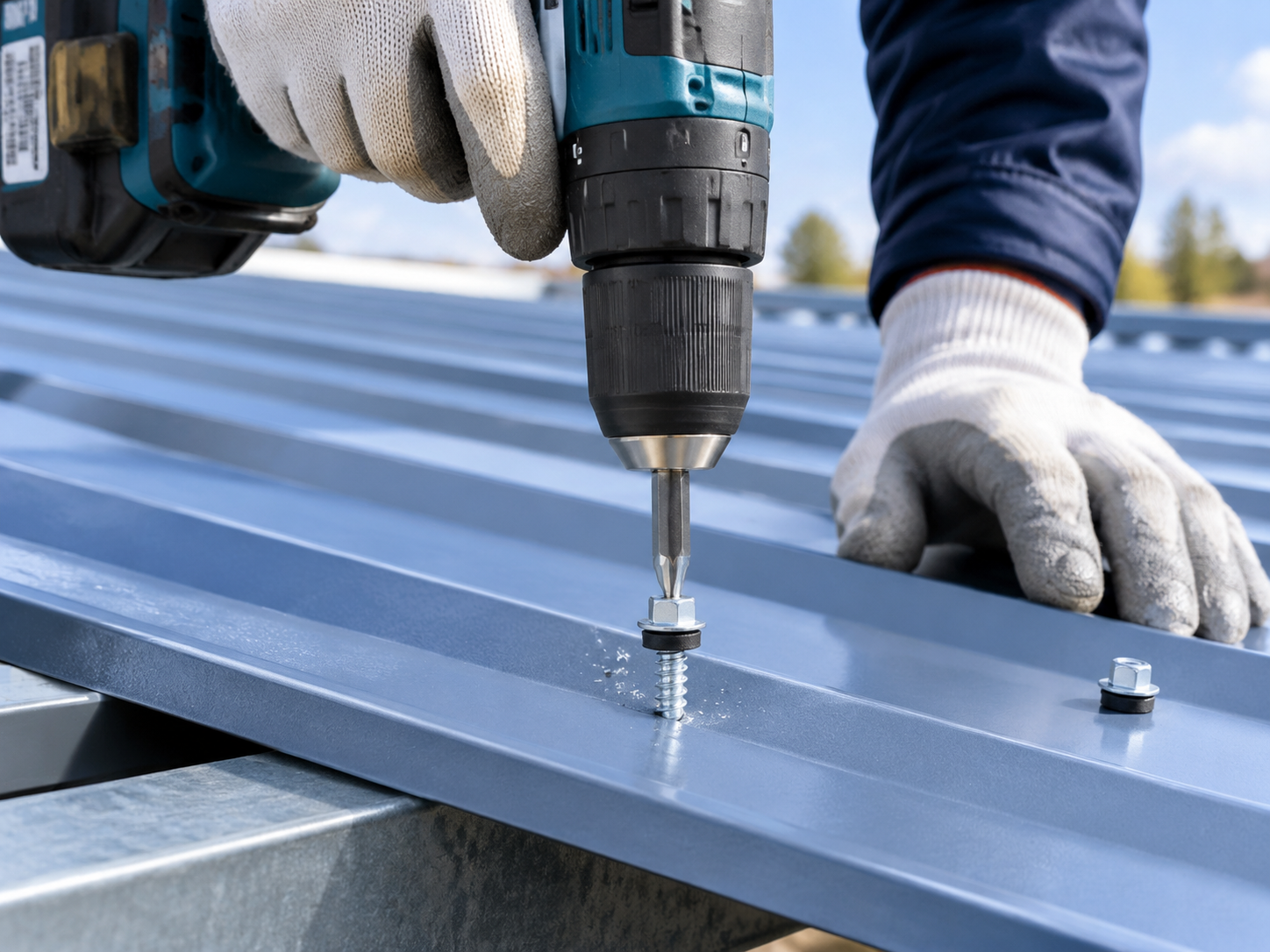
Two screws can look similar and still be designed for different steel thicknesses. That is why the panel manufacturer’s fastener specification matters more than a generic size such as “#12 self-drilling.”
Exposed panel to wood
When the substrate is wood, the connection changes. The screw needs a thread and point suited to wood, and the length must provide enough embedment after passing through the panel. Wood density, moisture, condition, and the risk of splitting can all affect the result.
A fastener designed for a steel purlin is not automatically suitable for a wood purlin, even if both have a hex washer head and an EPDM washer.
Standing seam clips and flanges
Standing seam systems use fasteners, but the fastener is usually part of a concealed attachment. The clip or flange transfers the load to the structure, and the panel is not sealed by an exposed washer at every attachment point.
This is the most common source of confusion in the standing seam vs. exposed-fastener comparison. Standing seam does not eliminate fasteners. It changes their location, exposure, and function.
Trim, flashing, and accessories
Roof edging, closures, flashings, and accessories may use self-drilling or stitch screws, but the requirements depend on the detail. The fastener may need to clamp two thin metal layers, seal a trim joint, or isolate dissimilar materials. A roof panel fastener is not automatically the right choice for trim.
Retrofit and metal-over-metal
Retrofit projects often add sub-purlins or a new framing layer over an existing metal roof. The new panel is then attached to that system. The fastener package can include sub-purlin fasteners, panel fasteners, and trim fasteners, each with a different structural role.
Repair and replacement
On an exposed-fastener roof, repair often means matching the existing screw and washer assembly. A longer or larger screw is not automatically an upgrade. The panel, washer, substrate, and original installation detail all need to be checked before a substitution is made.
For a deeper specification view of washers and installation, see the metal roofing screw specification checklist and the EPDM washer size guide.
Why screw count does not scale with roof area
The public market data gives one variable: roof area. A useful screw estimate needs at least four more:
Screw demand ≈ roof area × through-fastened share × attachment points per area × replacement/repair factor
That formula is a planning frame, not a published market statistic. Each variable is controlled by the project:
- Panel profile and width. Ribs, flats, sidelaps, and clip spacing change the number and location of fastening points.
- Purlin spacing and panel span. The panel’s load table determines how far it can span and where it must be supported.
- Wind uplift and edge zones. Edges, corners, and high-wind areas often require a tighter attachment pattern than the field of the roof.
- Roof slope and system approval. The panel system, slope, and tested assembly determine what is allowed.
- New construction, retrofit, or repair. These use different substrate conditions, fastener lengths, and labor steps.
- Exposure and coating. Coastal, industrial, and high-humidity conditions can change the material and coating requirement, even when the screw count stays the same.
This is why a single market growth percentage cannot be translated directly into screw units. A mix shift toward standing seam can reduce through-panel fastener demand per square foot. A shift toward retrofit and repair can increase the service content and the variety of fasteners required. A tighter edge pattern can increase fastener density without any change in total roof area.
The practical conclusion is simple: do not estimate a metal roofing screw order from square footage alone. Start with the panel system and its attachment pattern.
The hidden demand is in retrofit and repair
The replacement signal is important. Residential replacement is expected to account for about 96% of residential metal roofing activity through 2030. That means the market is not only about new roofs. It is also about removing, recovering, or upgrading existing roofs.
Metal-over-metal retrofit is a good example. A new standing seam roof can be installed over an existing metal roof using sub-purlins shaped to fit the old panel profile. The existing roof may be an exposed-fastener R-panel, a standing seam system, or another profile. The retrofit changes the framing, the panel support, and the fastener package.
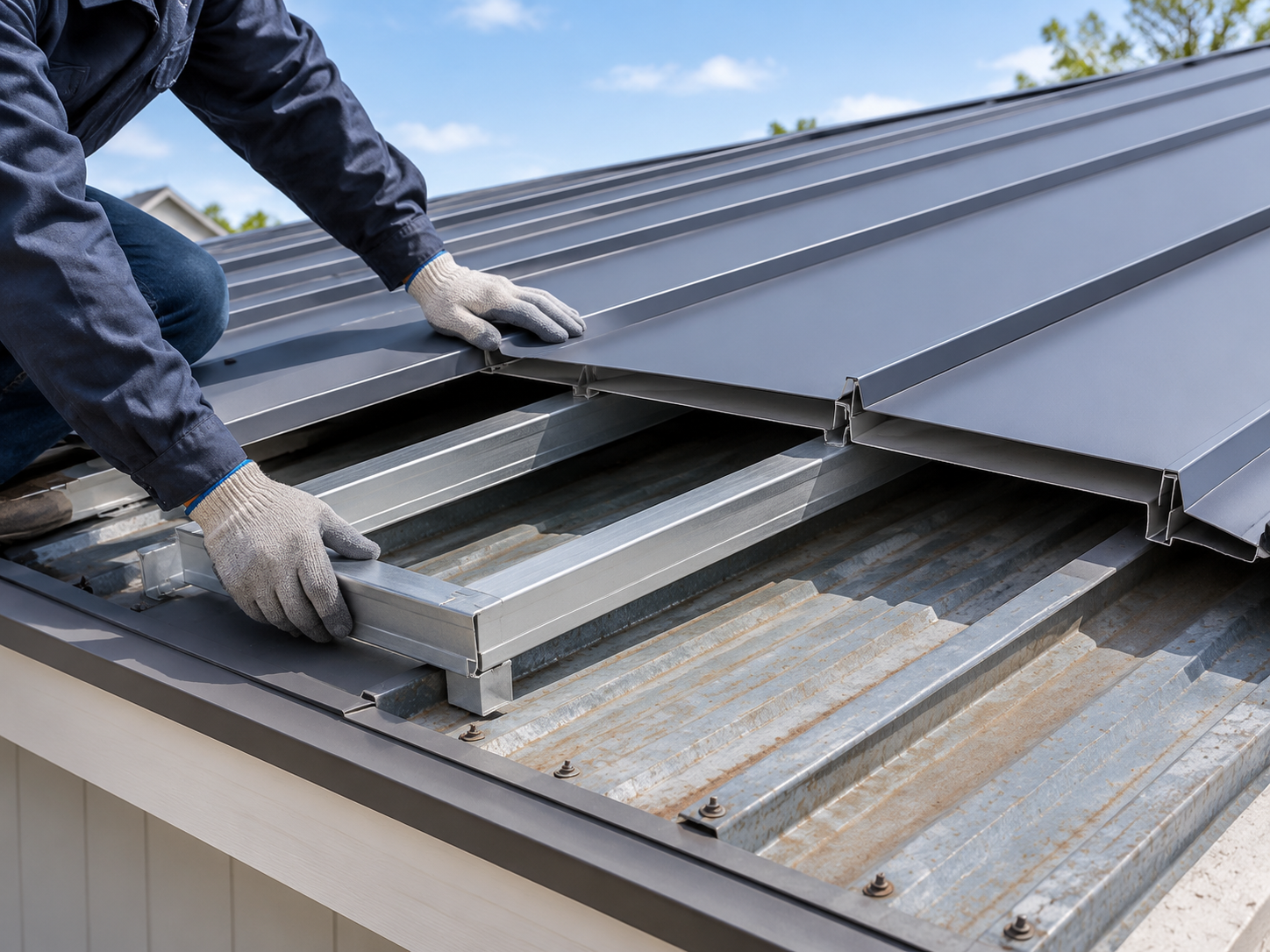
That creates several practical requirements:
- Verify the existing panel profile and rib spacing.
- Check the condition of the existing purlins and substrate.
- Confirm the new panel’s attachment and load requirements.
- Select fasteners for the sub-purlin, panel, trim, and any isolation details.
- Confirm coating and material compatibility with the existing roof.
Repair work may be smaller in volume, but it is often less price-driven. A contractor needs the right replacement screw and washer quickly, and the wrong substitution can create a leak or a callback. For coastal or corrosive environments, the material question may matter more than the diameter. The 304, 410 and bi-metal comparison explains why the three options are not a simple ranking.
This is also where distributors can differentiate. A supplier that can identify the existing panel, substrate, and exposure and provide a matched assembly is more useful than a supplier that only quotes a diameter and length.
An RFQ checklist for metal roofing screws
If you cannot answer the first four items below, the quotation is still a guess:
- Panel type and profile. Standing seam, R-panel, PBR, 5V crimp, corrugated, metal shingle, or another system.
- Panel material, gauge, and coating. Steel, aluminum, or another metal; painted or metallic finish.
- Substrate type. Steel purlin, wood purlin, solid deck, sub-purlin, or existing roof.
- Substrate thickness or condition. Steel gauge or thickness; wood species and condition.
- Purlin spacing and panel span. The support layout, not just the roof area.
- Roof slope. The approved system may depend on it.
- Wind zone and edge/corner requirements. Field, edge, and corner patterns can differ.
- Project type. New construction, retrofit, or repair.
- Exposure. Coastal, industrial, high-humidity, or general atmospheric.
- Panel manufacturer’s specified fastener and installation guide. This controls the approved assembly.
- Head, drive, color, washer, and coating requirements. The visible finish and the sealing function both matter.
- Quantity, packaging, batch, and documentation. Include the unit basis and any traceability requirement.
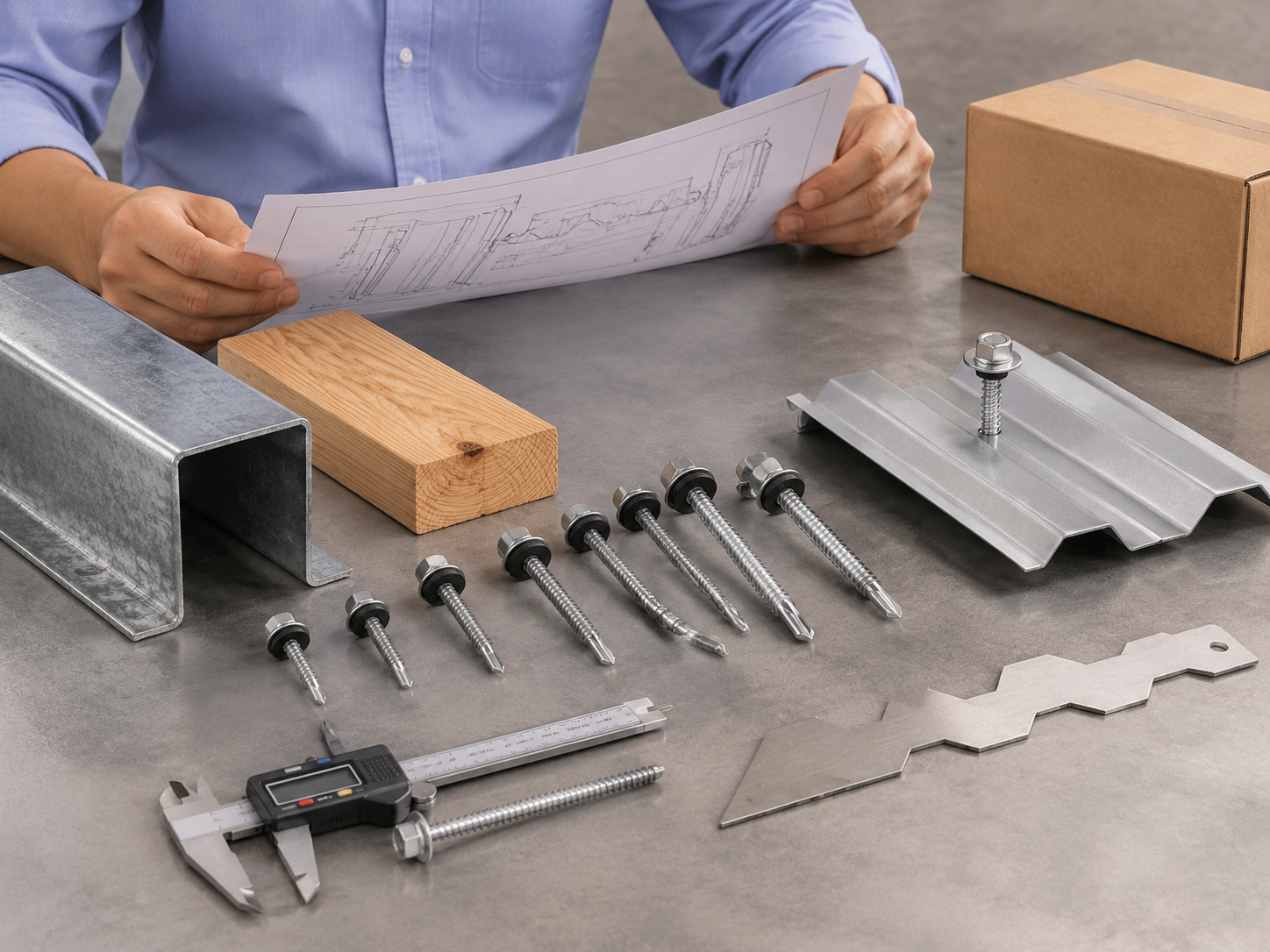
A useful RFQ does not say only “12 × 1 self-drilling.” It says what the screw connects, what it drills into, how the connection is sealed, and which installation document governs the work.
What distributors should change
The market shift toward metal roofing does not mean every distributor should add more generic roofing screws. It means the SKU set should follow the fixing method.
- Ask “standing seam or exposed fastener?” before quoting. The answer changes the fastener family.
- Ask “steel or wood?” next. The substrate changes the point, thread, and length.
- Carry complete assemblies, not just screws. A screw without the specified washer may not be the same product.
- Separate clip, trim, and panel fasteners. They do different jobs and should not be substituted casually.
- Use callback data to refine the range. Leaks, backed-out screws, corroded heads, and washer failures point to the specifications that need attention.
- Do not forecast from total roof area alone. Track the panel mix, retrofit share, and project pipeline instead.
A simple sales script works better than a catalogue page:
- “Is the roof standing seam or exposed fastener?”
- “Is the panel going into steel, wood, or an existing roof?”
- “Is this new construction, retrofit, or repair?”
Those three answers narrow the fastener family before anyone discusses price.
The takeaway: specify the connection, not the label
Metal roofing growth is a positive signal for the fastener category, but it is not a 1:1 demand forecast. Standing seam’s share of area means the largest share of metal roofing area is concealed-fastener standing seam. Exposed-fastener panels still create direct demand for metal roofing screws with sealing washers, especially in agricultural, commercial, retrofit, and repair work.
Self-drilling screws are most directly tied to the places where the panel is penetrated, where a clip or flange must be structurally attached, where trim and flashing are fixed, and where an existing roof is being upgraded or repaired. The exact demand depends on the connection, not the roof-area headline.
If you are selecting a fastener for a metal roofing project, send the panel profile, substrate type and thickness, purlin spacing, exposure, and required quantity. ScrewTrade supplies self-drilling and self-tapping screws for bulk B2B and project requirements, including hex washer head self-drilling screws assembled with EPDM washers. You can send the connection details through the contact page so the fastener assembly can be reviewed against the actual roof system.
Related News
Other news you might be interested in

Peta Permintaan Pengencang 2027: Pusat Data, Energi, dan Proyek Industri
Prospek pengencang 2027 bukanlah pemulihan yang luas. Ini adalah peta kantong-kantong proyek—dan kantong terkuat adalah pusat data, energi, dan pekerjaan industri tertentu. Arahnya sudah terlihat dari hasil perusahaan pada akhir tahun 2026. Hilti melaporkan pertumbuhan penjualan mata uang lokal sebesar 5,9% dalam delapan bulan pertama tahun 2026, dengan pertumbuhan dua digit di Amerika dan Asia Pasifik, sementara menggambarkan konstruksi tradisional sebagai lemah. Penjualan kedirgantaraan LISI naik 14,3% dalam sembilan bulan pertama, tetapi penjualan otomotifnya turun 5,2%. Penjualan kuartal ketiga Bossard tumbuh 12%, didukung oleh permintaan pusat data di Amerika dan ekspansi semikonduktor serta elektronik di Asia.

Apa itu Sekrup Bi-Logam dan Mengapa Atap Aluminium Membutuhkannya?
Sekrup bi-logam adalah satu pengikat yang terbuat dari dua logam dengan fungsi berbeda. Dalam atap, konstruksi umumnya adalah kepala dan badan baja tahan karat dengan titik bor baja karbon keras dan ulir pemimpin. Bagian baja tahan karat menahan korosi pada atap yang terbuka; titik yang dikeraskan mengebor purlin baja, girt, atau rangka. Atap aluminium sering membutuhkan kombinasi ini ketika panel aluminium dipasang langsung ke substruktur baja, karena panelnya lembut dan tahan korosi, tetapi sekrupnya tetap harus mengebor baja dan bertahan dari cuaca. Bi-logam bukan jaminan: kelas baja tahan karat, kapasitas titik, lapisan, ring, dan detail aluminium-ke-baja masih harus ditentukan.
Want to know more?
Get in touch with us for more information about our services and products.