
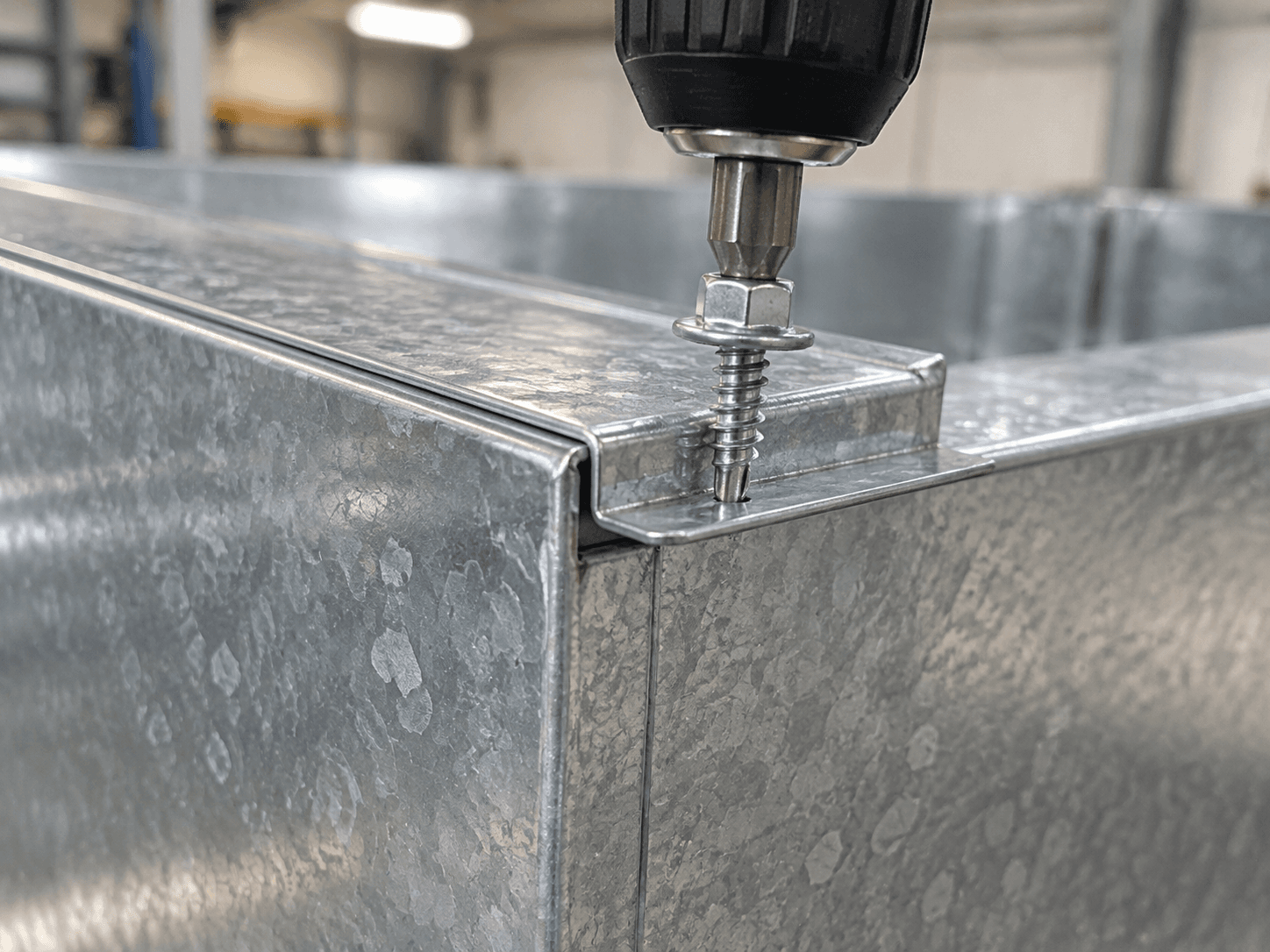
Ductwork Fastening Guide: Selecting HVAC Self-Drilling Screws for Sheet Metal Assembly

Han Congming
AuthorWith experience in screw and fastener manufacturing and sales, we operate our own production facility with stable large-scale capacity. We are specialists in self-drilling screws, drywall screws, chipboard screws, machine screws, bolts, and customized fasteners for construction and industrial applications.
In the manufacturing, prefabrication, and on-site installation of HVAC ductwork, fasteners are not minor components that can be selected only by diameter and length. They affect whether duct seams fit tightly, whether fittings remain securely positioned, whether access panels can be repeatedly removed, and whether the system can resist vibration, remain serviceable, and reduce the risk of air leakage.
Most duct systems are fabricated from galvanized steel sheet, stainless steel sheet, or other thin-gauge metal materials. Whether the application involves longitudinal seams in rectangular ducts, the assembly of elbows and tees, or the fastening of equipment casings and access panels, the core requirement is reliable metal-to-metal fastening under the intended operating conditions. For industrial sheet-metal applications, Screwtrade's self-drilling screw category provides a useful starting point. However, the final screw specification should always be selected according to the actual joint design.
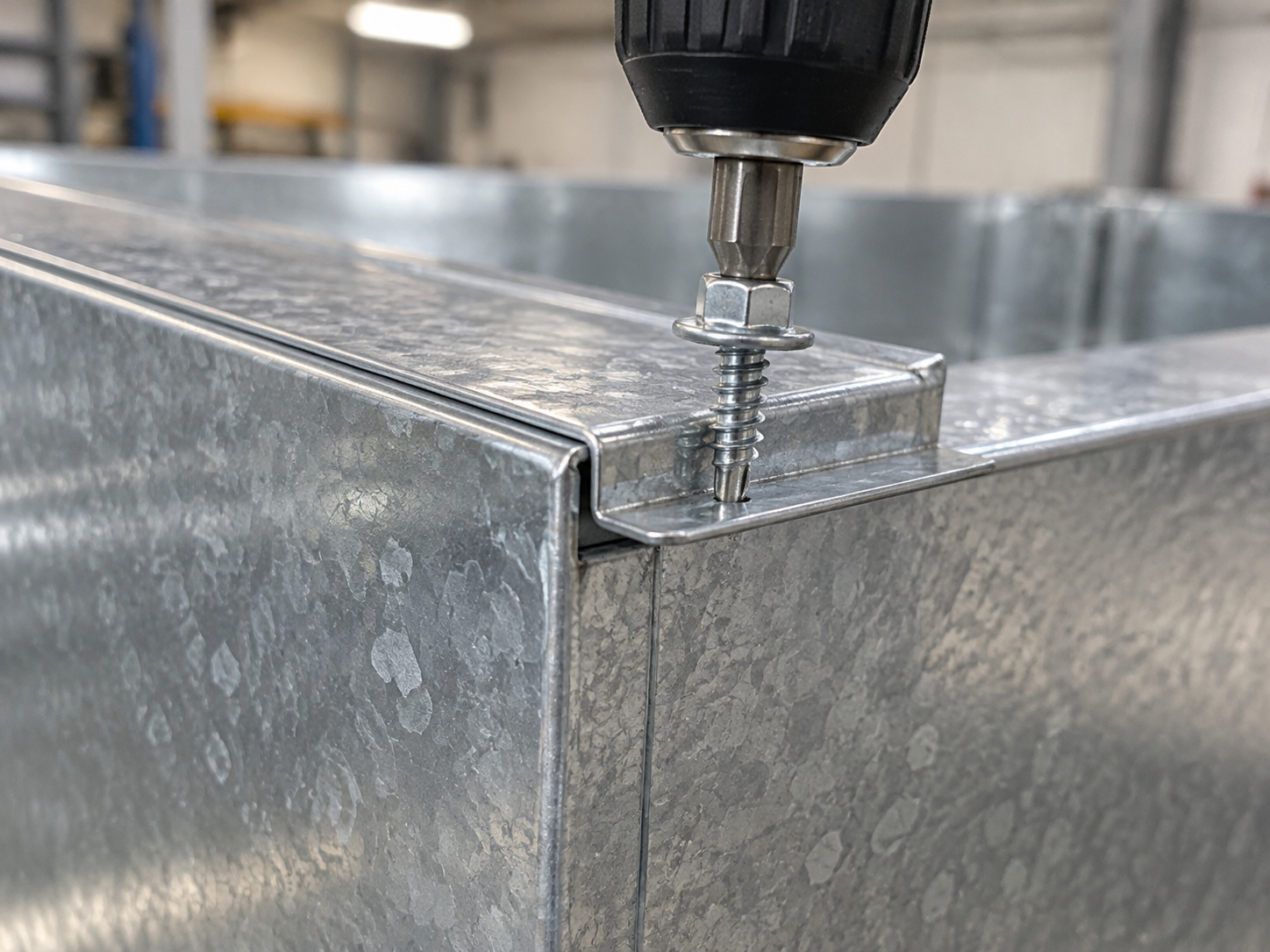
Start With the Joint Design, Not the Screw Size
One of the most frequently overlooked factors in ductwork assembly is the total thickness of the joint. A screw may need to pass through an outer sheet, an inner sheet, a folded edge, a duct flange, or a reinforcement member. Selecting a screw based only on the visible outer sheet can lead to insufficient drilling capacity, oversized holes, screw spinning, or inadequate thread engagement.
Before selecting HVAC self-drilling screws, confirm the following:
- Whether the joint contains a single sheet or multiple layers of sheet-metal overlap;
- The material, thickness, and total thickness of the sheets;
- Whether the connection includes folded edges, flanges, or reinforcement parts;
- Whether the installation will be exposed to vibration, condensation, moisture, or outdoor corrosion;
- Whether the connection is intended for sheet-metal fastening only or involves load-bearing hanger and support systems.
Duct sheet-metal fastening and structural support are different engineering functions. Screws used for sheet-metal assembly should not be assumed to replace structural suspension, heavy-duty anchoring, or project-specified structural connectors. Where load, safety, or seismic requirements apply, project drawings, technical specifications, and local regulations should govern the final fastening method.
Three Common Screw Types for Ductwork Assembly
Self-Drilling Screws: For Efficient Metal-to-Metal Assembly
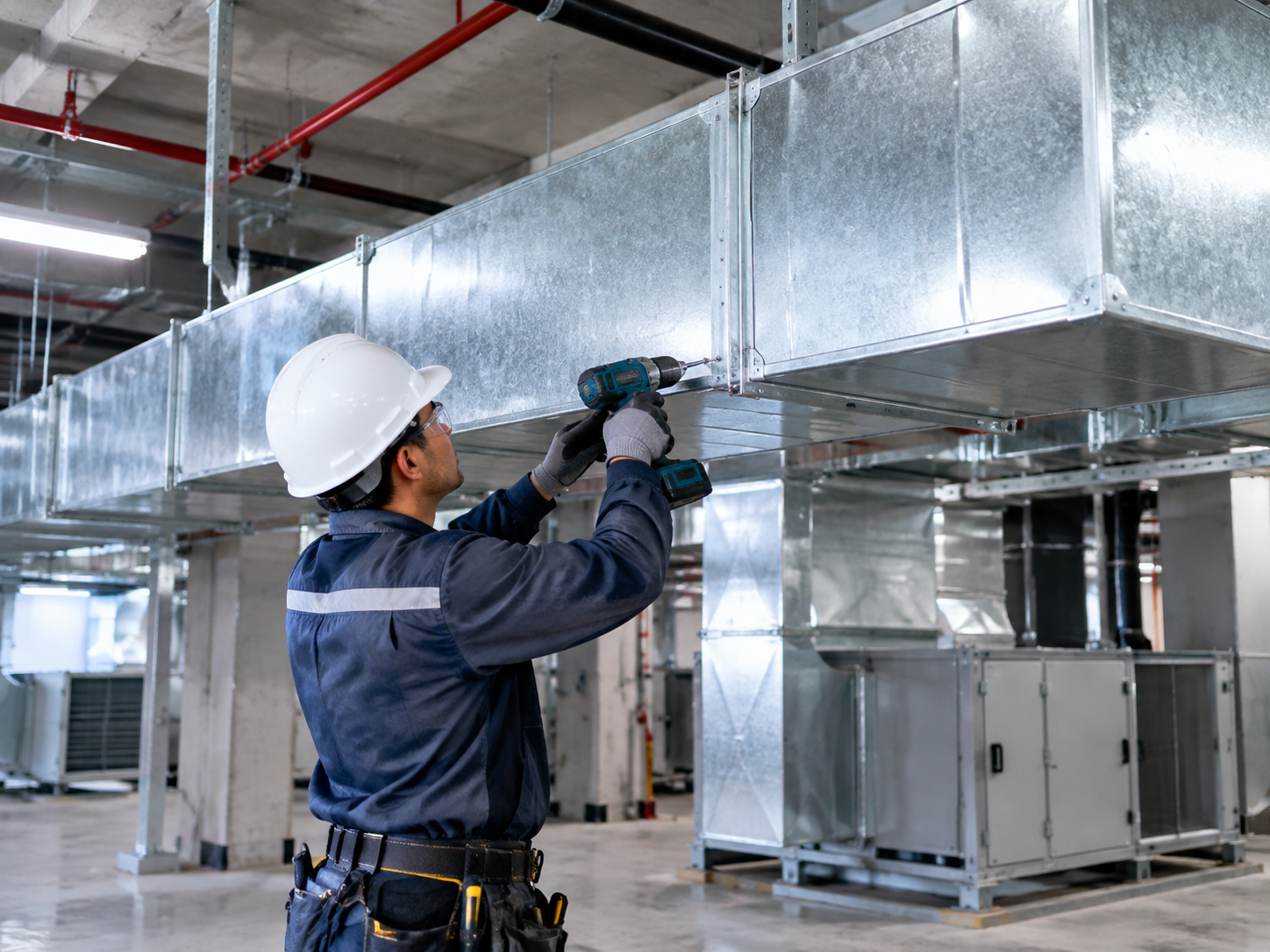
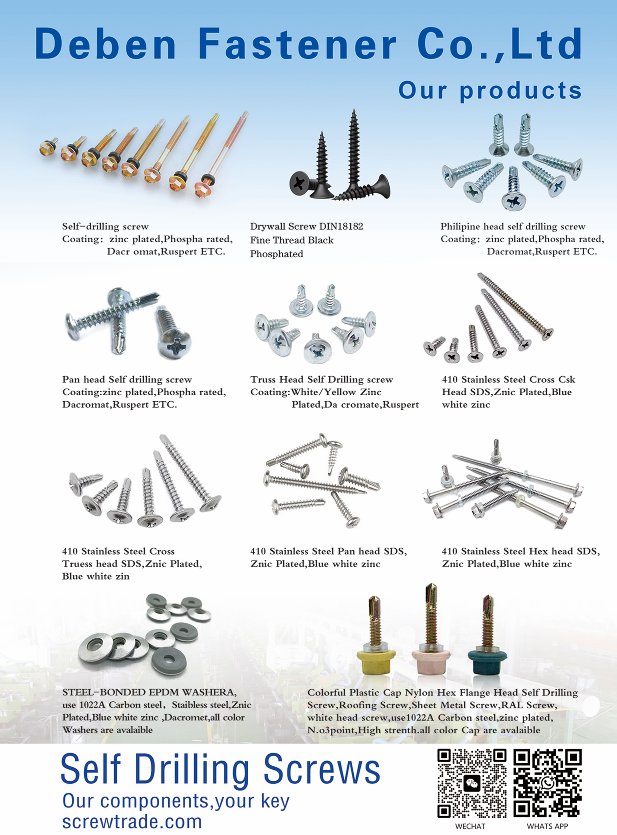
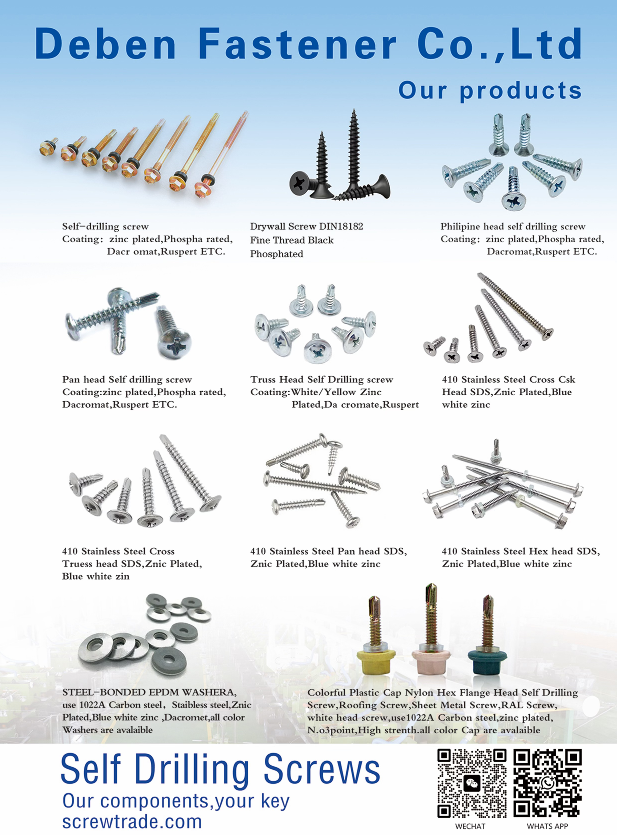
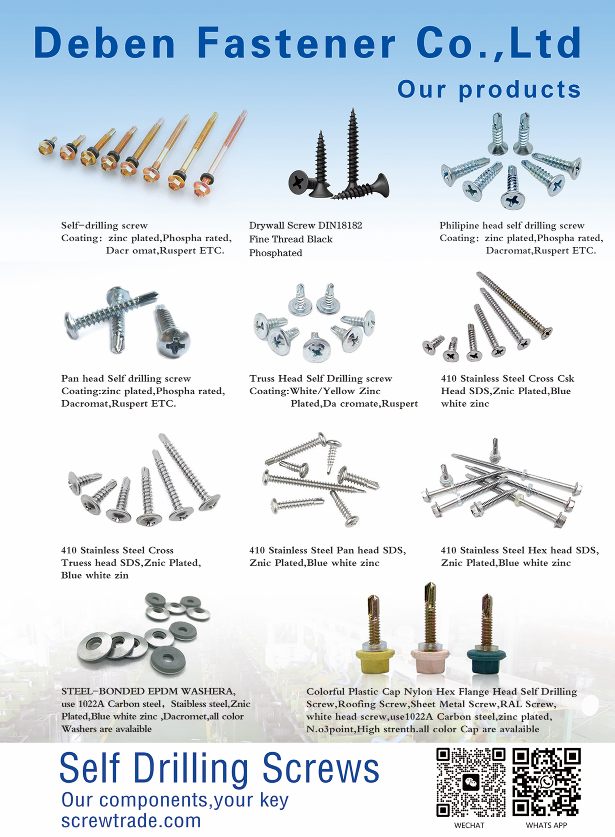
Self-drilling screws use a drilling point to create the hole and fasten the material within a suitable thickness range. In common ductwork metal-to-metal fastening applications, they can reduce pre-drilling steps, improve installation efficiency, and lower the risk of hole misalignment.
However, a screw that can penetrate a sheet is not automatically suitable for the joint. If the combined material thickness, material hardness, or number of layers exceeds the capability of the drill point, installation may result in overheating, irregular holes, panel deformation, and increased tool wear. For more guidance on matching drill points to material thickness, see Screwtrade's self-drilling screw drill point and steel-thickness guide.
Self-Tapping Screws: For Pre-Drilled or Existing Holes
Self-tapping screws are appropriate for duct components with existing holes, pre-drilled holes, or applications where hole size must be controlled. In standardized prefabrication, pre-punched holes can improve part consistency. During repair, retrofit, or access-panel replacement, suitable self-tapping screws can also help match existing hole locations.
That said, self-tapping screws are not a universal replacement for every thin-sheet application. Oversized holes, very thin material, or a mismatched screw specification can still result in stripped threads and poor holding strength. For a technical comparison, refer to Screwtrade's article on the difference between self-tapping screws and self-drilling screws.
Self-Piercing Screws: For Selected Light-Gauge Applications
Self-piercing screws can be effective for rapid fastening in thinner sheet materials, light-duty fittings, and selected duct components. Their suitability depends on sheet thickness, joint configuration, and the required long-term holding performance.
When the material becomes thicker, the joint includes more layers, or stronger thread engagement is required, the connection should be reassessed. In those cases, a self-drilling screw or a pre-drilled self-tapping screw solution may be more appropriate. Reducing one installation step should never come at the expense of connection reliability.
How to Select HVAC Self-Drilling Screws
Match the Drill Point to Sheet Thickness
The purpose of a drill point is to penetrate the material without damaging the sheet or creating an oversized hole. If drilling capacity is insufficient, the installer may experience slipping, overheating, damaged drill points, and enlarged holes. If the screw specification is unnecessarily heavy-duty, it may increase purchasing cost without improving the joint.
For ductwork projects, buyers should provide the thickness of each sheet layer, the number of overlapping layers, and the total joint thickness. A screw should not be selected only by nominal diameter and length.
For broader sheet-metal screw selection principles, see Screwtrade's sheet-metal screw types, specifications, and material selection guide, then apply those principles to the actual ductwork assembly.
Determine Diameter and Length by Total Joint Thickness
Screw length should not be selected only to achieve penetration. After penetration, adequate thread engagement must remain to keep the joint stable during transportation, equipment vibration, and temperature changes.
A screw that is too short may not provide enough engagement. A screw that is too long may interfere with internal clearances, affect assembly, or create unnecessary maintenance and safety concerns. For multi-layer joints involving duct flanges, folded edges, or reinforcement members, the effective length should be determined by the full assembly thickness.
Select a Head Style That Fits the Installation Area
Different screw head styles affect driving performance, clamping force, and installation convenience.
A hex washer head is often suitable where installation space allows and stable driving force is needed. A pan head may be appropriate for certain access panels, fittings, and locations where contact area and surface profile need consideration. In every case, the installer should also account for the driving tool, driver bit, and available working clearance.
If the tool cannot remain reasonably perpendicular to the sheet surface, the screw may enter at an angle, causing distorted holes, head slippage, and uneven joint loading.
Select Material and Corrosion Protection by Environment
Indoor ductwork, humid areas, locations exposed to condensation, and outdoor equipment zones do not require the same level of corrosion resistance. Standard indoor applications may use fasteners with appropriate zinc plating or other corrosion-resistant coatings. In high-humidity, coastal, or corrosive environments, stainless steel screws or bi-metal screws may need to be considered.
Material selection should not focus on the screw alone. Sheet-metal material, condensation, cleaning chemicals, salt exposure, and adjacent metals can all affect long-term durability. Where different metals are used together, possible galvanic corrosion should also be assessed.
Three Typical Ductwork Applications
Indoor Galvanized Steel Ductwork
For indoor galvanized steel sheet ductwork, the main priorities are installation efficiency, consistent thread engagement, and repeatable assembly quality. Selection should focus on sheet thickness, overlap design, drilling capacity, and suitable screw head style, rather than simply choosing the longest or largest screw.
Access Panels and Equipment Casings
Access panels, equipment casings, and removable metal covers require both secure fastening and future serviceability. In these areas, the selected screw should support convenient removal, fit the available installation space, and retain sufficient holding performance after repeated maintenance access.
Humid, Outdoor, or Corrosive Areas
In locations with condensation, humidity, outdoor exposure, or high corrosion risk, the importance of corrosion-resistant coatings and material compatibility increases significantly. Early fastener corrosion can make future disassembly difficult and may eventually contribute to loose joints, water ingress, and higher maintenance costs.
Installation Quality Determines Fastening Performance
Even when the screw specification is correct, poor installation can reduce joint reliability. First, the screw should enter the sheet as close to perpendicular as possible. Angled installation can create irregular holes and reduce thread engagement. Second, the correct driving tool and driver bit should be used to avoid head slippage or excessive force.
Torque control is especially important. Over-tightening can deform thin sheet metal, damage the corrosion-resistant coating, and create stress concentration around the joint. Under-tightening may allow the connection to loosen over time because of transportation, vibration, or system operation.
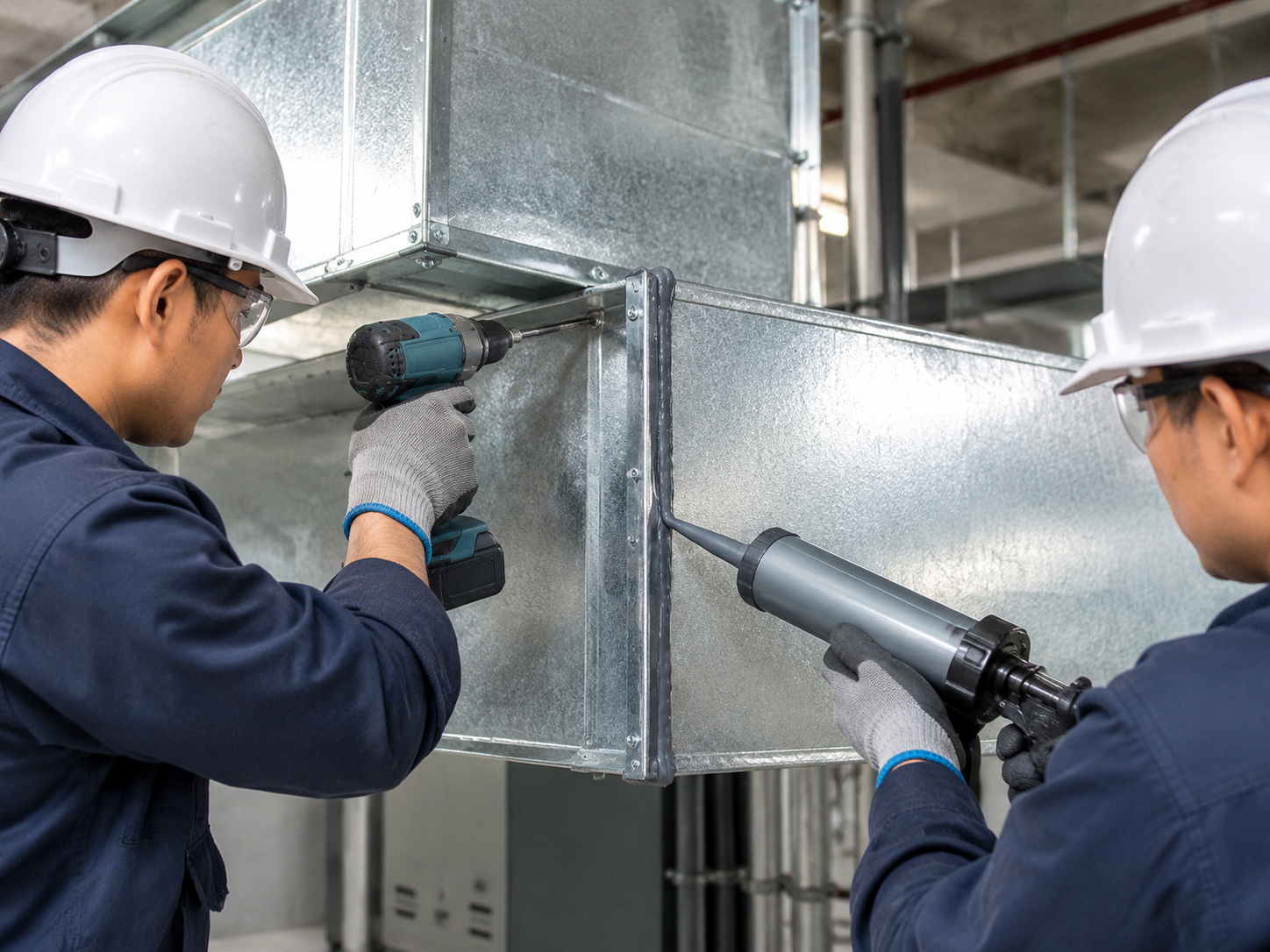
It is also important to distinguish mechanical fastening from air sealing. Screws provide mechanical retention; they do not replace required sealant, gaskets, or other specified sealing methods. In duct systems with air-tightness requirements, sealing materials must still be installed according to the project specification. A mechanically fastened joint is not automatically an air-tight joint.
Common Problems and Practical Checks
When screws spin freely or develop stripped threads, check sheet thickness, hole diameter, screw diameter, and available thread engagement before simply increasing driving force.
When a drill point cannot penetrate the material, reassess the total material thickness, material hardness, and drill-point capability. A pre-drilled-hole method may be more appropriate in some cases.
When sheet metal is dimpled or seams become uneven, the likely causes include excessive torque, an unsuitable screw head style, or angled installation. When air leakage remains after fastening, the issue may involve more than the screw: seam fit, flange alignment, sealant application, and gasket performance should all be inspected.
Technical Information to Confirm Before Purchasing
For project-based or bulk procurement, buyers should provide more than screw diameter and length. The following information will support more accurate selection:
- Sheet material, thickness of each layer, and total joint thickness;
- Whether the application is a metal-to-metal fastening connection and whether flanges, folded edges, or reinforcements are involved;
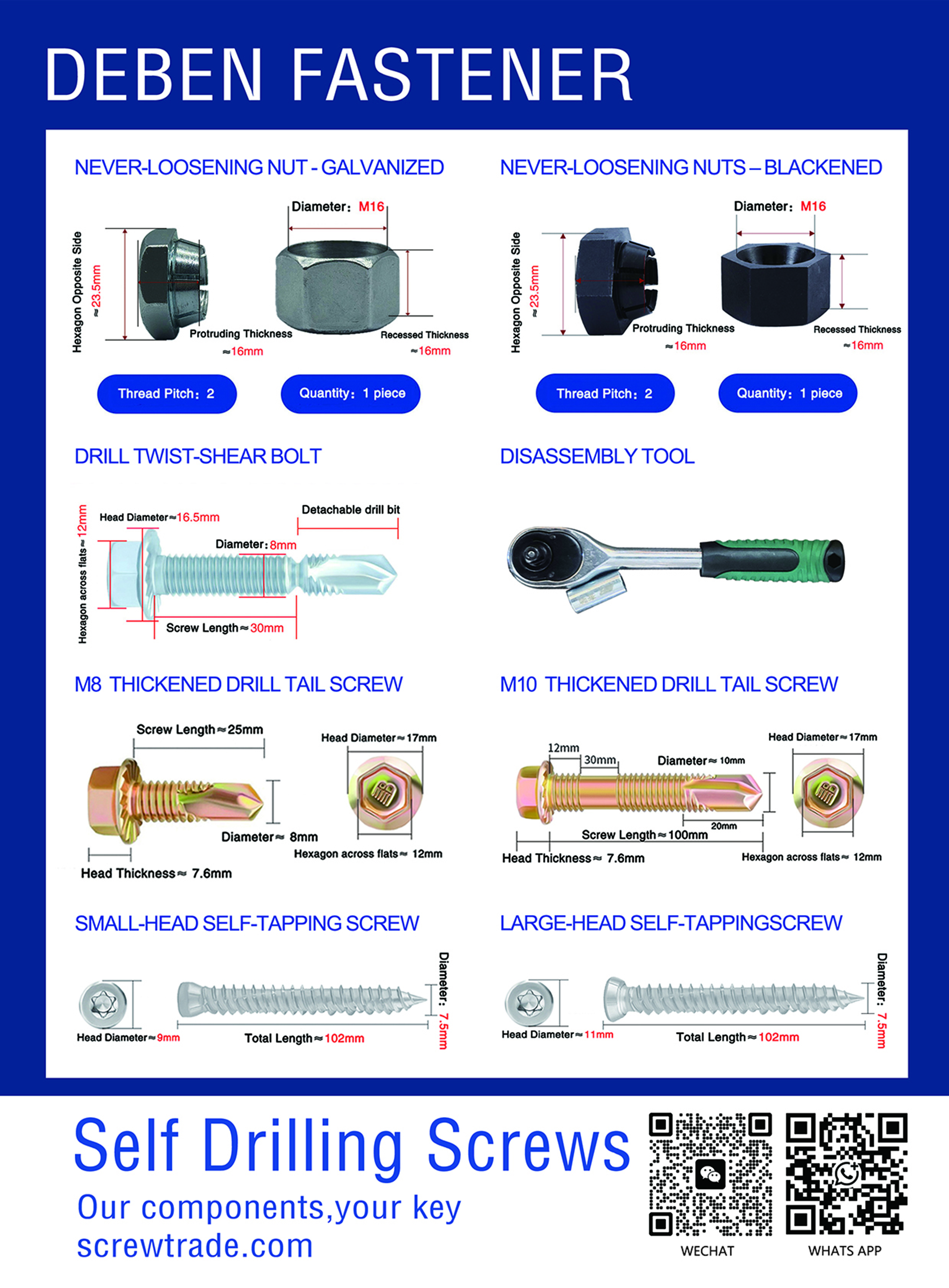
- Required drill point capacity, diameter, length, head style, and drive type;
- Service environment and corrosion-resistant coating requirements;
- Whether stainless steel screws or bi-metal screws are required;
- Packaging requirements, sample testing, batch consistency, and delivery expectations.
To explore Screwtrade's industrial fastener range, visit the product overview. For project-specific guidance based on duct material, thickness, environment, and joint design, submit the relevant requirements through the contact page.
Conclusion
Reliable ductwork fastening is not simply a matter of choosing a screw that can penetrate the sheet. It requires a complete assessment of the material, joint configuration, operating environment, and installation method. Properly matching self-drilling screws, self-tapping screws, corrosion-resistant coatings, and installation practices can improve assembly efficiency while reducing the risk of loose connections, corrosion, and air leakage.
For every project, final fastener selection should support the reliability of the complete HVAC ductwork system and should be confirmed against project drawings, manufacturing standards, and applicable local requirements.
Related News
Other news you might be interested in

The 2027 Fastener Demand Map: Data Centers, Energy and Industrial Projects
The 2027 fastener outlook is not a broad recovery. It is a map of project pockets—and the strongest pockets are data centers, energy and selected industrial work.The direction is already visible in late-2026 company results. Hilti reported local-currency sales growth of 5.9% in the first eight months of 2026, with double-digit growth in the Americas and Asia Pacific, while describing traditional construction as soft. LISI’s aerospace sales rose 14.3% in the first nine months, but its automotive sales fell 5.2%. Bossard’s third-quarter sales grew 12%, helped by data-center demand in the Americas and semiconductor and electronics expansion in Asia.

What Is a Bi-Metal Screw and Why Does Aluminum Roofing Need One?
a bi-metal screw is one fastener made from two metals with different jobs. In roofing, the common construction is a stainless steel head and body with a hardened carbon steel drill point and lead thread. The stainless section resists corrosion on the exposed roof; the hardened point drills the steel purlin, girt or frame. Aluminum roofing often calls for this combination when an aluminum panel is fixed directly to a steel substructure, because the panel is soft and corrosion-resistant, but the screw still has to drill steel and survive the weather. Bi-metal is not a guarantee: the stainless grade, point capacity, coating, washer and aluminum-to-steel detail still have to be specified.
Want to know more?
Get in touch with us for more information about our services and products.