
Growth in Industrial Automation Equipment Drives Demand for Precision Fasteners and Anti-Loosening Connectors

Han Congming
AuthorWith experience in screw and fastener manufacturing and sales, we operate our own production facility with stable large-scale capacity. We are specialists in self-drilling screws, drywall screws, chipboard screws, machine screws, bolts, and customized fasteners for construction and industrial applications.
Summary: As global manufacturing continues to accelerate automation upgrades, demand is increasing for industrial robots, smart production lines, semiconductor equipment, packaging machinery, logistics sorting systems, and precision assembly systems. Industrial automation equipment often features high-speed operation, repeated movement, vibration loads, precision positioning, and long-term continuous work. As a result, fasteners are no longer just basic connecting parts, but important components that affect equipment stability, maintenance frequency, and operational safety. Under this trend, precision fasteners and anti-loosening connectors with dimensional stability, vibration resistance, installation consistency, and long-term locking performance are seeing new purchasing demand.
Industrial Automation Growth Changes Fastener Procurement Logic
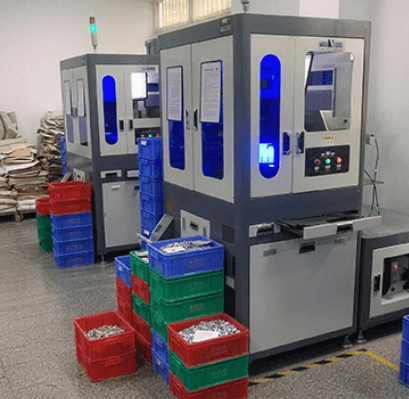
Market research institutions show that the global industrial automation market is expected to continue growing in the coming years. To improve production efficiency, reduce labor dependence, and stabilize product quality, manufacturing companies are continuously investing in automation equipment and intelligent manufacturing systems. The expansion of automation equipment is also driving demand for equipment frames, cabinet housings, transmission systems, guide rail assemblies, support structures, and safety protection devices.
In traditional procurement, fasteners are often regarded as standard consumables, and buyers mainly focus on price, specifications, and delivery time. However, in automation equipment, fasteners play a more critical role. A loose connection point may cause increased equipment vibration, positioning deviation, component wear, or even downtime for maintenance. Therefore, the growth of industrial automation equipment is driving fastener procurement from “low-cost standard parts” toward “high-reliability connection solutions.”
High-Speed Equipment Increases Demand for Anti-Loosening Connections
Automation equipment often involves repeated movement, periodic impact, and continuous vibration. Conveyor systems, packaging machinery, robot bases, transmission mechanisms, machine tool accessories, and testing equipment all generate dynamic loads on connectors during long-term operation. If ordinary nuts or common connectors are used, clamping force may gradually decrease under vibration, creating loosening risks.
This is an important reason for the rising demand for anti-loosening connectors. For equipment manufacturers and maintenance service providers, anti-loosening performance affects not only the safety of a single connection point, but also the maintenance cost and operating efficiency of the entire machine. Especially in continuous production environments, the cost of shutdown inspection and repair is often much higher than the cost of the fastener itself.
Anti-Loosening Nuts Become an Important Choice for Vibration Equipment Connections
In equipment applications with high vibration loads, high maintenance costs, or high safety requirements, anti-loosening nuts are receiving more attention. Their value lies in improving connection stability and reducing the risk of loosening caused by vibration, repeated movement, or dynamic loads.
For industrial equipment, mechanical structures, transmission systems, and safety-critical connection points, can use the Never Loosen Nut A Patented Anti-Loosening Nut . This product is designed for vibration environments and high-reliability connections. Its anti-loosening structure helps improve locking stability, making it suitable for equipment manufacturing, construction machinery, industrial assembly, and connection points that require long-term reliable operation.
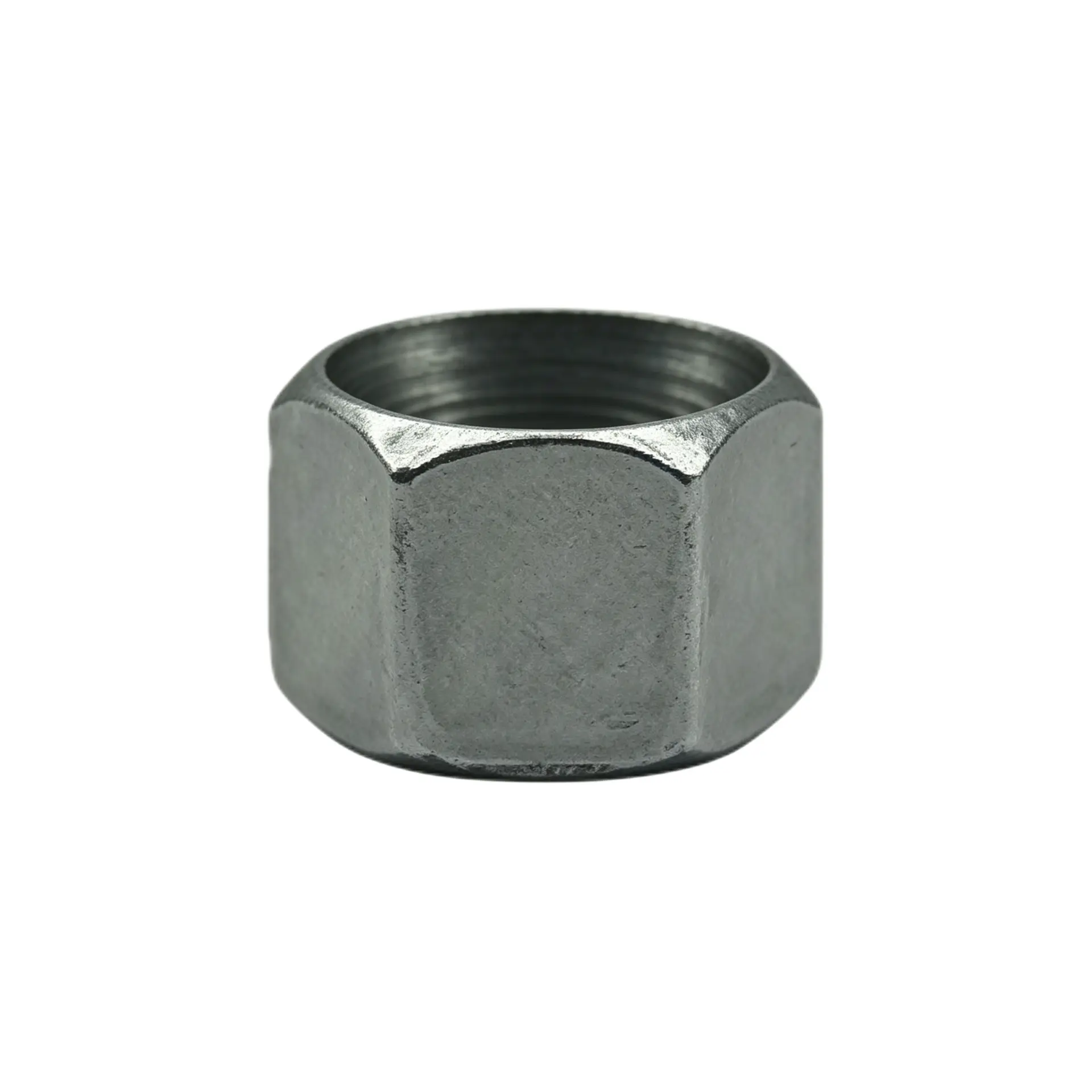
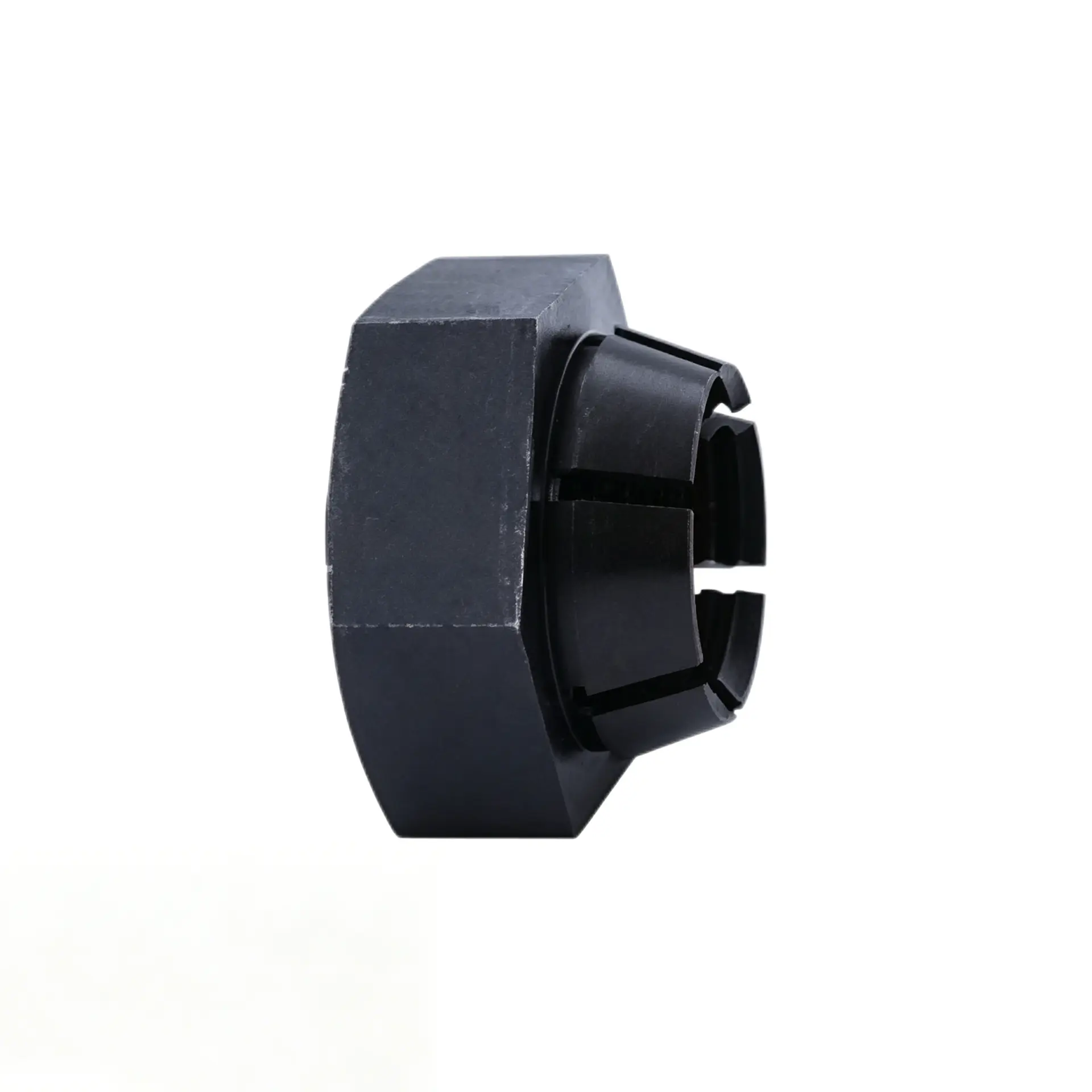
Never Loosen Nut A Patented Anti-Loosening Nut
Precision Assembly Drives Upgrades in Fastener Consistency
In addition to anti-loosening performance, industrial automation equipment places higher requirements on fastener consistency. Automation equipment is usually composed of many standardized modules. During assembly, hole alignment, surface contact, even stress distribution, and batch installation efficiency must be ensured. If fasteners have large dimensional variation, unsuitable head designs, or unstable surface treatment, they may affect assembly rhythm and product consistency.
In equipment housings, sheet metal connections, aluminum profile frames, metal brackets, and control cabinet installation, buyers pay more attention to screw head type, drill point performance, surface treatment, torque performance, and batch stability. Stable fasteners can reduce assembly errors, improve production line installation efficiency, and support long-term repeat purchasing.
Self-Drilling Screws Help Fast Assembly of Equipment Housings and Brackets
In the assembly of thin steel sheets, aluminum profiles, metal brackets, and equipment housings, self-drilling screws can reduce the need for pre-drilling and improve installation efficiency. For automation equipment manufacturers, these products are suitable for batch assembly, on-site modification, and standardized production.
For industrial assembly applications that require a larger bearing surface, better surface contact, and stable installation performance, can use the Truss Head Self Drilling Screw 2 Product. This type of truss head self-drilling screw is suitable for thin steel sheets, aluminum profiles, light steel studs, and metal bracket connections. Its wider head helps distribute load and is suitable for projects that require assembly appearance, stable contact, and batch installation efficiency.
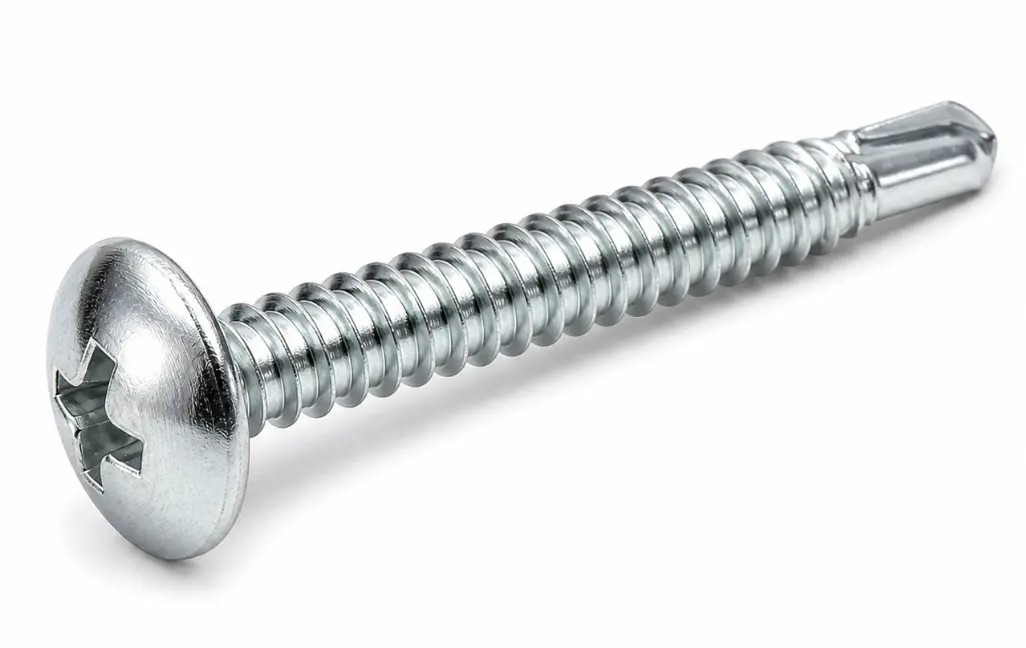
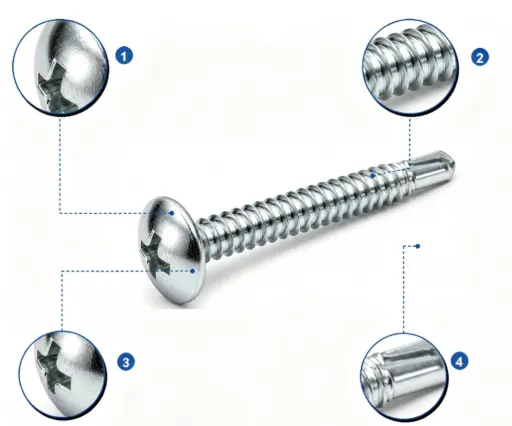
Truss Head Self Drilling Screw 2 Product
Key Procurement Parameters for B2B Buyers
With the growing demand for industrial automation equipment, buyers should select precision fasteners and anti-loosening connectors based on actual application environments instead of simply comparing unit prices. Key parameters include:
- Application scenario: equipment frames, transmission systems, robot bases, cabinet housings, metal brackets, or maintenance spare parts
- Load condition: whether vibration, impact, repeated movement, or long-term dynamic load exists
- Precision requirement: dimensional tolerance, head structure, surface contact, and batch consistency
- Anti-loosening requirement: whether locking structures, lock nuts, or other anti-vibration solutions are needed
- Surface treatment: whether zinc plating, black oxide, stainless steel, or customized corrosion-resistant treatment is required
- Installation method: manual assembly, electric tools, pneumatic tools, or automated assembly lines
- Supply model: sample verification, bulk procurement, OEM packaging, or long-term stable supply
These factors determine whether fasteners can truly match automation equipment, rather than only meeting basic dimensional standards.
Industry Trend: Fasteners Will Shift from Standard Parts to Functional Components
As industrial automation equipment continues to grow, the focus of competition in the fastener industry is changing. In the future, buyers will pay more attention to connection reliability, anti-loosening performance, assembly efficiency, batch stability, and supply chain responsiveness. For equipment manufacturers, reliable fasteners can reduce downtime maintenance and after-sales risks. For distributors, precision fasteners and anti-loosening connectors with functional differentiation are more likely to form high-value product lines.
Overall, the growth of industrial automation equipment is driving upgraded demand for precision fasteners and anti-loosening connectors. Products that can meet requirements for vibration resistance, stable assembly, batch consistency, and long-term supply will be more likely to enter mechanical equipment, intelligent manufacturing, industrial maintenance, and B2B distribution markets.
Related News
Other news you might be interested in
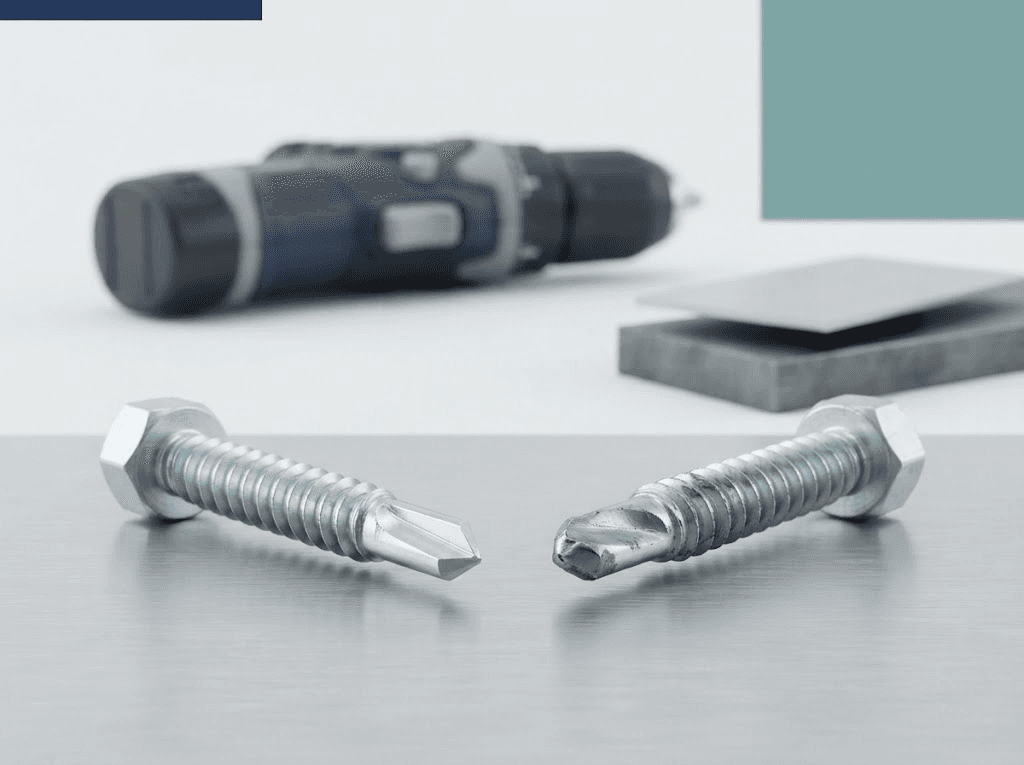
Why Self-Drilling Screws Fail to Drill: A Substrate and Installation Checklist
When a self-drilling screw spins against steel without making progress, the purchasing decision becomes urgent: should the installer change the tool settings, should the buyer order a different screw, or should the supplier investigate the batch?A useful diagnosis starts by identifying exactly where drilling stops. Record the material at that point, check the selected screw against the assembly, and then compare installation conditions. This approach gives buyers a clearer basis for deciding what to change and what evidence to request.
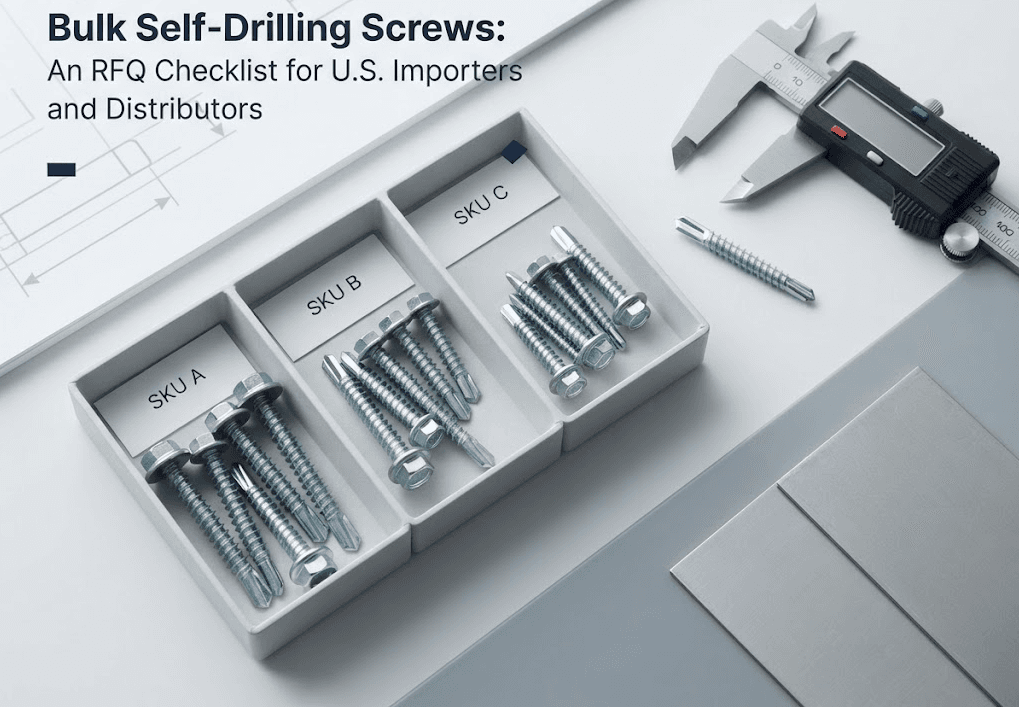
Bulk Self-Drilling Screws: An RFQ Checklist for U.S. Importers and Distributors
When sourcing bulk self-drilling screws, a unit price is only useful if you know exactly what it covers. Two quotations may appear to describe the same product while differing in dimensions, coating, packaging, or delivery conditions. For U.S. importers and distributors managing several SKUs, those differences can make supplier comparisons difficult. A clear request for quotation—an RFQ—helps suppliers understand your requirements and gives your purchasing team a consistent basis for reviewing their offers. This checklist explains what to include, which details need confirmation, and how to turn an initial inquiry into a specification that both buyer and supplier can review.
Want to know more?
Get in touch with us for more information about our services and products.