
Почему биметаллические винты становятся новым стандартом к 2026 году?

Han Congming
АвторМы обладаем опытом производства и продаж винтов и крепежных изделий, располагаем собственным производственным предприятием со стабильными крупносерийными мощностями. Мы специализируемся на самосверлящих винтах, винтах для гипсокартона, винтах для ДСП, машинных винтах, болтах и индивидуальных крепежных изделиях для строительства и промышленности.
Short answer: for exposed steel-to-steel fastening in metal roofing, wall cladding, light steel framing, solar mounting, and electrical support, bi-metal screws have become the practical 2026 default. They are not a universal standard, and they should not be sold as one.
Bi-metal self-drilling screws (often written bimetal screws) are not new. Welding a hardened carbon steel drill point to a stainless steel body has been a practical way to fasten metal roofs, wall panels, and light steel frames for years.
The term is written both ways. Bimetal screws and bi-metal screws refer to the same construction.
What is new is how often the bi-metal construction now appears as the default line in a 2026 specification, rather than as an upgrade line in a quotation.
That shift is easy to misread. "New standard" does not mean every screw on every project should be bi-metal. It means that for a growing group of exposed steel-to-steel connections, the burden of proof has moved. A coated carbon steel screw now has to prove that it is good enough for the exposure. A bi-metal screw is increasingly the baseline that the alternatives are measured against.
This article explains why that happened, where the line should be drawn, and what a 2026 bi-metal specification should contain. It is written for importers, distributors, fabricators, and project buyers who have to defend the choice after the building is occupied.
Why 2026 is the inflection point
Three changes converged in 2026:
- The project mix moved toward exposed, long-life, steel-to-steel assemblies.
- The cost of a fastener failure rose faster than the price difference between fastener options.
- Buyers began specifying the construction, not just the material grade.
The result is a screw that separates two jobs that used to be compromised in one material: corrosion protection on the exposed body, and hard drilling at the point.
It is not a universal standard. In dry indoor assemblies, thin sheet, mild exposure, or a tight commodity budget, a good coated carbon steel screw can still be the correct choice. In severe chloride or chemical service, even a bi-metal screw may need a 316 body and a project-specific corrosion review.
The 2026 project mix favors the bi-metal construction
Fastener demand follows the buildings being built. In 2026, several of the strongest construction segments share the same fastening problem.
| 2026 segment | What the fastener has to do | Why bi-metal enters the conversation |
|---|---|---|
| Metal roofing and wall cladding | Drill through panel and purlin, seal the penetration, survive weather | Stainless exposed body plus a hard drill point and EPDM washer |
| Metal roofing retrofit | Fix new material over an existing structure with limited access | Predictable drilling and fewer callbacks in occupied buildings |
| Light steel framing and PEB | Steel-to-steel connection at varying thickness | Drill-point capability with an exposed corrosion-resistant body |
| Data centers and electrical support | Fix trays, busbar, enclosures, and supports | Corrosion resistance, vibration, and maintainable connections |
| Commercial solar | Attach mounts and rails to steel or roof structures | Mixed-metal contact, weather exposure, and long service life |
Those segments are large enough to change what distributors stock and what project teams specify.
The Metal Construction Association's 2026 market study projects U.S. metal roofing shipments of about 4.775 billion square feet in 2026 and 4.876 billion square feet in 2027. It also estimates that roughly 96% of residential metal roofing is retrofit or replacement. Retrofit work is less forgiving: the installer is working around an existing building, access is constrained, and a leaking or loose fastener is expensive to revisit.
Data center construction adds a different kind of demand. ConstructConnect recorded $135.8 billion of U.S. data center starts from January to September 2026, with a further $748 billion planned over the next six months. Those are planned starts, not committed orders. They still show where the electrical support, cable tray, busbar, enclosure, cooling, grounding, and roof-penetration work is likely to be.
Commercial solar has its own timing pressure. Under IRS Notice 2025-42, qualifying wind and solar facilities that begin construction after July 4, 2026 and are placed in service after December 31, 2027 can lose the relevant credit. That is a tax rule, not a fastener rule, and project eligibility belongs with the project's tax adviser. The procurement effect is still real: projects that proceed will compress design, sourcing, and installation into a shorter window.
This is a specification trend, not a market-share statistic. None of these segments is "a bi-metal market" by definition. What they share is a connection that is exposed, hard to revisit, and required to drill into steel. That is exactly the combination bi-metal was designed for.
The cost of failure changed the buying math
For years, the fastener conversation was dominated by unit price. A screw is a small line in a bill of materials, so buyers naturally compared cents per piece.
That math works only when a failed screw is also a small cost. In 2026, it is not.
Three signals from the U.S. market explain the shift:
- Fastenal's Q3 2026 results showed direct fastener and hardware daily sales up 16.8%, with price contributing about 240 basis points and inventory up only 3.1%. Distributors are moving more product without carrying proportionally more stock.
- AGC, citing BLS data, reported that U.S. nonresidential construction input prices were up 11.9% year over year in September 2026, the highest in four years, with steel, aluminum, diesel, and transport pressure spreading.
- AIA's September 2026 Architecture Billings Index was 44.7, with new design contracts at 43.7. The forward pipeline is weaker even while current fastener demand holds up.
Put those together and the buyer's problem changes. Inventory slack is thinner. Material and rework costs are higher. A callback that requires access equipment, removal of finished panels, water-damage repair, and a warranty conversation can cost many times the price difference between a commodity screw and a properly specified one.
This is why "total installed cost" has become a more useful comparison than "price per thousand":
Purchase price + installation time + rework + callbacks + warranty + inventory risk.
A bi-metal screw rarely wins the first line. It can win the total because the joint is less likely to be revisited.
The specification language matured
The third change is less visible than a shipment number. It is the way buyers write the requirement.
A few years ago, an RFQ could say "stainless self-drilling screw" and leave the rest to the supplier. In 2026, a serious buyer is more likely to ask:
- Which stainless grade is the body: 304, 316, or another grade?
- Which material is the drill point, and how is it hardened?
- How is the weld or transition controlled and inspected?
- What coating covers the point, the thread, and the weld zone?
- What total steel thickness and steel strength has the point been tested on?
- Which EPDM compound and washer construction are being supplied?
- Which batch record, certificate, and test report will come with the shipment?
That list is not academic. It is how a buyer protects a project when the supplier, the production batch, or the country of origin changes.
It is also how a product becomes a standard. A standard is not a certificate on the wall. It is a shared vocabulary that lets a buyer compare two offers and know what is being compared. Bi-metal has moved into that role because the construction forces the conversation onto the details that matter: body grade, point, weld, coating, capacity, and evidence.
That is the difference between a catalog item and a specified component.
Why the older single-material answers reached their limits
Bi-metal did not become the default because it is new. It became the default because the older answers each carry a compromise that more 2026 projects are unwilling to accept.
| Option | What it does well | Where it runs into trouble | 2026 role |
|---|---|---|---|
| Coated carbon steel | Economical, strong, widely available | Coating damage at the point, thread, and cut edges; corrosion at exposed damage | Still the right baseline for dry indoor and mild exposure |
| 410 stainless | Can be hardened; good drilling | Lower corrosion resistance than 304, especially in chloride and wet conditions | Niche, controlled, or coated applications |
| 304 stainless | Good general corrosion resistance | Drill-point hardness and capacity still have to be verified | Corrosion-first applications where drilling demand is modest |
| Bi-metal | Stainless body plus a hardened carbon point | Weld, point coating, body grade, and drill capacity must be controlled | Default for exposed steel-to-steel where both corrosion and drilling matter |
The key point is that none of these is "bad." They are different answers to different questions.
A coated carbon steel screw is a sensible, cost-effective choice for a dry warehouse, an internal partition, or a protected equipment enclosure. It becomes a weak choice when the coating is damaged during installation and the connection stays wet.
A 410 screw can offer hardness, but it should not be treated as an outdoor equivalent simply because it is called stainless. In a chloride-rich environment, the corrosion trade-off may overwhelm the drilling benefit.
A 304 screw offers good general corrosion resistance, but the finished drill point still has to suit the substrate. The body grade does not guarantee the drilling performance.
Bi-metal exists to stop compromising one requirement to satisfy the other. The stainless body handles the exposed surface. The hardened carbon steel point handles the drilling. The engineering work moves to the joint between them, and to the coating that protects it.
What "bi-metal" actually means
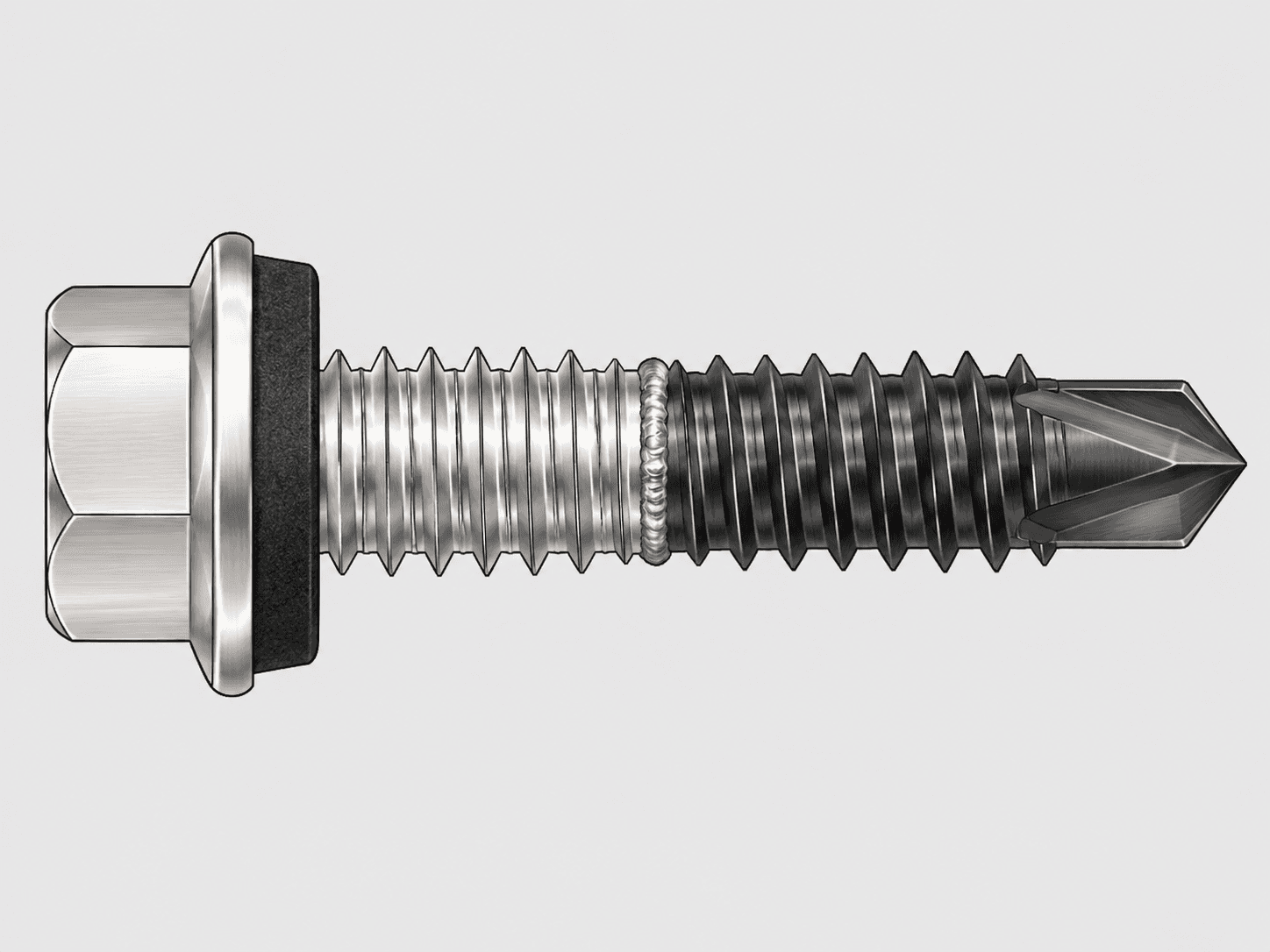
A bi-metal self-drilling screw is a construction, not a grade.
A typical screw has:
- a stainless steel body and head, commonly 304 or 316;
- a hardened carbon steel drill point and lead thread;
- a welded transition between the two materials;
- local hardening at the drill point;
- a coating or surface treatment selected for the finished screw;
- an optional EPDM or sealing washer for exterior connections.
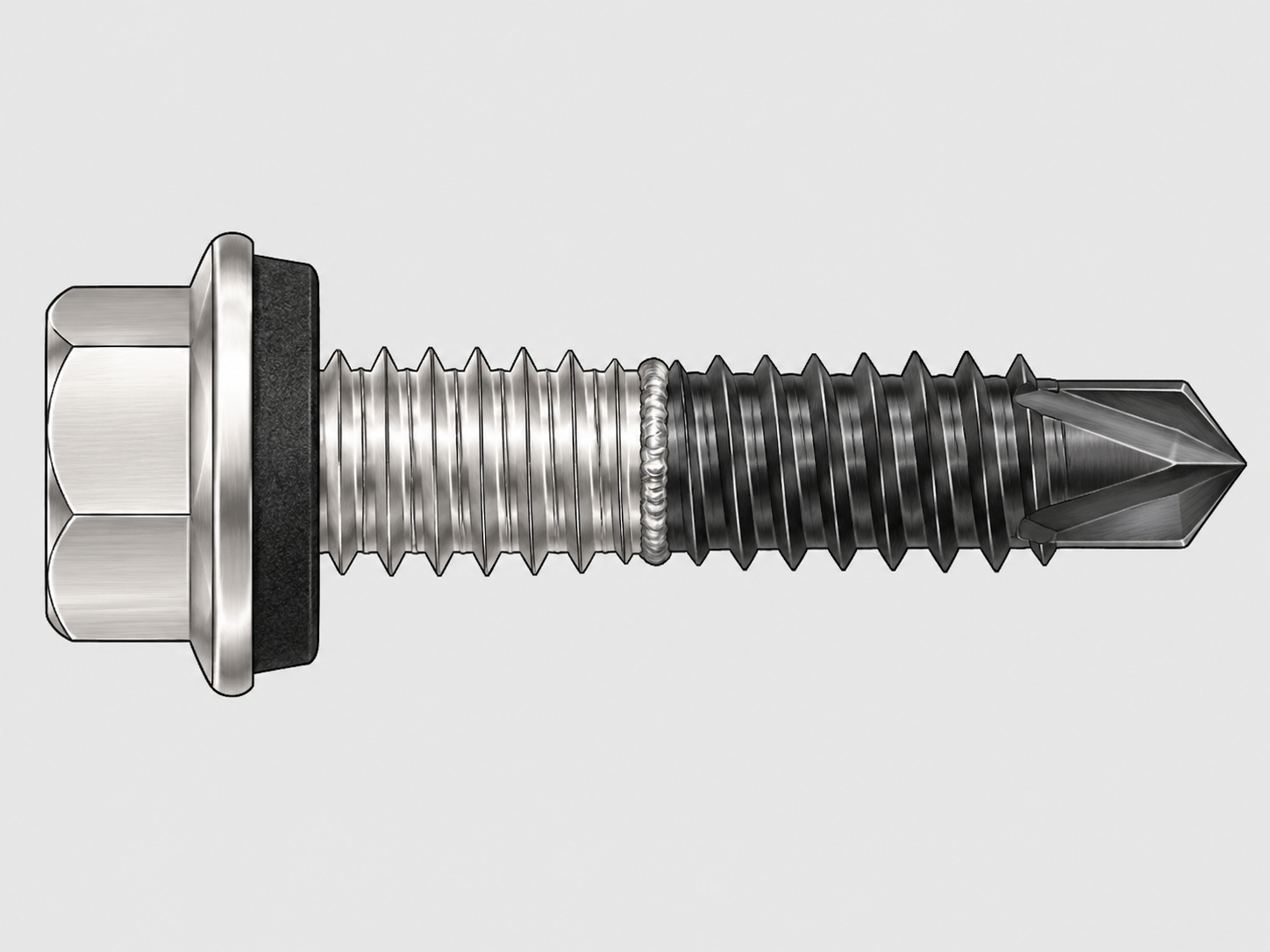
That construction is why the screw can be corrosion-resistant on the exposed body and hard enough to drill steel. It is also why "bi-metal" alone is not a specification.
Two suppliers can both sell a "bi-metal self-drilling screw" and deliver different products:
- one may use a 304 body and another a 316 body;
- one may control the weld hardness and another may not;
- one may coat the point and weld zone and another may leave them bare;
- one may have a tested drill capacity and another may repeat a catalog number;
- one may offer a bonded EPDM washer and another a loose washer.
Those differences do not show up in a photo. They show up in a specification, a sample trial, and a batch record.
The same discipline applies to self-tapping screws. The difference is whether the screw drills its own hole or needs a pilot hole; the material, coating, washer, and evidence questions remain.
For a construction-level explanation, see the bi-metal self-drilling screw guide.
Where bi-metal is the right 2026 default
Bi-metal earns the "default" label in applications where four conditions are present at the same time:
- the connection is exposed to weather or moisture;
- the screw must drill into steel, often through more than one layer;
- the connection is difficult or expensive to revisit;
- the specification requires a corrosion-resistant exterior.
That combination is common in the following applications.
Metal roofing and wall cladding
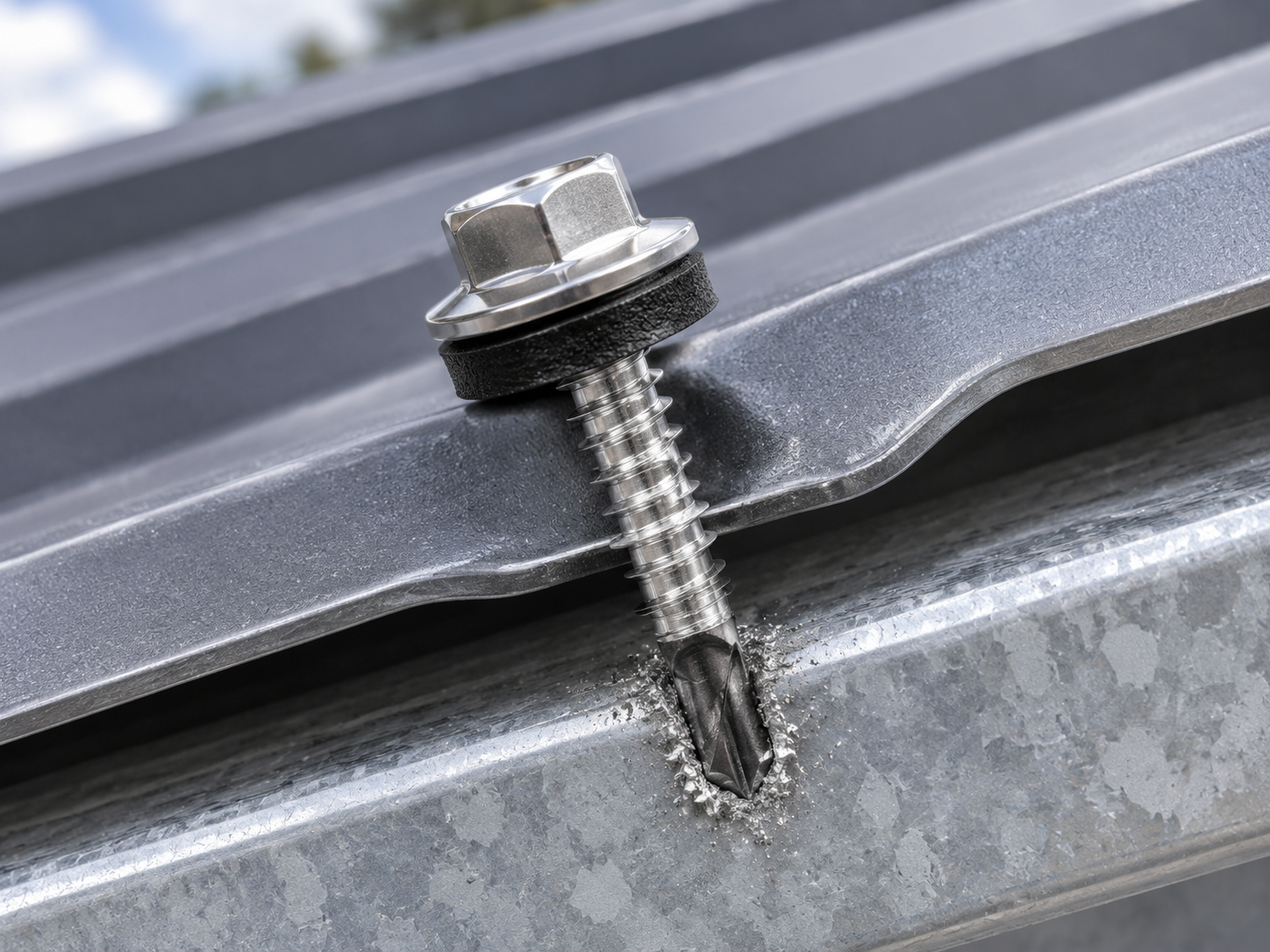
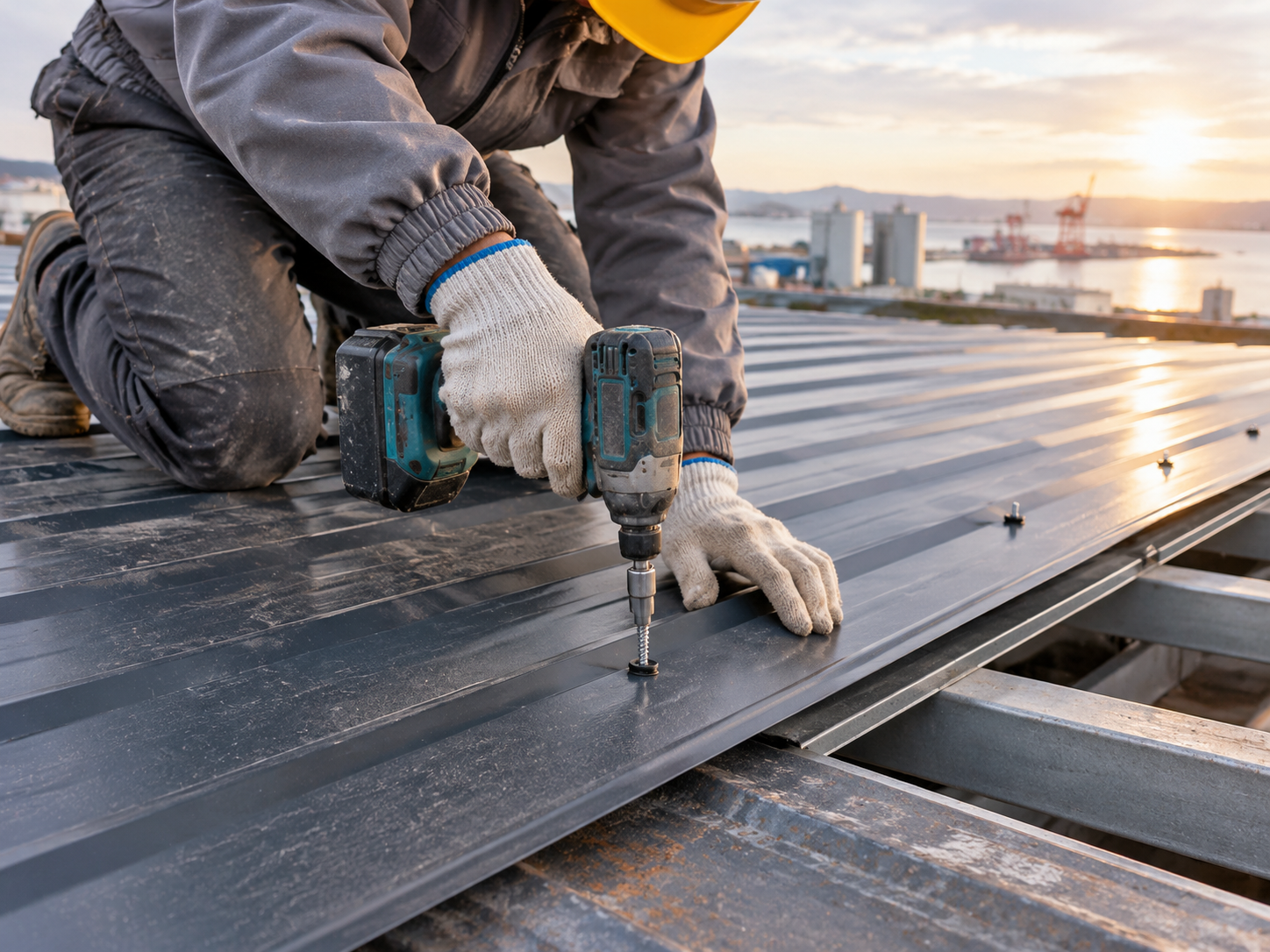
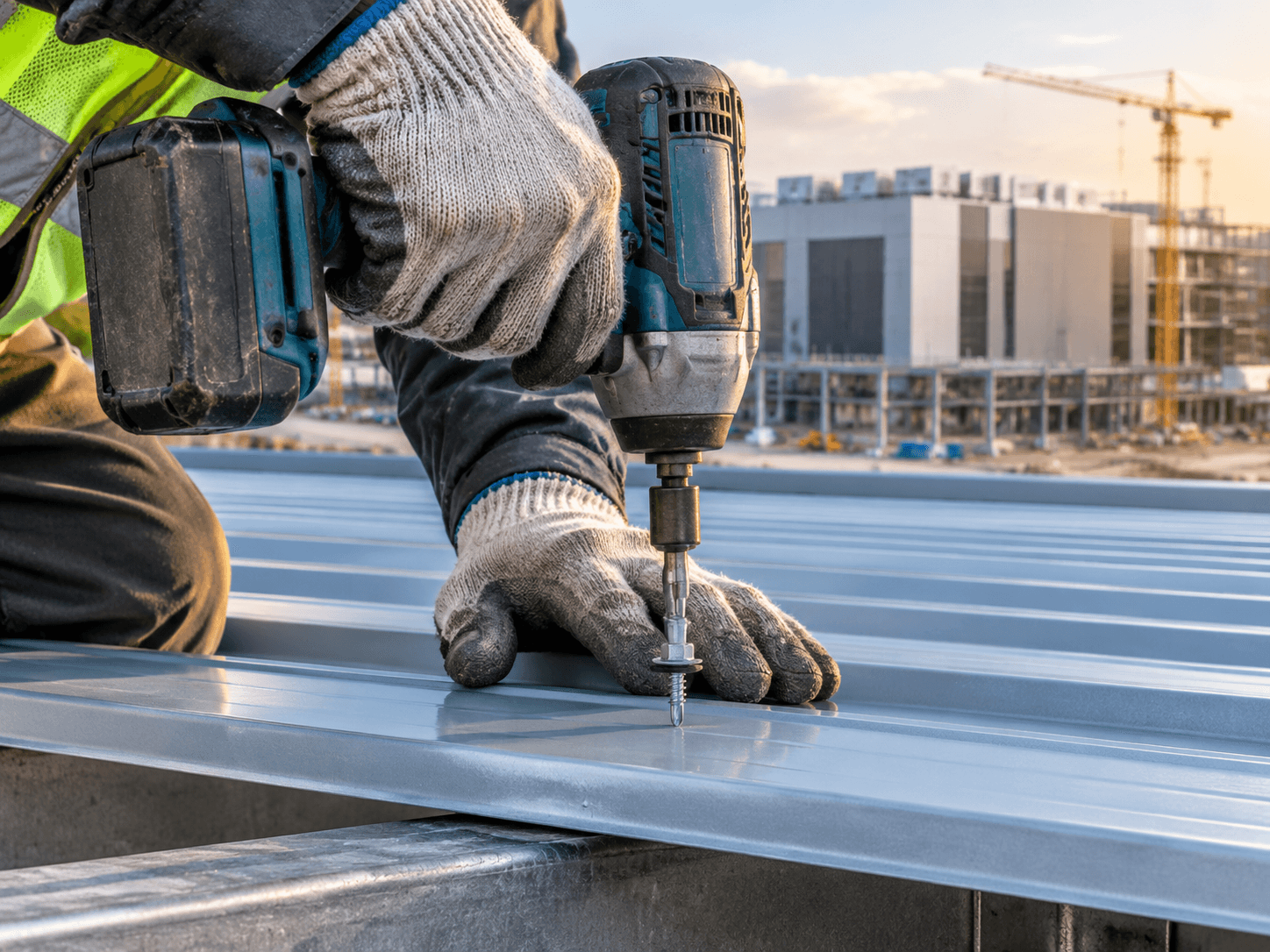
Exposed roofing screws have to do three jobs: drill, fasten, and seal. A bi-metal screw with a stainless body and a hardened point can address the drilling and corrosion sides, while a bonded EPDM washer addresses the sealing side.
The washer is not an accessory. It is part of the assembly. Confirm the EPDM compound, the metal backing, the washer diameter, and the compression behavior. An under-compressed washer can leave a water path; an over-compressed washer can be permanently deformed.
For visible work, confirm color matching and touch-up requirements for the head and washer as well. A color match is a finish decision; it is not evidence of corrosion performance.
For the installation side, see the metal roofing screw callback checklist.
Light steel framing, PEB, and steel-to-steel connections
In a steel-to-steel connection, the drill point has to penetrate the total thickness of every layer, not just the first sheet. The body has to survive the exposure after installation. A bi-metal screw can be a good fit when the connection is exposed and the substrate is thicker than a single light-gauge sheet.
The specification still has to state the total steel thickness, the steel grade or strength, and the tested capacity of the exact point. A screw that drills 1.5 mm sheet is not automatically suitable for a 6 mm structural section.
Data centers and electrical support
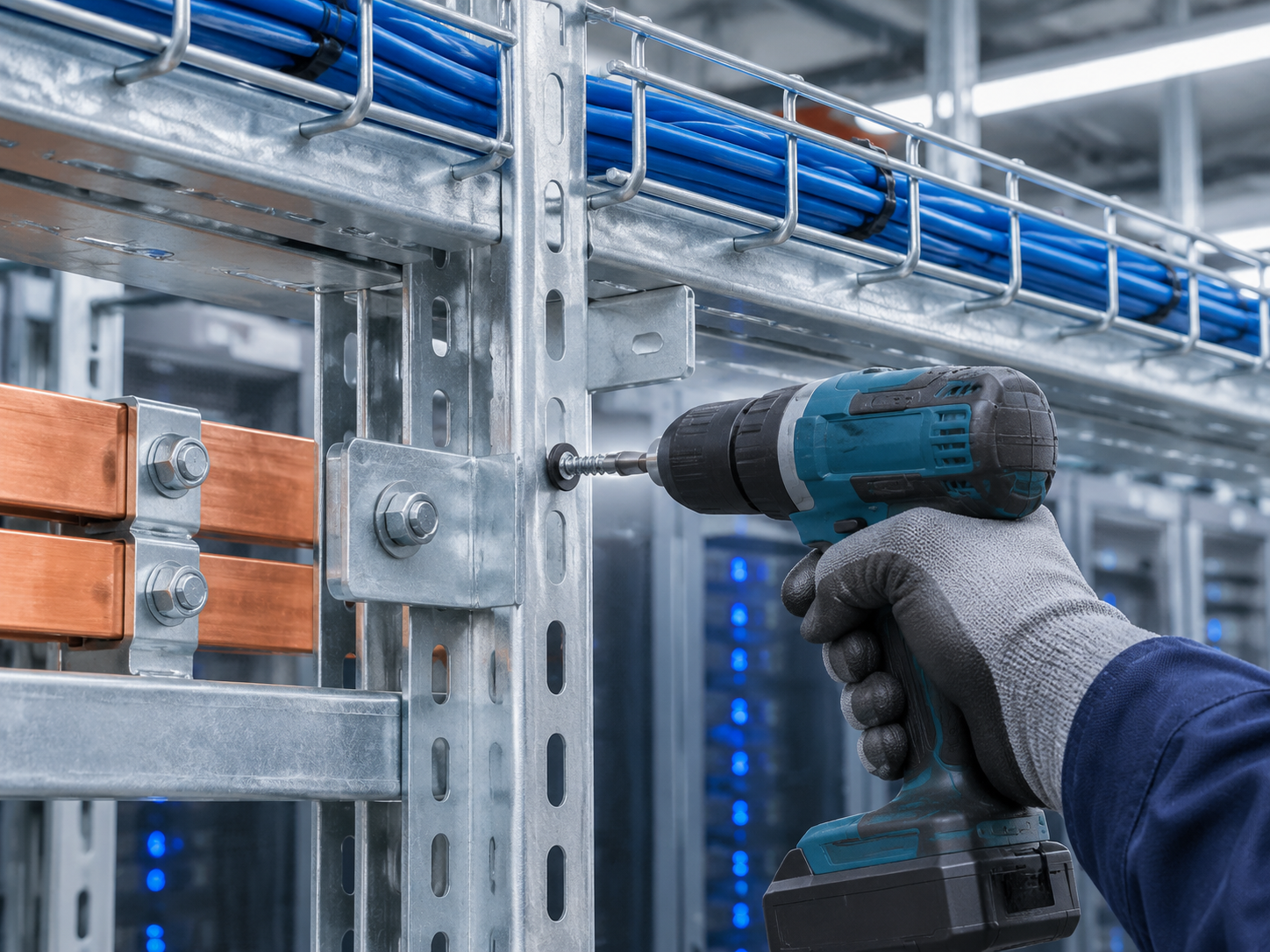
Data center fasteners are usually discussed in the context of cable tray, busbar, switchgear enclosures, cooling equipment, grounding, and vibration. The fastener is rarely the headline component, but it is part of the support system.
In these applications, ask about corrosion resistance in the actual room or outdoor enclosure, the effect of vibration on the connection, the installation tool and torque, and whether the fastener is accessible for maintenance. A bi-metal screw may be appropriate for exposed or humid areas; a coated carbon screw may be sufficient in a dry, controlled electrical room. The application decides.
Commercial solar mounting
Solar mounting brings mixed metals, weather exposure, and a long service life into one joint. Stainless fasteners are often used with aluminum rails, galvanized steel, or coated steel components. The galvanic couple, the drainage, and the washer material matter as much as the screw body.
Bi-metal can be a reasonable option when the screw has to drill steel and remain exposed. It is not a solution to a bad mixed-metal detail. If aluminum is in the assembly, ask about isolation and review the joint with the project engineer.
Retrofit and coastal repair
Retrofit work concentrates the risk. The building is occupied, the access is limited, and the existing substrate may not match the original drawing. A fastener that drills predictably and resists corrosion reduces the chance of a return visit.
In coastal or high-chloride locations, the body grade becomes a project decision. A 304 body may be adequate in some sheltered conditions; a 316 body may be more appropriate in severe exposure. "Bi-metal" alone does not answer that question.
Where bi-metal is not the automatic answer
A "new standard" story becomes misleading if it turns into "bi-metal everywhere." It is not the right choice in every case.
| Situation | Better starting point | Why |
|---|---|---|
| Dry indoor assembly, mild exposure | Zinc-plated or coated carbon steel | Lower cost, adequate performance, easier availability |
| Thin sheet with light load | Coated carbon steel or 304, depending on exposure | Bi-metal may add cost without solving a real problem |
| Severe chloride, chemical, or washdown | 316 body or a higher-alloy option; project corrosion review | The body grade and environment, not the construction label, decide |
| Aluminum or dissimilar-metal joint | Material pair selected for the joint; isolation may be required | Galvanic corrosion is a system problem |
| Code-governed structural connection | Fastener selected by the structural engineer | A catalog screw is not a structural approval |
| Commodity order where the specification allows coated carbon | Coated carbon steel | Do not upgrade the product without upgrading the reason |
The practical rule is simple: use bi-metal when the exposure and the drilling demand occur together, and when the cost of a callback is real. If one of those conditions is missing, a simpler product may be the better engineering and commercial choice.
The ten-line 2026 bi-metal specification
If bi-metal is the default, the specification has to be precise enough to compare suppliers. A 2026 RFQ should be able to fit the critical requirements into ten lines:
- Body grade: 304, 316, or another grade, stated explicitly.
- Point material: carbon steel grade and hardening condition.
- Weld or transition: how the two materials are joined, and how the joint is inspected.
- Coating: system, thickness, and coverage on the head, body, thread, point, and weld zone. Name the system, whether zinc, zinc-aluminum flake, Ruspert-type, or another finish.
- Drill capacity: total steel thickness, steel strength, and the test method used to establish it.
- Thread and dimensions: thread form, diameter, length, and tolerance.
- Head and drive: head type (hex washer, pan, truss, countersunk), drive type, and driver bit.
- Washer: EPDM compound, backing material, dimensions, and bonded or loose construction.
- Installation: tool, speed, torque, clamping, and any access limits.
- Evidence: material certificate, test report scope, batch traceability, and sample approval.
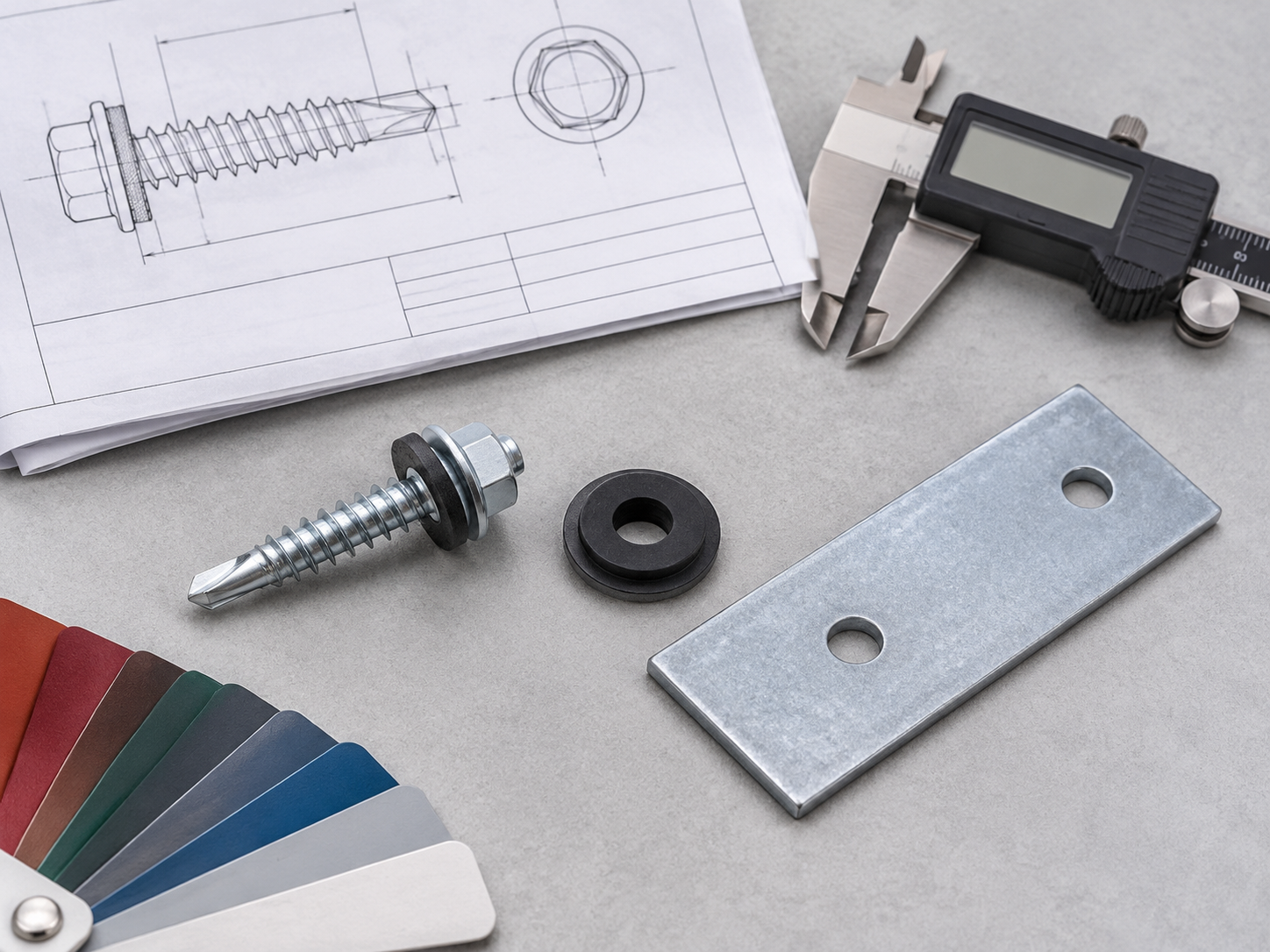
A quotation that cannot answer these ten lines is not a comparable quotation, even if the price looks lower.
How to compare bi-metal suppliers
Price comparison is the last step, not the first. Before comparing cents per piece, compare the product and the evidence.
| What to ask | A good answer | A warning sign |
|---|---|---|
| Which stainless grade is the body? | A stated grade with a certificate | "Stainless steel" with no grade |
| Which material is the point? | A stated carbon steel grade and hardening process | "Hardened point" with no detail |
| How is the weld controlled? | A described process and inspection method | No answer, or a claim that the weld "never fails" |
| What is the tested drill capacity? | A stated thickness, steel grade, and test method | A catalog number copied from another product |
| What coating covers the point and weld? | A named system with thickness and coverage | A coating name with no specification |
| Can you show a batch record? | A traceable batch and inspection record | A generic certificate for a different product |
| Can you match the sample in mass production? | A defined sample approval and first-article process | "Same as sample" with no record |
| What is the MOQ and lead time? | A clear trigger and production schedule | A lead time with no starting point |
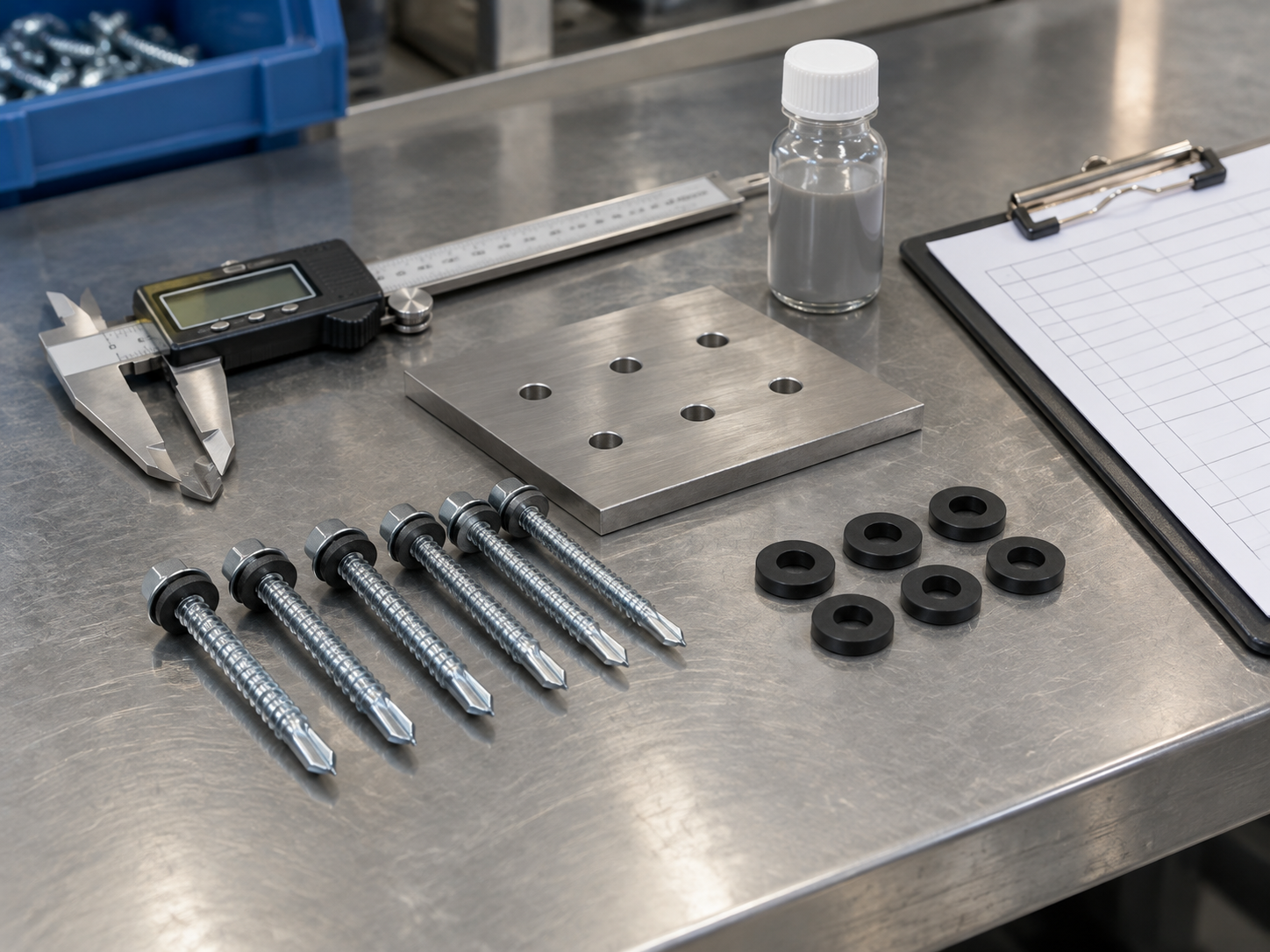
The most useful test is still the sample trial on the actual assembly. Record the substrate, the total thickness, the tool, the speed, the torque, the operator, and the result. A sample that drills well on a bench but fails on a vertical panel is not an approval.
For drill-point selection, use the self-drilling screw drill point chart to narrow the options, then confirm the exact product with a trial.
RFQ checklist
Send the following with your inquiry:
- application and connection drawing or photo;
- each layer, material, and thickness;
- steel grade or strength, if known;
- indoor, outdoor, coastal, industrial, or chemical exposure;
- expected service life and maintenance assumption;
- body grade and point requirement, if already specified;
- head, drive, diameter, length, and thread;
- washer type, EPDM requirement, and sealing detail;
- coating system, color, and coverage;
- installation tool, access, and torque limit;
- sample quantity and trial method;
- certificate, test report, and batch traceability requirements;
- packaging, labeling, OEM requirements, mixed-SKU rules, MOQ, and destination.
If a field is unknown, say so. A supplier who asks the right questions is easier to qualify than one who quotes a generic screw.
Five myths about bi-metal screws
"Bi-metal means rust-proof." No. It means a stainless body and a hardened point. The body grade, point protection, weld zone, coating, installation damage, and environment still decide the corrosion outcome.
"More stainless is always better." A 316 body may be appropriate in severe chloride exposure, but it is not automatically the right choice for every project. The environment and the joint decide.
"Any heavy-duty point drills any steel." Drill capacity is specific to the point geometry, hardness, substrate strength, and total thickness. Confirm the tested capacity for the exact product.
"A longer salt-spray number means a longer service life." A salt-spray report, such as one run to ASTM B117, is a controlled test, not a service-life prediction. The method, specimen, coating, and failure criterion have to match before two reports can be compared.
"The lowest price per thousand is the lowest project cost." Not if it leads to rework, callbacks, or a warranty claim. Compare the total installed cost and the evidence behind the product.
FAQ
Are bi-metal screws the same as 304 stainless screws?
No. 304 is a stainless steel grade. Bi-metal describes a construction that usually combines a stainless body with a hardened carbon steel drill point. A bi-metal screw can have a 304 or 316 body, so the terms are not interchangeable.
Are bi-metal screws worth the price premium?
They can be, when the connection is exposed and difficult to revisit. The value comes from reducing the risk of corrosion, drilling failure, and callbacks. In a dry indoor assembly with mild exposure, a coated carbon screw may be the better value.
Can bi-metal screws be used on coastal projects?
They can be considered, but the body grade and the complete assembly have to match the exposure. A 304 body may be adequate in some sheltered coastal conditions; a 316 body may be more appropriate in severe chloride exposure. Review the joint, washer, and maintenance assumptions with the project engineer.
Do bi-metal screws need a special driver?
They need a driver bit that matches the head and drive, and an installation method that suits the screw and substrate. Confirm the bit, speed, torque, and clamping requirement with the supplier. Do not assume that a higher torque improves the connection.
Can ScrewTrade supply bi-metal screws to my specification?
ScrewTrade's bi-metal self-drilling screw range is intended for metal roofing, steel framing, and industrial fastening, with technical confirmation and sample support. The exact body grade, point, coating, washer, dimensions, and tested capacity depend on the SKU and the application. Send your application details or RFQ with a drawing, photo, or existing sample reference.
The standard is not the label. It is the evidence.
Bi-metal screws are becoming the 2026 default because they solve a problem that more projects now have: a corrosion-resistant exterior and a hard drill point in the same exposed steel-to-steel connection.
But the label is not the standard. The standard is the specification behind it: the body grade, the point material, the weld, the coating, the drill capacity, the washer, the installation method, and the batch evidence.
If you are building a 2026 specification for metal roofing, light steel framing, solar, or electrical support, start with the connection and the exposure. Then ask for the ten lines. The right supplier will answer them before quoting.
Related News
Other news you might be interested in
Карта спроса на крепеж в 2027 году: центры обработки данных, энергетика и промышленные проекты
Прогноз по крепежу на 2027 год — это не широкое восстановление. Это карта проектных ниш — и самые сильные ниши — это центры обработки данных, энергетика и отдельные промышленные работы. Направление уже видно в результатах компаний за конец 2026 года. Hilti сообщила о росте продаж в местной валюте на 5,9% за первые восемь месяцев 2026 года, с двузначным ростом в Америке и Азиатско-Тихоокеанском регионе, при этом описав традиционное строительство как слабое. Продажи LISI в аэрокосмической отрасли выросли на 14,3% за первые девять месяцев, но продажи в автомобильной отрасли упали на 5,2%. Продажи Bossard в третьем квартале выросли на 12%, чему способствовал спрос на центры обработки данных в Америке и расширение полупроводниковой и электронной промышленности в Азии.
Что такое биметаллический саморез и зачем он нужен для алюминиевой кровли?
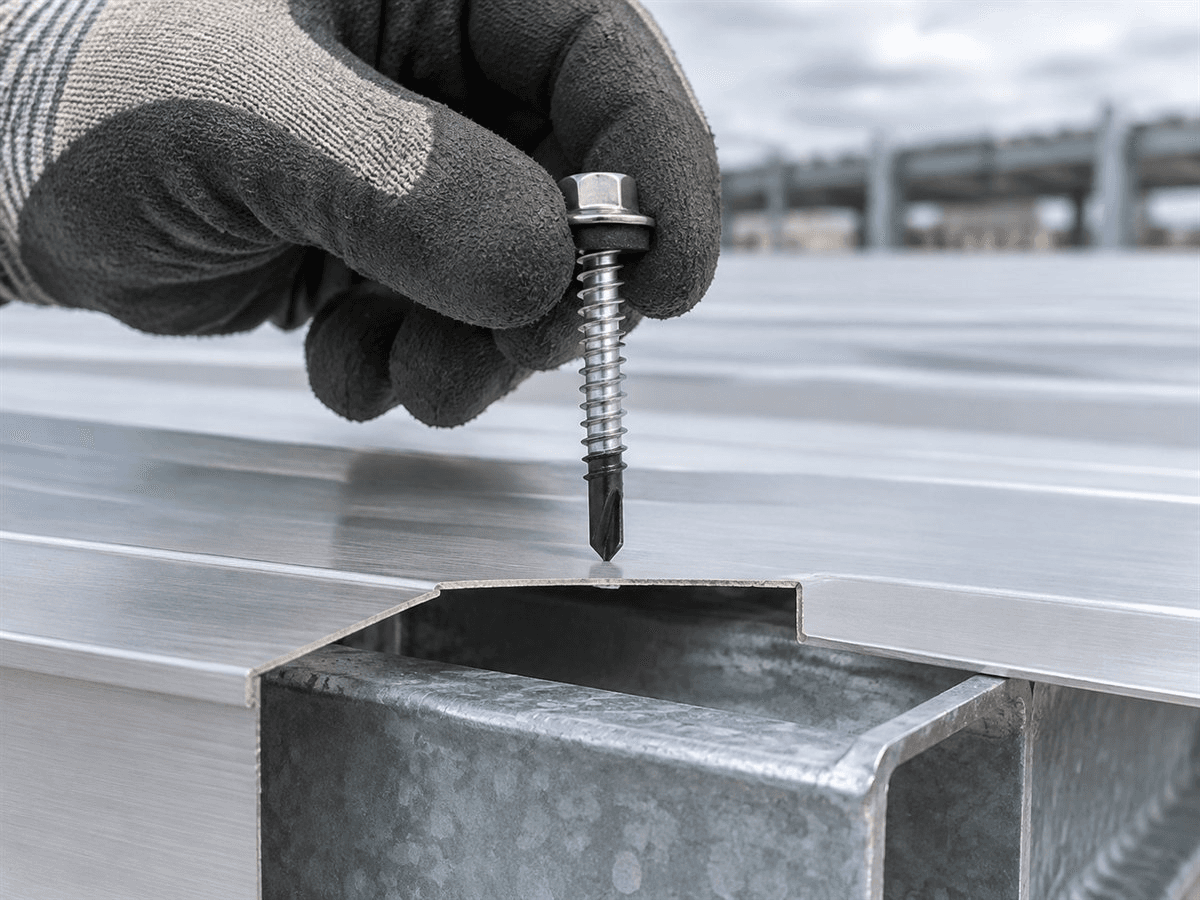
Биметаллический саморез — это крепежное изделие, изготовленное из двух металлов, выполняющих разные функции. В кровельных работах распространенная конструкция включает головку и корпус из нержавеющей стали, а также закаленную углеродистую сталь для сверла и ведущей резьбы. Нержавеющая часть обеспечивает устойчивость к коррозии на открытой кровле; закаленное сверло просверливает стальной прогон, ригель или каркас. Алюминиевая кровля часто требует такой комбинации, когда алюминиевая панель крепится непосредственно к стальной подконструкции, поскольку панель мягкая и коррозионностойкая, но саморез должен просверлить сталь и выдержать погодные условия. Биметаллический саморез не является гарантией: марка нержавеющей стали, способность сверла, покрытие, шайба и детали соединения алюминия со сталью все равно должны быть определены.
Want to know more?
Get in touch with us for more information about our services and products.