
A Practical Guide to Selecting Fasteners for Machinery, Steel Structures, and Equipment Assembly

Han Congming
AuthorWith experience in screw and fastener manufacturing and sales, we operate our own production facility with stable large-scale capacity. We are specialists in self-drilling screws, drywall screws, chipboard screws, machine screws, bolts, and customized fasteners for construction and industrial applications.
Summary
Industrial fastener purchasing is becoming more application-driven. Buyers are no longer choosing screws, bolts, nuts, or anchors only by size and unit price; they are comparing load requirements, installation efficiency, vibration risk, corrosion exposure, surface finish, and long-term maintenance cost. For machinery, steel structures, and equipment assembly projects, the right fastener selection can directly affect production stability, installation speed, safety performance, and after-sales reliability.
Industrial Buyers Are Moving From “Standard Parts” to Application-Matched Fasteners
In many industrial projects, fasteners are still treated as small components with limited influence on the final system. However, procurement teams are increasingly finding that fastener failure can create large operational risks. A loose nut may stop a machine. A poorly matched screw may damage thin metal sheets. An unsuitable surface treatment may lead to early corrosion in outdoor or humid environments.
This is why modern fastener sourcing is shifting from simple specification matching to application-based selection. Before confirming a bulk order, buyers need to understand where the fastener will be used, what materials it will connect, what loads it must bear, and what environmental conditions it will face during service.
Start With the Application Scenario
The first selection question is not “What size do we need?” but “What job must the fastener perform?”
For machinery, vibration and dynamic load are major concerns. Fasteners used in motors, frames, conveyors, production equipment, construction machinery, and rotating systems must maintain clamping force over time. In these cases, anti-loosening performance is often more important than basic tensile strength alone.
For steel structures, buyers usually focus on installation efficiency, holding force, drilling performance, and corrosion resistance. Fasteners may need to connect metal sheets, purlins, roof panels, light steel frames, equipment housings, or ventilation ducts. A self-drilling design can reduce pre-drilling work and improve site productivity.
For equipment assembly, appearance, fitting tightness, repeatability, and surface finish may become more important. A flat or countersunk head may be required when the surface must remain smooth, while a hex head may be better for high-efficiency installation with sockets or power tools.
Match Fastener Type to Material and Installation Method
Different base materials require different fastening logic. Thin steel plates, aluminum profiles, color steel sheets, and light metal frames often benefit from self-drilling screws because they combine drilling, tapping, and fastening in one step. This helps contractors and assembly workers reduce installation time while maintaining consistent fastening quality.
For example, ScrewTrade’s Hexagon Head Self Drilling Screws Product is suitable for thin steel plates, color steel plates, metal studs, aluminum profiles, roof enclosures, equipment housings, ventilation ducts, and light-duty metal frames. In procurement terms, this type of product is useful when buyers need one fastener solution that supports efficient installation across repeated metal connection scenarios.
The key point is not only that the screw can drill. Buyers should also check drill point design, head type, surface treatment, diameter, length, and compatibility with the actual sheet thickness. A mismatch may cause thread stripping, poor holding force, or installation rework.
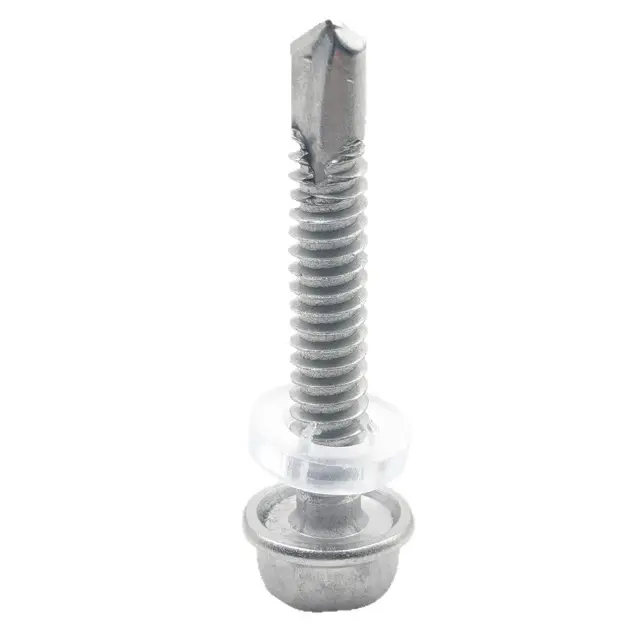
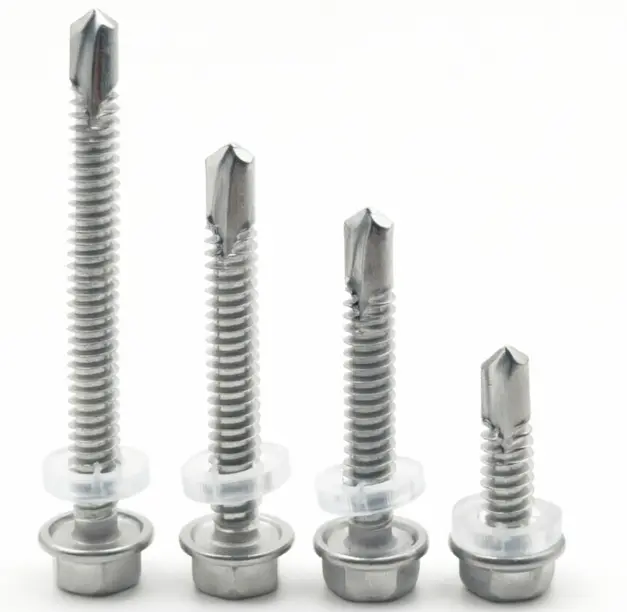
Hexagon Head Self Drilling Screws
Evaluate Vibration and Long-Term Loosening Risk
In machinery and industrial equipment, the main risk is often not immediate breakage. It is gradual loosening after repeated vibration, impact, or load changes. This is especially important for equipment frames, chassis components, production lines, machine tools, power units, and safety-related joints.
In these applications, a standard nut may not provide enough long-term fastening reliability. Buyers should evaluate whether anti-loosening nuts, locking structures, washers, thread-locking solutions, or higher-grade fastening systems are needed.
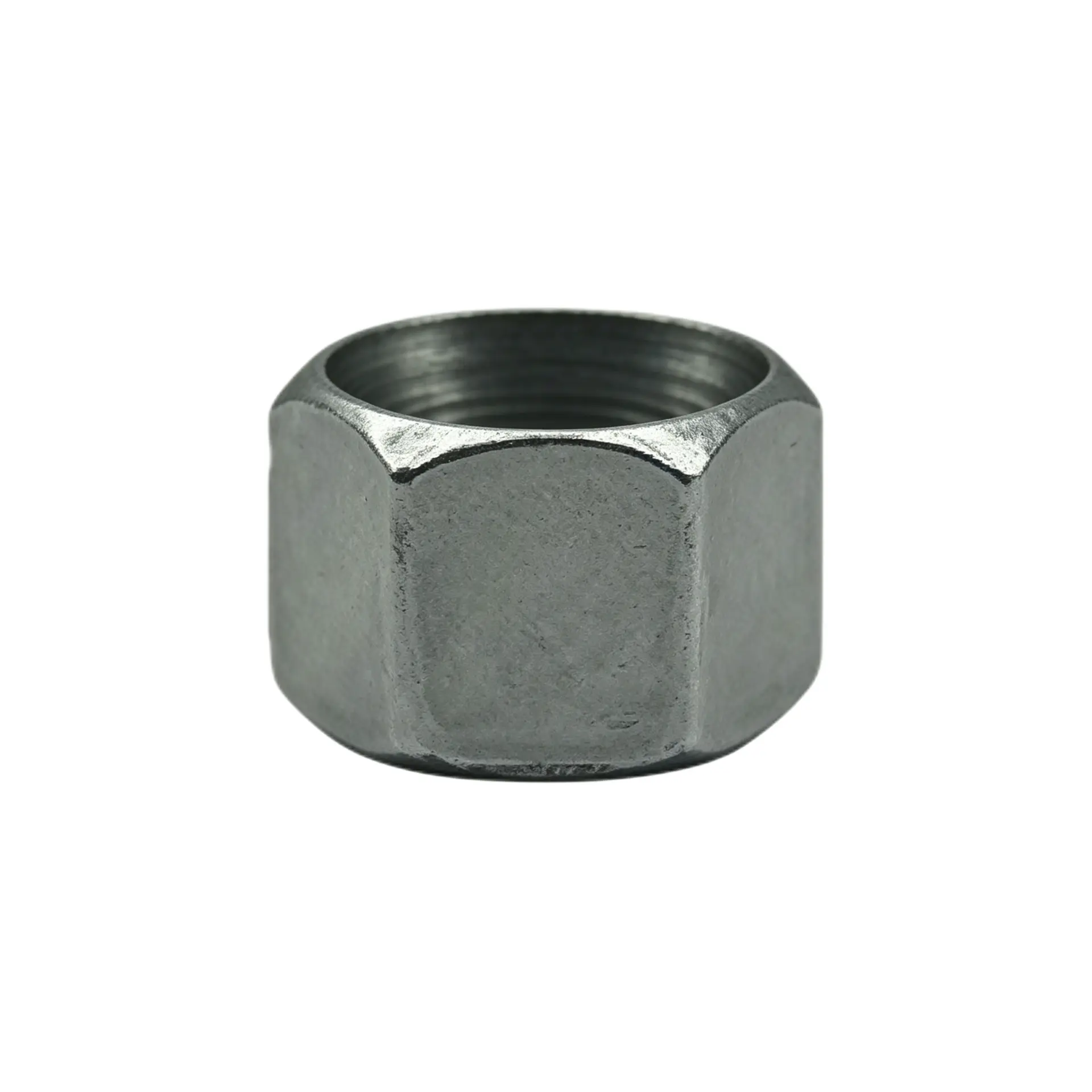
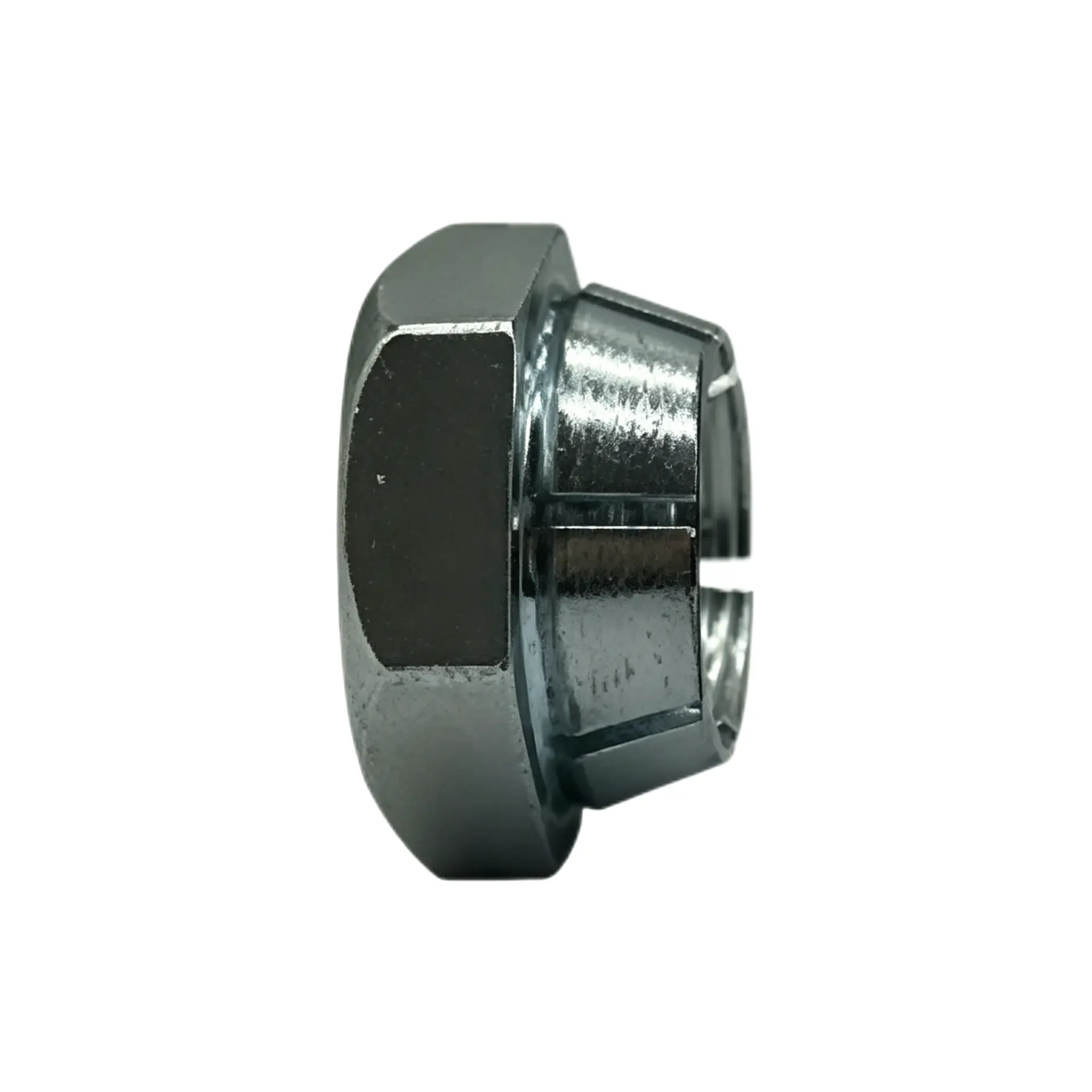
ScrewTrade’s Never Loosen Nut is positioned for vibration-prone and safety-critical applications. For buyers sourcing fasteners for industrial equipment, construction machinery, automotive maintenance, or structural bolted connections, this type of anti-loosening product can help reduce maintenance pressure and improve long-term joint stability.
Surface Treatment Should Match the Service Environment
Surface treatment is another important purchasing factor. Indoor equipment assembly may only require basic zinc plating, while outdoor steel structures, roofing systems, humid workshops, or coastal environments may need stronger anti-corrosion protection.
Buyers should avoid selecting surface treatment only by price. A lower-cost finish may be acceptable for ordinary indoor use, but it can become expensive if early rust, warranty claims, or replacement work occur after installation. For long-term projects, it is better to define the expected service environment before confirming the coating requirement.
The practical approach is to classify applications into indoor, semi-outdoor, outdoor, high-humidity, and high-corrosion environments. Then buyers can align surface treatment, material grade, and inspection standards with each category.
Procurement Teams Should Confirm More Than Dimensions
A complete fastener RFQ should include more than diameter and length. To reduce sourcing risk, buyers should confirm:
- Application material and thickness
- Load and vibration conditions
- Head type and drive type
- Surface treatment and corrosion requirement
- Installation method and tool compatibility
- Packaging format and label requirements
- Inspection criteria and batch consistency
- Delivery schedule and repeat-order stability
This information helps suppliers recommend the correct product instead of only quoting the closest available item. It also reduces misunderstandings during sampling, mass production, and after-sales communication.
The Right Fastener Reduces Total Project Risk
For industrial buyers, the cheapest fastener is not always the lowest-cost choice. A well-selected fastener can reduce installation time, lower maintenance frequency, improve equipment reliability, and support more predictable project delivery.
In machinery, the priority may be anti-loosening and safety. In steel structures, it may be drilling performance, holding force, and coating durability. In equipment assembly, it may be repeatable installation, clean appearance, and batch consistency.
The best sourcing decision comes from matching the fastener to the real working condition. By treating fasteners as functional engineering components rather than simple consumables, procurement teams can make better decisions for machinery, steel structures, and equipment assembly projects.

Related News
Other news you might be interested in
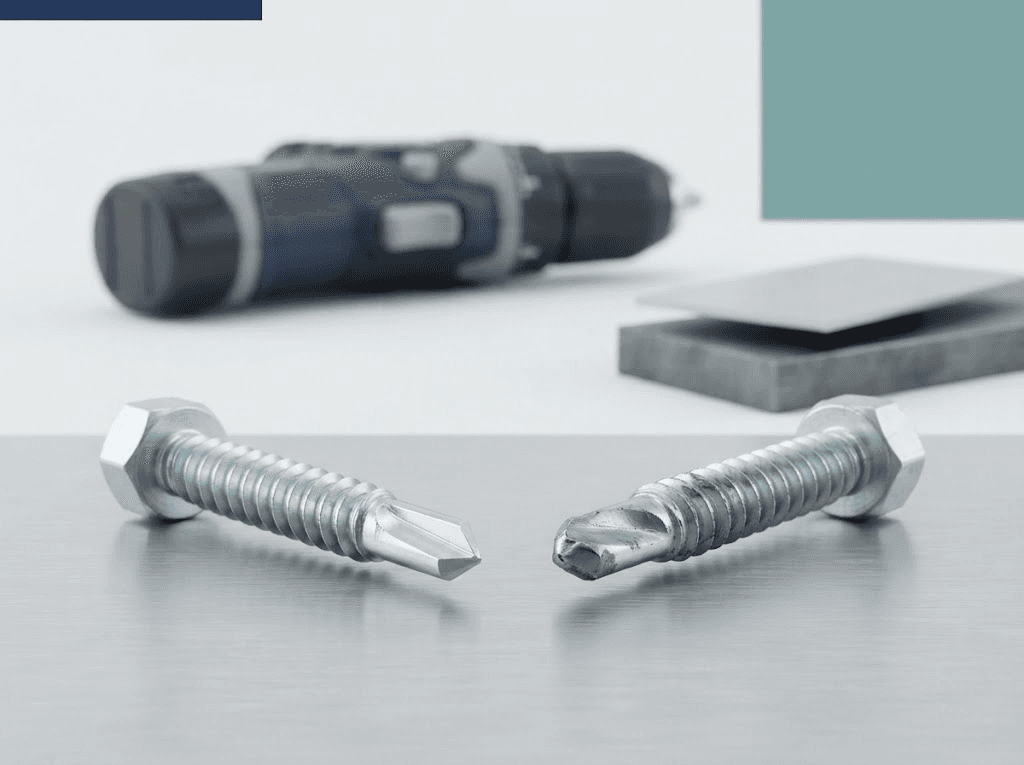
Why Self-Drilling Screws Fail to Drill: A Substrate and Installation Checklist
When a self-drilling screw spins against steel without making progress, the purchasing decision becomes urgent: should the installer change the tool settings, should the buyer order a different screw, or should the supplier investigate the batch?A useful diagnosis starts by identifying exactly where drilling stops. Record the material at that point, check the selected screw against the assembly, and then compare installation conditions. This approach gives buyers a clearer basis for deciding what to change and what evidence to request.
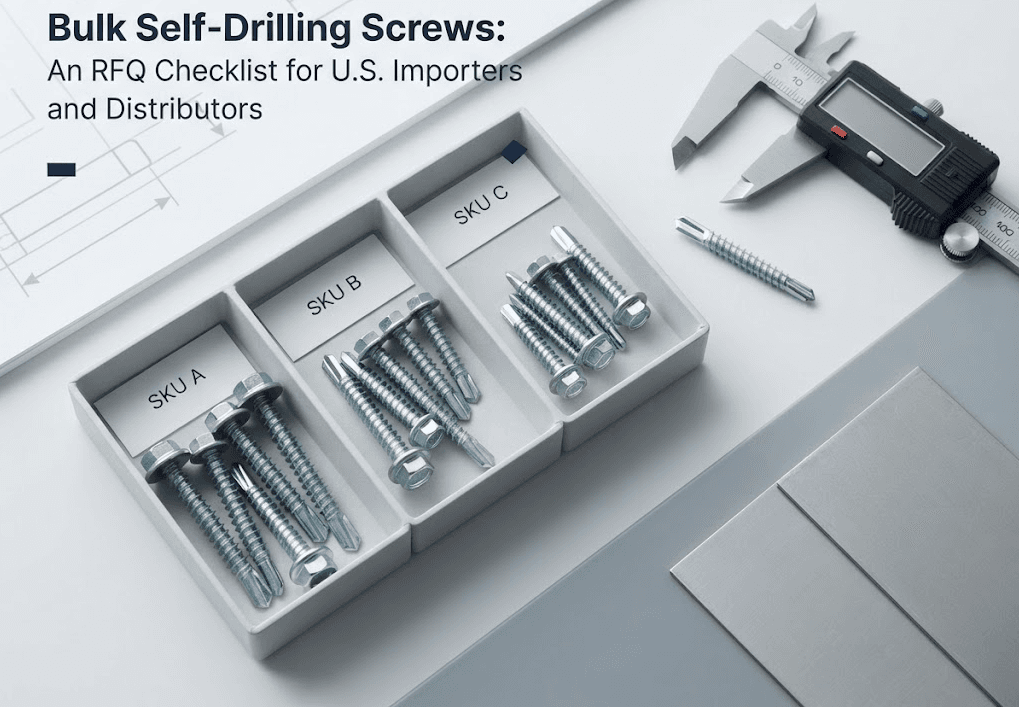
Bulk Self-Drilling Screws: An RFQ Checklist for U.S. Importers and Distributors
When sourcing bulk self-drilling screws, a unit price is only useful if you know exactly what it covers. Two quotations may appear to describe the same product while differing in dimensions, coating, packaging, or delivery conditions. For U.S. importers and distributors managing several SKUs, those differences can make supplier comparisons difficult. A clear request for quotation—an RFQ—helps suppliers understand your requirements and gives your purchasing team a consistent basis for reviewing their offers. This checklist explains what to include, which details need confirmation, and how to turn an initial inquiry into a specification that both buyer and supplier can review.
Want to know more?
Get in touch with us for more information about our services and products.