
EPDM Washer in Roofing Screws: Why It Matters More Than You Think

Han Congming
AuthorWith experience in screw and fastener manufacturing and sales, we operate our own production facility with stable large-scale capacity. We are specialists in self-drilling screws, drywall screws, chipboard screws, machine screws, bolts, and customized fasteners for construction and industrial applications.
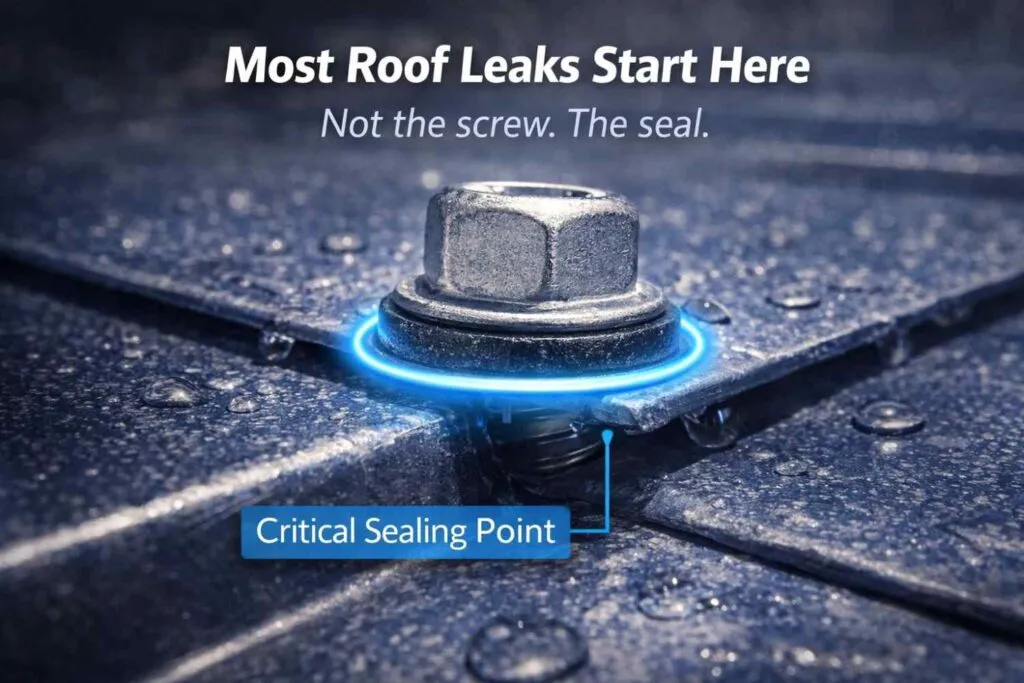
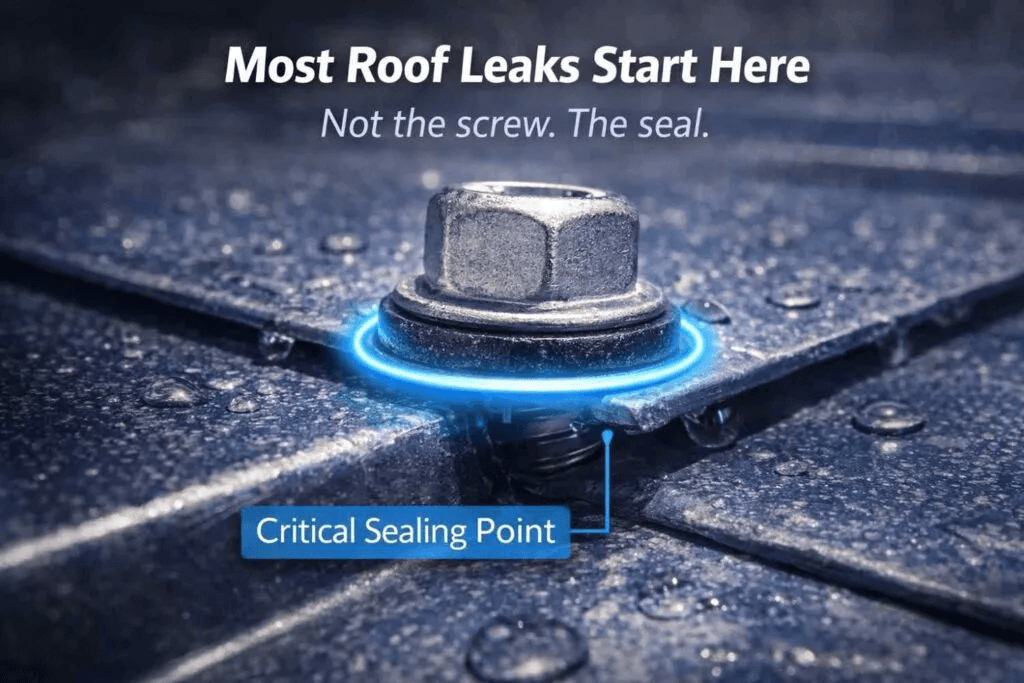
In most roofing installations, the focus is usually on the screw — its length, diameter, or type. But one small component often gets overlooked: the EPDM washer.
On-site, many roof leaks don’t happen because the screw failed. They happen because the sealing around the screw wasn’t effective.
That sealing responsibility lies with the washer.
Placed just below the screw head, the EPDM washer plays a critical role in preventing water from entering through fastener points. It also helps manage pressure, movement, and long-term exposure to weather conditions.
Ignoring this small component can compromise the performance of the entire roofing system — even when everything else is installed correctly.
What Is an EPDM Washer?
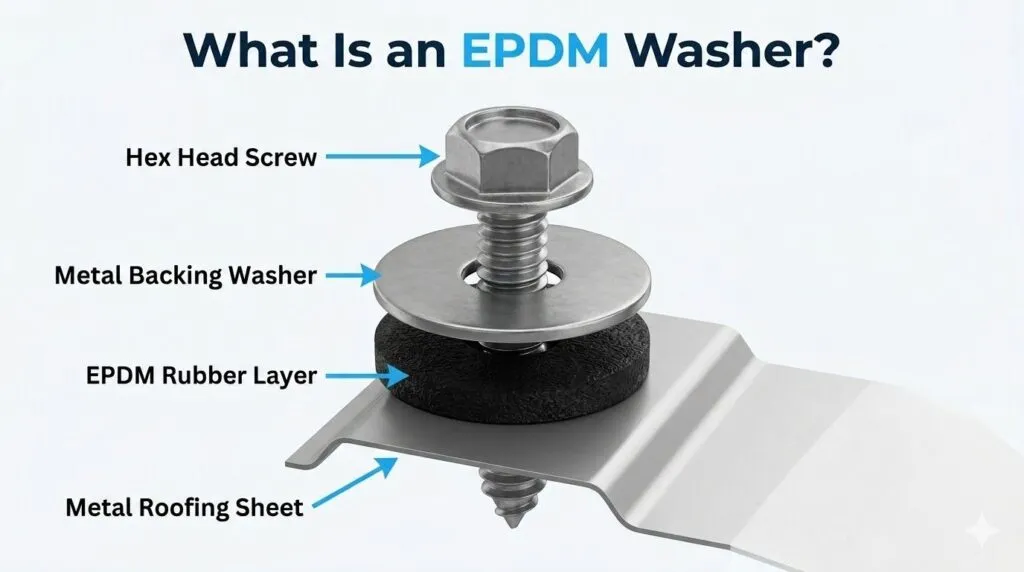
An EPDM washer is a rubber sealing component attached to roofing screws, positioned just below the screw head. It is designed to create a tight seal at the point where the screw penetrates the metal sheet.
EPDM stands for Ethylene Propylene Diene Monomer, a type of synthetic rubber known for its durability and resistance to weather conditions. In roofing applications, the focus is not the chemistry, but its ability to maintain flexibility and sealing performance over time.
When the screw is installed, the washer compresses against the metal surface, filling small gaps and preventing water from entering through the fastener hole.
Key Functions of an EPDM Washer
• creates a watertight seal around the screw • distributes pressure evenly during tightening • adapts to minor surface irregularities • maintains flexibility under temperature changes
Where It Sits
The EPDM washer is typically bonded with a metal backing washer and sits directly under the screw head. This combination ensures both:
• structural support (from metal) • sealing performance (from EPDM rubber)
Why EPDM Washers Are Used in Roofing Screws
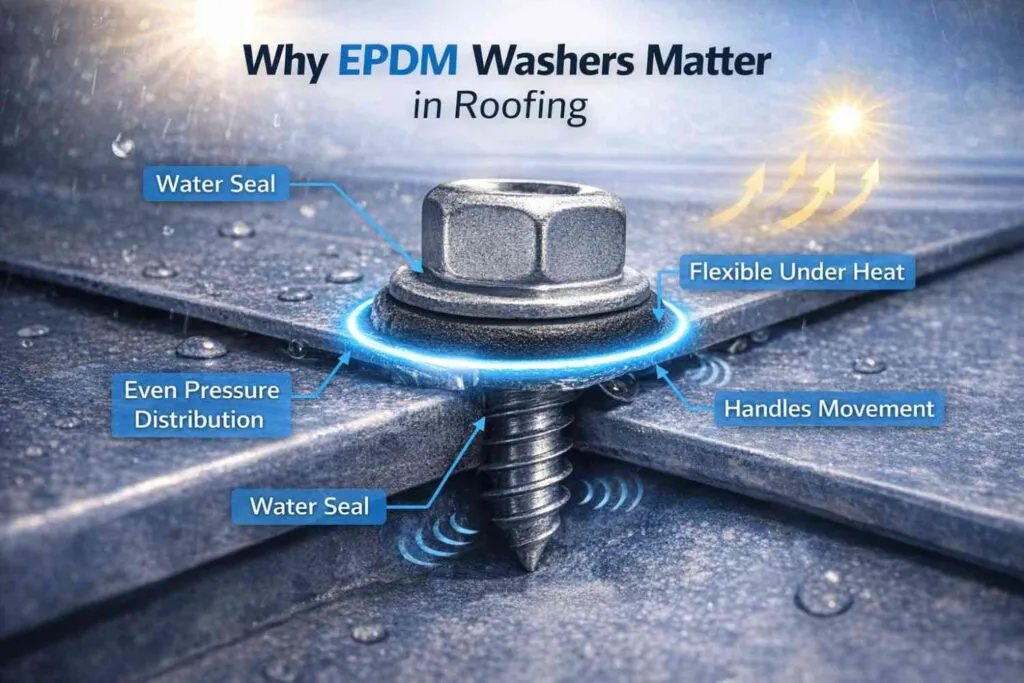
In metal roofing, the fastener point is one of the most vulnerable areas for water entry. While the screw provides holding strength, the EPDM washer is what ensures sealing performance.
Without an effective washer, even a correctly installed screw can become a leakage point over time.
Key Reasons EPDM Washers Are Used
• Prevents Water Ingress The washer compresses against the sheet and forms a tight seal around the screw hole, blocking water entry.
• Handles Thermal Expansion Metal roofing expands and contracts with temperature changes. EPDM remains flexible, allowing it to adapt without breaking the seal.
• Absorbs Vibration & Movement Wind loads and structural vibrations can affect fastener points. The washer helps absorb this movement and maintains sealing.
• Maintains Long-Term Sealing Unlike standard rubber, EPDM resists cracking, hardening, and degradation over time, especially in outdoor conditions.
• Distributes Installation Pressure The washer spreads the load evenly when the screw is tightened, reducing the risk of sheet damage or improper sealing.
Why This Matters
In roofing systems, durability is not just about strength — it’s about consistent sealing under real conditions. EPDM washers help ensure that fastener points remain secure and leak-resistant over time.
Why EPDM Washers matter in roofing
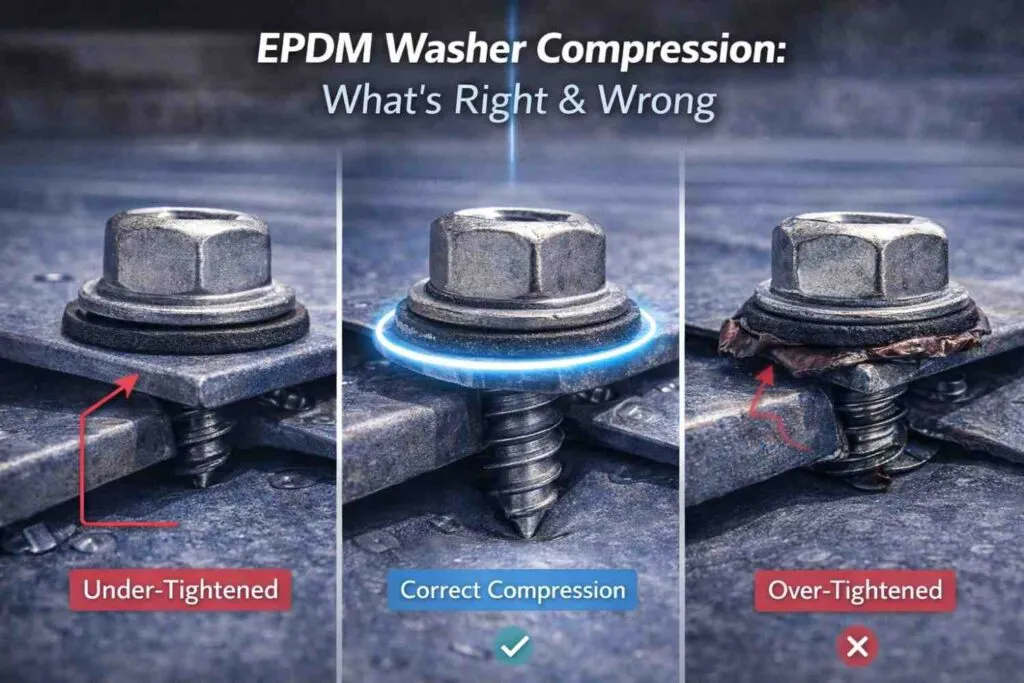
The performance of an EPDM washer depends heavily on how it behaves during installation. Its role becomes active the moment the screw is tightened.
As the screw is driven into the metal sheet, the washer gets compressed between the screw head and the surface. This compression is what creates a tight, watertight seal around the fastener point.
What Happens During Tightening
• the screw pulls the metal washer downward • the EPDM layer compresses against the sheet • small gaps and surface irregularities are filled • a continuous sealing ring is formed around the hole
Importance of Correct Compression
The effectiveness of the seal depends on applying the right amount of pressure:
• Under-tightening → washer is not fully compressed, leaving gaps for water entry • Over-tightening → washer gets crushed or deformed, reducing its sealing ability
What Proper Installation Looks Like
• washer is evenly compressed (not bulging out) • no visible gaps between washer and sheet • rubber retains its shape without cracking • clean, uniform contact around the screw
Why This Matters
Even a high-quality EPDM washer can fail if not installed correctly. Proper compression ensures that the washer maintains its sealing performance over time, especially under changing weather and load conditions.
Common Problems Related to EPDM Washers
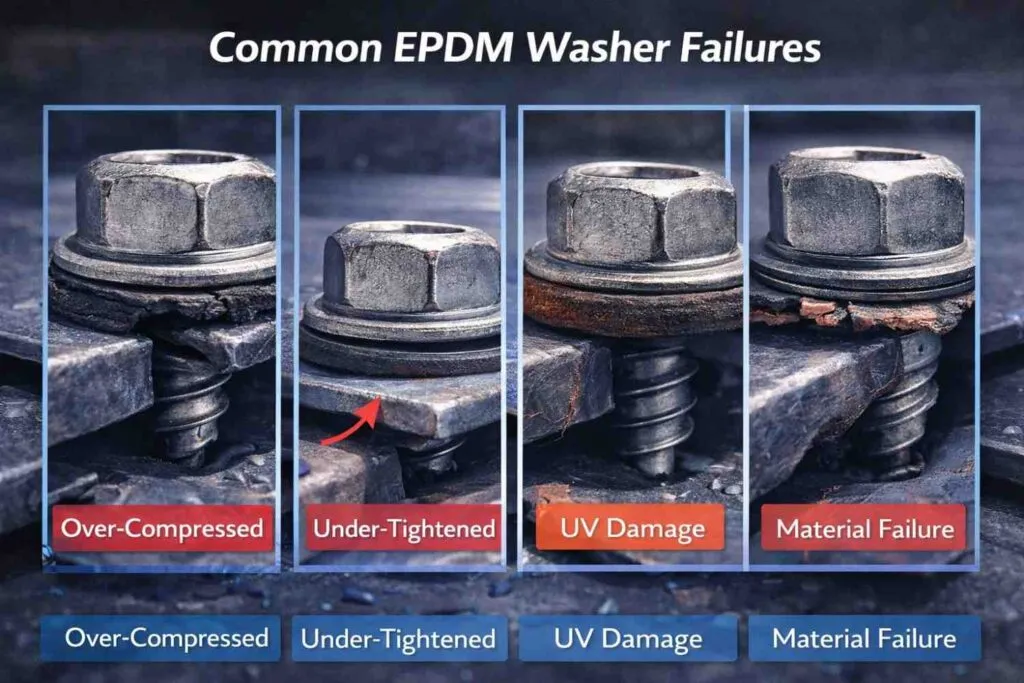
Even though EPDM washers are designed for durability, most failures occur due to installation errors or poor material quality rather than the concept itself.
Understanding these issues helps prevent leakage at one of the most critical points in a roofing system.
Common Issues to Watch For
• Over-Compression of the Washer Excessive tightening can crush the EPDM layer, causing it to lose elasticity and eventually crack.
• Under-Compression (Incomplete Sealing) If the washer is not compressed enough, it fails to seal the screw hole properly, leaving a path for water entry.
• Low-Quality EPDM Material Inferior rubber can harden, shrink, or degrade quickly when exposed to sunlight and weather conditions.
• UV and Weather Degradation Continuous exposure to heat, rain, and UV rays can weaken non-standard washers, reducing their lifespan.
• Separation from Metal Washer In some cases, poor bonding between the EPDM layer and metal backing can lead to separation, affecting sealing performance.
• Improper Application Areas Using screws with EPDM washers in unsuitable conditions (like incorrect substrates or angles) can compromise effectiveness.
Why These Problems Matter
Most roof leaks don’t appear immediately — they develop over time due to gradual failure at sealing points. Addressing these issues early helps avoid:
• repeated maintenance • water damage • reduced roof life
EPDM vs Other Washer Materials
Not all washers used in roofing screws offer the same level of performance. The material of the washer directly affects sealing durability, weather resistance, and long-term reliability.
Here’s a simple comparison to understand the difference:
| Feature | EPDM Washer | Standard Rubber Washer | Metal Washer Only |
|---|---|---|---|
| Sealing Ability | Excellent | Moderate | None |
| Weather Resistance | High | Low to Moderate | Not applicable |
| UV Resistance | Strong | Weak (cracks over time) | Not applicable |
| Flexibility Over Time | Maintains flexibility | Hardens and loses shape | Rigid |
| Suitability for Roofing | Highly suitable | Limited use | Not suitable for sealing |
Where EPDM Washer Quality Matters Most
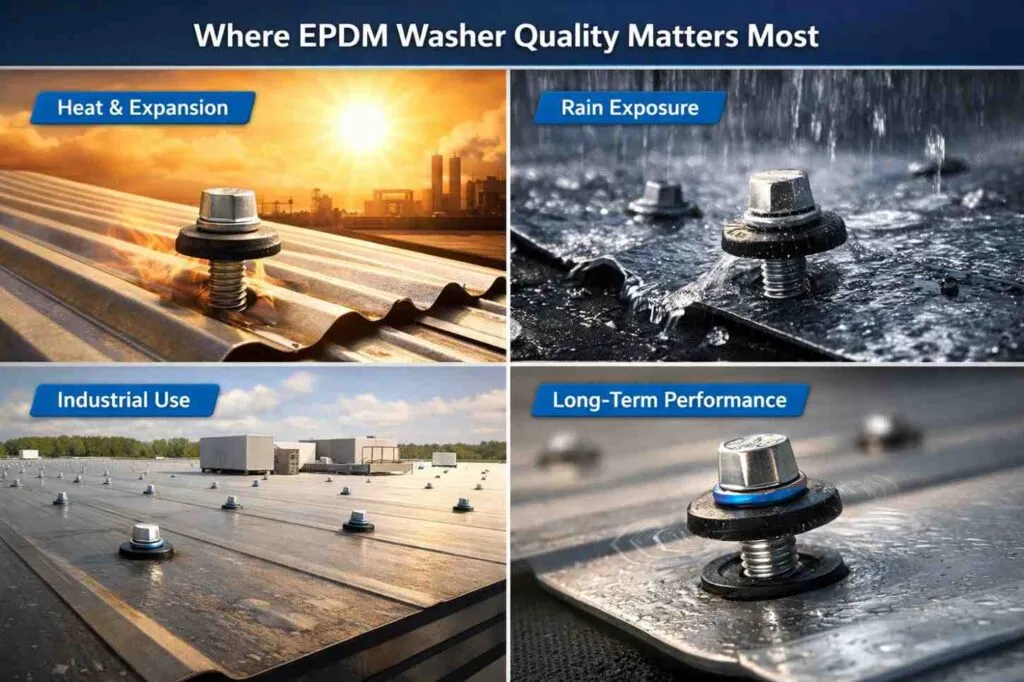
The importance of EPDM washer quality becomes more critical in environments where the roofing system is exposed to continuous stress, weather, and movement.
In such conditions, even small variations in washer performance can lead to long-term sealing issues.
Key Applications Where It Matters Most
• Outdoor Metal Roofing Systems Constant exposure to rain, sunlight, and temperature changes makes reliable sealing essential at every fastener point.
• High Temperature & Thermal Expansion Areas Roofing sheets expand and contract significantly in hot climates. EPDM washers must retain flexibility to maintain the seal.
• Industrial & Commercial Roofs These structures often face vibration, wind loads, and long operational lifespans, increasing the demand for consistent sealing performance.
• Long-Term Installations Projects where maintenance access is limited require washers that can perform reliably over extended periods without frequent replacement.
• Areas Prone to Water Accumulation Low-slope roofs or regions with heavy rainfall need dependable sealing at fastener points to prevent gradual leakage.
Why This Matters
In controlled environments, performance differences may not be immediately visible. But in real roofing conditions, exposure over time reveals the true quality of the washer.
Choosing the right material becomes less about specification — and more about long-term reliability on site.
SCREWTRADE Roofing Screws with EPDM Washers
In roofing applications, consistency across fasteners is just as important as the specification itself. This is where the integration of the screw, metal washer, and EPDM layer plays a key role.
SCREWTRADE roofing screws are designed with factory-bonded EPDM washers, ensuring that the sealing component performs reliably under real installation conditions. The focus is not only on material quality, but also on how well the washer works in combination with the screw during tightening.
What Matters in Practice
• Consistent Washer Quality Uniform EPDM material helps maintain reliable sealing across all fastener points.
• Proper Bonding with Metal Washer Strong bonding prevents separation during installation and long-term use.
• Balanced Compression Performance Designed to compress correctly without excessive deformation or premature failure.
• Suitability for Roofing Conditions Built to handle outdoor exposure, temperature changes, and structural movement.
Why This Matters
In large roofing projects, even minor inconsistencies across fasteners can lead to uneven sealing performance. A well-integrated screw and washer system helps ensure that each fastening point performs as expected over time.
Conclusion
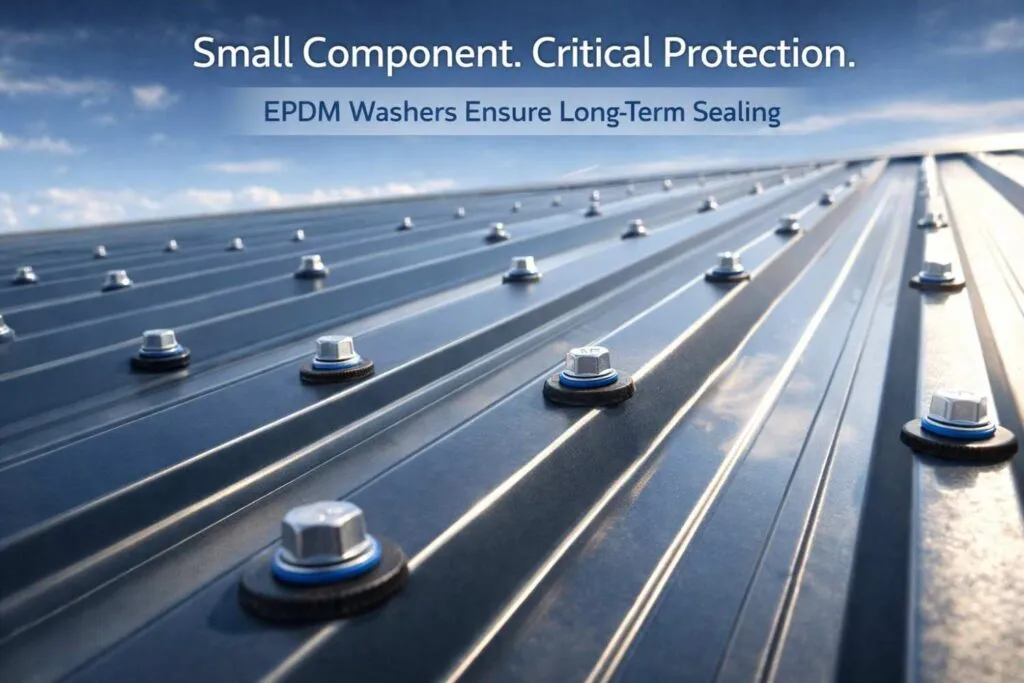
In roofing systems, performance is often judged by visible components like sheets and fasteners. But long-term reliability depends just as much on smaller elements like the EPDM washer.
It is this component that ensures proper sealing at the most vulnerable point — where the screw penetrates the sheet. When selected and installed correctly, it helps prevent water ingress, adapts to movement, and maintains sealing under changing weather conditions.
Ignoring washer quality or installation can compromise the entire system, regardless of the screw used. A well-performing roof is not just about strength — it’s about consistent sealing at every fastening point.
Related News
Other news you might be interested in
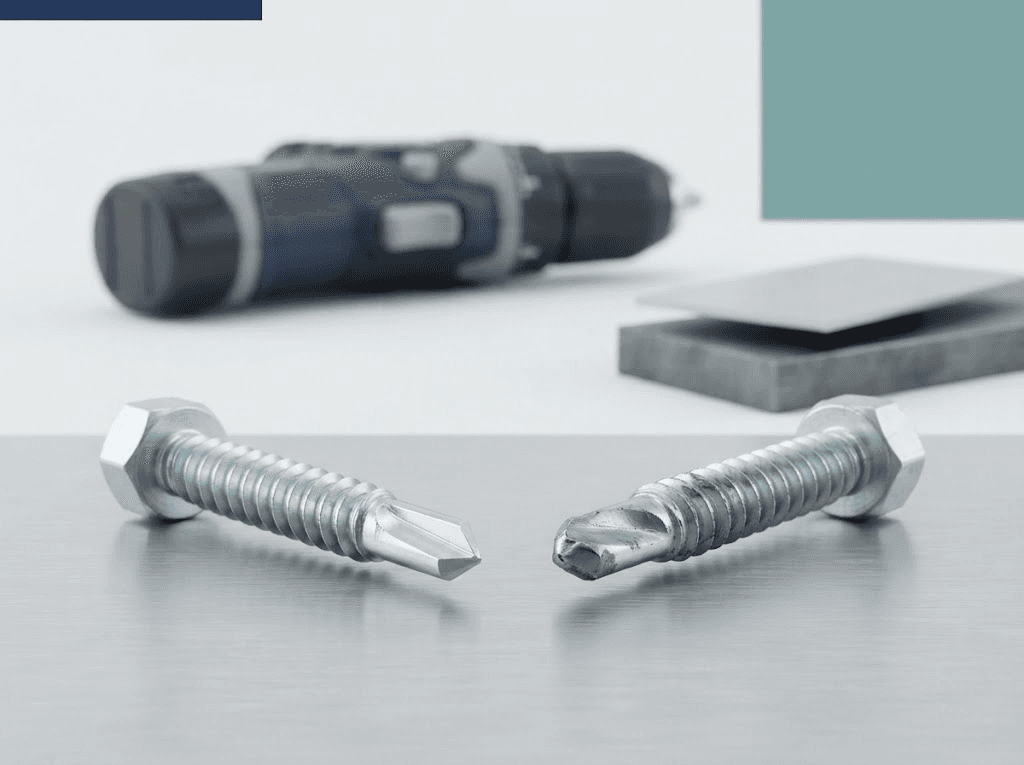
Why Self-Drilling Screws Fail to Drill: A Substrate and Installation Checklist
When a self-drilling screw spins against steel without making progress, the purchasing decision becomes urgent: should the installer change the tool settings, should the buyer order a different screw, or should the supplier investigate the batch?A useful diagnosis starts by identifying exactly where drilling stops. Record the material at that point, check the selected screw against the assembly, and then compare installation conditions. This approach gives buyers a clearer basis for deciding what to change and what evidence to request.
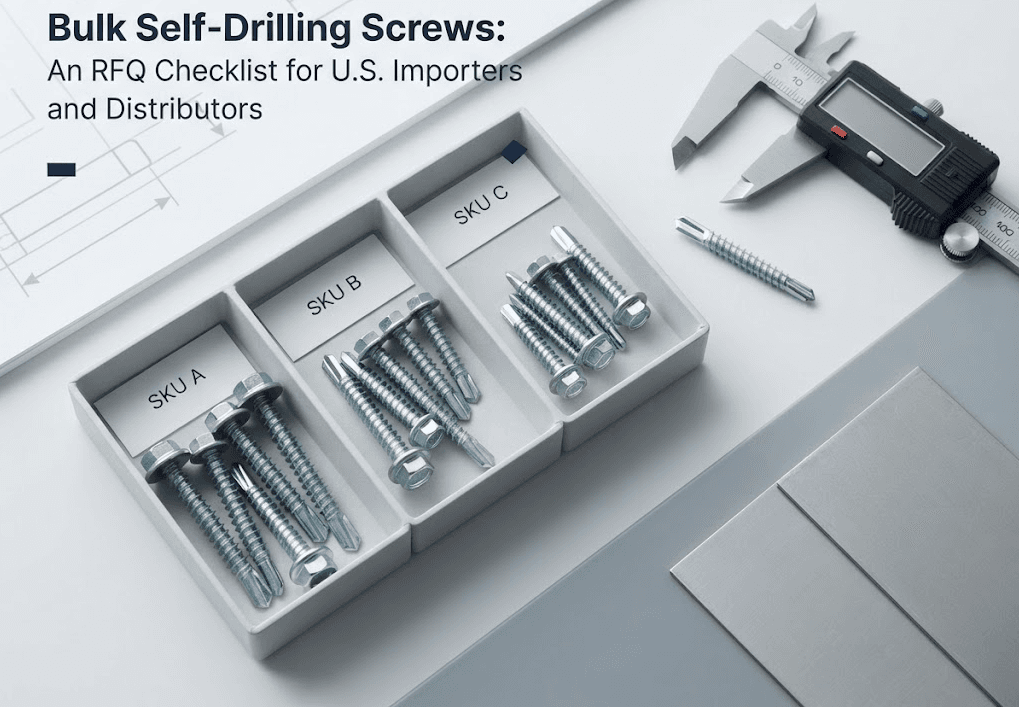
Bulk Self-Drilling Screws: An RFQ Checklist for U.S. Importers and Distributors
When sourcing bulk self-drilling screws, a unit price is only useful if you know exactly what it covers. Two quotations may appear to describe the same product while differing in dimensions, coating, packaging, or delivery conditions. For U.S. importers and distributors managing several SKUs, those differences can make supplier comparisons difficult. A clear request for quotation—an RFQ—helps suppliers understand your requirements and gives your purchasing team a consistent basis for reviewing their offers. This checklist explains what to include, which details need confirmation, and how to turn an initial inquiry into a specification that both buyer and supplier can review.
Want to know more?
Get in touch with us for more information about our services and products.