
Fastener Specifications Explained: How Types, Materials, Strength, and Coatings Affect Performance

Han Congming
AuthorWith experience in screw and fastener manufacturing and sales, we operate our own production facility with stable large-scale capacity. We are specialists in self-drilling screws, drywall screws, chipboard screws, machine screws, bolts, and customized fasteners for construction and industrial applications.
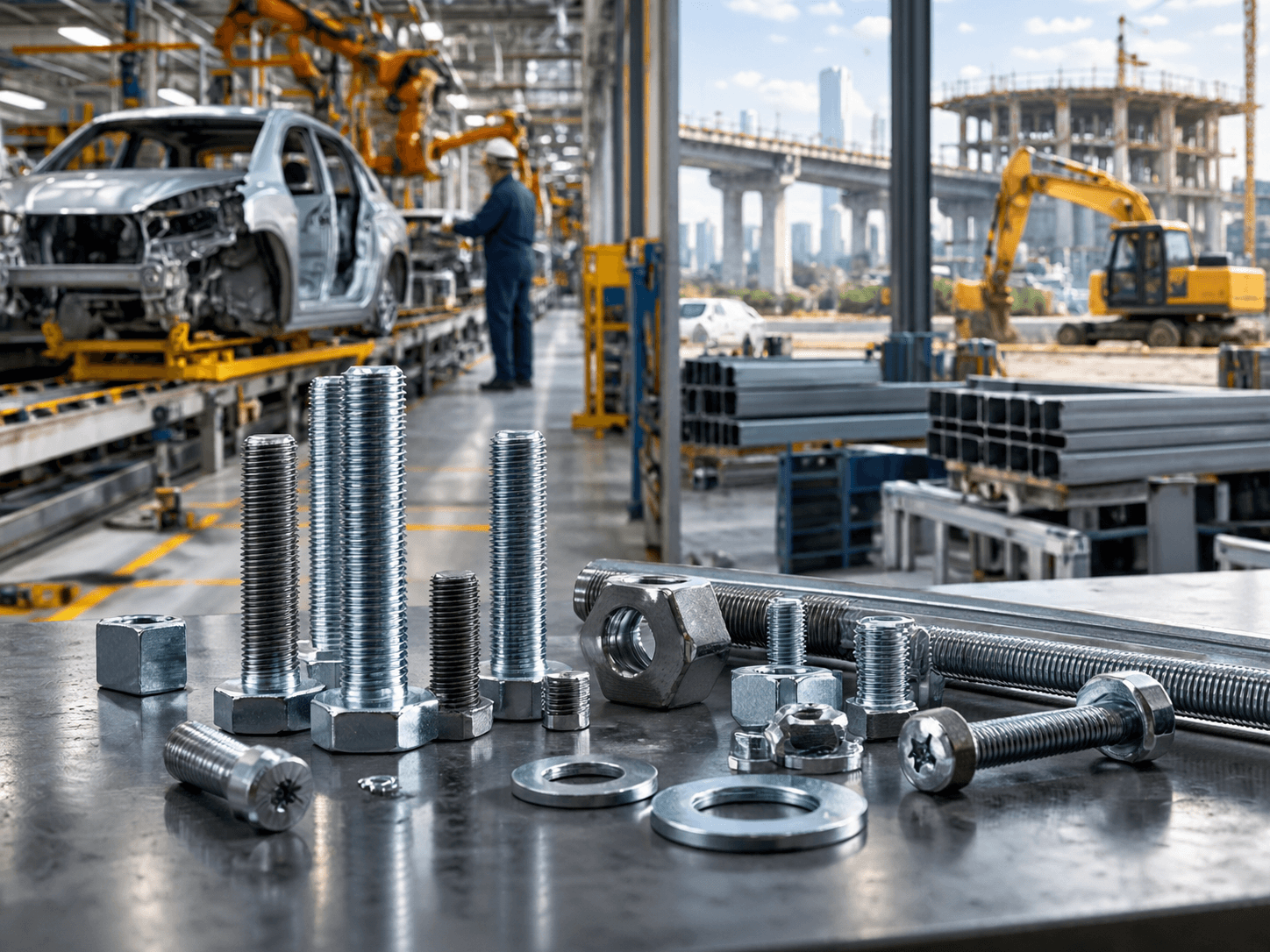
Fasteners are essential components in manufacturing and construction. Their quality and delivery performance affect industries ranging from automotive and machinery to building and infrastructure. As downstream applications place greater demands on reliability, corrosion resistance, and supply stability, industry priorities are extending beyond price and output to include specification management, quality control, surface treatment, and supply chain coordination. Recent industry discussions have also emphasized that outsourced coating and sorting can affect product quality and lead times, while efficient manufacturing, recyclable materials, and lightweight design have become areas of industry innovation. As a result, fastener types, materials, strength, and coatings are no longer isolated parameters; together, they influence manufacturing consistency, connection reliability, and performance in service.
Why the Fastener Industry Is a Foundation of Manufacturing and Construction
How Fasteners Connect the Automotive, Machinery, Construction, and Infrastructure Industries
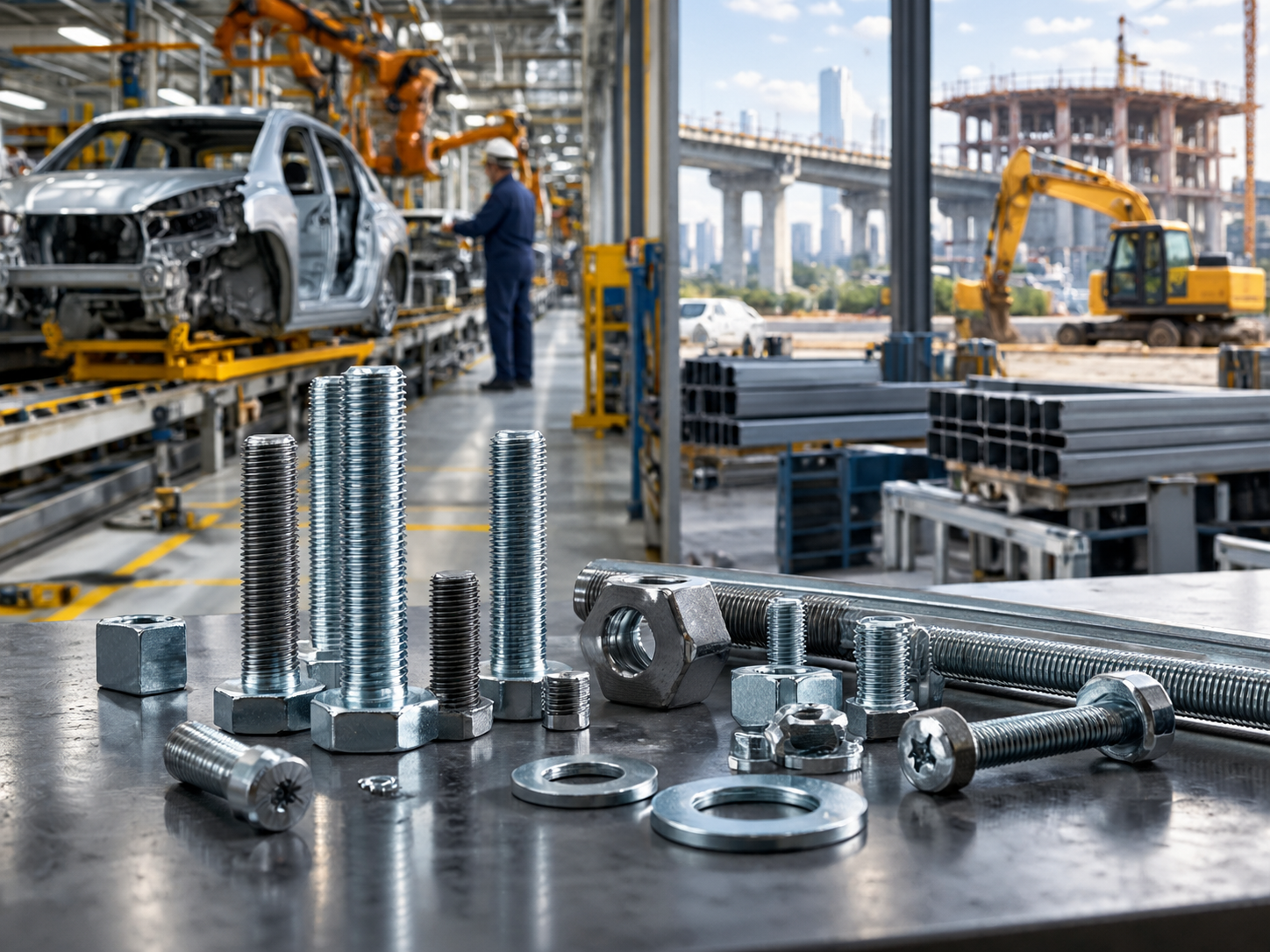
From automotive and aerospace to machinery, construction, energy, and infrastructure, many industries rely on fasteners to join components. Requirements for dimensions, materials, load capacity, environmental resistance, and inspection documentation vary across sectors. Industrial fasteners therefore do not represent a single product market, but a foundational supply category serving a wide range of industries.
From Standardized Components to Critical Elements of System Reliability
Fasteners are often small and relatively low in unit cost, yet they sit at critical connection points. If specifications, manufacturing consistency, or installation conditions are unsuitable, the consequences can extend to rework, equipment downtime, or connection failure. Industry discussions of fastener performance therefore go beyond the strength of an individual part to include quality consistency, traceability, and continuity of supply. For manufacturers, fastener reliability is part of the reliability of the overall connection system—not the result of a single parameter.
How Downstream Industries Shape Requirements for Fastener Performance, Quality, and Delivery
Different markets prioritize different requirements. Construction projects place importance on environmental resistance and long-term durability; automotive and equipment manufacturing focus on batch consistency and assembly efficiency; aerospace, medical, and other sectors place greater emphasis on specifications, validation, and quality documentation. Demand therefore involves more than supplying a particular specification: it also requires stable production, batch identification, and delivery in accordance with requirements.
How the Fastener Supply Chain Connects Raw Materials to End Applications
How Wire and Raw Materials Affect the Manufacturing Foundation of Fasteners
The fastener supply chain begins with steel, wire, and other suitable raw materials. Material composition, wire diameter, condition, and surface characteristics can affect downstream forming and process stability. Raw material suppliers and fastener manufacturers therefore need to coordinate around actual process requirements. Industry supplier information identifies wire diameter, condition, surface treatment, lubrication, and quality assurance as factors in determining suitability for production.
The Role of Forming, Threading, Heat Treatment, and Surface Treatment in the Supply Chain
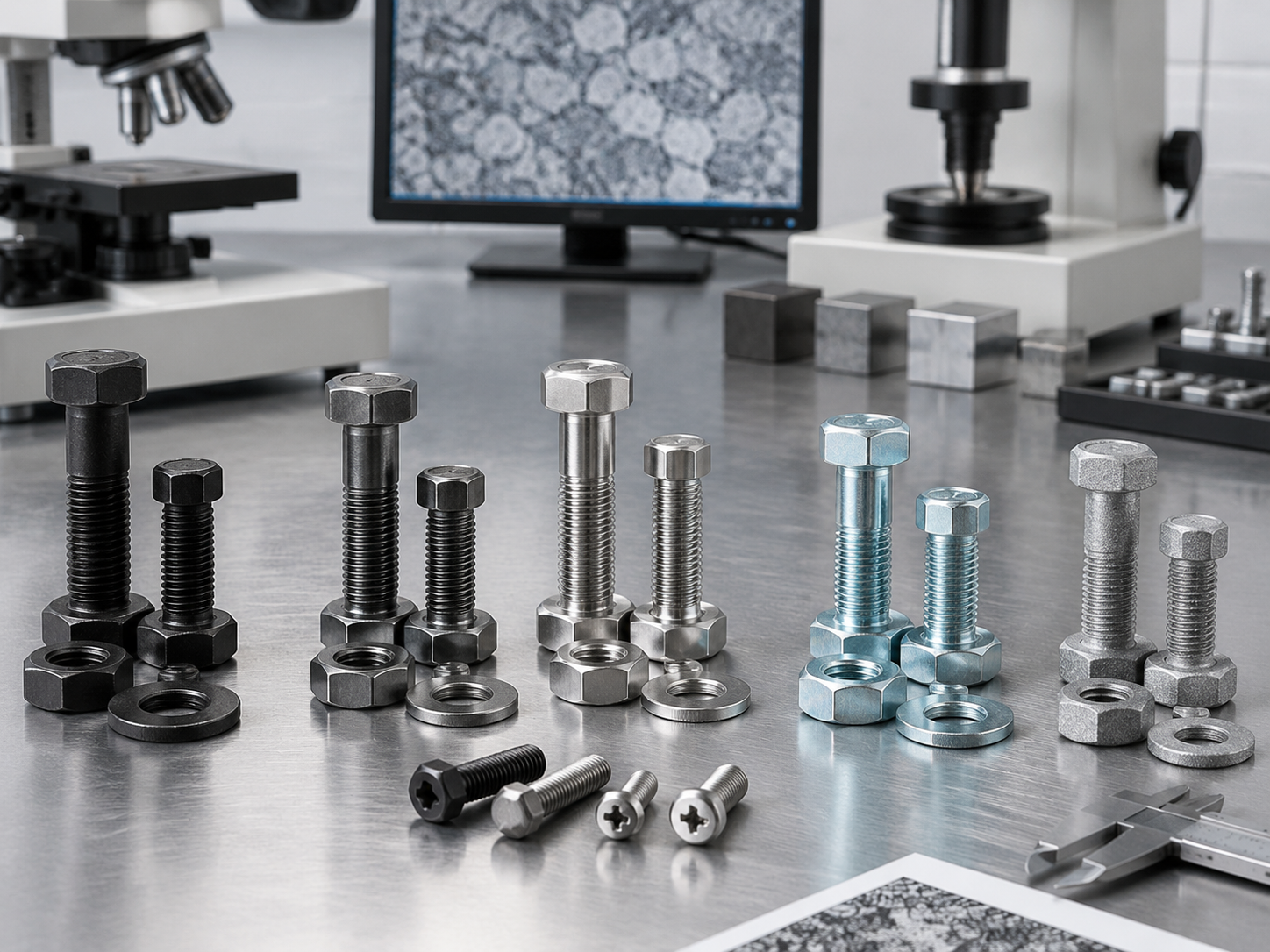
After entering production, raw materials typically undergo processes such as forming, threading, heat treatment, surface treatment, and inspection. Each stage must control dimensions, mechanical properties, and batch consistency. A deviation at any stage may affect subsequent processing or end-use assembly. Understanding fastener manufacturing therefore requires viewing it as a coordinated process involving multiple operations, rather than a single forming step.
How Inspection, Sorting, Inventory, Distribution, and OEM Purchasing Connect Supply and Demand
Manufacturers, heat-treatment and surface-treatment service providers, sorting companies, distributors, OEMs, and end users all form part of the industry’s supply network. Inspection and sorting connect production batches with purchasing requirements, while distribution and inventory affect product availability and delivery schedules. The participation of manufacturers, distributors, suppliers, equipment service providers, and end users at industry exhibitions reflects the multi-party nature of the fastener supply chain.
Why Outsourced Coating and Sorting Can Affect Production Cycles and Delivery Stability
Surface treatment, coating, and sorting may be handled by different specialized service providers. Each handoff adds complexity to scheduling, information transfer, and inspection coordination. If coating requirements, batch identification, or delivery timing are not clearly communicated, rework or delays may result. An industry article published by IFE on October 3, 2026, also identified coordination among outsourced plating, coating, and sorting providers as a supply chain factor affecting lead times and quality management.
How Product-Type Changes Reflect Market Segmentation in the Fastener Industry
Standard and Custom Fasteners: Balancing Production Scale with Application Fit
Standard fasteners rely on relatively consistent specifications and established processes, making them suitable for stable, repeat demand. Custom fasteners, by contrast, require collaboration based on drawings, materials, geometry, or application conditions. This is not simply a distinction between higher- and lower-value products; the two categories involve different supply models, development timelines, and quality communication. The industry therefore competes on both large-scale delivery and the ability to support smaller-batch engineering requirements.
General-Purpose and Engineered Fasteners: How Their Competitive Priorities Differ

Competition in general-purpose products typically focuses on cost, availability, specification range, and delivery efficiency. Engineered fasteners depend more heavily on design collaboration, performance validation, quality records, and supply stability. Both models may coexist in the market, and a company’s product portfolio and service capabilities influence the supply chains in which it can participate. The value of an engineered fastener lies not only in the part itself, but also in how manufacturing is matched to application requirements.
How Downstream Markets Such as Construction, Automotive, Machinery, and New Energy Shape Different Needs
Operating environments, assembly methods, and quality systems differ across end-use industries, driving greater specialization in fastener products and services. Automotive, construction, machinery, energy, and electronics are among the sectors represented in international industry classifications. This demonstrates the cross-industry nature of demand, but does not mean every supplier can serve every market. Suppliers generally need to select their focus sectors based on their own processes and quality capabilities.
How Product-Mix Upgrading Is Moving Fasteners from “Selling by the Piece” to Application Solutions
When buyers consider not only unit price but also materials, specifications, coatings, inspection, and delivery coordination, supplier value can extend from “delivering parts” to “supporting applications.” This does not mean every fastener requires complex customization. It does mean that fastener manufacturers need to understand customers’ process conditions and acceptance requirements more accurately. Clear technical documentation and reliable coordination across production stages are also becoming part of supplier competitiveness.
How Material Changes Affect Industry Performance Goals and Manufacturing Choices
The Different Roles of Carbon Steel, Alloy Steel, and Stainless Steel in Fastener Applications
Carbon steel, alloy steel, and stainless steel are common material categories in the fastener field, but they differ in performance, cost, processing methods, and suitability for particular environments. Material decisions need to account for design requirements, mating components, and service conditions; they should not be based on a single factor such as “high strength” or “corrosion resistance.” Material selection can also affect subsequent heat treatment, surface treatment, and quality verification.
Industry Trade-Offs Between Lightweight Design, Corrosion Resistance, and Cost Control
Downstream requirements for weight, durability, and manufacturing cost may conflict with one another. Industry development must evaluate material selection, structural design, manufacturing efficiency, and lifecycle requirements while meeting connection needs, rather than simply pursuing lower weight or greater corrosion resistance. Fastener Fair Global 2025 included lightweight design and reduced environmental impact among its innovation themes. This indicates that these issues are part of industry discussion, but does not mean one solution is suitable for every application.
How Raw Material Characteristics Carry Through to Processing, Heat Treatment, and Final Performance
Materials do not become irrelevant once they are purchased. Wire condition, composition, and dimensional consistency carry through to forming, heat treatment, and subsequent inspection, affecting consistency in batch production. Communication between upstream material suppliers and manufacturers about diameter, condition, surface, coating, and lubrication is a practical example of how the supply chain manages this relationship.
The Connection Between Material Selection and Industry Issues Such as Recyclability and Material Efficiency
Sustainable fasteners involve more than whether a material can be recycled. They also raise questions about material utilization during manufacturing, production efficiency, service life, and product disassembly and recovery. Fastener Fair Global 2025’s Innovation and Sustainability Pavilion presented high performance alongside reduced environmental impact, with examples including efficient manufacturing, recyclable materials, and lightweight design. A rigorous industry article should describe these as areas of innovation, rather than claim they have already been adopted across the entire industry.
Strength Classes and Standardization: A Shared Technical Language for the Global Fastener Industry
How Property Classes and Material Categories Support Communication Across the Supply Chain
Fastener standards provide manufacturers, buyers, and inspection bodies with a shared technical language for specifying materials, dimensions, performance categories, and inspection requirements. Standardization can reduce ambiguity between companies, but a standard marking covers only the scope defined by that standard; it does not replace project-specific design requirements or acceptance criteria. ISO also identifies dimensions, tolerances, materials, and coatings as important areas of fastener standardization.
Why Standards for Different Material Systems Should Not Be Interchanged
For example, ISO 898-1:2013 specifies mechanical and physical properties for certain carbon and alloy steel bolts, screws, and studs. ISO 3506-1:2020 addresses corresponding property classes for corrosion-resistant stainless steel fasteners. The two standards apply to different material systems and scopes, so their property-class numbers or product appearances should not be treated as directly equivalent. ISO’s pages indicate that both were reviewed and confirmed in 2025.
How Standardization Affects Manufacturing Consistency, Quality Inspection, and International Purchasing
Standardized specifications help translate design requirements into manufacturing and inspection criteria, and make it easier for suppliers to exchange technical information. For international purchasing, clearly identifying the standard edition, product scope, and acceptance criteria can reduce the risk that both parties use the same terminology but understand it differently. Recent industry discussions have also identified material-source traceability, batch control, digital certification, and visibility across multiple supplier tiers as supply chain concerns.
The Boundaries Between Standard Compliance and Performance in Actual Applications
Compliance with a standard does not mean that a product will perform identically under every temperature, load, or environmental condition. ISO 898-1, for example, defines the applicable materials, product types, and test temperature range, and also excludes certain performance requirements, such as corrosion resistance, shear, fatigue, and torque/clamp-force performance. When citing a standard, an article should explain its scope and avoid treating standard compliance as a guarantee of performance under all service conditions.
Coatings Are Becoming a Quality and Delivery Variable in the Supply Chain
How Different Coating Systems Address Corrosion Resistance and Application Environments
Coatings are used to address different corrosion environments, assembly requirements, and product-performance objectives, but no single “best coating” is suitable for every fastener. Coating selection and evaluation should consider the specific system, test conditions, base material, mating components, and service environment. Industry reporting also emphasizes evaluating coatings in relation to actual operating conditions, rather than choosing solely by name or a single ranking.
How Coating Processes Affect Dimensions, Assembly, Inspection, and Batch Consistency
Surface treatment can affect dimensional fit, thread condition, friction, and assembly performance. Coating requirements therefore need to be managed in coordination with manufacturing, inspection, and end-use assembly. ISO 10683:2018 specifies requirements for non-electrolytically applied zinc-flake coating systems for steel fasteners, and states that its scope does not cover every product attribute, including weldability or paintability. The standard should be described according to its actual scope.
Quality Management and Supply Chain Coordination Challenges from Outsourced Surface Treatment
When plating, coating, or sorting is performed by an external specialist, fastener manufacturers need to manage process handoffs, batch identification, inspection records, and delivery coordination. Outsourcing can provide access to specialized equipment and capabilities, but it also adds supply chain links. Surface treatment is therefore not only a final manufacturing operation; it is also part of fastener quality control and delivery management.
How to Distinguish Standards and Test Conditions from Actual Service Environments
Coating standards and laboratory tests provide comparable technical requirements, but test results cannot automatically be equated with service life in the field. Humidity, salt, temperature, friction, and contact with dissimilar materials may all affect actual fastener performance. Industry communication should clearly state the test method, sample conditions, and acceptance criteria rather than using “hours of salt spray resistance” as a substitute for a full application assessment.
How Performance in Service Translates into Manufacturing Costs and Industry Competitiveness

How Connection Failure, Rework, and Material Waste Affect the Supply Chain
Unstable batch performance or unclear specifications may lead to rework, sorting, replacement orders, and production rescheduling. These effects do not stop at the fastener supplier; they can also reach assembly plants and end-use projects. Fastener reliability and quality consistency are therefore cost issues for the manufacturing system as a whole, not merely component-level metrics.
Why Fastening Consistency in High-Volume Assembly Affects Project Quality
In high-volume production, consistency in product dimensions, material condition, coating, and assembly conditions can help reduce process variation. Conversely, differences between batches may increase on-site adjustments and quality checks. IFE 2026’s industry agenda included zero-defect quality, failure analysis, and automation as manufacturing topics, reflecting industry attention to process stability.
How Quality Control Extends from Individual Inspection to Production and Assembly Processes
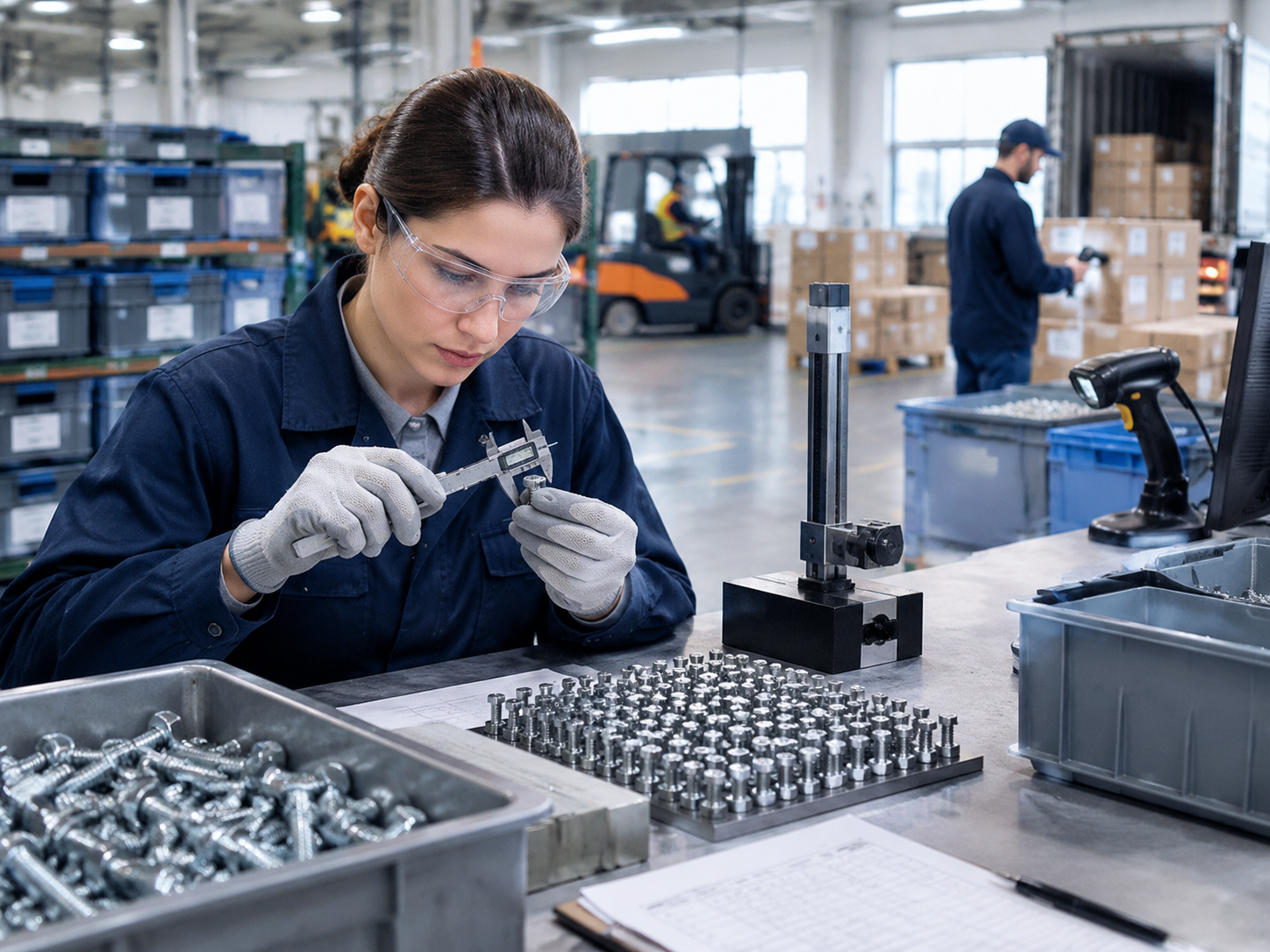
Inspection of an individual part can show whether the sampled item meets specified criteria, but it cannot by itself demonstrate stability across the entire process. More complete fastener quality control connects raw materials, process parameters, outsourced operations, batch records, and final inspection, with traceability determined by customer requirements. This allows quality data to support manufacturing improvements rather than serving only as shipping documentation.
How Manufacturers, Distributors, and End Users Can Work Together to Reduce Quality Risks
Risk control requires accurate information from every party: end users need to define applications and acceptance requirements, manufacturers need to confirm process and inspection capabilities, and distributors need to maintain complete batch and documentation information. Industry discussions of material-source controls, batch management, digital certification, and visibility across supplier tiers illustrate why supply chain transparency requires cooperation between companies.
Global Purchasing and Supply Chain Coordination Are Reshaping Industry Competition
How Buyers Assess Quality, Capacity, Lead Times, and Supply Stability Together
B2B purchasing usually involves a combined assessment of specification fit, quality systems, production capacity, lead times, and continuity of supply—not price alone. The participation of manufacturers, distributors, procurement professionals, and end-use industries in supplier showcases reflects the multiple roles in the purchasing chain. Evaluation criteria should be weighted according to project risk and product category rather than applied as a single universal formula.
How Specification Communication and Quality Documentation Reduce Information Gaps in the Supply Chain
Clear drawings, material requirements, standard editions, coating specifications, inspection criteria, and packaging requirements can reduce information gaps between manufacturers and outsourced service providers. IFE’s supply chain reporting notes that standardized specifications and consistent supplier communication can help reduce errors and protect production schedules. For cross-border purchasing, document version control and links between records and batches are especially important.
How Outsourced Processing, International Shipping, and Multi-Tier Supply Increase Coordination Complexity
Global fastener sourcing involves multiple suppliers, processing services, and logistics links. Schedule or information changes at any stage may affect final delivery. Industry cases and exhibition discussions show that companies are considering local distribution hubs, cross-border transportation, outsourced surface treatment, and supply chain traceability; however, each business organizes its supply network according to its markets and products.
How Supplier Competitiveness Is Expanding from Price to Technical Response and Delivery Management
As purchasing requirements become more specific, supplier competitiveness also depends on understanding specifications, quickly confirming manufacturability, providing verifiable quality documentation, and coordinating delivery. Price remains important, but for products involving multiple processes or higher requirements, response time, technical communication, and process transparency can also affect supplier evaluations. This requires coordination among sales, engineering, quality, and supply chain teams—not quotation competitiveness alone.
The Industry’s Next Areas of Focus: Manufacturing Efficiency, Sustainability, and Application Innovation
How Efficient Manufacturing and Process Control Can Improve Product Consistency
Manufacturing efficiency is not only about increasing speed; it also involves reducing process variation, minimizing rework, and maintaining batch stability. Automation, in-line inspection, and production data management are areas of industry interest, although their specific impact depends on product types, factory processes, and investment conditions. IFE 2026 included automation, production quality, and manufacturing efficiency in its industry program, indicating that these topics are receiving attention.
How Lightweight Materials, Material Efficiency, and Recyclability Are Entering Industry Innovation Discussions
Industry sustainability discussions are expanding to include material use, product lightweighting, manufacturing efficiency, and environmental impact. Fastener Fair Global 2025’s Innovation and Sustainability Pavilion cited efficient manufacturing, recyclable materials, and lightweight design as areas of innovation. Exhibition examples can show that these topics are attracting attention, but they do not by themselves prove that the practices are widespread across all market segments.
How Customization Is Encouraging Greater Engineering and Technical Collaboration
Specification, material, and process requirements from different end markets are prompting some suppliers to engage in more technical discussions with customers earlier in the process. Customization is not necessary for every product, but when standard products cannot meet connection, assembly, or validation requirements, drawing reviews, sample confirmation, and process control become more important. The industry value lies in improving application fit, not simply increasing the number of product variants.
How to Distinguish Established Industry Practices from Trends That Still Need Validation
Industry articles should distinguish published standards, actual supply chain cases, exhibition themes, and long-term forecasts. Standards define requirements and scope; company cases represent specific practices; exhibition themes indicate areas of industry attention. These forms of evidence are not interchangeable. Assessments of fastener industry trends should avoid presenting an individual innovation as universally adopted or making definitive market-growth forecasts without supporting data.
Conclusion: Specifications Reflect the System Capabilities of the Fastener Industry
How Types, Materials, Strength, and Coatings Work Together to Affect Industry Value
Types, materials, strength classes, and coatings jointly affect manufacturing methods, quality verification, and in-service performance. They are not isolated keywords, but technical variables connecting design, production, surface treatment, and end-use applications. Understanding their relationships helps explain product structures and performance differences across the industry.
How Manufacturing, Standards, Quality, and Supply Chains Determine Whether Products Can Be Delivered Reliably
After raw materials enter production, fasteners still pass through processing, heat treatment, surface treatment, inspection, distribution, and end-use assembly. Clearer standards, quality records, and supply chain coordination can reduce information gaps between these stages; however, final performance still depends on the specific specifications, production controls, and application conditions.
How Industry Competition Is Expanding from Price to Reliability and Coordination Capabilities
Price remains part of purchasing decisions, but industry competition increasingly also reflects overall capabilities in reliable manufacturing, accurate communication, quality traceability, and stable delivery. For manufacturers, distributors, and end users, understanding changes in the fastener industry ultimately helps them make more informed decisions about product performance, production efficiency, and supply chain risk.
Related News
Other news you might be interested in

Why Self-Drilling Screws Fail to Drill: A Substrate and Installation Checklist
When a self-drilling screw spins against steel without making progress, the purchasing decision becomes urgent: should the installer change the tool settings, should the buyer order a different screw, or should the supplier investigate the batch?A useful diagnosis starts by identifying exactly where drilling stops. Record the material at that point, check the selected screw against the assembly, and then compare installation conditions. This approach gives buyers a clearer basis for deciding what to change and what evidence to request.

Bulk Self-Drilling Screws: An RFQ Checklist for U.S. Importers and Distributors
When sourcing bulk self-drilling screws, a unit price is only useful if you know exactly what it covers. Two quotations may appear to describe the same product while differing in dimensions, coating, packaging, or delivery conditions. For U.S. importers and distributors managing several SKUs, those differences can make supplier comparisons difficult. A clear request for quotation—an RFQ—helps suppliers understand your requirements and gives your purchasing team a consistent basis for reviewing their offers. This checklist explains what to include, which details need confirmation, and how to turn an initial inquiry into a specification that both buyer and supplier can review.
Want to know more?
Get in touch with us for more information about our services and products.