

Hex Washer Head Self Drilling Screws: Accurate Size Chart and Buying Guide

Han Congming
AuthorWith experience in screw and fastener manufacturing and sales, we operate our own production facility with stable large-scale capacity. We are specialists in self-drilling screws, drywall screws, chipboard screws, machine screws, bolts, and customized fasteners for construction and industrial applications.
Choosing the wrong hex washer head self drilling screw can cost you more than just the fastener – it can lead to roof leaks, corroded panels, and structural failures that show up years after the job is done.
I’ve been manufacturing these screws for over 20 years. The difference between a screw that holds for 25 years and one that fails in 5 isn’t the steel – it’s the washer, the drill point, and the coating. Here’s what actually matters when you’re buying in bulk for roofing, steel framing, or construction.

What are Hex Washer Head Self Drilling Screws?
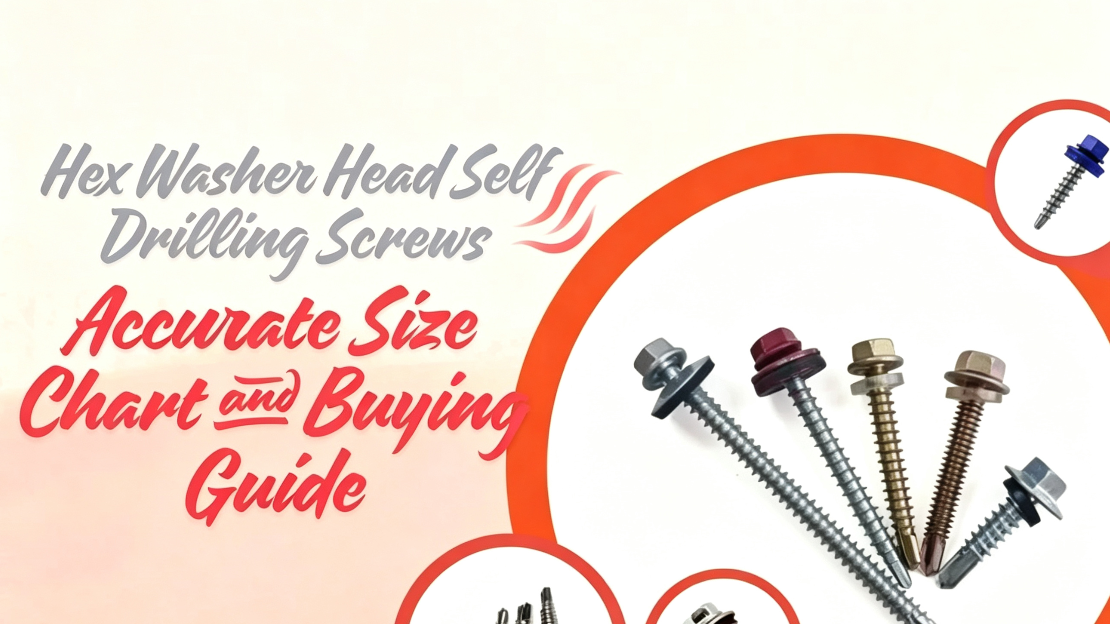
Think of a hex washer head self drilling screw as a drill bit, a tap, and a fastener all in one. The hex head takes a wrench or socket, the integrated washer seals the surface, and the self-drilling tip cuts its own hole – no pre-drilling required.
The tip acts like a drill bit, penetrating and creating its own thread path as it’s driven. This single-operation fastening reduces labor time, lowers costs, and increases installation consistency – which is why these screws are everywhere in metal roofing, steel framing, HVAC, and metal fabrication.
But here’s where most buyers get it wrong: they focus on the screw size and ignore the washer, the drill point, and the coating. Those three components determine how long the connection actually lasts
Hex Washer Head Self Drilling Screws – Sizes Chart
The following four types of screws may help you when purchasing hex washer head self drilling screws:
| Size (Diameter x Length) | Threads Per Inch (Approx.) | Drill Point Length | Common Application Scenarios |
| #10 x 1 inch | 16 | Short (~3/16″) | Light-Gauge Sheet Metal Work: Ideal for fastening thin sheet metal (up to 20 gauge), attaching trim, electrical boxes, or HVAC ductwork connections where material thickness is minimal. |
| 1/4″ x 1.5 inches | 14 | Medium (~1/4″) | General Construction & Steel Framing: A versatile size for attaching plywood or OSB to steel studs, connecting light structural members (16-14 gauge), and mounting fixtures to metal framing. Balances strength and versatility. |
| #12 x 2.5 inches | 11 | Long (~1/2″) | Metal Roofing & Siding Panels: Frequently used to secure corrugated roofing or wall panels to structural purlins (wood or steel). The length of hex head self drilling screws allows penetration through multiple layers or insulation, while the integrated washer seals the panel hole effectively. |
| 5/16″ x 3 inches | 12 | Extra Long (~5/8″) | Heavy-Duty Structural & Trailer Building: Employed in demanding applications such as securing thick lumber to steel beams, constructing trailers, or assembling heavy equipment where significant material thickness (up to 1/2″ steel) needs to be penetrated and clamped with high strength. |
Based on our export data, the most popular sizes among distributors are #10 × 1/2″, #10 × 1″, and #12 × 1-1/2″ – widely used in roofing panels, steel framing, and HVAC installations.
Drill Point Types: #3 vs #5 – What Actually Matters
Most suppliers give you a generic #1-#4 table and call it a day. But if you’re working with heavy steel, that’s not enough.
| Point Type | Drilling Capacity | Typical Use |
|---|---|---|
| #1 | Up to ~0.9mm (20 gauge) | Thin sheet metal, HVAC |
| #2 | 1–2mm (16-14 gauge) | Standard roofing, light steel |
| #3 | 2–3mm (14-12 gauge) | Steel framing, residential construction |
| #4 | 3–5mm (12-10 gauge) | Heavy steel, commercial framing |
| #5 | Up to 12.5mm (structural steel) | I-beams, hot-rolled steel, industrial |
Here’s the thing most suppliers won’t tell you: for structural steel or I-beams up to 12.5mm thickness, you need a #5 point. Our #5 drill points are CNC-ground to eliminate “walking” on smooth steel surfaces and ensure a clean, fast cut within 2 seconds. This isn’t just about speed – it’s about preventing worker fatigue and assembly errors.
If your project involves hot-rolled steel, heavy gauge metal buildings, or structural framing, ask your supplier about #5 point availability. If they don’t offer it, they’re not equipped for your application.
Integrated Hex Washer Heads vs. Standard Hex Heads
The integrated washer isn’t just extra metal – it’s an engineered component that affects installation performance and longevity.
| Feature | Integrated Hex Washer Head | Standard Hex Head (No Washer) |
|---|---|---|
| Bearing surface | Large – load distributed | Small – point load |
| Pull-through resistance | High | Low |
| Sealing capability | Excellent (with EPDM) | None |
| Material damage risk | Low | High (embedding into soft materials) |
| Best for | Roofing, siding, soft materials | Structural steel, pre-drilled holes |
Screws with integrated hex heads are better suited for applications requiring a large bearing surface. The flat washer distributes clamping force, preventing the screw head from pulling through or over-embedding into softer materials such as sheet metal or plywood.
Conversely, when a lower profile or smaller head diameter is required, standard hex head self-tapping screws (without washers) work well for heavy-duty structural steel connections where the material is thick enough to withstand concentrated pressure.
EPDM Sealing Washers: The Most Overlooked Component
A roofing screw is only as good as its washer. Period.
Our integrated hex washer heads are fitted with high-UV resistance EPDM bonded washers. Unlike cheap PVC or nitrile alternatives, EPDM doesn’t crack, shrink, or leak under extreme temperature shifts – -40°C to +120°C range – and maintains its sealing properties for decades.
What makes a bonded washer different from a loose washer? The EPDM rubber is chemically bonded to a metal backing (typically aluminum or steel). This prevents the rubber from splitting or spinning off during installation. The metal backing also provides consistent compression across the entire sealing surface, eliminating gaps where water can penetrate.
If you’re buying roofing screws, check whether the washer is EPDM or PVC. EPDM is the only choice for long-term outdoor exposure.
Coatings: Matching the Lifespan of Your Roof
For modern pre-painted steel panels, standard zinc is not enough. The coating determines how long the screw lasts – and if the screw fails before the roof does, the repair costs far more than the fastener.
| Coating Type | Salt Spray Resistance | Best For |
|---|---|---|
| Zinc Plated | 100-200 hours | Indoor, dry environments |
| Zinc Chromate (Yellow Zinc) | 300-500 hours | Light outdoor, general construction |
| Hot-Dip Galvanized (HDG) | 500-800 hours | Outdoor, industrial, harsh environments |
| Ruspert (Ceramic Multi-Layer) | 1000+ hours | Pre-painted steel, coastal, 25-year roof systems |
For modern pre-painted steel panels, we recommend Ruspert 1000h or 1500h multi-layer ceramic coating. It provides superior resistance to galvanic corrosion between the fastener and the panel – a critical issue when the screw coating doesn’t match the panel coating.
Why does this matter? Pre-painted steel panels typically come with a 25-year warranty. If the screws fail in 10 years because the coating was too thin, the owner is left with a roof that leaks and a warranty that doesn’t cover fasteners. Ruspert-coated screws are engineered to match the 25-year lifespan of premium steel panels.
For coastal environments, we recommend upgrading to 316 stainless steel, which provides excellent corrosion resistance to salt water without relying on coatings that can be scratched during installation.
Materials and Surface Treatments
Carbon Steel (1022 Steel): The most economical choice for non-corrosive environments. Good strength and hardness.
Hardened/Alloy Steel: Heat-treated for higher tensile strength and tip sharpness – essential for penetrating hard substrates without deformation or breakage.
Stainless Steel (410, 305, 316):
- Grade 410: Good strength and moderate corrosion resistance
- Grade 305/316: Excellent corrosion resistance for coastal, chemical, and saltwater applications
How to Choose the Right Hex Washer Head Self Drilling Screw
Three factors determine the right screw for your project:
1. Material thickness – For thin sheet metal (up to 20 gauge), #10 or #8 works. For steel framing, #12 or #14. For structural steel or I-beams, you need a #5 point.
2. Drill point type – Match the point to the metal thickness. #1-2 for light gauge, #3-4 for heavy gauge, #5 for structural steel up to 12.5mm.
3. Coating and environment – Indoor: zinc plated. Outdoor: zinc chromate or HDG. Pre-painted steel or coastal: Ruspert 1000h/1500h or stainless steel.
For aluminum: Never use zinc-plated or galvanized screws – the galvanic reaction between zinc and aluminum will cause rapid corrosion. Use stainless steel 304 or 316 instead.
For treated lumber: Use Ruspert-coated or stainless steel screws – ACQ-treated lumber corrodes standard zinc coatings within 1-2 years.
Why choose Screwtrade
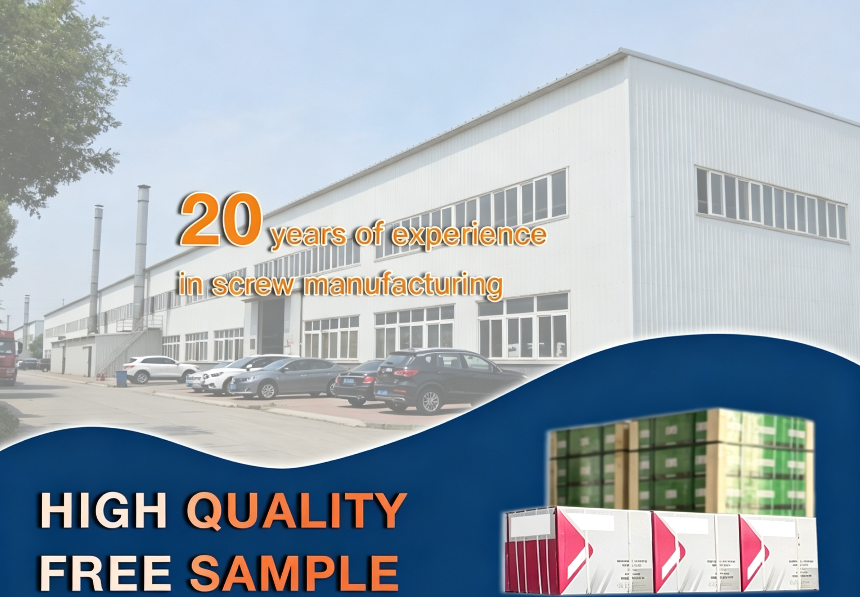
Screwtrade has over 20 years of experience manufacturing self drilling screws for customers in North America, South America, and Europe. Our screws are produced using high-quality 1022 carbon steel and undergo strict heat treatment to ensure optimal drilling performance and tensile strength.
What we offer:
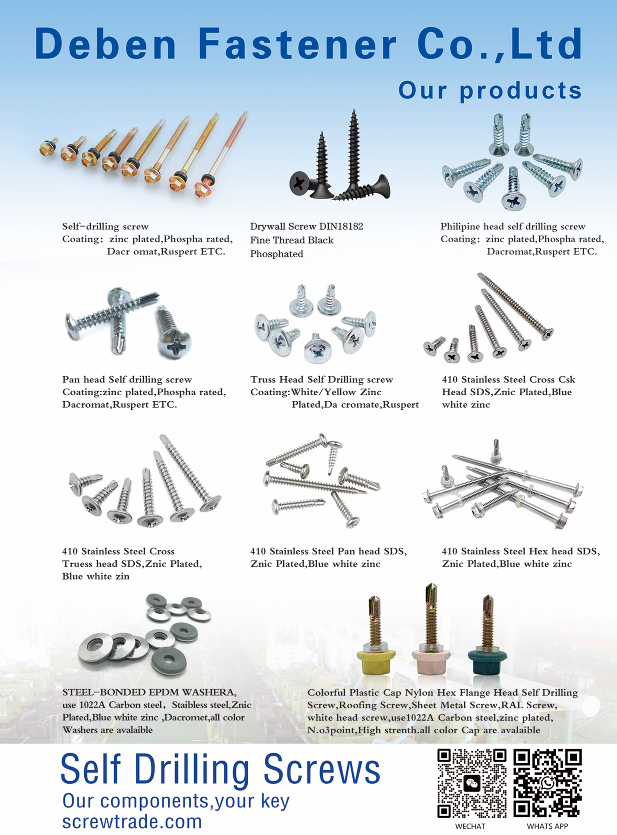
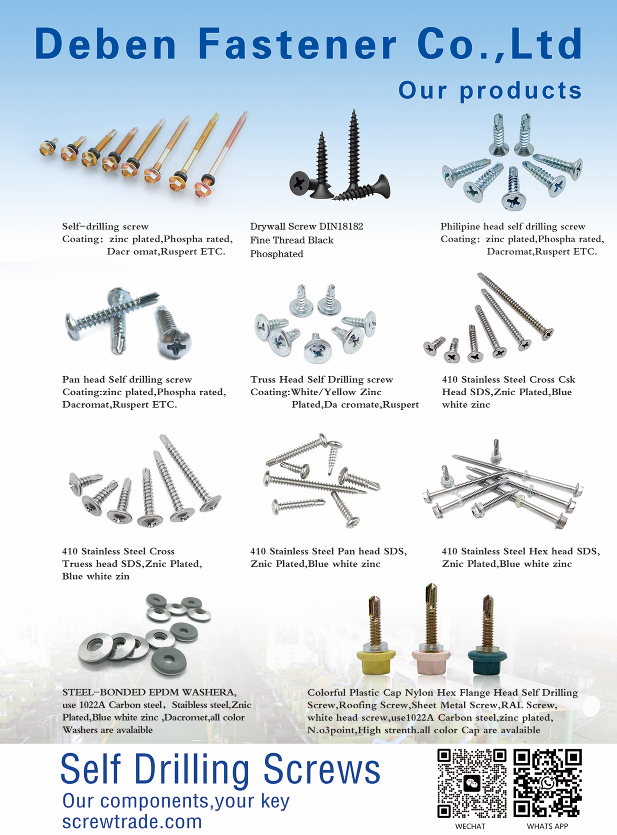
- #3 and #5 drill points for standard and structural applications
- EPDM bonded washers with -40°C to +120°C temperature range
- Ruspert 1000h/1500h coatings for pre-painted steel panels
- 316 stainless steel for coastal and marine environments
- Custom packaging – your logo, your design, your brand
- Free samples – test before you commit
We have strong confidence in the quality of our screws. We welcome trials and testing, and can provide samples for your inspection.
Related News
Other news you might be interested in

Why Self-Drilling Screws Fail to Drill: A Substrate and Installation Checklist
When a self-drilling screw spins against steel without making progress, the purchasing decision becomes urgent: should the installer change the tool settings, should the buyer order a different screw, or should the supplier investigate the batch?A useful diagnosis starts by identifying exactly where drilling stops. Record the material at that point, check the selected screw against the assembly, and then compare installation conditions. This approach gives buyers a clearer basis for deciding what to change and what evidence to request.

Bulk Self-Drilling Screws: An RFQ Checklist for U.S. Importers and Distributors
When sourcing bulk self-drilling screws, a unit price is only useful if you know exactly what it covers. Two quotations may appear to describe the same product while differing in dimensions, coating, packaging, or delivery conditions. For U.S. importers and distributors managing several SKUs, those differences can make supplier comparisons difficult. A clear request for quotation—an RFQ—helps suppliers understand your requirements and gives your purchasing team a consistent basis for reviewing their offers. This checklist explains what to include, which details need confirmation, and how to turn an initial inquiry into a specification that both buyer and supplier can review.
Want to know more?
Get in touch with us for more information about our services and products.