
How Anti-Loosening Nuts Prevent Fastener Failure in Machinery and Steel Structures

Han Congming
AuthorWith experience in screw and fastener manufacturing and sales, we operate our own production facility with stable large-scale capacity. We are specialists in self-drilling screws, drywall screws, chipboard screws, machine screws, bolts, and customized fasteners for construction and industrial applications.
Industry Background: From “Installed” to “Secure Over Time”
In industrial manufacturing, energy facilities, logistics systems, construction machinery, and building installation, bolted connections remain one of the most common joining methods. They are easy to assemble, inspect, and replace. However, connection reliability does not depend on bolts and nuts alone. Installation torque, joint surface condition, operating loads, environmental corrosion, and maintenance practices can all affect long-term performance.
The industry is moving beyond a focus on unit purchase price toward equipment safety, maintenance frequency, and total cost of ownership. For continuously operating machinery, an unexpected shutdown can lead to production losses. For outdoor or load-bearing steel structures, loose critical connections can create more serious safety concerns. As an industrial fastener supplier, ScrewTrade provides fastening products for a range of engineering and equipment applications.
Why Loose Nuts Create Safety Risks
A complete bolted connection relies on sufficient preload to clamp the joined parts together. When preload decreases, small movements can occur between components, changing how the joint carries load. Early signs may include noise, increased vibration, or local wear. If left unaddressed, the issue can develop into enlarged holes, damaged threads, component displacement, or even equipment and structural failure.
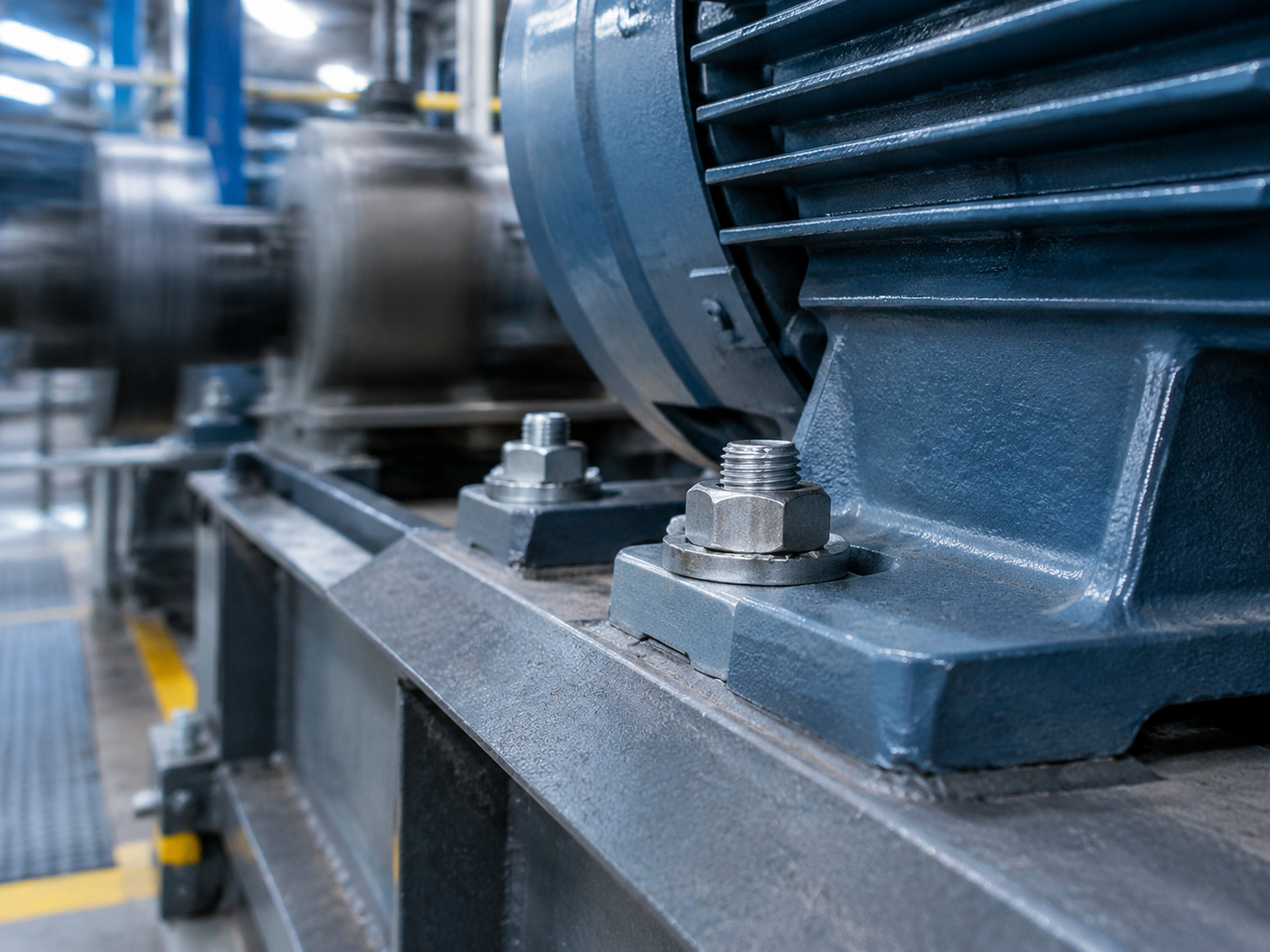
This problem is particularly common in high-frequency machinery, including motor bases, conveyor systems, pump assemblies, fans, and transmission components. In steel structure projects, platforms, support frames, equipment bases, and connection nodes also require stable long-term fastening.
Common Causes of Loose Nuts in Machinery and Steel Structures
Vibration and Repeated Movement
Continuous vibration can create small movements between jointed components. When a fastening system does not provide sufficient locking resistance, standard nuts may gradually rotate loose during long-term operation.
Dynamic Loads and Impact
Equipment start-up, braking, reciprocating motion, material impact, and cyclic loads all subject a bolted connection to changing forces. Compared with static joints, connections exposed to dynamic loads are more likely to experience preload loss.
Temperature Changes and Environmental Exposure
Temperature cycling can cause thermal expansion and contraction. Moisture, salt spray, or chemical exposure can also lead to corrosion. Once joint surfaces deform, corrode, or wear, the original preload may be difficult to maintain, increasing the risk of fastener failure.
Common Anti-Loosening Methods in the Industry
Different operating conditions require different anti-loosening methods:
| Anti-Loosening Method | Typical Use | Key Considerations |
|---|---|---|
| Anti-loosening nuts | Joints that require long-term locking performance | Thread compatibility, installation torque, operating load |
| Spring washers | Simple and widely used installations | Suitability for high-vibration conditions |
| Lock washers | Selected vibration-resistant applications | Joint surface condition and installation method |
| Thread-locking adhesive | Improves resistance between threads | Temperature, removal requirements, curing conditions |
| Double-nut arrangement | Uses mutual locking between two nuts | Assembly efficiency and available installation space |
No single method is suitable for every application. Engineers should select an appropriate fastening solution based on the vibration level of the machinery, the load condition of the steel structure, maintenance intervals, and disassembly requirements.
The Role of Anti-Loosening Nuts
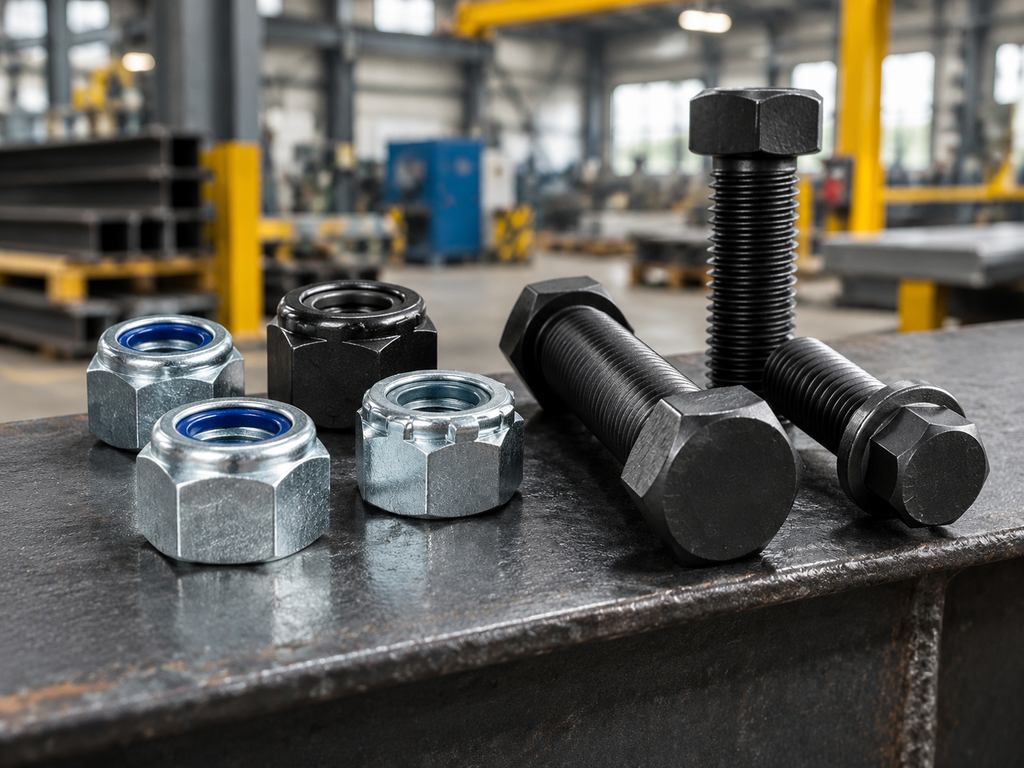
Anti-loosening nuts are designed to improve resistance to rotation and loosening, helping a connection maintain more stable preload during service. They are particularly relevant for fastening points exposed to vibration, impact, repeated start-stop cycles, or complex dynamic loads.
However, an anti-loosening nut is not a stand-alone solution for every joint problem. Insufficient bolt length, uneven joint surfaces, oversized holes, or incorrect installation torque can still affect the performance of a bolted connection.
Common Applications for Anti-Loosening Nuts
Industrial Machinery
Anti-loosening nuts can be used on motors, gearboxes, pumps, fans, conveyors, construction equipment, and automated production lines. These systems often experience continuous vibration or periodic dynamic loads, making fastening reliability especially important.
Steel Structure Projects
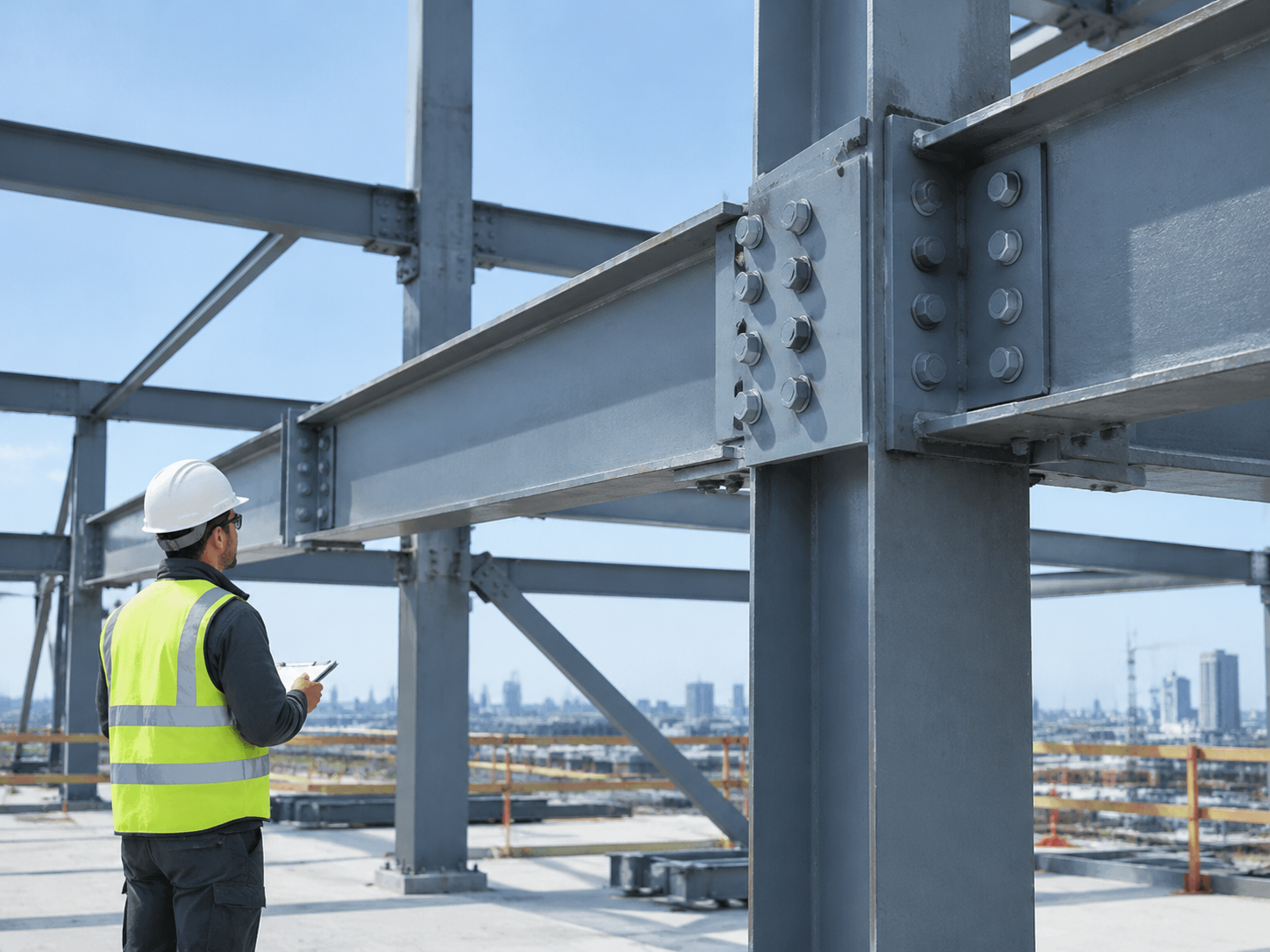
Typical applications include equipment platforms, support frames, guardrails, structural connections, and outdoor installation points. For projects exposed to wind loads, equipment loads, or changing environmental conditions, proper fastener selection can help reduce maintenance requirements.
High-Vibration Equipment
Fans, pump units, construction machinery, mining equipment, and transport equipment may all benefit from anti-loosening nuts as part of a more reliable bolted connection strategy.
How to Select the Right Fastening Solution
Before selecting anti-loosening nuts, consider the following:
- Whether the thread size, pitch, and bolt grade are compatible;
- Whether the joint is exposed to vibration, impact, or dynamic loads;
- Whether the operating environment is humid, outdoor, or corrosive;
- Whether frequent removal and reassembly are required;
- Whether the project specifies requirements for material, surface treatment, inspection, or relevant standards.
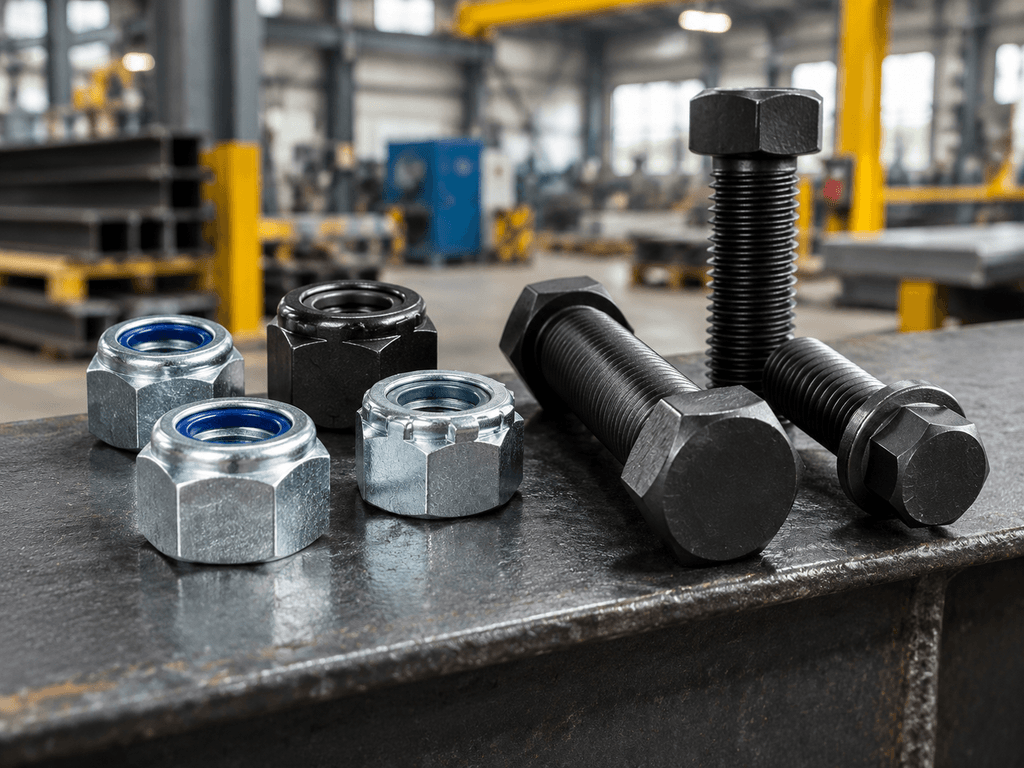
For procurement projects, buyers can review bolts and nuts products and then determine a suitable anti-loosening nut solution based on thread specifications, application conditions, and joint design.
Installation Matters for Anti-Loosening Performance
Correct installation is essential to the performance of anti-loosening nuts. Before installation, threads should be clean and undamaged. Rust, oil, burrs, and thread damage can affect joint performance. Appropriate tools should be used, and installation torque should follow project requirements.
Insufficient torque may result in inadequate preload, while over-tightening can damage threads or connected components. Joint surfaces should also fit properly. If gaps, deformation, or coating compression are present, preload may decrease during operation and increase the risk of loose nuts.
Inspection and Maintenance Recommendations
For long-running machinery and outdoor steel structures, regular inspection should be part of the maintenance program. Key checks include loosening, corrosion, deformation, abnormal vibration, and component movement.
For high-vibration, high-load, or safety-critical applications, incorporating anti-loosening nuts into a preventive maintenance strategy can help identify potential fastener failure risks early. Preventive maintenance is generally more effective for controlling total cost of ownership than emergency repairs after a failure occurs.
Frequently Asked Questions About Anti-Loosening Nuts
Can anti-loosening nuts be used with standard bolts? They should be used with compatible bolt thread sizes and pitches. Confirm the thread specification and installation requirements before use.
Are anti-loosening nuts suitable for outdoor steel structures? They can be suitable, but the material and surface treatment should match the local humidity, corrosion risk, and environmental conditions.
Do anti-loosening nuts eliminate the need for inspection? No. Anti-loosening nuts can reduce the risk of loose nuts, but critical connections should still be inspected according to the maintenance plan.
Choose Reliable Anti-Loosening Nuts for Your Project
For machinery and steel structures exposed to vibration, dynamic loads, or long-term operating stress, reliable anti-loosening nuts can help improve bolted connection stability, reduce maintenance pressure, and lower the risk of fastener failure.For product matching based on drawings, thread sizes, material requirements, or operating conditions, contact ScrewTrade for product and quotation support.
Related News
Other news you might be interested in

Why Self-Drilling Screws Fail to Drill: A Substrate and Installation Checklist
When a self-drilling screw spins against steel without making progress, the purchasing decision becomes urgent: should the installer change the tool settings, should the buyer order a different screw, or should the supplier investigate the batch?A useful diagnosis starts by identifying exactly where drilling stops. Record the material at that point, check the selected screw against the assembly, and then compare installation conditions. This approach gives buyers a clearer basis for deciding what to change and what evidence to request.

Bulk Self-Drilling Screws: An RFQ Checklist for U.S. Importers and Distributors
When sourcing bulk self-drilling screws, a unit price is only useful if you know exactly what it covers. Two quotations may appear to describe the same product while differing in dimensions, coating, packaging, or delivery conditions. For U.S. importers and distributors managing several SKUs, those differences can make supplier comparisons difficult. A clear request for quotation—an RFQ—helps suppliers understand your requirements and gives your purchasing team a consistent basis for reviewing their offers. This checklist explains what to include, which details need confirmation, and how to turn an initial inquiry into a specification that both buyer and supplier can review.
Want to know more?
Get in touch with us for more information about our services and products.