

How to Use Self Tapping Screws?

Han Congming
AuthorWith experience in screw and fastener manufacturing and sales, we operate our own production facility with stable large-scale capacity. We are specialists in self-drilling screws, drywall screws, chipboard screws, machine screws, bolts, and customized fasteners for construction and industrial applications.
What is the difference between a self-tapping screw and a self-drilling screw?
Walk into any hardware store in China and you'll hear this argued in the fastener aisle at least once a week. Short version. A self-driller has a drill tip. TEK point. Fluted. It bores the hole, then taps threads. One shot. A self-tapper only does the second half — forms threads in a hole somebody already made. That's it. The whole distinction. If you're hanging sheet metal roofing on steel purlins, reach for the TEK. Pre-machined holes in an aluminum extrusion bracket? Self-tapper.

Do self tapping screws need a pilot hole?
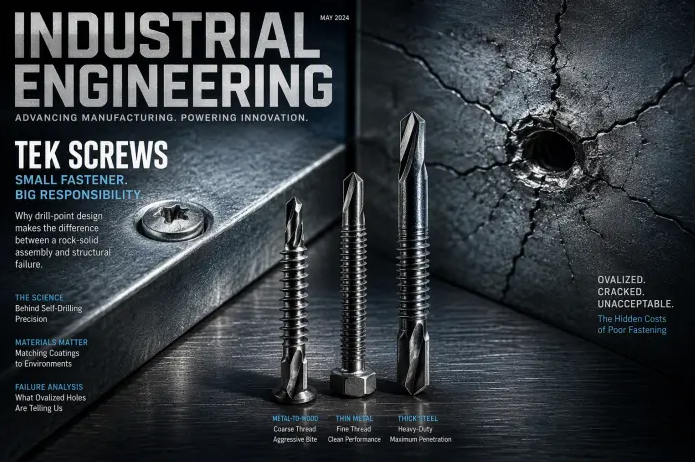
They absolutely do, unless the substrate is so thin you can practically see through it. Here's why it matters beyond the obvious: when a self tapper goes into an undersized hole — or worse, no hole at all — the radial expansion force can crack the boss in a molded plastic housing before the screw even seats. I've torn down enough warranty-return appliances to know this isn't theoretical. The failure mode is always the same. Hairline crack radiating from the screw boss. Customer says it rattles. Engineer opens it up, sees the crack, blames the molder. The molder blames the assembly spec. Nobody checks the pilot hole because nobody was told to drill one.
What size pilot hole should you drill?
Somewhere between the screw's minor diameter and major diameter. Not helpful? Fine. For a #8 self tapper — that's roughly 4.2 mm major, 3.0 mm minor — drill 3.2 mm in nylon or ABS, 3.5 mm in aluminum, and around 3.0 mm in steel if you're using a thread-cutting screw, and approximately 3.5–3.6 mm (close to the pitch diameter) if you're using a thread-forming screw. Softer material, smaller hole. It's that simple. You want the substrate to flow into the thread flanks. That's where the grip comes from. Aluminum's a different animal. Go undersized on aluminum and the threads gall instead of form. Screwtrade ships a pilot hole chart with every batch covering sixteen substrate types across four screw classes. Not because it's fancy marketing. Because guessing pilot hole sizes from memory at 3 PM on a Friday is how field failures happen.
Can you use self tapping screws in metal without a pilot hole?
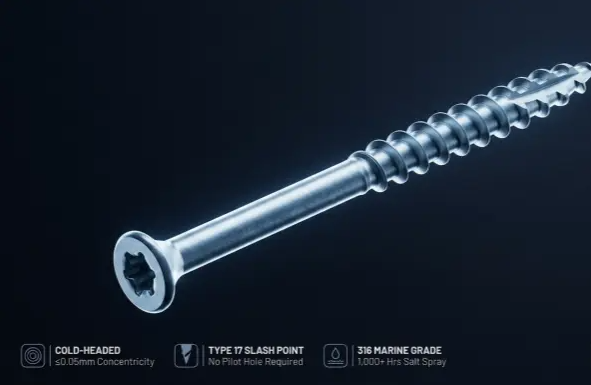
If the sheet is under about 1.2 mm and you're using a Type AB point — the sharp gimlet-point style — then yeah, it'll punch through and start forming threads. I've seen it work on HVAC ductwork a thousand times. But on 2 mm mild steel plate? Or anything structural? The point just can't shove that much steel out of the way. The screw stalls. Then it spins. Then the operator leans harder on the drill, the tip work-hardens the steel around the hole, and now you've got a burnished, hardened crater that nothing will thread into. At that point you're not fastening anything. You're creating rework.
How many times can you reuse a self tapping screw?
Once. Maybe three times if you're lucky and the substrate is metal. In plastic? Forget it. Every time you back out and re-drive a self tapper, you're shaving a little more of the formed thread off the hole wall. By the third cycle in glass-filled nylon the holding force has fallen off a cliff — sometimes 50% or worse. That's fine for a one-time assembly. It's a disaster for a service panel that needs to come off every quarter. If the joint needs to be opened regularly, skip the self tapper entirely. Use a machine screw into a brass insert or a rivet nut. Your field techs will thank you.
What stops a self tapping screw from stripping?
Three things, and none of them are complicated. One: slow down. Run thread-cutting screws between 800 and 1,500 RPM with steady forward pressure — not the 3,000 RPM impact-driver hammering guys use on deck screws. Two: screw length matters more than most people think. Stack-up thickness plus about 3 mm of tip protrusion. If the tip bottoms in a blind hole before the head seats, the threads keep cutting with nowhere to go. That's a stripped hole every single time. Three: throw away worn driver bits. A Phillips #2 bit that's done ten thousand screws has rounded edges, and a worn Phillips #2 bit in a Phillips recess is the fastest way I know to cam out and destroy a screw head. The flanks round off after a few thousand cycles, engagement drops, and the bit rides up the cross — stripping the recess instantly.
screwtrade's self tapping screws roll out of the same plant that runs their cold-heading, heat treatment, and plating under one roof — case depth controlled in the range of 0.05–0.18 mm per ISO 2702, with batch-to-batch variation held within ±0.02 mm, zinc plating to 5–8 µm per ISO 4042. The pilot hole table comes in the box. Not a QR code, not a PDF link. Paper. Because a greasy printout taped to the assembly bench is worth more than a perfect digital file nobody opens.
Related News
Other news you might be interested in
Why Self-Drilling Screws Fail to Drill: A Substrate and Installation Checklist
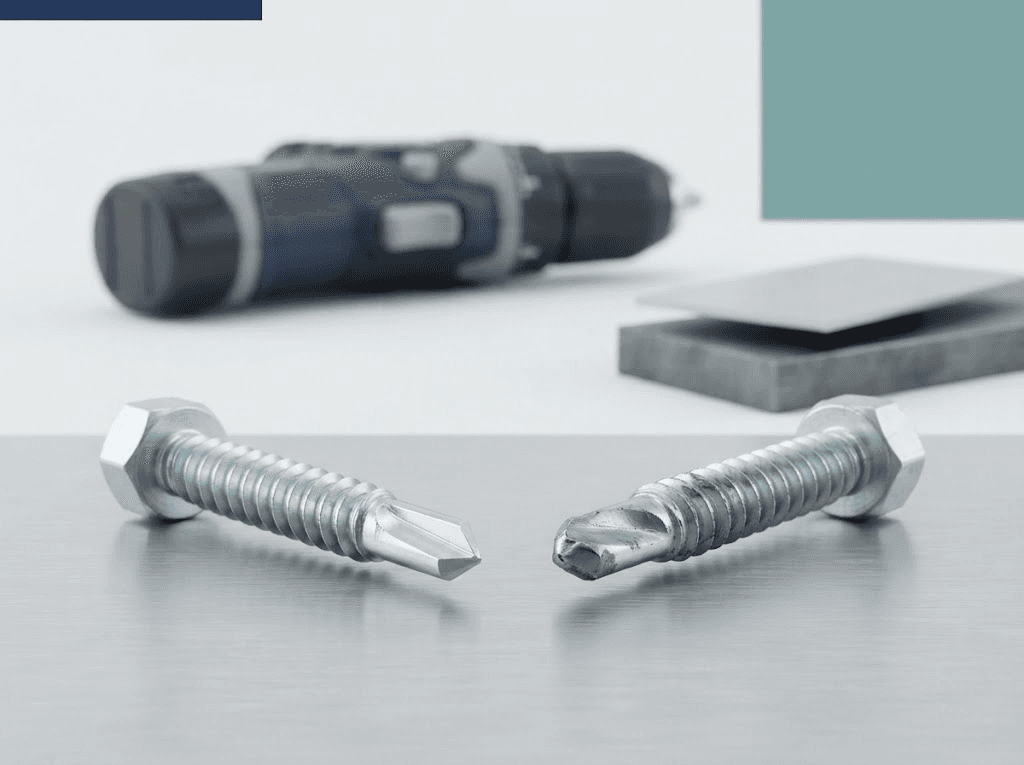
When a self-drilling screw spins against steel without making progress, the purchasing decision becomes urgent: should the installer change the tool settings, should the buyer order a different screw, or should the supplier investigate the batch?A useful diagnosis starts by identifying exactly where drilling stops. Record the material at that point, check the selected screw against the assembly, and then compare installation conditions. This approach gives buyers a clearer basis for deciding what to change and what evidence to request.
Bulk Self-Drilling Screws: An RFQ Checklist for U.S. Importers and Distributors
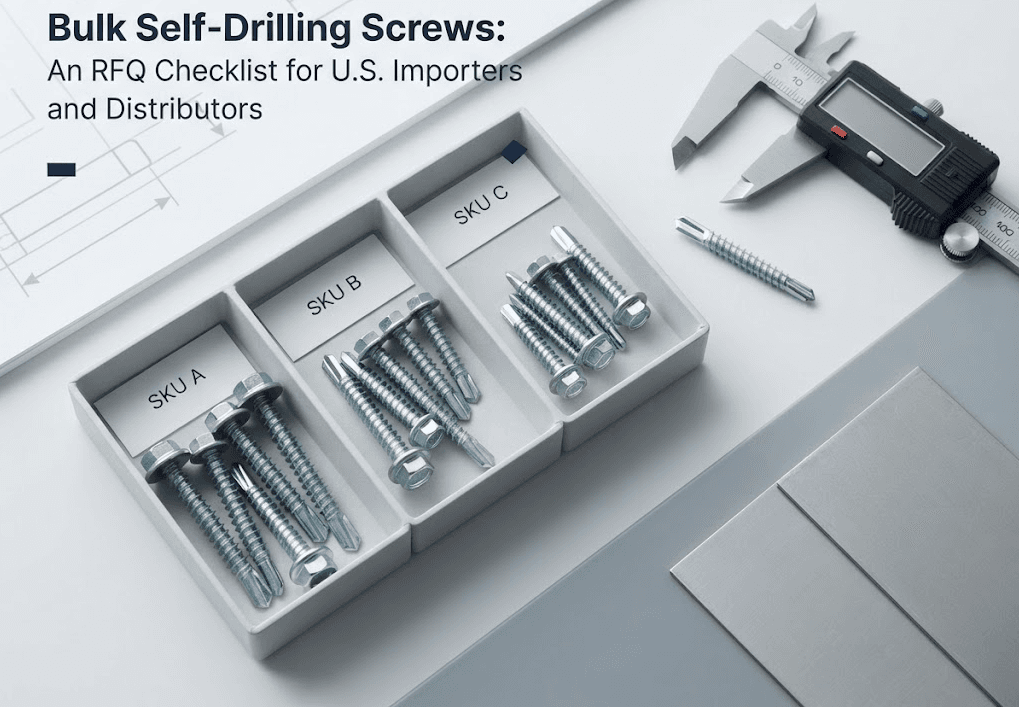
When sourcing bulk self-drilling screws, a unit price is only useful if you know exactly what it covers. Two quotations may appear to describe the same product while differing in dimensions, coating, packaging, or delivery conditions. For U.S. importers and distributors managing several SKUs, those differences can make supplier comparisons difficult. A clear request for quotation—an RFQ—helps suppliers understand your requirements and gives your purchasing team a consistent basis for reviewing their offers. This checklist explains what to include, which details need confirmation, and how to turn an initial inquiry into a specification that both buyer and supplier can review.
Want to know more?
Get in touch with us for more information about our services and products.