
The B2B Buyer’s Guide to Self-Drilling Screws: Quality, Standards, and Supply Chain Excellence

Han Congming
AuthorWith experience in screw and fastener manufacturing and sales, we operate our own production facility with stable large-scale capacity. We are specialists in self-drilling screws, drywall screws, chipboard screws, machine screws, bolts, and customized fasteners for construction and industrial applications.
Introduction: Navigating the Challenges of Fastener Sourcing
For screw importer businesses and screw distributor networks, every shipment is a direct test of your supply chain’s integrity. Inconsistent quality, opaque export documentation, and volatile material costs don’t just eat margins—they break client trust. A single batch of self-drilling screw products that fails on the jobsite can cost you more than a refund; it can cost you the entire relationship.
The global screws and fasteners market is projected to reach $161.8 billion by 2034. That growth will favor importers and screw wholesaler operations who lock in dependable sourcing now—before capacity tightens and lead times stretch. This guide addresses the real friction points: drill point consistency across batches, mixed container loading for inventory agility, and OEM screw packaging that meets your specifications without exception. If you’re ready to move beyond transactional suppliers and build a supply chain that protects your reputation, you’re exactly where you need to be.
Understanding Self-Drilling Screw Standards and Grades
Specifying the right fastener begins with standards fluency. The ISO fastener standard framework and DIN 7504 (the benchmark for self-tapping screw products with drilling capability) are your essential references. Drill point classifications—#1 through #5—define material thickness capacity, and a mismatch means costly callbacks. Too many buyers inherit problems because a previous supplier substituted a #3 point where a #4 was required. Our team provides specification matching support to cross-reference standards before orders are placed, eliminating guesswork and field failures.
Coating selection directly impacts service life and warranty exposure. A zinc plated screw offers moderate corrosion resistance for interior or sheltered applications—cost-effective but limited. For exterior exposure, HDG screw (hot-dip galvanized) provides a thicker sacrificial layer. Where performance demands escalate—coastal building facades, refrigerated facilities, chemical environments—the Ruspert coated screw delivers salt spray resistance exceeding 1,000 hours. Material substrate matters equally: carbon steel screw options deliver strength and value while stainless steel screw grades (304, 316) solve corrosion challenges at a higher price point. The key is matching the specification to the actual environmental load—neither over-engineering nor under-specifying—to keep your projects on time and on budget.
Key Considerations for B2B Bulk Sourcing
Inventory strategy separates reactive buyers from strategic ones. MOQ (Minimum Order Quantity) and lead time aren’t just line items on a quote—they’re negotiable variables when the supplier values your partnership. Start by demanding transparent production schedules and confirm whether the fastener manufacturer holds buffer stock for repeat clients. For importers testing new SKUs or entering a category, mixed container loading (LCL consolidation) lets you run multiple drill point screw variants, wood to metal screw lines, and metal to metal screw products without committing to a full container of each. Once volumes stabilize, FCL shipments cut per-unit logistics costs substantially.
OEM screw packaging demands precise, upfront communication. Your branding, barcode integration, label compliance, and inner-box quantities must be locked into the production workflow—not bolted on as an afterthought in a third-party warehouse. A supplier seasoned in B2B screw sourcing confirms packaging specs alongside product specs, before tooling ever starts. That’s the difference between a shipment that clears customs smoothly and one that sits in limbo.
Product Deep Dive: Solutions for Demanding Projects
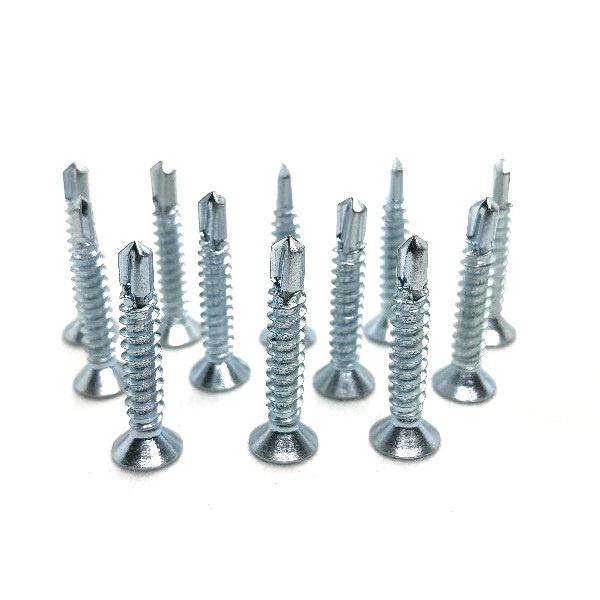
The difference between a commodity fastener and an engineered solution reveals itself under load. The Ruspert Hex Washer Head Self Drilling Screw is purpose-built for metal roofing and cladding systems where installation torque consistency prevents over-driving and under-driving across thousands of fasteners. This hex washer head screw pairs Ruspert coating’s corrosion performance with a flange geometry that distributes clamping force predictably. For wood-to-metal connections, the Flat Head Self Drilling Screw 4.2mm 35mm delivers a countersunk finish that sits flush—a detail critical where surface aesthetics and safety are non-negotiable.
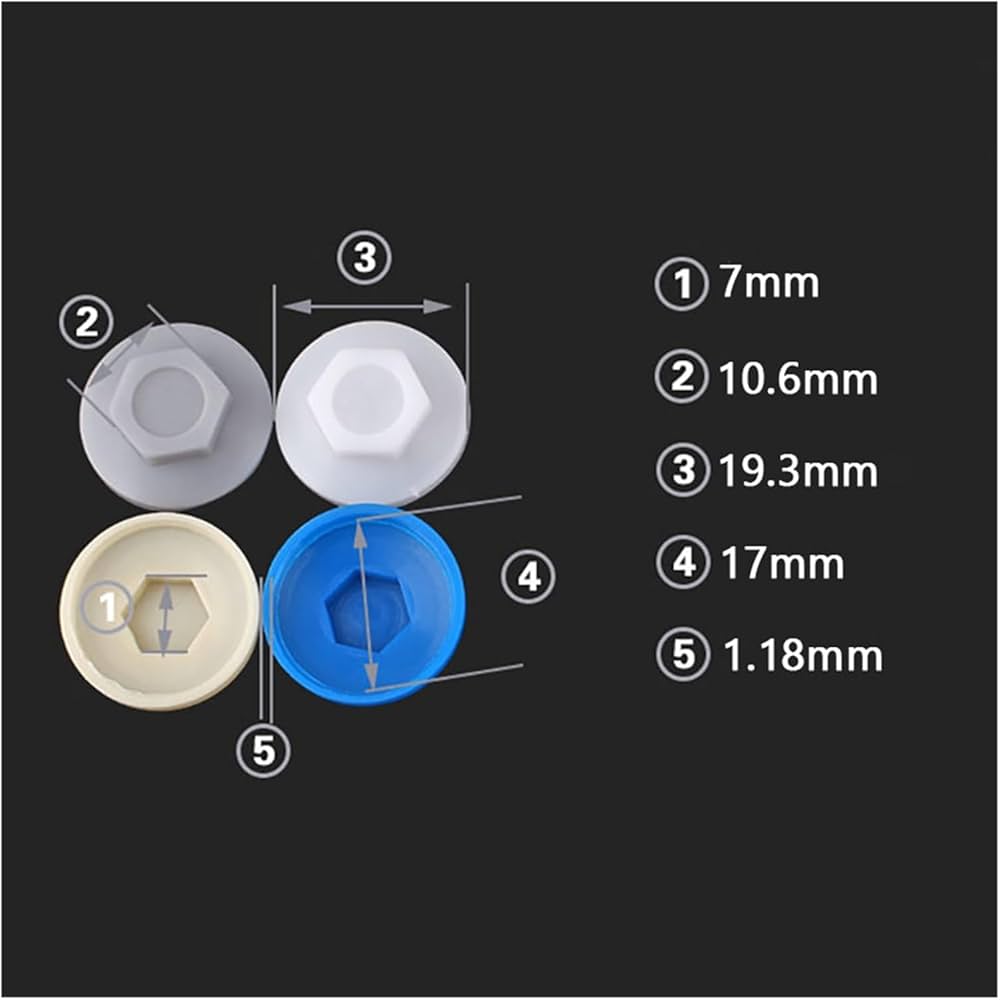
Vibration applications require a fundamentally different approach. The patented Never Loosen Nut—an anti-loosening fastener tested far beyond standard safety margins—solves the root cause of joint failure in machinery, automotive, and heavy equipment assemblies. For anchoring into concrete and masonry, the Stainless Steel Countersunk Sleeve Anchor provides batch-to-batch consistency and corrosion resistance that generic alternatives can’t match. We also supply PVC Hex Caps for Self-Drilling Screws, a small but vital component that prevents moisture ingress and protects fastener heads in exposed outdoor installations—scalable procurement for roofing screw and cladding projects. Rounding out the range, Hexagon Head Self Drilling Screws—or tek screw variants—serve general metal-to-metal fastening with reliable drill point accuracy. Our team’s self drilling screw focus means these products aren’t side-line items; they’re core engineering priorities.
Quality Assurance and Testing Methods
You shouldn’t have to discover coating failure on a completed structure. The salt spray test (ASTM B117) accelerates corrosion to evaluate coating durability—specify the hours required for your application (500, 720, 1000+) and demand actual test data, not verbal assurances. For a Ruspert coated screw on a coastal project, we recommend a 1000+ hour benchmark. Heat treatment parameters and cold heading process control directly determine tensile strength and thread integrity; require the fastener manufacturer to provide material test reports and process certifications with every shipment.
Thread forming technique is a quality indicator that separates capable suppliers from the rest. Thread rolling—rather than cutting—displaces material to create stronger, fatigue-resistant threads with a superior surface finish. A supplier with integrated production and qc controls these variables in-house instead of outsourcing critical steps. Request performance testing reports for each batch; a supplier who tests systematically will share data willingly. One who hesitates is telling you everything you need to know.
Export Documentation and Logistics Simplified
Customs clearance failures cost time and money—and they’re almost always preventable. Accurate export documentation—material test reports, certificates of origin, commercial invoices, and packing lists that precisely match the physical shipment—keeps your containers moving. When documentation and product don’t align, the importer typically pays the demurrage. For buyers testing the market, mixed container loading (LCL) reduces inventory exposure; for established bulk screw order volumes, FCL delivers lower per-unit freight and greater shipping predictability.
Choose a China fastener supplier who communicates lead times transparently and owns logistics coordination from factory to port. Supplier delivery execution—the ability to hit promised ship dates consistently—is a capability you evaluate before placing orders, not after. Ask for recent shipment tracking data and reference checks from other screw importer clients. A supplier who can show you their on-time delivery record is a supplier worth your trust.
How to Choose a Reliable China Fastener Supplier
Supplier qualification must go deeper than a website and a quote. Verify ISO 9001 quality management system certification and confirm product-specific compliance—DIN 7504 for self-tapping screw products, for example. Request production samples and run your own salt spray and tensile tests. A credible supplier will not only provide samples but will include their own internal test data for comparison, showing you exactly what to expect from full production runs.
Evaluate whether the supplier has genuine experience serving screw importer and screw distributor clients—not just transactional exporters. Look for a track record in B2B screw sourcing that includes consistent documentation quality, packaging compliance, and after-shipment support. When a potential supplier can walk you through their process for handling a non-conformance finding from a previous batch—clearly and without defensiveness—you’re talking to a partner, not just a vendor.
Conclusion: Secure Your Supply Chain Today
The divide between a supplier and a strategic partner becomes clear in the repeat orders—consistent product, on-time delivery, and documentation that doesn’t create problems at the port. Whether you need wood to metal screw fasteners for timber construction, roofing screw products for metal building systems, or tek screw variants for general fabrication, qualifying a reliable source now positions you ahead of supply constraints and price volatility.
From carbon steel screw economics to stainless steel screw corrosion performance, from zinc plated screw cost-efficiency to HDG screw and Ruspert coated screw durability, the right specification paired with the right supply partner eliminates the variables that hurt your reputation. Don’t leave your next order to chance. Contact us today to request samples, discuss your requirements, and build a procurement program that controls cost without cutting corners.
Related News
Other news you might be interested in
Why Self-Drilling Screws Fail to Drill: A Substrate and Installation Checklist
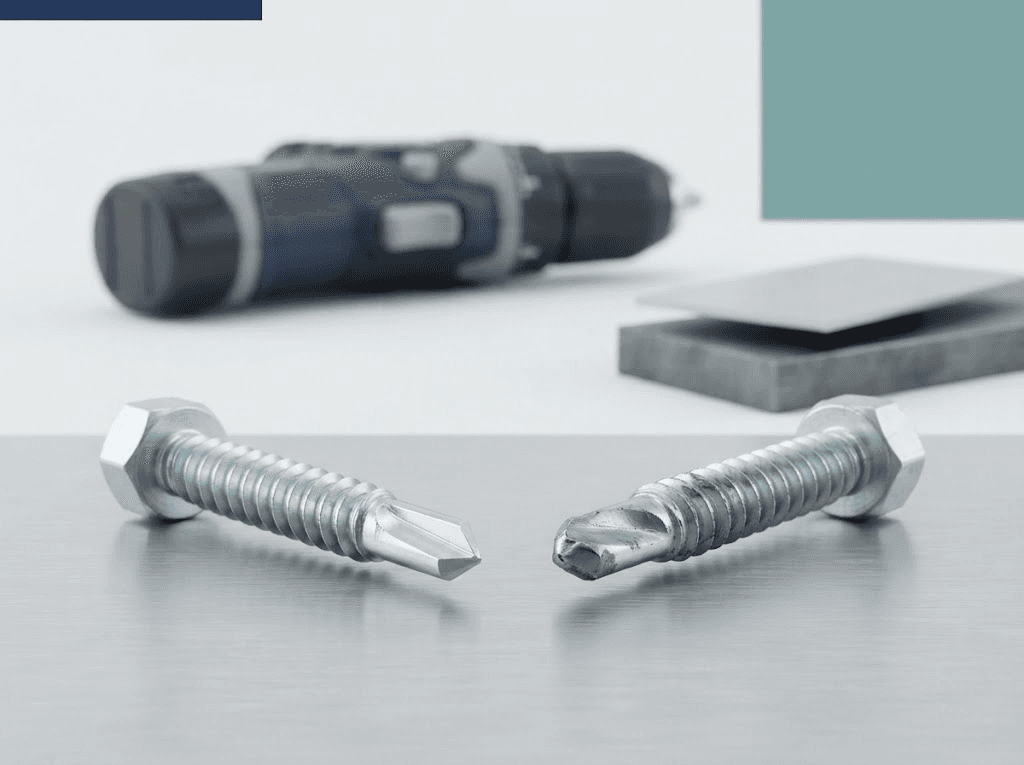
When a self-drilling screw spins against steel without making progress, the purchasing decision becomes urgent: should the installer change the tool settings, should the buyer order a different screw, or should the supplier investigate the batch?A useful diagnosis starts by identifying exactly where drilling stops. Record the material at that point, check the selected screw against the assembly, and then compare installation conditions. This approach gives buyers a clearer basis for deciding what to change and what evidence to request.
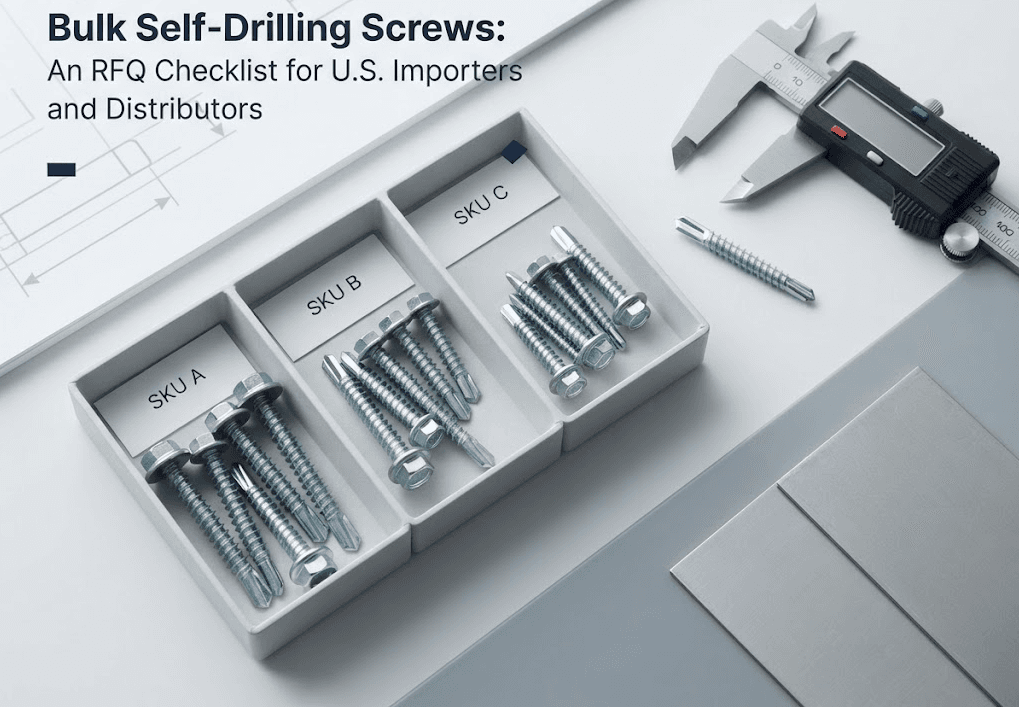
Bulk Self-Drilling Screws: An RFQ Checklist for U.S. Importers and Distributors
When sourcing bulk self-drilling screws, a unit price is only useful if you know exactly what it covers. Two quotations may appear to describe the same product while differing in dimensions, coating, packaging, or delivery conditions. For U.S. importers and distributors managing several SKUs, those differences can make supplier comparisons difficult. A clear request for quotation—an RFQ—helps suppliers understand your requirements and gives your purchasing team a consistent basis for reviewing their offers. This checklist explains what to include, which details need confirmation, and how to turn an initial inquiry into a specification that both buyer and supplier can review.
Want to know more?
Get in touch with us for more information about our services and products.