
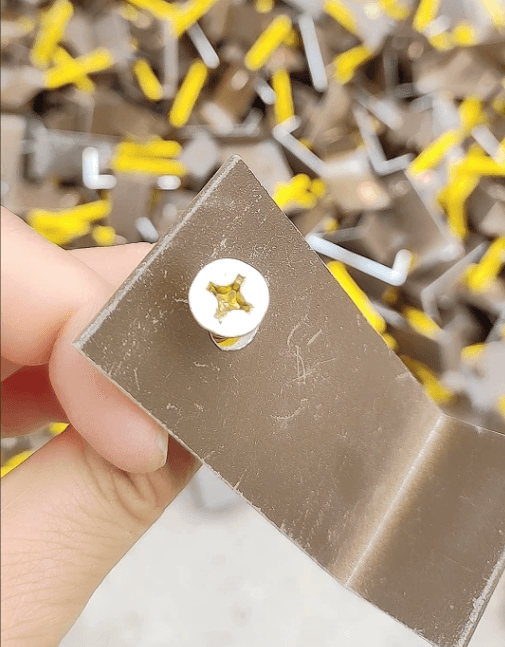
The Hidden Cost of Cheap Fasteners: Why Quality Roofing Bolts Are Non-Negotiable for Long-Term Project ROI

Han Congming
AuthorWith experience in screw and fastener manufacturing and sales, we operate our own production facility with stable large-scale capacity. We are specialists in self-drilling screws, drywall screws, chipboard screws, machine screws, bolts, and customized fasteners for construction and industrial applications.
Abstract
In commercial and industrial roofing, fasteners are often treated as a commodity — a low-cost line item to be minimized during procurement. However, industry data and field experience consistently show that cutting corners on roofing bolts leads to far greater expenses down the line: premature corrosion, structural leaks, warranty claims, and costly retrofits. This article examines the real total cost of ownership (TCO) for roofing fasteners, explains how substandard products fail in service, and outlines why investing in premium-grade bolts — particularly those with advanced anti-corrosion coatings — delivers superior long-term ROI for contractors, building owners, and engineering firms alike.
The Initial Price Trap: Why Cheap Fasteners Seem Like a Bargain
On a typical metal roofing bill of materials, fasteners account for only 2–5% of the total project cost. For budget-conscious procurement teams, switching to a lower-priced supplier appears to be an easy win — the per-unit savings multiply across thousands of bolts, and the upfront reduction is immediately visible on the P&L.
What this calculation misses, however, is the lifecycle dimension. A roofing system is expected to perform for 20, 30, or even 50 years. A fastener that costs 20% less upfront but fails in year five due to corrosion does not save money — it triggers a cascade of expenses: water damage remediation, interior repairs, labor for tear-off and reinstallation, and reputational damage for the installer. In extreme coastal or industrial environments, the gap between budget fasteners and quality fasteners can be measured not in years, but in months.
Corrosion & Failure: The Real Price of Cutting Corners
Fastener failure in roofing applications almost always traces back to corrosion. When a bolt's protective coating is thin, poorly applied, or formulated with low-grade materials, rust begins to form at the head or the shank. Over time, the corrosion expands, compromising the seal between the fastener and the roofing panel. The result is a leak point — and in a system with thousands of fasteners, even a small failure rate translates to dozens of entry points for water.
The downstream costs are disproportionately high:
- Water intrusion damage to insulation, ceiling systems, electrical wiring, and stored inventory
- Mold and indoor air quality issues that require professional remediation
- Structural degradation of roof purlins and decking from prolonged moisture exposure
- Labor and access costs for rooftop repair work, which often requires mobilizing specialized crews and safety equipment
- Warranty and legal exposure when building owners hold installers accountable for system failures
Industry studies suggest that a single fastener failure, when fully resolved including interior repairs, can cost 10 to 50 times the original price of the bolt itself.
Roofing System Failures: Case Studies and Industry Data
Field audits from coastal construction markets reveal a consistent pattern. Projects that specified economy-grade fasteners without proper corrosion rating showed a 15–25% failure rate within the first seven years in salt-air environments. By contrast, projects using coated, corrosion-resistant fasteners reported failure rates below 2% over the same period.
The difference is not merely cosmetic. In one documented case on the U.S. Gulf Coast, a 100,000 sq. ft. warehouse required a full fastener retrofit just six years after installation. The original savings on fasteners totaled roughly $12,000; the retrofit cost exceeded $280,000 — a 23x multiplier. Similar stories repeat in agricultural buildings, solar installations, and industrial facilities where environmental stressors accelerate degradation.
What Makes a Quality Roofing Fastener?
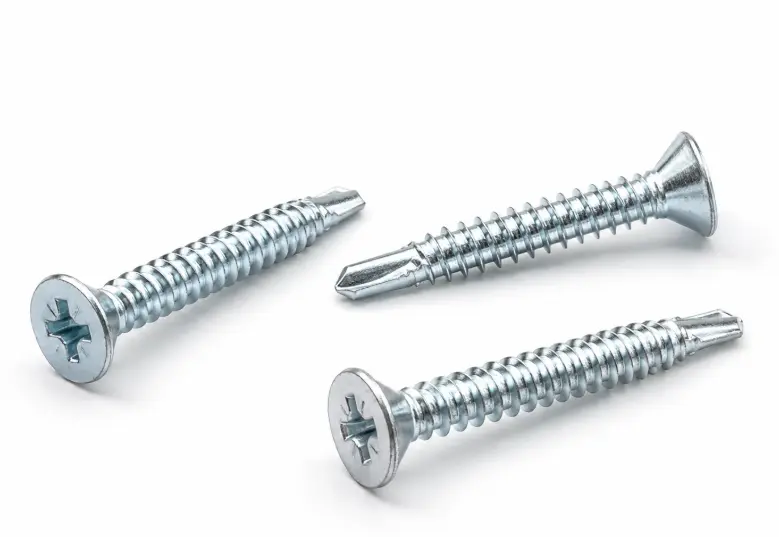
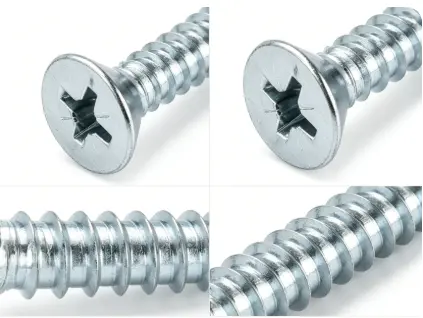
Not all self-drilling screws are created equal. A premium roofing fastener combines three engineering elements: precision drill points that deliver clean, consistent penetration without over-driving; a properly sized EPDM sealing washer that creates a watertight bond under compression; and a base metal formulation engineered for tensile strength and fatigue resistance.
For contractors and installers focused on reliability, metal roofing self-drilling screws from Screw Trade are engineered to meet these exacting standards. Each screw is manufactured with a sharp, durable drill tip that reduces driving time and minimizes panel distortion, while the integrated EPDM washer provides a consistent, weatherproof seal across a wide temperature range. The result is a faster installation and a longer service life — two factors that directly improve project margins and reduce callback rates.
Coating Technology That Stands the Test of Time
Even the best-engineered fastener will fail if its protective coating cannot withstand the environment. Standard zinc plating provides basic corrosion resistance for mild, inland applications, but in coastal areas, industrial zones with chemical exposure, or regions with heavy de-icing salt use, a higher tier of protection is required.
This is where advanced surface treatments like Ruspert coating change the equation. Ruspert is a multi-layer ceramic-metallic coating system that delivers significantly higher salt-spray resistance than conventional galvanizing or zinc plating. Applied through a proprietary process, it forms a durable, uniform barrier that resists chipping during installation and continues to protect the base metal through decades of weathering.
For projects in corrosive environments, Ruspert coated fasteners from Screw Trade offer a proven solution that extends service life and reduces long-term maintenance. Specifiers working on coastal warehouses, solar farm rooftops, chemical plant structures, and agricultural buildings routinely upgrade to Ruspert-grade fasteners as a standard, not an option — because the cost of doing otherwise has already been proven in the field.
Conclusion: Choose Wisely, Build Durably
Fasteners are the smallest components on a roofing project, but they are also the most numerous — and the most critical to long-term waterproofing performance. Saving a few cents per bolt at the procurement stage is a false economy that inevitably returns as far larger expenses in maintenance, repair, and replacement.
For contractors, specifiers, and building owners who measure success in decades rather than quarters, the path is clear: invest in fasteners engineered for the environment, specify coatings rated for the conditions, and work with suppliers who stand behind their products with consistent quality and traceable manufacturing. The roof is only as strong as the fasteners that hold it down — and in the long run, quality is always the cheaper choice.
Related News
Other news you might be interested in
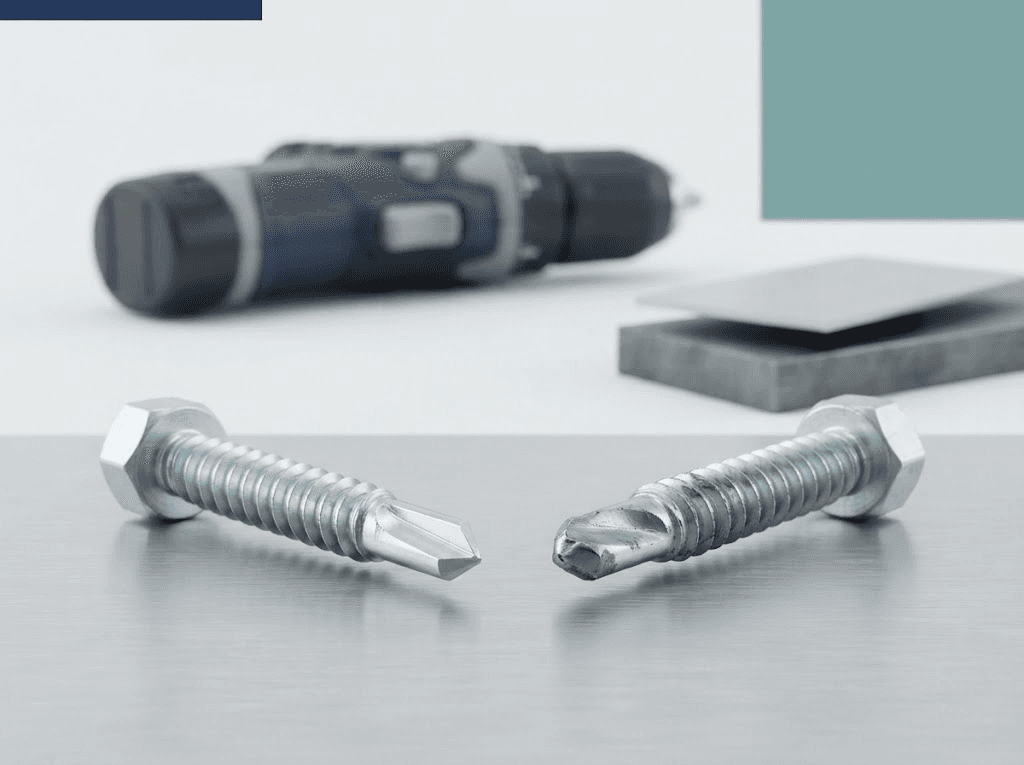
Why Self-Drilling Screws Fail to Drill: A Substrate and Installation Checklist
When a self-drilling screw spins against steel without making progress, the purchasing decision becomes urgent: should the installer change the tool settings, should the buyer order a different screw, or should the supplier investigate the batch?A useful diagnosis starts by identifying exactly where drilling stops. Record the material at that point, check the selected screw against the assembly, and then compare installation conditions. This approach gives buyers a clearer basis for deciding what to change and what evidence to request.
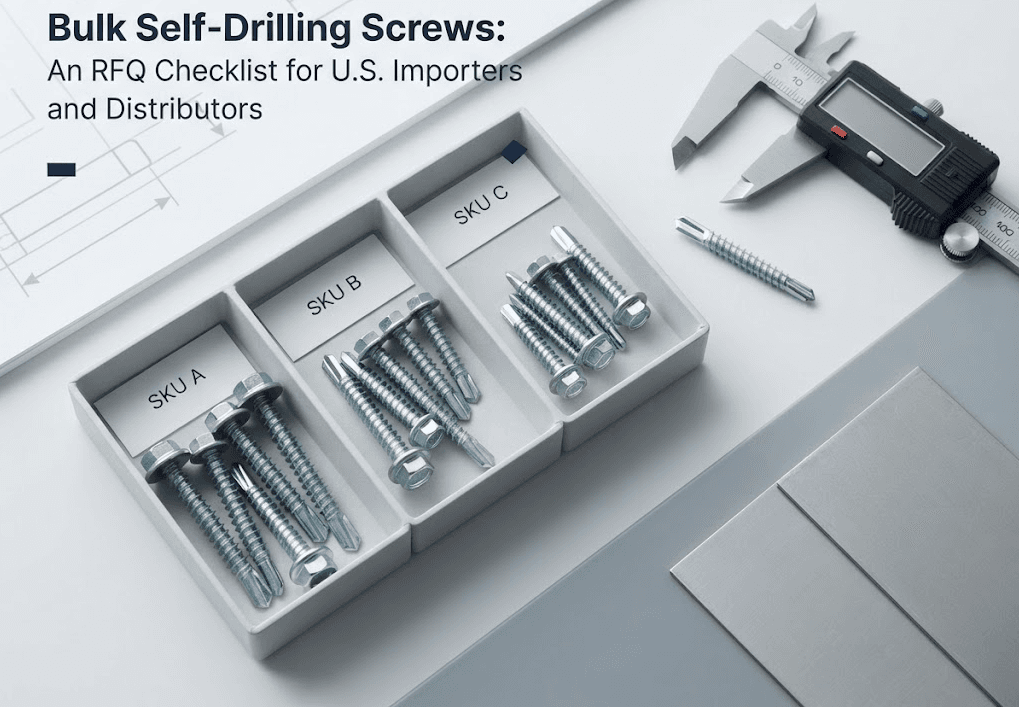
Bulk Self-Drilling Screws: An RFQ Checklist for U.S. Importers and Distributors
When sourcing bulk self-drilling screws, a unit price is only useful if you know exactly what it covers. Two quotations may appear to describe the same product while differing in dimensions, coating, packaging, or delivery conditions. For U.S. importers and distributors managing several SKUs, those differences can make supplier comparisons difficult. A clear request for quotation—an RFQ—helps suppliers understand your requirements and gives your purchasing team a consistent basis for reviewing their offers. This checklist explains what to include, which details need confirmation, and how to turn an initial inquiry into a specification that both buyer and supplier can review.
Want to know more?
Get in touch with us for more information about our services and products.