
Types of Screws: Self-Tapping Screws Usage Guide

Han Congming
AuthorWith experience in screw and fastener manufacturing and sales, we operate our own production facility with stable large-scale capacity. We are specialists in self-drilling screws, drywall screws, chipboard screws, machine screws, bolts, and customized fasteners for construction and industrial applications.
Industry Background and Trends
As light-gauge steel structures, metal roofing, prefabricated buildings, wall cladding systems, and industrial equipment assembly continue to grow, fasteners have become more than basic connection components. They directly affect installation efficiency, structural stability, waterproofing performance, and long-term maintenance costs. When selecting screws, buyers need to consider substrate type, material thickness, installation space, outdoor exposure, and required connection strength.
The fastener market is also moving beyond decisions based only on size and price. Material, thread design, head style, coating, sealing performance, and installation efficiency all need to work together. ScrewTrade supplies fastening solutions for roofing, steel structures, cladding, and industrial projects, helping buyers match products to real applications.
What Are Self-Tapping Screws?
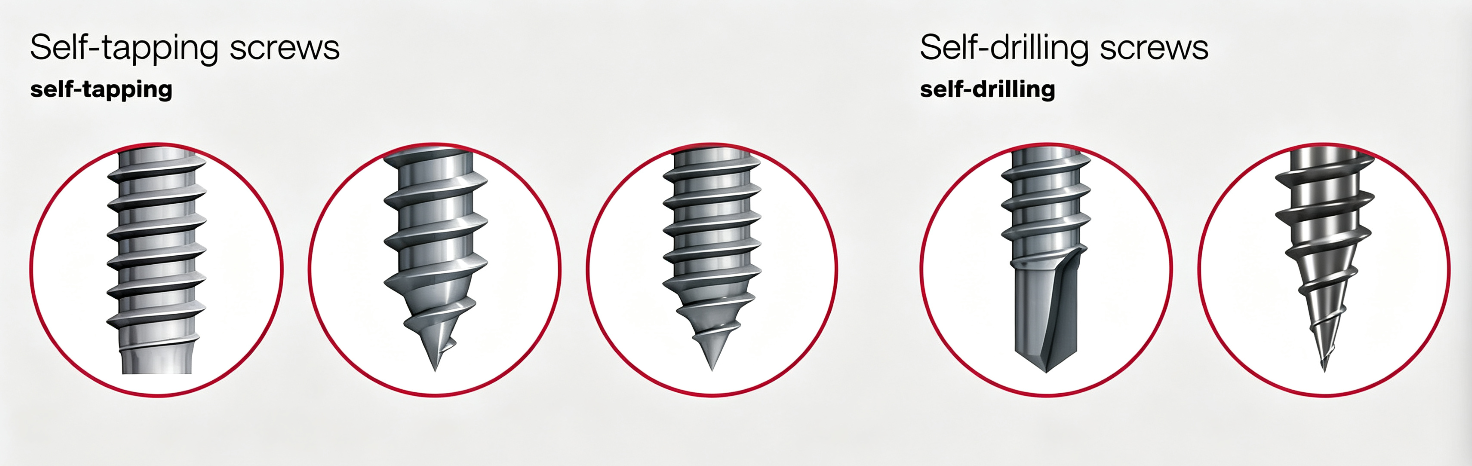
Self-tapping screws are fasteners that form or cut mating threads during installation. Depending on the substrate and connection requirements, some self-tapping screws are installed into pre-drilled holes and are suitable for thin steel sheet, wood, plastic, and many assembly components.
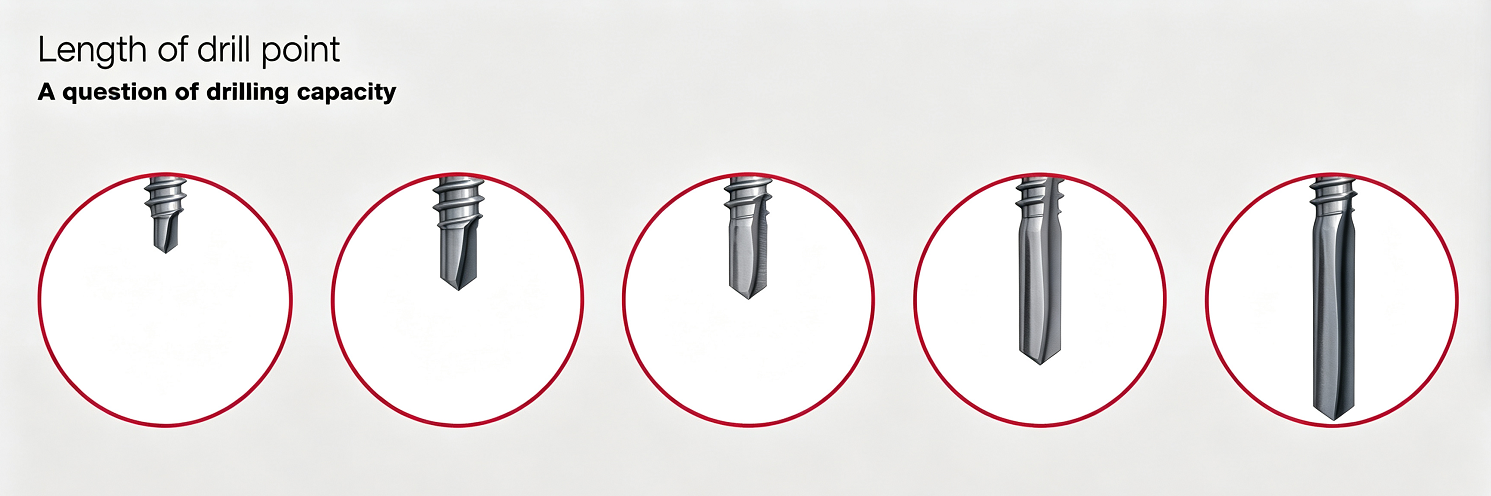
The main difference between self-tapping screws and self-drilling screws is drilling capability. Self-drilling screws have a drill point and can drill, tap, and fasten in one operation. Self-tapping screws are generally better suited to pre-punched holes, thinner materials, or applications with specific thread-forming requirements. Both are important parts of an industrial fastening system. Explore the ScrewTrade screw catalog for related options.
Common Types of Self-Tapping Screws
Self-tapping screws for thin sheet metal and light-gauge steel components need to balance thread engagement, installation torque, and connection strength. Screws for wood applications place greater emphasis on thread holding power, countersinking performance, and surface appearance.
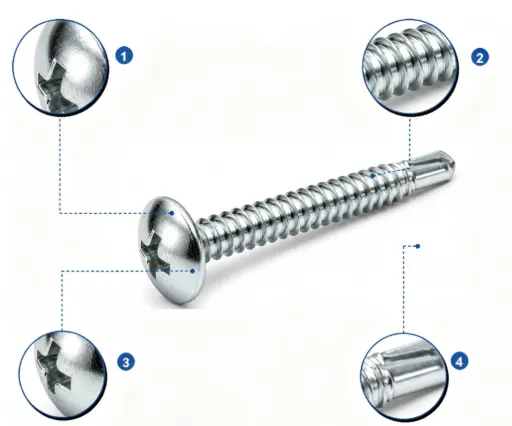
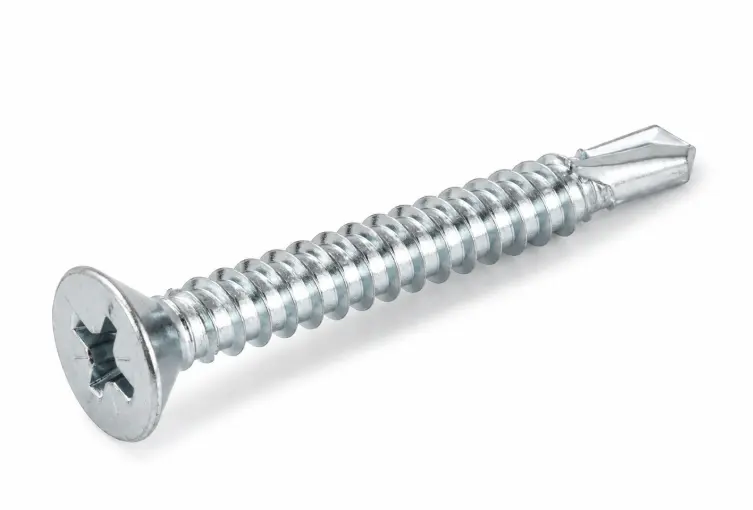
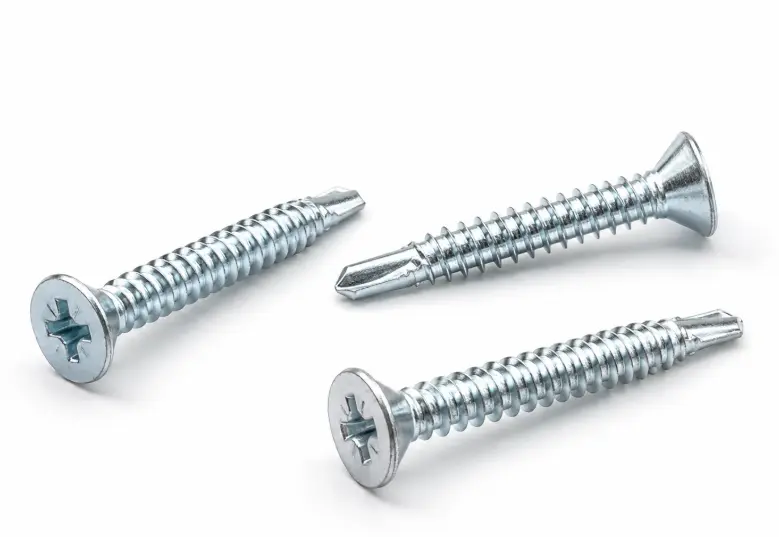
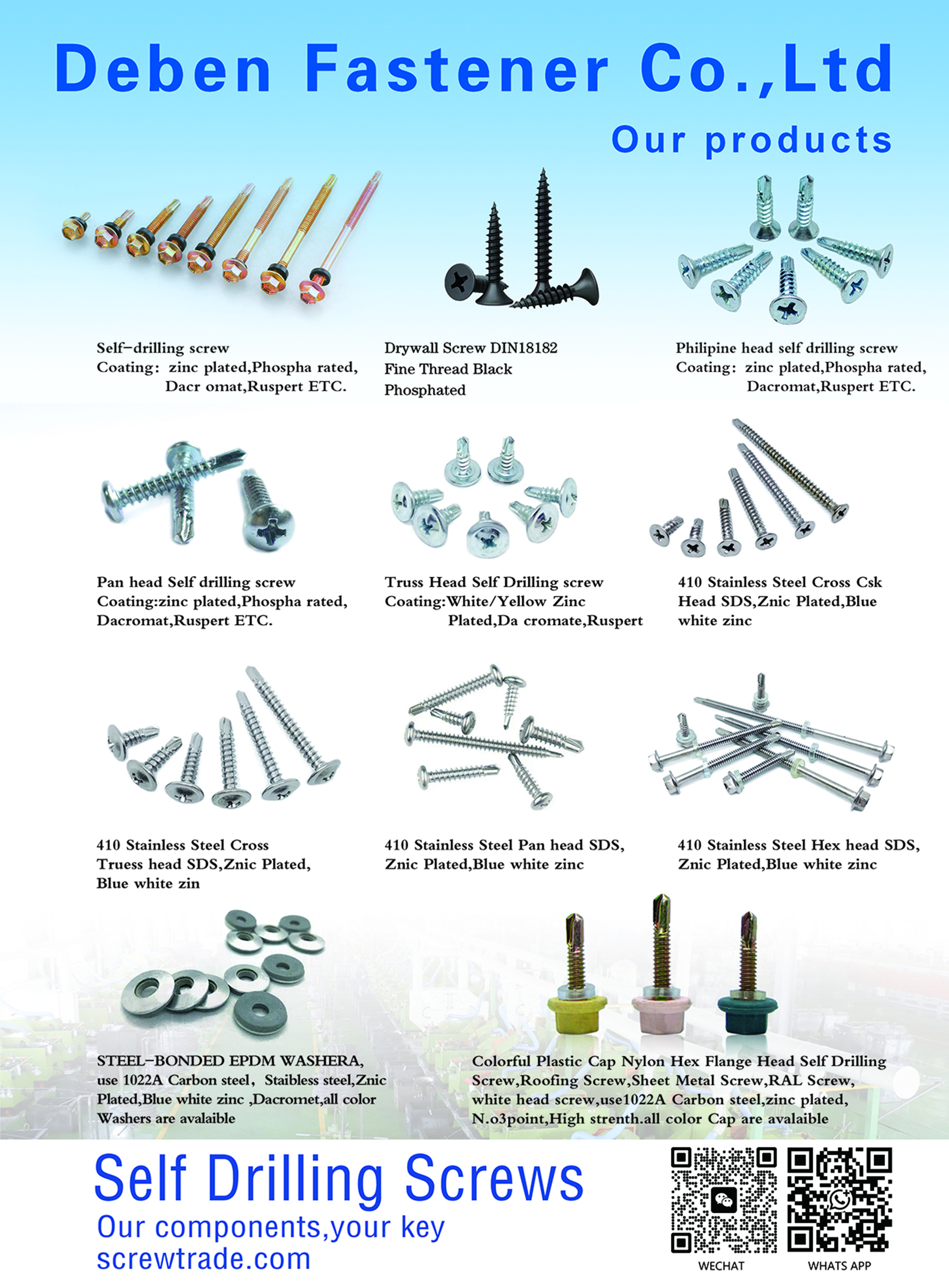
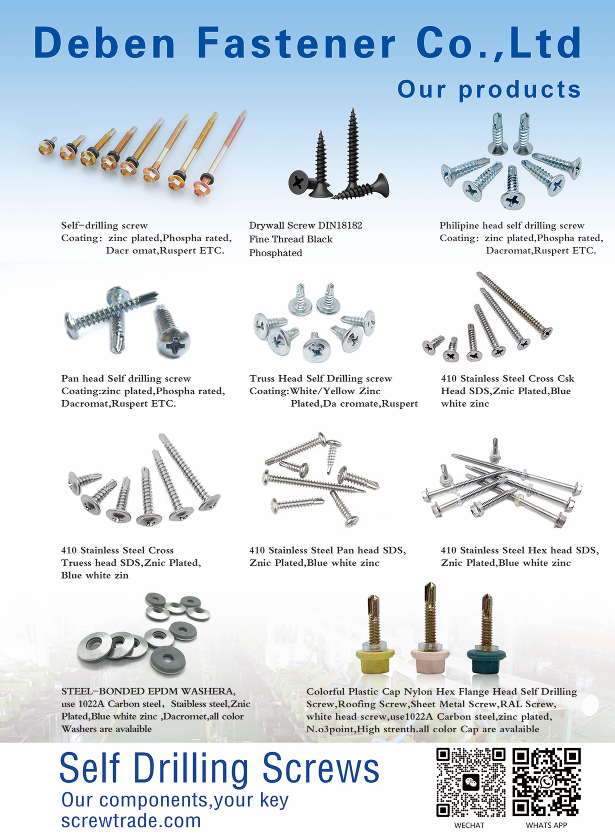
Head style affects bearing area, installation clearance, and appearance. Hex head screws are suitable for metal sheet and structural connections requiring higher torque. Truss head and pan head screws provide a wider bearing surface for panel connections. Flat head screws are suitable for wood or pre-countersunk components where a flush surface is required.
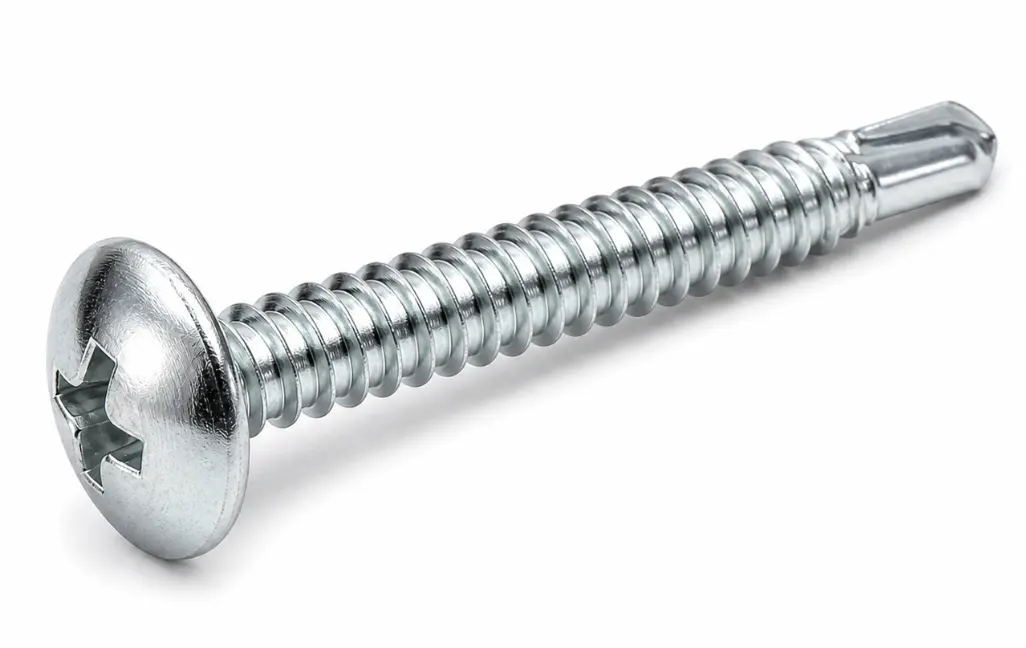
For example, hex washer head self-drilling screws are commonly used in roofing and steel structure applications. Flat head screws are suitable where a smoother surface finish is needed. Stainless steel Phillips truss head screws can be used for metal panel connections requiring a wider bearing surface.
How to Choose the Right Self-Tapping Screw
Start by confirming the substrate type and thickness. Steel, wood, aluminum, and composite panels require different thread designs, lengths, head styles, and installation methods. The screw length should provide sufficient thread engagement while avoiding excessive penetration or material deformation.
Material and coating are equally important. 1022A carbon steel is commonly used for standard steel sheet and light steel connections. 304 stainless steel is more suitable for humid, outdoor, or corrosion-sensitive environments. For metal roofing and wall panels, screws used with EPDM washers and sealing components can help create a stable waterproof sealing surface.
Main Applications of Self-Tapping Screws
Metal Roofing and Wall Cladding
Metal roof panels, wall panels, and cladding systems need to balance fastening strength, waterproof sealing, and weather resistance. For roofing installation, hex washer head screws can be paired with EPDM washers to form a stable seal as the screw clamps the panel.
In these applications, screw length must account for both panel thickness and the supporting substrate. The head style and washer affect bearing area, sealing performance, and installation efficiency. For long-term outdoor exposure, stainless steel materials or suitable corrosion-resistant coatings should be considered. Explore ScrewTrade roofing fasteners for relevant products.
Light-Gauge Steel Structures and Sheet Metal Connections
In light-gauge steel framing, steel structures, thin sheet metal, and metal fittings, self-tapping screws can provide efficient fastening for pre-drilled holes or thinner materials. Thread type, diameter, and effective engagement length all influence connection stability. The right drive type also improves torque control and installation consistency.
For thicker steel or applications requiring faster installation, Tek screws or self-drilling screws may be more suitable because they reduce separate drilling steps. The final selection should match steel thickness, drill-point capability, and connection design. Buyers can request specification and application support from ScrewTrade.
Sandwich Panels and Metal Panel Installation
When installing sandwich panels, composite panels, and metal facade sheets, the screw must secure the panel while avoiding localized denting, panel loosening, or sealing failure. Hex head, truss head, and pan head screws can be selected according to bearing area, appearance, and load requirements.
For projects requiring a cleaner facade appearance, low-profile heads and star-drive screws can reduce visual impact. For higher-torque panel connections, hex drives offer more stable installation. Different head styles can be explored through the full ScrewTrade product catalog.
Wood-to-Metal Connections
Wood-to-metal fastening is common in timber purlins, wood framing, furniture components, and equipment brackets. In these applications, buyers should consider thread holding strength in wood and whether gaps may occur between the metal fitting and the timber substrate.
Flat head screws are suitable when the screw head needs to sit flush with the wood surface. Truss head and pan head screws can provide a wider clamping surface. If the assembly includes metal sheet, the need for a pilot hole and reliable thread formation should also be considered. For interior applications involving gypsum board, light steel frames, and wooden frames, black phosphate drywall screws are a common fastening option.
Industrial Equipment and Sheet Metal Assembly
Self-tapping screws are widely used for equipment housings, sheet metal parts, ventilation components, cabinets, brackets, and general industrial assembly. These applications often prioritize repeatable installation, limited assembly space, head height, and ease of maintenance.
For components that require frequent removal and reinstallation, excessive tightening should be avoided to prevent thread damage. In humid, corrosive, or outdoor conditions, material selection and surface protection should be evaluated carefully. ScrewTrade can assist with sizes, head styles, materials, coatings, and packaging based on drawings, samples, and target applications through its custom quotation service.
Self-Tapping Screw Installation Tips
Before installation, confirm whether a pilot hole is required and select a compatible power tool and drive bit. Keep the screw perpendicular to the substrate to prevent it from entering at an angle. Excessive speed, pressure, or tightening torque can cause stripped threads, screw breakage, material deformation, or sealing failure.
After installation, check that the screw head sits correctly, the connection is secure, and any washer is evenly compressed. For bulk projects, sample installation is useful for confirming the most suitable screw specification, tool, and installation settings.
B2B Supply Support
ScrewTrade serves global distributors, wholesalers, and project buyers with self-tapping screws, self-drilling screws, metal roofing screws, and EPDM washer screws. Buyers can match screw dimensions, head styles, materials, coatings, and OEM packaging based on their target market, application, drawings, and packaging requirements.
For a product catalog, samples, or a bulk quotation, submit your specifications and sourcing requirements.
Frequently Asked Questions
What is the difference between self-tapping and self-drilling screws? Self-tapping screws form threads during installation and may require a pilot hole in some applications. Self-drilling screws have a drill point and can drill, tap, and fasten in one process.
Do self-tapping screws always require a pilot hole? No. It depends on the screw type, substrate hardness, material thickness, and installation requirements. Self-tapping screws are often suitable for thinner materials or pre-punched holes.
What screws are suitable for metal roofing? Metal roofing applications should consider panel thickness, supporting substrate, waterproofing needs, and outdoor corrosion resistance. Hex washer head screws with EPDM washers are a common option.
How should carbon steel and stainless steel screws be selected? 1022A carbon steel is suitable for standard steel sheet and light steel connections. 304 stainless steel is more suitable for humid, outdoor, or corrosion-sensitive environments.
How do I determine screw length and diameter? Consider panel thickness, the supporting material, effective thread engagement length, and installation clearance. A screw that is too short may provide insufficient holding strength, while one that is too long may cause interference or excessive penetration.
Why do stripped threads or broken screws occur? Common causes include incorrect screw specification, excessive speed or pressure, an incompatible drive bit, hard substrate material, or over-tightening. Keep the screw perpendicular and control installation torque.
What is the purpose of an EPDM washer? An EPDM washer forms a sealing surface after the screw is tightened. It is commonly used for metal roofing and wall panel installation to help reduce water penetration.
Does ScrewTrade support OEM packaging and custom specifications? Yes. Buyers can submit requirements for dimensions, head styles, materials, coatings, packaging, and order quantities through the ScrewTrade contact page.
conclusion
Whether you require self‑tapping screws for metal roofing, light‑gauge steel structures, wall panels, wood‑to‑metal connections, or industrial sheet‑metal assemblies, what truly matters is not merely purchasing a screw, but securing a fastening solution matched to your base material, material thickness, installation method and service environment.
ScrewTrade is a Chinese manufacturer and supplier of Tek screws and self‑drilling screws for global B2B buyers. We assist with selection considerations including screw material, diameter, length, head type, drive type, coating, EPDM washers, corrosion protection and packaging requirements. Drawing matching, sample validation, bulk orders, OEM packaging and export delivery are all available.
Send us your application scenarios, drawings, specification lists or purchase quantities. We will provide targeted product matching and quotation solutions tailored to your actual project requirements. Contact ScrewTrade now to obtain screw solutions and quotations for your project.
Related News
Other news you might be interested in

Why Self-Drilling Screws Fail to Drill: A Substrate and Installation Checklist
When a self-drilling screw spins against steel without making progress, the purchasing decision becomes urgent: should the installer change the tool settings, should the buyer order a different screw, or should the supplier investigate the batch?A useful diagnosis starts by identifying exactly where drilling stops. Record the material at that point, check the selected screw against the assembly, and then compare installation conditions. This approach gives buyers a clearer basis for deciding what to change and what evidence to request.

Bulk Self-Drilling Screws: An RFQ Checklist for U.S. Importers and Distributors
When sourcing bulk self-drilling screws, a unit price is only useful if you know exactly what it covers. Two quotations may appear to describe the same product while differing in dimensions, coating, packaging, or delivery conditions. For U.S. importers and distributors managing several SKUs, those differences can make supplier comparisons difficult. A clear request for quotation—an RFQ—helps suppliers understand your requirements and gives your purchasing team a consistent basis for reviewing their offers. This checklist explains what to include, which details need confirmation, and how to turn an initial inquiry into a specification that both buyer and supplier can review.
Want to know more?
Get in touch with us for more information about our services and products.