

B2B Screw Sourcing: Mitigating Supply Chain Risks, Ensuring ISO Compliance, and Driving ROI for Global Importers

Han Congming
AuthorWith experience in screw and fastener manufacturing and sales, we operate our own production facility with stable large-scale capacity. We are specialists in self-drilling screws, drywall screws, chipboard screws, machine screws, bolts, and customized fasteners for construction and industrial applications.
The Hidden Costs of Inconsistent Fastener Sourcing: Why Global Importers Are Reimagining Their Supply Chains
For years, frustrations around supply chain disruptions and quality inconsistencies have quietly eroded profitability for the global screw importer. Insights from industry veterans, including those shared as early as 2014, highlight a persistent truth: when a single batch of zinc plated screw fails a salt spray test or a shipment of self-drilling screw arrives with inconsistent drill points, the financial impact cascades through production lines and customer contracts. Today, the mandate for ISO fastener standard adherence is no longer optional—65% of global screw importers now require certification for all shipments, underscoring the severe risk of non-compliance in cross-border B2B screw sourcing. The gap between procurement goals—stable quality, controllable costs, and on-time delivery—and outdated supplier partnerships remains wide, particularly for high-demand products like zinc plated screw and self-drilling screw. This is why leading importers are reimagining their supply chains, seeking partners who offer not just products but specification matching support to close that gap.
Key Industry Trends Shaping B2B Fastener Procurement Through 2034
The industrial fasteners market is projected to reach $88.39 billion by 2031, with the screws and fasteners segment expanding to $161.8 billion by 2034. This growth is driving demand for specialized solutions like Ruspert coated screw and HDG screw, which offer superior corrosion resistance for demanding environments. A significant shift toward standardized manufacturing is underway: 65% of importers now prioritize suppliers that use cold heading, thread rolling, and salt spray testing to ensure consistent tensile strength and corrosion resistance. This trend is particularly evident in the rise of application-specific fasteners, such as self-drilling screw with tailored drill point (#1–#5) ratings for metal to metal screw and wood to metal screw applications in construction and manufacturing. As the market evolves, importers are turning to a China fastener supplier that can deliver these specialized products at scale, supported by integrated production and qc processes that ensure every batch meets rigorous standards.
Solving Core Sourcing Pain Points: Compliance, Flexibility, and Cost Control
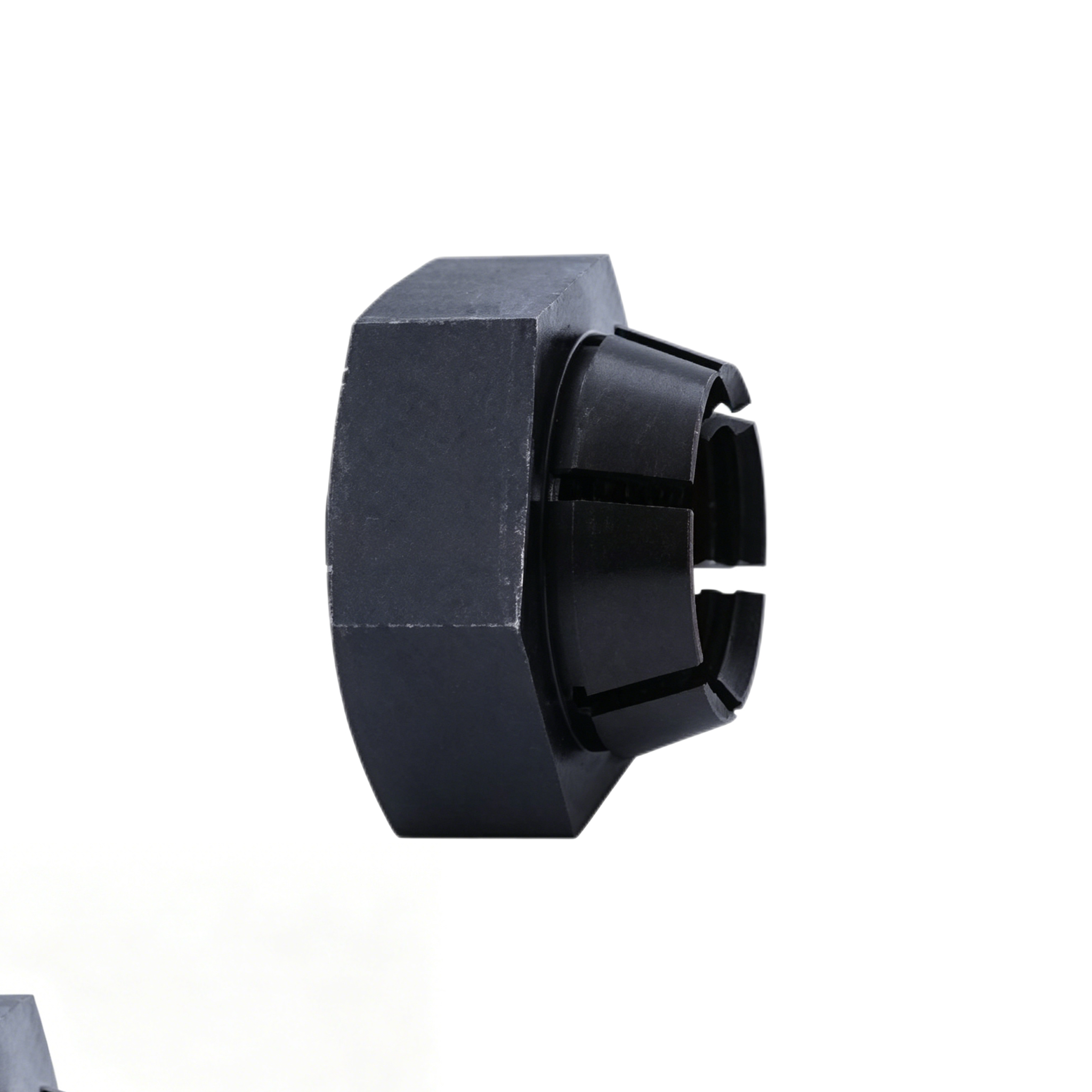
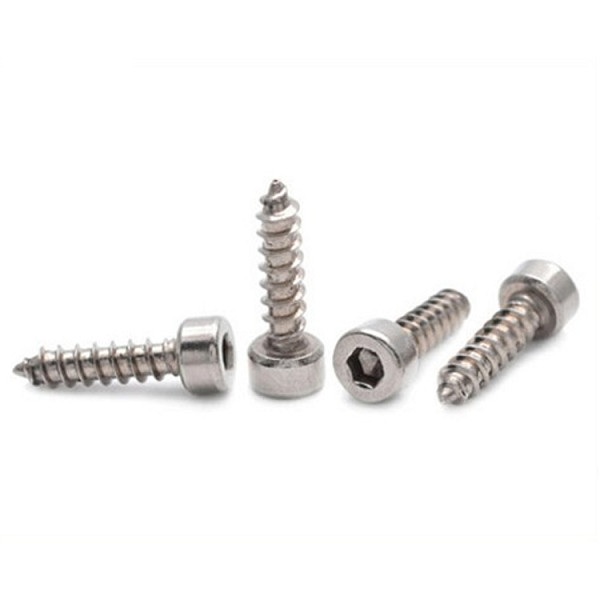
Addressing the core pain points of B2B screw sourcing requires a multi-faceted approach. First, ISO fastener standard adherence is non-negotiable. Partnering with a China fastener supplier that validates every batch via salt spray test and DIN 7504 alignment reduces non-compliance risks. For example, the Stainless Steel Hexagon Socket With Cylindrical Head Sts Product uses cold heading for uniform head formation, ensuring consistent quality. Second, supply chain resilience is achieved through flexible logistics solutions like mixed container loading (LCL/FCL) and predictable lead times for bulk screw orders, critical for managing MOQ and inventory fluctuations. Third, streamlined export documentation support minimizes customs hold-ups, a top pain point for screw importers and distributors. Finally, cost efficiency is driven by SKU optimization for products like Structural Washer Product and Flat Head Self Drilling Screw 4.2mm 35mm Product, balancing repeated order costs with stable quality. For deeper insights into how these solutions are implemented, Mina Park offers a case study on optimizing supply chains for European importers.
High-Performance Fastener Solutions for Critical B2B Applications
For critical B2B applications, performance and reliability are paramount. The Flat Head Self Drilling Screw 4.2mm 35mm Product features drill point #3, optimized for 1.5–2.0mm steel sheets, and thread rolling for superior strength—ideal for roofing screw and metal to metal screw projects. Corrosion resistance is addressed by the Hex Flange Head Sds With EPDM Washer 12 Product, which is Ruspert coated and tested to 1000+ hours in salt spray, as well as HDG screw alternatives for outdoor high-corrosion environments. For safety-critical fastening, the patented Never Loosen Nut offers anti-loosening design for vibration-prone applications, while the Stainless Steel Countersunk Sleeve Anchor Product is heat-treated for high tensile strength in structural integrity. OEM and inventory support is provided through the Stainless Steel Hexagon Socket With Cylindrical Head Sts Product, which offers OEM screw packaging customization, and the Structural Washer Product, which streamlines SKU management for wholesalers. To see how these products perform in real-world tests, review performance testing reports from our lab.
Proven ROI: How Strategic Sourcing Drives Importer Success
The return on investment from strategic B2B screw sourcing is measurable. In one case, a European screw importer reduced procurement costs by 12% and supply chain disruptions by 38% after adopting our mixed container loading and ISO-compliant product lineup, aligning with the 65% standardized sourcing trend. This approach captures growth in the $88.39 billion (2031) industrial fasteners market by prioritizing in-demand products like tek screw, stainless steel screw, and carbon steel screw. Long-term partnership benefits include controllable lead times, MOQ flexibility, and customized solutions that support screw distributor and screw wholesaler scalability. For a firsthand account of how these partnerships are built, Emily Robertson shares her experience transitioning to a more resilient supply chain.
Transform Your B2B Screw Sourcing Strategy Today
To begin transforming your sourcing strategy, start by requesting a compliance audit to validate your current supplier’s adherence to ISO fastener standard, salt spray test, and cold heading processes. Next, sample our high-performance products, such as the Flat Head Self Drilling Screw 4.2mm 35mm Product and Never Loosen Nut, for your specific applications. Finally, customize your supply plan by working with our team to design mixed container loading, OEM screw packaging, and lead time solutions tailored to your bulk screw order needs. For more on how we ensure consistent delivery, read about supplier delivery execution in our logistics framework. Contact us at /en/contact to start the conversation.
Related News
Other news you might be interested in
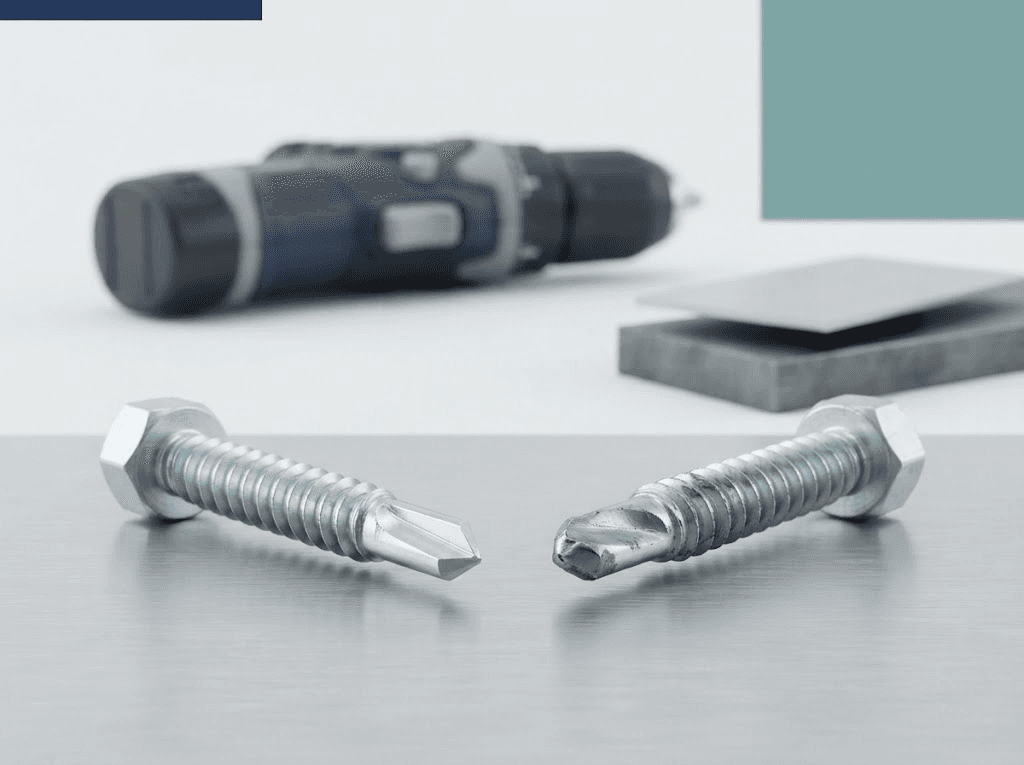
Why Self-Drilling Screws Fail to Drill: A Substrate and Installation Checklist
When a self-drilling screw spins against steel without making progress, the purchasing decision becomes urgent: should the installer change the tool settings, should the buyer order a different screw, or should the supplier investigate the batch?A useful diagnosis starts by identifying exactly where drilling stops. Record the material at that point, check the selected screw against the assembly, and then compare installation conditions. This approach gives buyers a clearer basis for deciding what to change and what evidence to request.
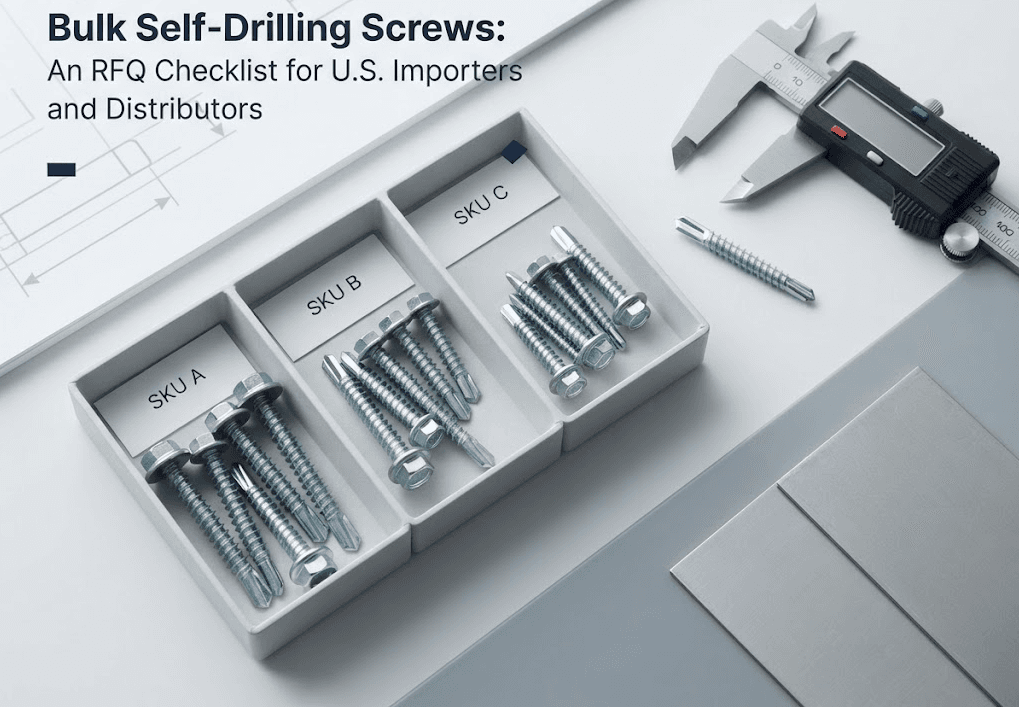
Bulk Self-Drilling Screws: An RFQ Checklist for U.S. Importers and Distributors
When sourcing bulk self-drilling screws, a unit price is only useful if you know exactly what it covers. Two quotations may appear to describe the same product while differing in dimensions, coating, packaging, or delivery conditions. For U.S. importers and distributors managing several SKUs, those differences can make supplier comparisons difficult. A clear request for quotation—an RFQ—helps suppliers understand your requirements and gives your purchasing team a consistent basis for reviewing their offers. This checklist explains what to include, which details need confirmation, and how to turn an initial inquiry into a specification that both buyer and supplier can review.
Want to know more?
Get in touch with us for more information about our services and products.