
EPDM Washers: Reliable Industrial Sealing

Han Congming
AuthorWith experience in screw and fastener manufacturing and sales, we operate our own production facility with stable large-scale capacity. We are specialists in self-drilling screws, drywall screws, chipboard screws, machine screws, bolts, and customized fasteners for construction and industrial applications.
An EPDM washer is often treated as a low-cost accessory added to a screw. In service, it may be the component that decides whether an industrial joint stays sealed through rain, UV exposure, thermal movement, vibration and repeated cleaning. The rubber compound matters, but it is not the whole answer. The metal backing, the bond between the two materials, the screw head, the bearing surface and the installation method all influence the result.
For buyers, the practical question is not "Does this washer contain EPDM?" It is "Has this washer assembly been specified for the actual connection, exposure and installation condition?" A washer can carry the right material name and still fail if it is too hard, too thin, poorly bonded, over-compressed or seated on the wrong part of a profile.
This guide explains what makes an EPDM sealing washer reliable in industrial fastening, where EPDM is a good fit, where it is not, and what to put in an RFQ before approving a bulk order.
What Reliable Sealing Means at a Fastener
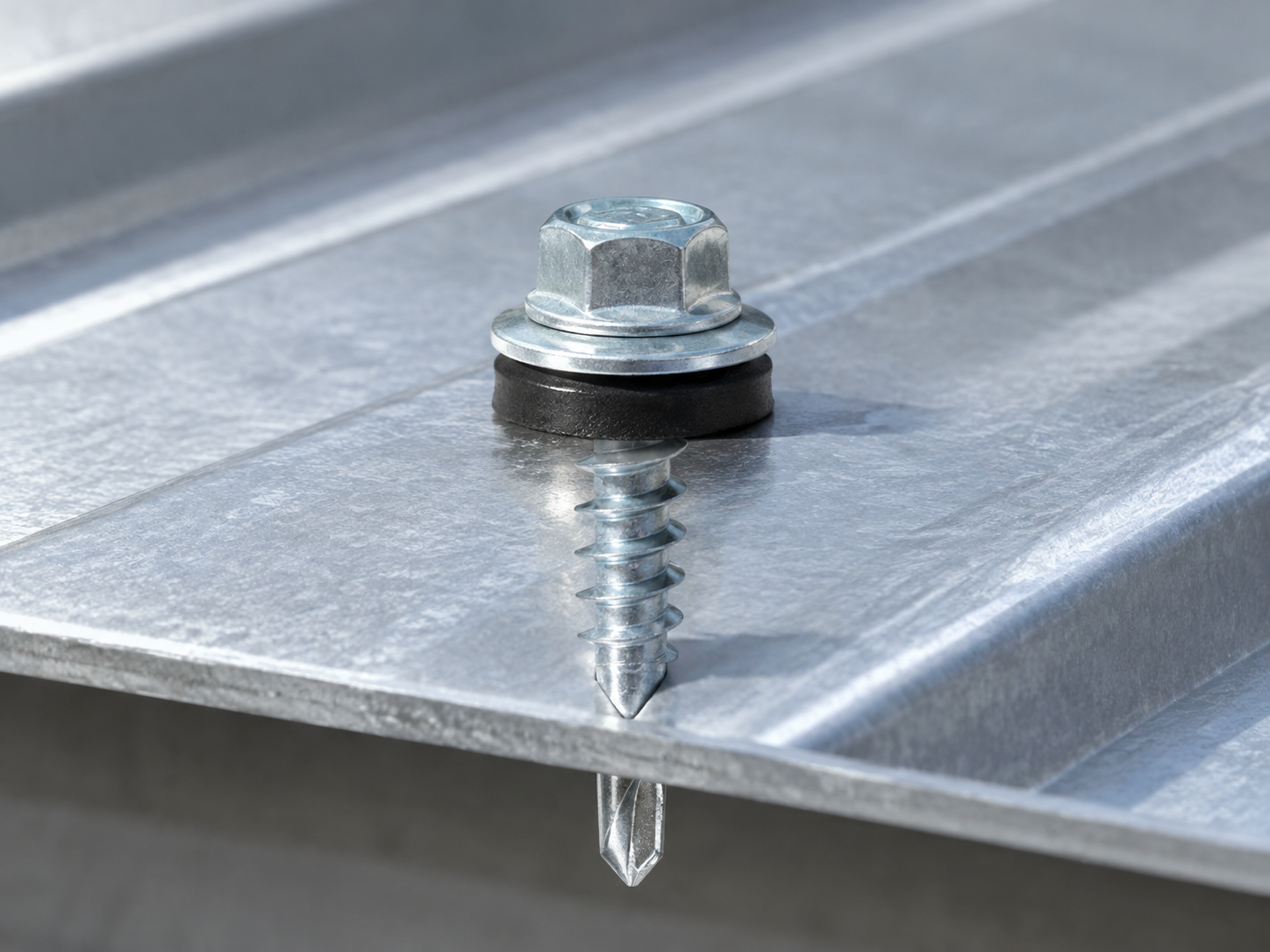
A reliable seal is a controlled contact zone, not a rubber plug. The washer must maintain continuous contact around the penetration while the joint is subjected to:
- clamping force from the screw
- thermal expansion and contraction
- wind or vibration
- moisture, dust and cleaning chemicals
- movement between connected components
- long-term exposure to UV and ozone
The seal does not need to resist the full load of the connection. It needs to remain in contact while the screw, panel and support perform their structural job. That distinction matters: a washer cannot compensate for an oversized hole, a tilted screw, a distorted panel or insufficient thread engagement.
A useful working definition: reliable industrial sealing exists when the washer assembly is compatible with the screw and bearing surface, compresses evenly under the specified installation method, and retains enough elasticity to follow normal service movement without losing contact.
The Washer Is a Three-Part System
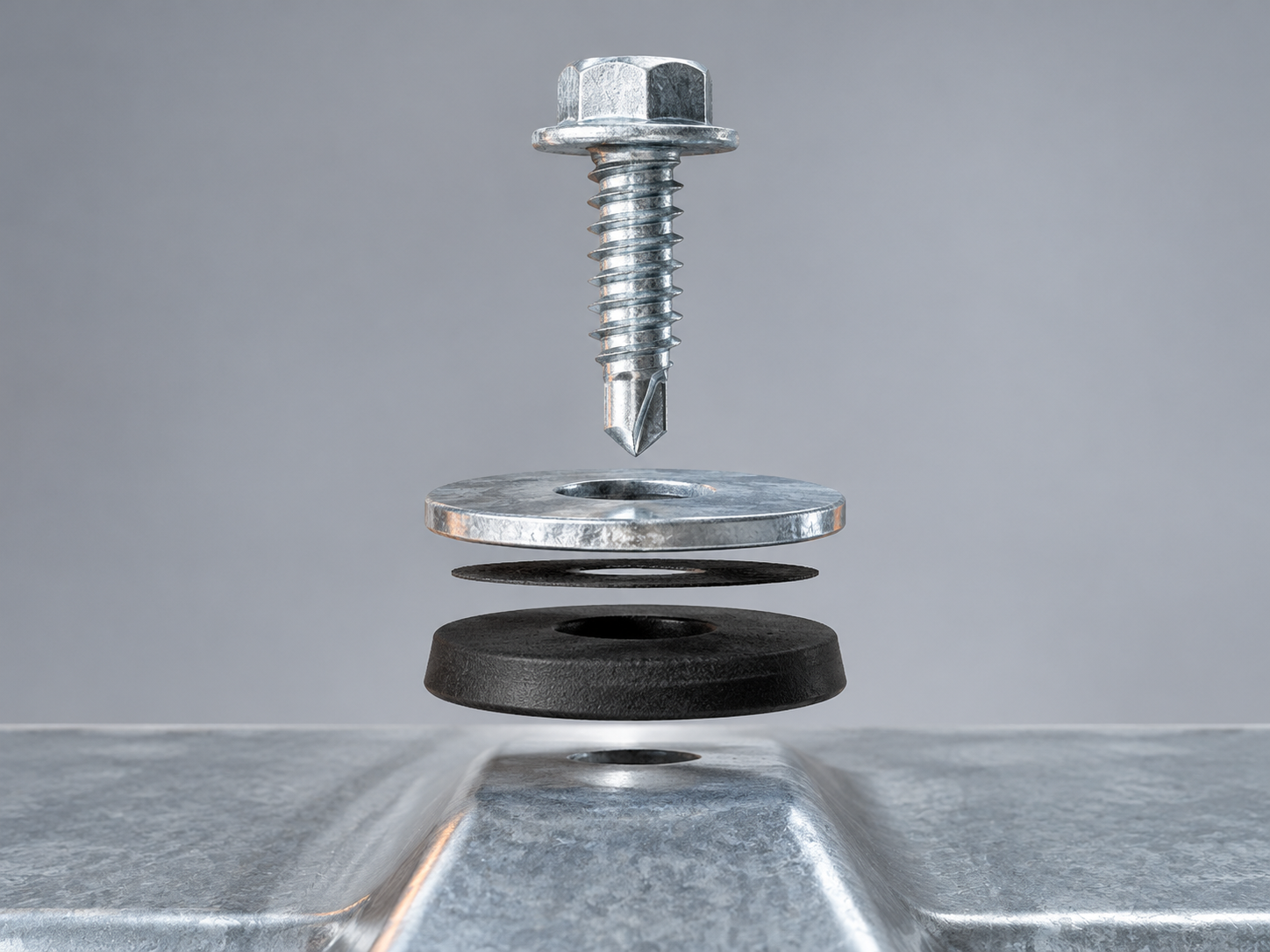
A typical bonded EPDM washer has three functional elements. Each can become the weak point.
1. The metal backing washer
The backing washer gives the screw head a stable bearing surface and spreads clamping force into the panel or component. Its diameter, thickness, stiffness and coating affect both sealing and local load transfer.
If the backing is too thin, it may dish or bend before the EPDM reaches controlled compression. If the backing is too wide for the fixing location, it may bridge a rib, overlap a lap or sit outside the intended flat area. If the coating is incompatible with the panel, corrosion at the backing can eventually disturb the seal even when the rubber itself remains intact.
2. The EPDM sealing layer
The EPDM layer conforms to small surface irregularities and forms the actual sealing interface. Its thickness, hardness, compression set and compound determine how it behaves under load and over time.
A softer compound is not automatically better. A very soft washer may conform easily but extrude or damage more readily under over-compression. A harder compound may resist extrusion but require more force to establish continuous contact. The correct balance depends on the screw, panel, installation tool and service conditions.
3. The bond or assembly method
The EPDM element may be vulcanized or otherwise bonded to the metal backing, or supplied as a separate component. The distinction matters during driving and in service.
A weak bond can allow the rubber to shift, separate or lift at the edge. A loose washer can fall out of position before the screw is driven. Either condition can interrupt the sealing ring even if the materials themselves are correct.
For a bonded washer, ask how the bond is made and how it is checked. For a loose washer, confirm that the installation method keeps the seal centred and correctly seated.
Why EPDM Is Used for Industrial Sealing
EPDM—ethylene propylene diene monomer rubber—is a saturated-chain synthetic rubber. That structure gives it a useful combination of properties for outdoor and water-exposed sealing:
- good resistance to weathering, UV and ozone
- good resistance to water, steam and many polar fluids
- useful flexibility over a broad service-temperature range
- low tendency to harden or crack under normal outdoor exposure
- good electrical insulation properties
These properties explain why EPDM is common in metal roofing, façade, sandwich-panel, solar-mounting and HVAC fastening. The washer can follow minor panel movement and maintain contact without becoming brittle.
The same chemistry also defines the limits. EPDM is generally not the first choice for petroleum-based oils, greases, fuels and many hydrocarbon solvents. If the fixing is exposed to those substances, the compound must be checked against the actual chemical, concentration and temperature. "EPDM" is a material family, not a universal chemical-resistance rating.
Some roofing fasteners use a self-vulcanizing EPDM washer. Rawlplug, for example, describes its sandwich-panel screw washer as resistant to UV radiation, ageing and temperature fluctuations, and intended to maintain long-term watertightness. That is a product-specific claim, not a universal EPDM specification; the compound and test evidence still need to match the application.
EPDM is not a complete specification
Two washers can both be described as EPDM and still differ in:
- polymer grade and compound
- hardness and compression set
- tensile strength and elongation
- UV, ozone and heat-ageing performance
- thickness and dimensional tolerance
- metal backing material and coating
- bonding method
- surface finish and colour
That is why a purchase order should identify the complete washer, not only the elastomer name.
Where EPDM Washers Fit in Industrial Fastening
EPDM sealing washers are most useful where the fastener penetrates a surface that must remain weathertight, dust-resistant or water-resistant, and where the washer can be compressed against a stable bearing area.
| Application | Sealing job | What to verify |
|---|---|---|
| Exposed metal roofing | Seal each screw penetration through the panel | Panel profile, fixing location, screw head, washer diameter, compression |
| Sandwich panels | Seal the outer skin and protect the insulation core from water | Screw length, drill point, under-head thread, washer support |
| Solar mounting | Seal roof penetrations around rails, brackets or clamps | Roof interface, thermal movement, material compatibility, bonding requirements |
| HVAC and ductwork | Limit air, dust or water ingress at fastened joints | Sheet thickness, vibration, temperature, chemical exposure |
| Industrial enclosures and equipment | Protect internal components from dust and water | IP or project requirement, surface finish, screw type, service temperature |
| Coastal or industrial sites | Maintain the seal where salt, pollutants or humidity accelerate degradation | Compound verification, backing corrosion resistance, test evidence |
This table is a starting point, not an approval matrix. The panel or system manufacturer's instructions and the project specification take precedence.
For ScrewTrade's core construction range, the most direct starting points are EPDM sealing washers for self-drilling screws, screws assembled with EPDM washers and sandwich-panel screws. The exact product must still be checked against the panel, support and installation condition.
The Installation Variables That Decide Whether the Washer Works
A correct washer can fail if it is installed outside its intended condition. The most important variables are easy to inspect.
Compression
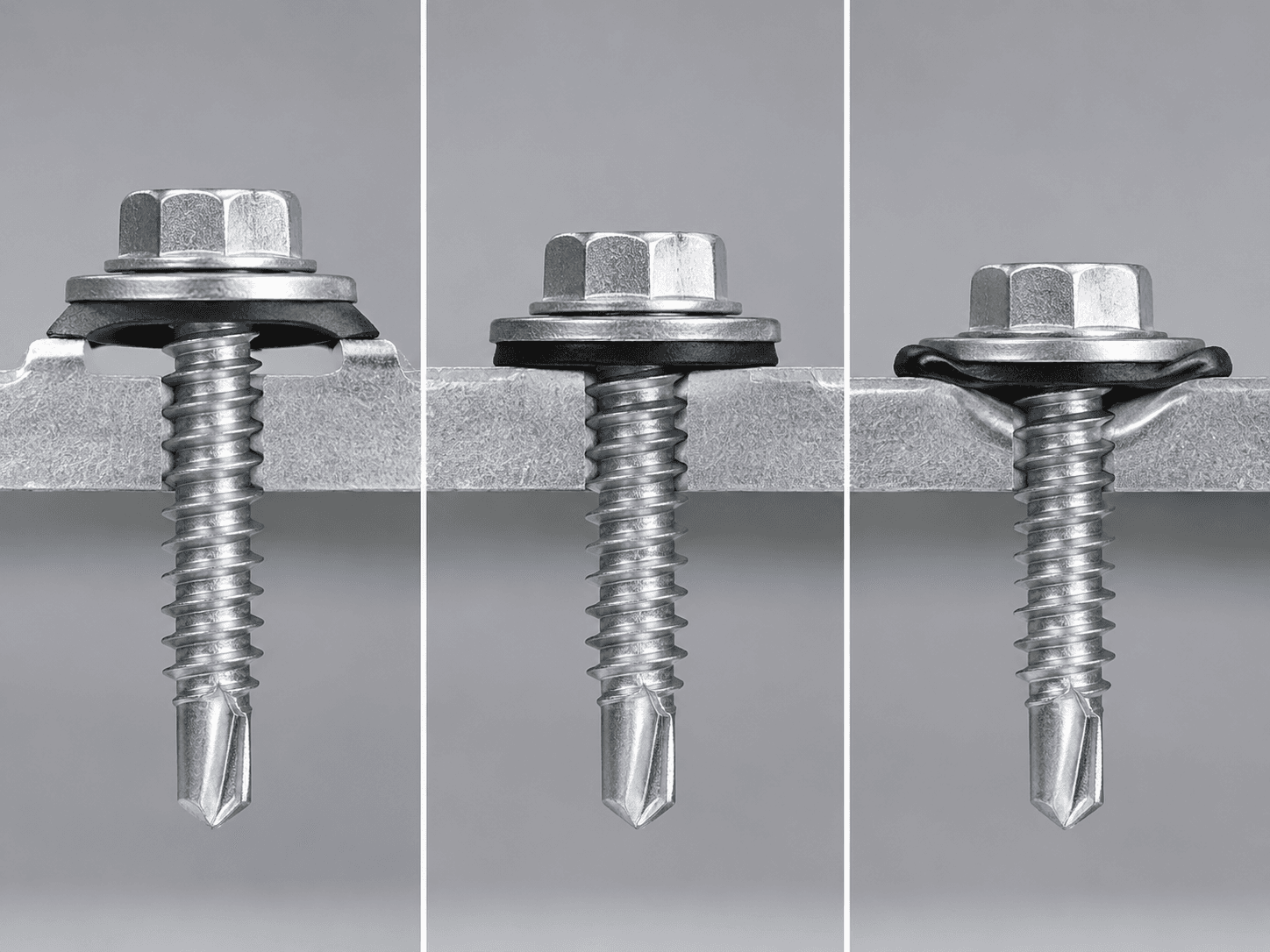
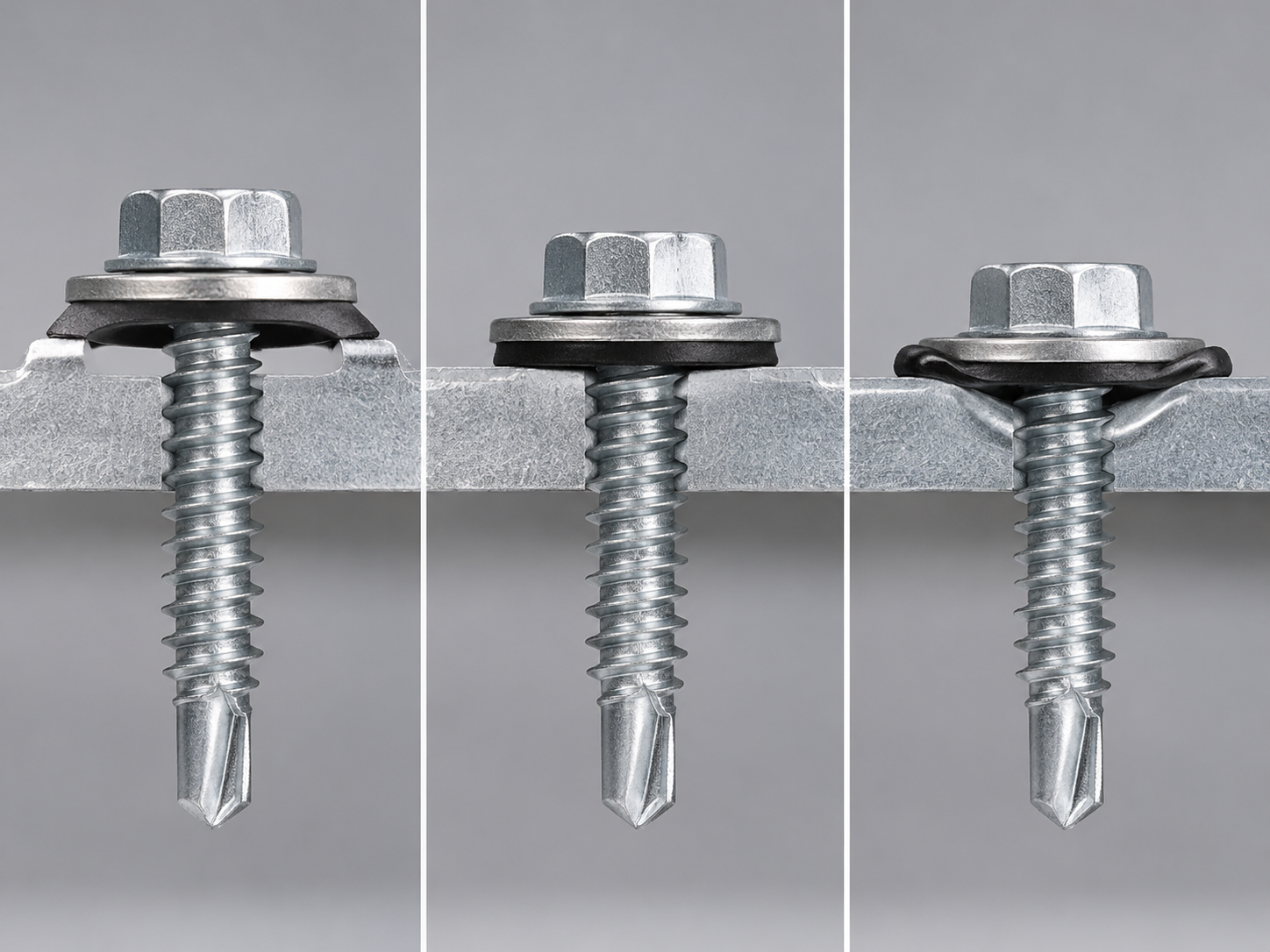
The washer must be compressed enough to create continuous contact around the fixing, but not so much that the EPDM is crushed, extruded or cut. EJOT notes that an under-tightened sealing washer may not be watertight, while an over-tightened washer can bulge and damage the inner EPDM lip. A correctly installed washer may show some rubber protruding at the side; the joint is definitely too tight when the metal backing changes from convex to concave.
That description is useful for inspection, but it is not a universal torque setting. The correct compression depends on the specific washer, screw, panel and tool.
Screw angle
An angled screw compresses one side of the washer more than the other. The opposite side may remain loose, and the panel surface may be distorted. On a profiled panel, the problem is harder to see because the bearing surface may already be curved or inclined.
Bearing surface and profile
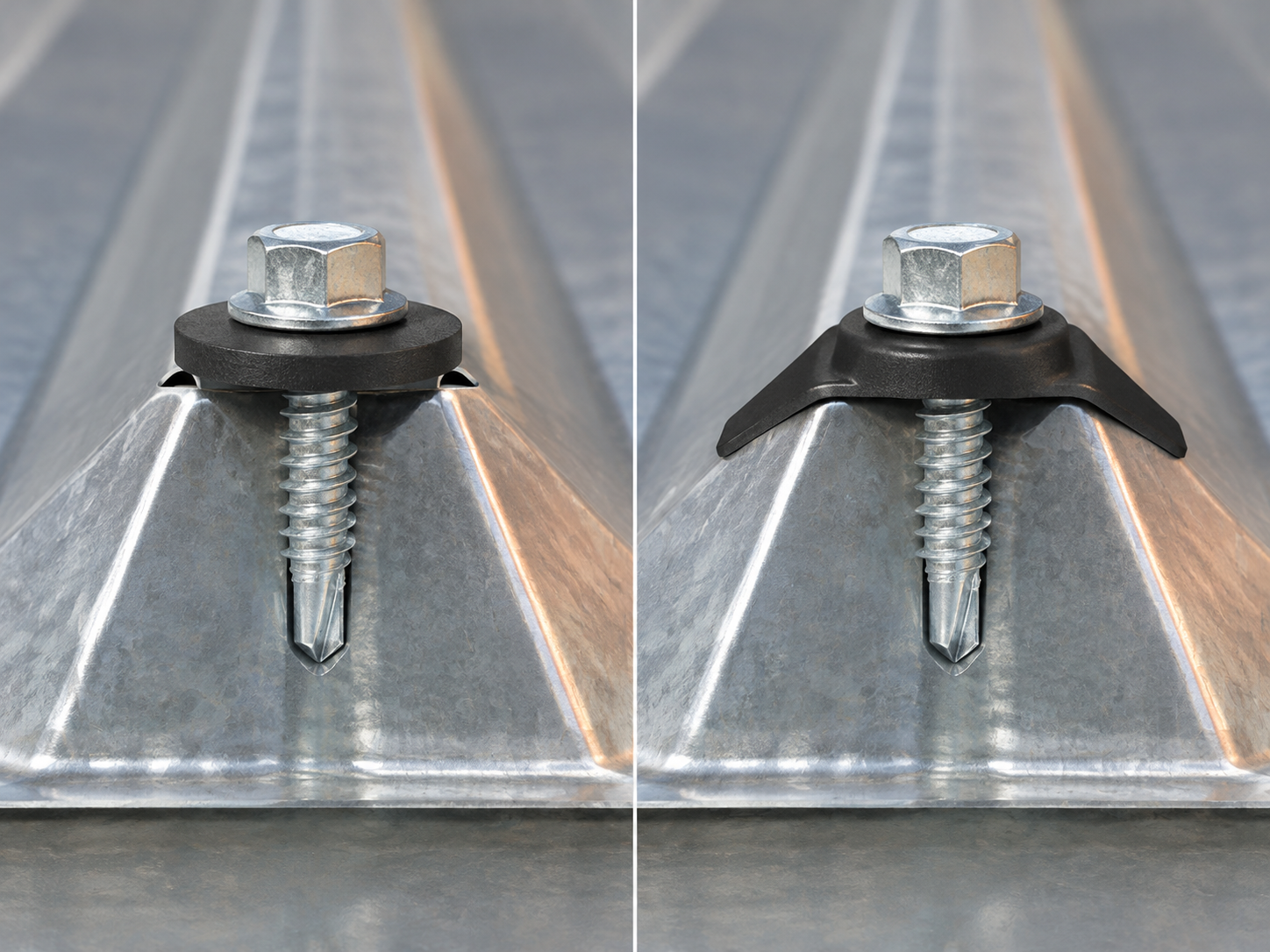
A flat washer does not fit every panel location. Ribs, pans, laps, stiffeners and curved profiles change the actual contact area. If the washer extends onto a rib or bridges a valley, the sealing face may not be continuous.
Where the profile requires it, a saddle washer or profile-matched support may be needed to give the sealing washer a stable seat. That is a system decision, not an upgrade that can be applied blindly. JOPAL notes that flat sheet, trapezoidal profiles, corrugated sheets and sandwich-panel skins do not provide the same seating condition.
Hole quality and cleanliness
A damaged, oversized or burred hole can leave insufficient material around the seal. Metal chips, dust, oil or old sealant under the washer can create a local gap or prevent the EPDM from conforming to the surface. Clean the fixing area and inspect the hole before installation.
Tool control
Depth-sensing screw guns and controlled clutch settings help repeat the same seating condition across many fixings. Impact drivers and hammer drills may be unsuitable for some roofing fasteners; McElroy Metal notes that SFS recommends a depth-sensing screw gun for many of its roofing fasteners and does not recommend impact guns or hammer drills for those applications. Follow the fastener and panel manufacturer's instructions for the actual assembly.
Common Failure Modes
Most EPDM washer failures are not mysterious. They usually fall into a small number of categories.
| Failure mode | What it looks like | Likely cause |
|---|---|---|
| Under-compression | Washer loose, partial contact, visible gap | Insufficient drive depth, wrong tool, panel not seated |
| Over-compression | EPDM bulges or splits, backing dishes, panel dimples | Excessive torque or drive depth, hard or thin backing |
| Angled seating | One side compressed, opposite side open | Screw not perpendicular to the bearing surface |
| Profile mismatch | Washer overlaps rib or bridges a valley | Washer diameter or support not matched to panel |
| Bond failure | EPDM separates, lifts or shifts | Weak bonding, incompatible materials, poor storage |
| Backing corrosion | Rust or coating damage around the washer | Wrong backing material or coating for the environment |
| Wrong elastomer | Rubber hardens, swells or cracks | EPDM not compatible with the chemical or temperature exposure |
| Contamination | Local leak path under the washer | Chips, oil, dust or sealant on the sealing surface |
A leak at a fastener is not always a washer failure. Water can enter through a lap, flashing, end seal, damaged panel or unsealed penetration and travel laterally. Before changing the washer, identify the actual water path. The existing metal roofing screw specification checklist follows the same system-level approach.
How to Specify an EPDM Washer for a Bulk Order
A useful RFQ does not stop at "EPDM washer." It defines the complete component and the evidence required.
| RFQ item | What to state | Why it matters |
|---|---|---|
| Washer type | Bonded, loose or assembled with screw | Determines handling, installation and inspection |
| Dimensions | Outside diameter, inside diameter, thickness, tolerances | Controls fit, bearing area and compression |
| Metal backing | Material, thickness, coating | Affects load distribution and corrosion |
| EPDM compound | Hardness, grade, compression set, temperature range | Defines sealing behaviour and service limits |
| Bond method | Vulcanized, adhesive or mechanical assembly | Affects separation risk during driving |
| Screw interface | Screw diameter, head type, under-head geometry | Ensures centring and load transfer |
| Panel or substrate | Profile, material, thickness, fixing location | Defines the actual sealing surface |
| Exposure | UV, rain, salt, chemicals, temperature, cleaning | Sets the material and test requirements |
| Evidence | Test method, test conditions, tested SKU, report date | Prevents generic claims from being applied to the wrong item |
| Packaging | Bulk carton, pallet, labels, lot identification | Supports receiving and traceability |
| Sample approval | Trial assembly and acceptance criteria | Confirms the complete system before mass production |
ScrewTrade's public EPDM sealing washer listing is positioned for self-drilling screws and metal roofing, with an EPDM rubber composite seal, customizable dimensions, bulk carton or pallet packaging and OEM/ODM support. The listing cites an application-dependent temperature range of -40°C to 120°C. Those are useful starting points for a quotation, not a substitute for drawing-level confirmation of the exact washer, backing, hardness and test data.
Where the washer is supplied as part of a screw assembly, specify the screw and washer together. A compatible-looking washer from another supplier is not automatically interchangeable, because the head geometry, under-head clearance and compression behaviour may differ.
Trial Assembly and Incoming Inspection
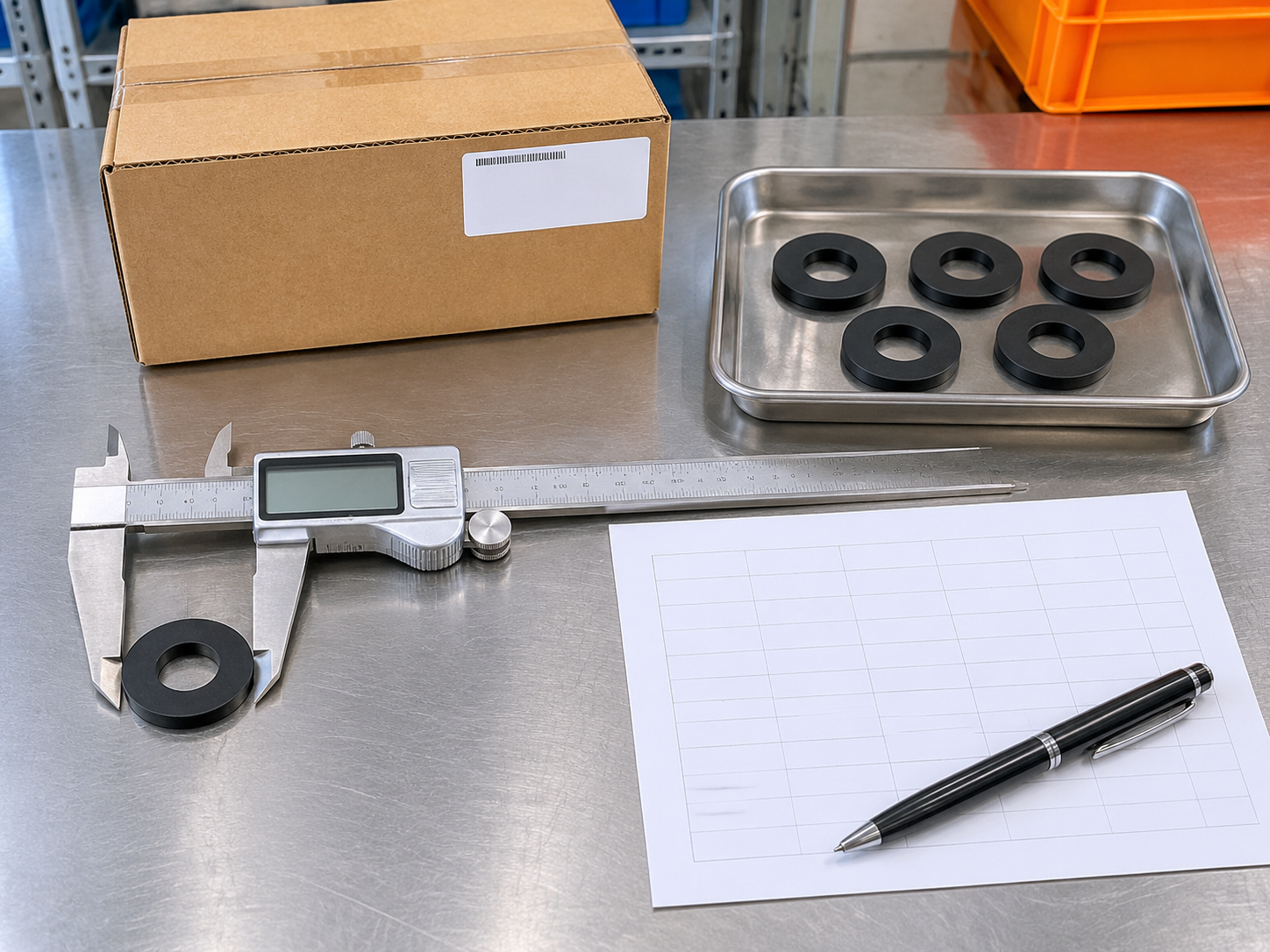
Before approving a bulk order, run a trial with the production-intent screw, washer, panel, support and tool.
Record:
- the exact product references and drawing revision
- panel profile, material and thickness
- fixing location and support condition
- tool model, speed setting and depth control
- washer compression and visible condition
- screw angle and panel deformation
- any cracking, separation or extrusion
- the batch or sample reference used
A trial on a flat sample does not prove performance on a rib, lap or edge fixing. Repeat the trial at each critical fixing location.
For incoming inspection, check dimensions, hardness where specified, backing condition, bond integrity, visible damage and packaging identity. If a test report is supplied, confirm that it refers to the same product construction and, where relevant, the same production lot. A report for a different compound, backing or washer size does not establish the performance of the delivered item.
This is also where an existing supplier can separate itself from a catalogue description. The useful evidence is not a sentence saying "UV resistant" or "long service life." It is a report or trial record tied to the actual washer construction and the conditions the project will see.
Conclusion: Specify the System, Not Just the Rubber
EPDM washers are a practical choice for industrial sealing because the material handles weather, water, UV and ozone well. But the material name is only the beginning. Reliable sealing depends on the complete washer assembly: the backing, the bond, the dimensions, the screw interface, the bearing surface and the installation method.
For a roofing, sandwich-panel, solar or industrial fastening project, define the actual connection first. Then select the washer that fits that connection, verify the compound and backing, and approve it through a trial assembly. That approach is more reliable than choosing a washer by description, price or a single material claim.
For a closer look at washer size specifically, the existing guide Is a Bigger EPDM Washer Always Better for Metal Roofing Screws? explains why diameter alone is not a performance rating.
If you are reviewing EPDM sealing washers for a bulk order, send ScrewTrade the screw specification, washer drawing or sample reference, panel profile, exposure conditions, target quantity and packaging requirements. The available construction and supporting documents can then be checked against the actual application before approval.
Related News
Other news you might be interested in
The 2027 Fastener Demand Map: Data Centers, Energy and Industrial Projects
The 2027 fastener outlook is not a broad recovery. It is a map of project pockets—and the strongest pockets are data centers, energy and selected industrial work.The direction is already visible in late-2026 company results. Hilti reported local-currency sales growth of 5.9% in the first eight months of 2026, with double-digit growth in the Americas and Asia Pacific, while describing traditional construction as soft. LISI’s aerospace sales rose 14.3% in the first nine months, but its automotive sales fell 5.2%. Bossard’s third-quarter sales grew 12%, helped by data-center demand in the Americas and semiconductor and electronics expansion in Asia.
What Is a Bi-Metal Screw and Why Does Aluminum Roofing Need One?
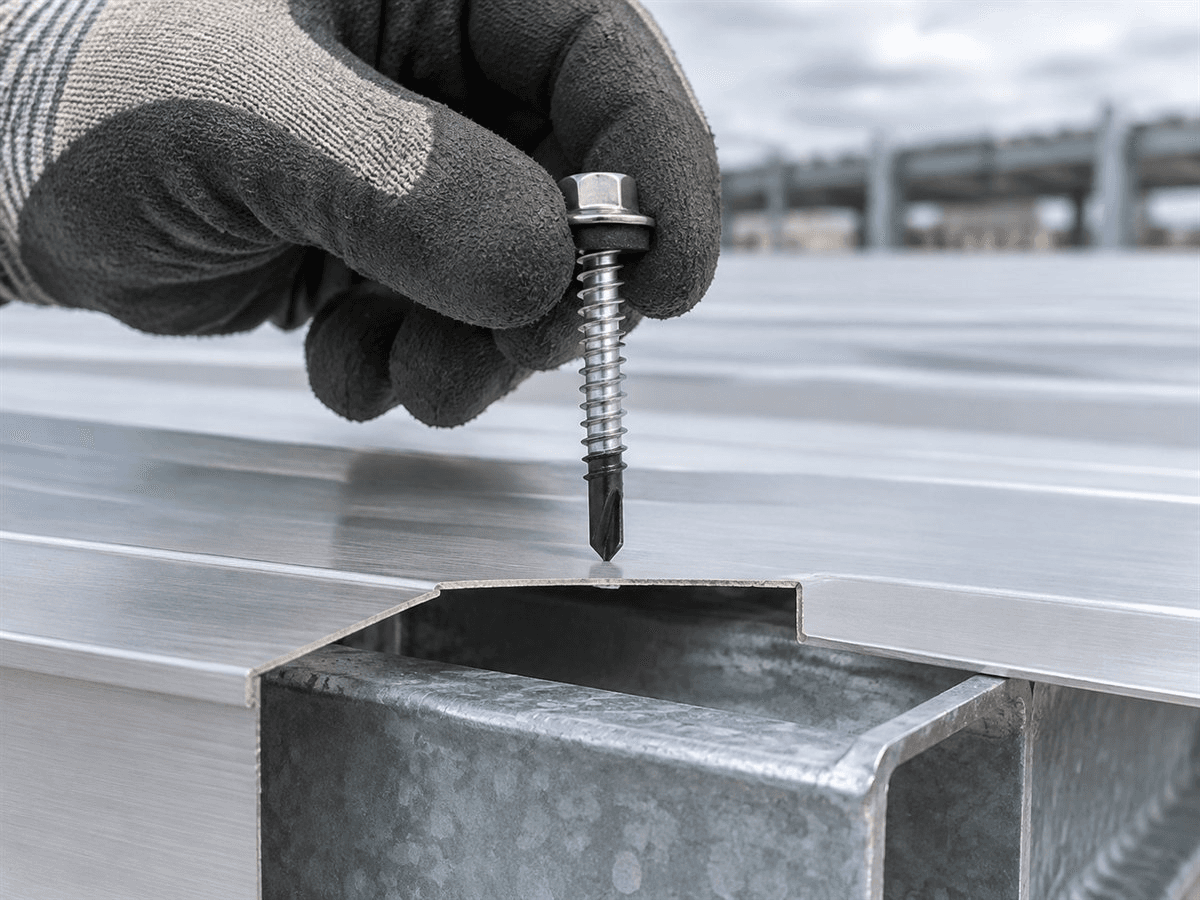
a bi-metal screw is one fastener made from two metals with different jobs. In roofing, the common construction is a stainless steel head and body with a hardened carbon steel drill point and lead thread. The stainless section resists corrosion on the exposed roof; the hardened point drills the steel purlin, girt or frame. Aluminum roofing often calls for this combination when an aluminum panel is fixed directly to a steel substructure, because the panel is soft and corrosion-resistant, but the screw still has to drill steel and survive the weather. Bi-metal is not a guarantee: the stainless grade, point capacity, coating, washer and aluminum-to-steel detail still have to be specified.
Want to know more?
Get in touch with us for more information about our services and products.