
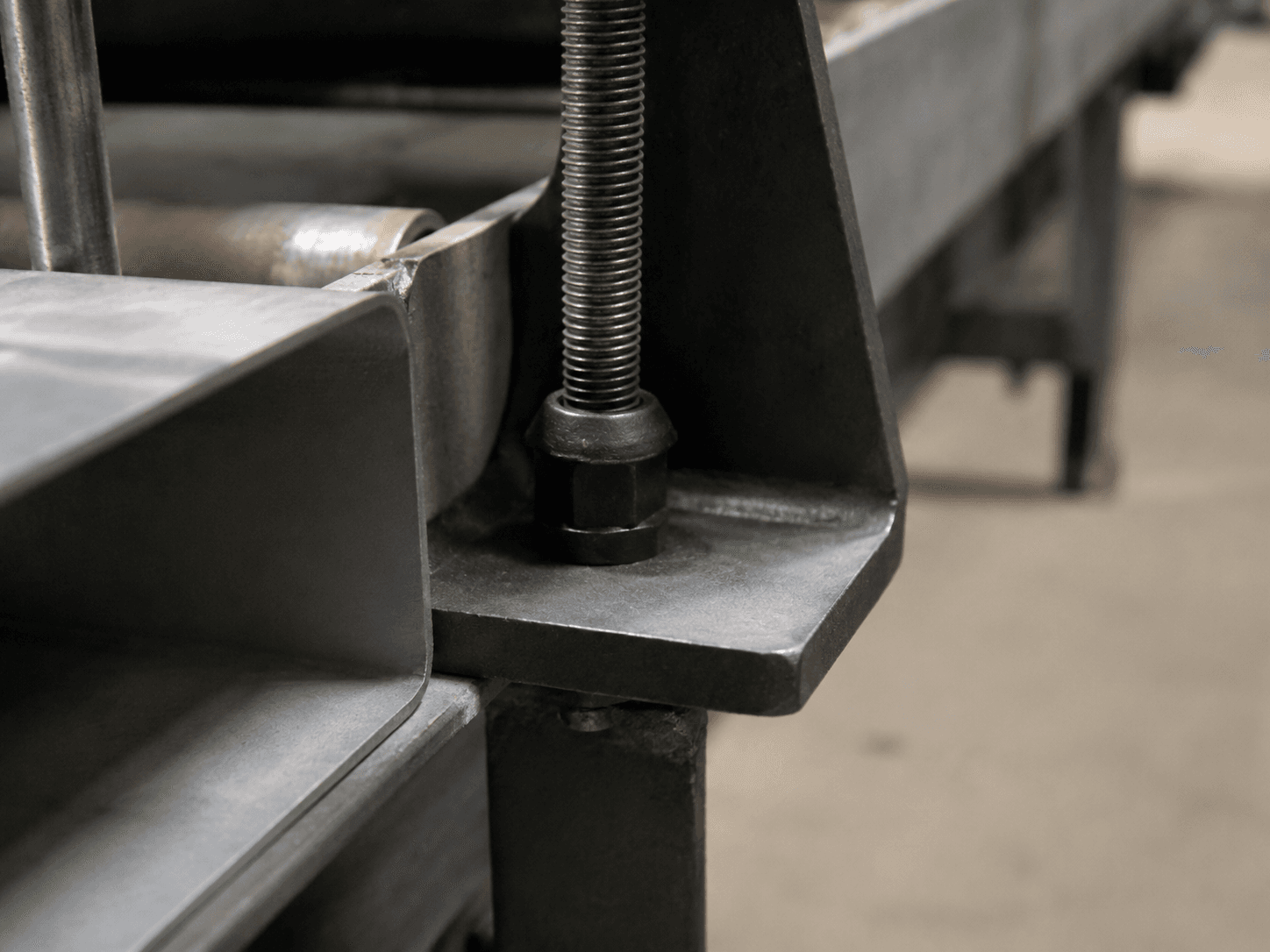
Fasteners Enter the Anti-Corrosion Race as Coastal Construction and Metal Roofing Demand Surge

Han Congming
AuthorWith experience in screw and fastener manufacturing and sales, we operate our own production facility with stable large-scale capacity. We are specialists in self-drilling screws, drywall screws, chipboard screws, machine screws, bolts, and customized fasteners for construction and industrial applications.
Summary: As coastal industrial buildings, warehouses, agricultural sheds, and metal roofing projects continue to increase, competition in the fastener industry is shifting from “price and delivery time” to “corrosion resistance, sealing stability, and long-term installation reliability.” In environments exposed to salt spray, humidity, temperature changes, and strong winds, ordinary fasteners are more likely to suffer from rust, loosening, and water leakage. For contractors and B2B buyers, choosing the right self-drilling screws, EPDM washers, and high-corrosion-resistant coatings is becoming an important step in reducing maintenance costs and project risks.
Coastal Construction Is Pushing Fasteners Into Harsher Applications
Metal roofing is increasingly used in industrial plants, warehouses, agricultural buildings, and commercial facilities because of its high installation efficiency, lightweight structure, and relatively easy maintenance. In coastal areas especially, construction projects must withstand not only rain and humidity, but also long-term exposure to salt spray, ultraviolet radiation, temperature fluctuations, and wind loads.
These environmental factors directly amplify the performance differences between fasteners. An unstable screw coating may lead to early corrosion. Poor washer sealing performance may cause roof leakage. Inconsistent drill points may affect on-site installation efficiency and connection strength. Fasteners, once often regarded as simple auxiliary materials, are now becoming key components in the overall reliability of roofing systems.
From “Holding Things Together” to “Long-Term Protection”
In traditional procurement, fasteners are often compared by specification, quantity, and unit price. However, in coastal construction and metal roofing projects, simply choosing the lowest price is no longer enough to meet long-term performance requirements.
More buyers are now focusing on three key questions: First, how long can the screw maintain corrosion resistance in humid and salt-spray environments? Second, can it maintain stable sealing after installation and reduce the risk of roof leakage? Third, can the product maintain consistent quality in size, coating, drill point, and washer performance across multiple batches?
This trend is pushing fastener suppliers to compete in materials, surface treatment, washer combinations, and production consistency. Corrosion resistance is no longer just a technical parameter. It has become an important factor affecting project lifespan, after-sales costs, and customer satisfaction.
In Metal Roofing, Sealing and Corrosion Resistance Must Work Together
For metal roofing systems, screws do more than provide mechanical fastening. They also play a direct role in waterproof sealing. After a screw penetrates the metal roof panel, if the washer does not compress properly or lacks weather resistance, rainwater may enter through the fixing point. If the screw head and shank do not provide sufficient corrosion resistance, rust may also begin around the connection area and spread over time.
As a result, roofing self-drilling screws with EPDM washers are receiving more attention. For example, ScrewTrade’s Hex Flange Head Self Drilling Screw With Black EPDM Washer is designed for metal roofing, weather sealing, and industrial fastening applications. It is suitable for projects that require both fast installation and reliable sealing performance. For coastal workshops, light steel roofing systems, and outdoor envelope structures, this type of product can help reduce the risk of water leakage and later repair work.
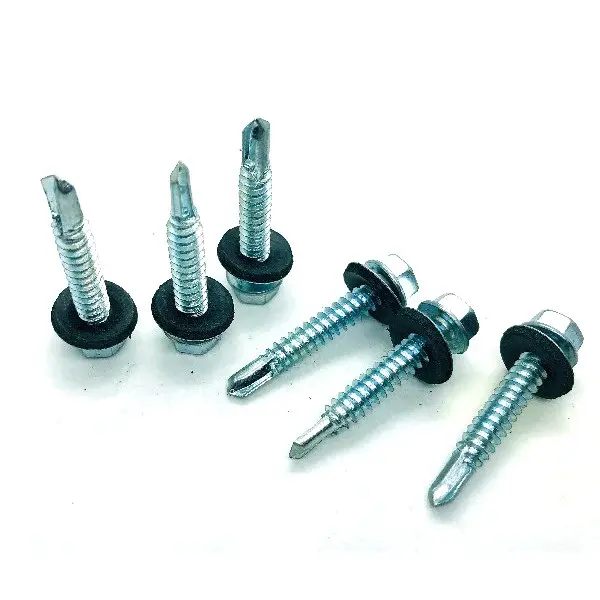
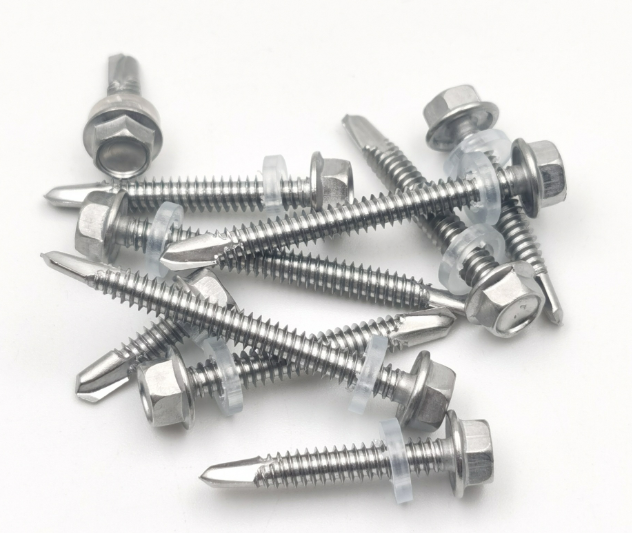
Hex Flange Head Self Drilling Screw With Black EPDM Washer
Corrosion Resistance Is Becoming a New Competitive Standard
In addition to sealing performance, surface treatment is another important consideration for coastal building projects. Zinc coating, coating systems, salt spray resistance, and batch consistency can all affect the service life of fasteners in outdoor environments.
Under this demand, fasteners positioned for higher corrosion resistance are more likely to enter engineering procurement lists. ScrewTrade’s Self-Drilling Screws Galvanised Class 4 is suitable for B2B projects that require stable quality, consistent installation performance, and controlled procurement costs. It can be used in metal roofing, steel framing, and industrial fastening applications. For distributors, wholesalers, and project buyers, the value of this type of product lies not only in the individual screw itself, but also in its ability to maintain stable performance across multiple supply batches and reduce uncertainty during project execution.
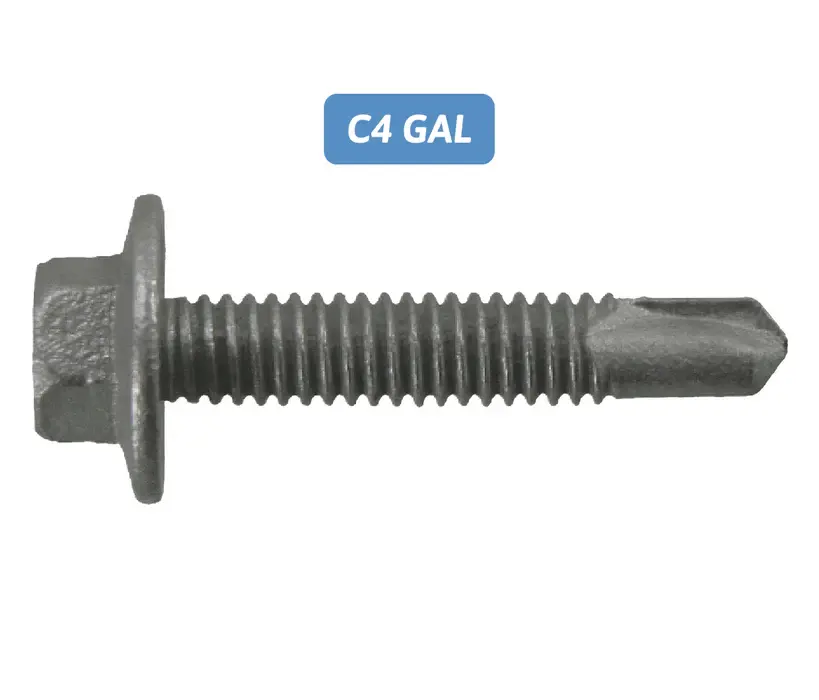
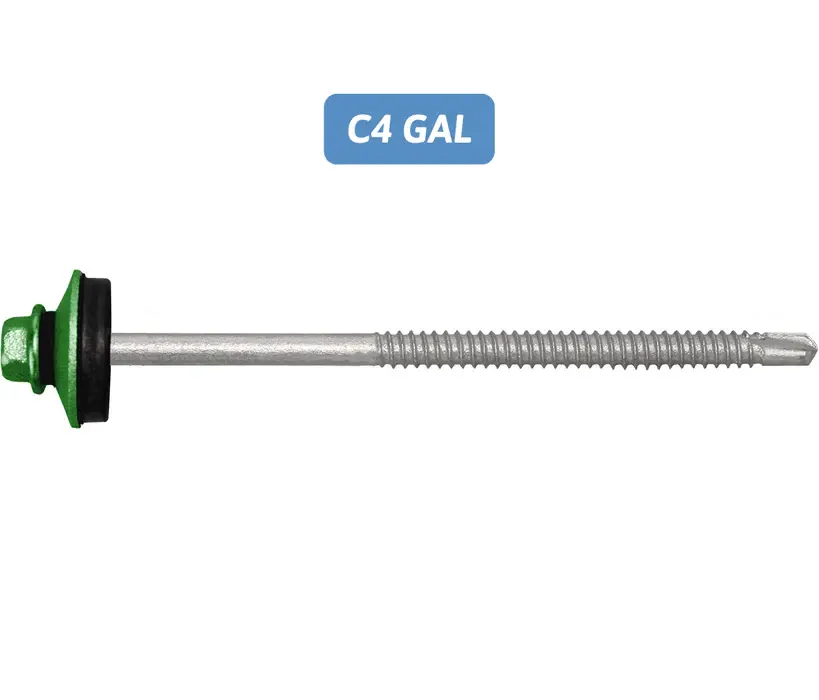
Self-Drilling Screws Galvanised Class 4
Industry Competition Is Moving From Product Supply to Solution Capability
As demand grows in coastal construction and metal roofing, competition in the fastener industry is also changing. Customers are no longer simply asking, “Do you have this specification?” Instead, they are paying more attention to questions such as: “Is this specification suitable for my application environment?” “Can the coating meet the project requirements?” “Is the washer suitable for long-term outdoor use?” “Can the supplier support stable bulk delivery?”
This means fastener suppliers need stronger technical communication and project-matching capabilities. From screw head type, drill point specification, and surface treatment to EPDM washers, packaging methods, and export documents, every detail may influence a buyer’s decision.
Related News
Other news you might be interested in

Why Self-Drilling Screws Fail to Drill: A Substrate and Installation Checklist
When a self-drilling screw spins against steel without making progress, the purchasing decision becomes urgent: should the installer change the tool settings, should the buyer order a different screw, or should the supplier investigate the batch?A useful diagnosis starts by identifying exactly where drilling stops. Record the material at that point, check the selected screw against the assembly, and then compare installation conditions. This approach gives buyers a clearer basis for deciding what to change and what evidence to request.

Bulk Self-Drilling Screws: An RFQ Checklist for U.S. Importers and Distributors
When sourcing bulk self-drilling screws, a unit price is only useful if you know exactly what it covers. Two quotations may appear to describe the same product while differing in dimensions, coating, packaging, or delivery conditions. For U.S. importers and distributors managing several SKUs, those differences can make supplier comparisons difficult. A clear request for quotation—an RFQ—helps suppliers understand your requirements and gives your purchasing team a consistent basis for reviewing their offers. This checklist explains what to include, which details need confirmation, and how to turn an initial inquiry into a specification that both buyer and supplier can review.
Want to know more?
Get in touch with us for more information about our services and products.