

Sandwich Panel Screws: How to Select the Right Length, Drill Point, and Sealing Solution for Steel Structures

Han Congming
AuthorWith experience in screw and fastener manufacturing and sales, we operate our own production facility with stable large-scale capacity. We are specialists in self-drilling screws, drywall screws, chipboard screws, machine screws, bolts, and customized fasteners for construction and industrial applications.
In sandwich panel roofing and wall systems, sandwich panel screws are more than simple fasteners. They must pass through the metal facing, insulation core, and inner panel, then secure reliably into steel purlins or another steel substrate. For this reason, screw length, self-drilling points, thread engagement, and EPDM sealing washers must be considered as one complete fastening solution.
Selecting screws by diameter or price alone can lead to insufficient fixing strength, poor drilling efficiency, panel deformation, sealing failure, and water leakage. The correct selection process is to confirm the installation structure first, determine the required screw length, and then match the drill point, sealing washer, and corrosion-resistant finish.

Why Do Sandwich Panel Screws Require Application-Specific Selection?
A sandwich panel consists of metal facings, an insulation core, and an inner metal layer. Its total thickness is usually much greater than that of a single metal sheet. During installation, sandwich panel screws must penetrate the panel assembly and create sufficient thread engagement in the steel purlin to maintain a stable connection.
Standard short self-drilling screws may not be suitable for insulated panel projects. A screw that is too short may not achieve reliable fixing in the steel substrate, while an excessively long screw can create unnecessary protrusion and make installation management more difficult. For roofing systems, weatherproof sealing, wind exposure, and long-term corrosion resistance must also be considered.
Step 1: Confirm the Sandwich Panel and Steel Structure Installation Conditions
Before selecting sandwich panel screws, confirm the full connection design, including:
- Total sandwich panel thickness
- Outer and inner steel sheet thickness
- Thickness and material of the steel purlin or steel beam
- Roof panel or wall panel installation position
- Overlaps, flashings, and local reinforcement details
- Humidity, rainfall, salt spray, and industrial corrosion conditions
Roofing sandwich panel screws usually require closer attention to waterproof sealing, wind loads, and thermal movement. Wall-panel fastening places greater emphasis on panel flatness, connection stability, and visual consistency. Even when the same sandwich panel is used, different substrate thicknesses and installation positions may require different self-drilling screw specifications.
Step 2: How to Determine the Correct Screw Length
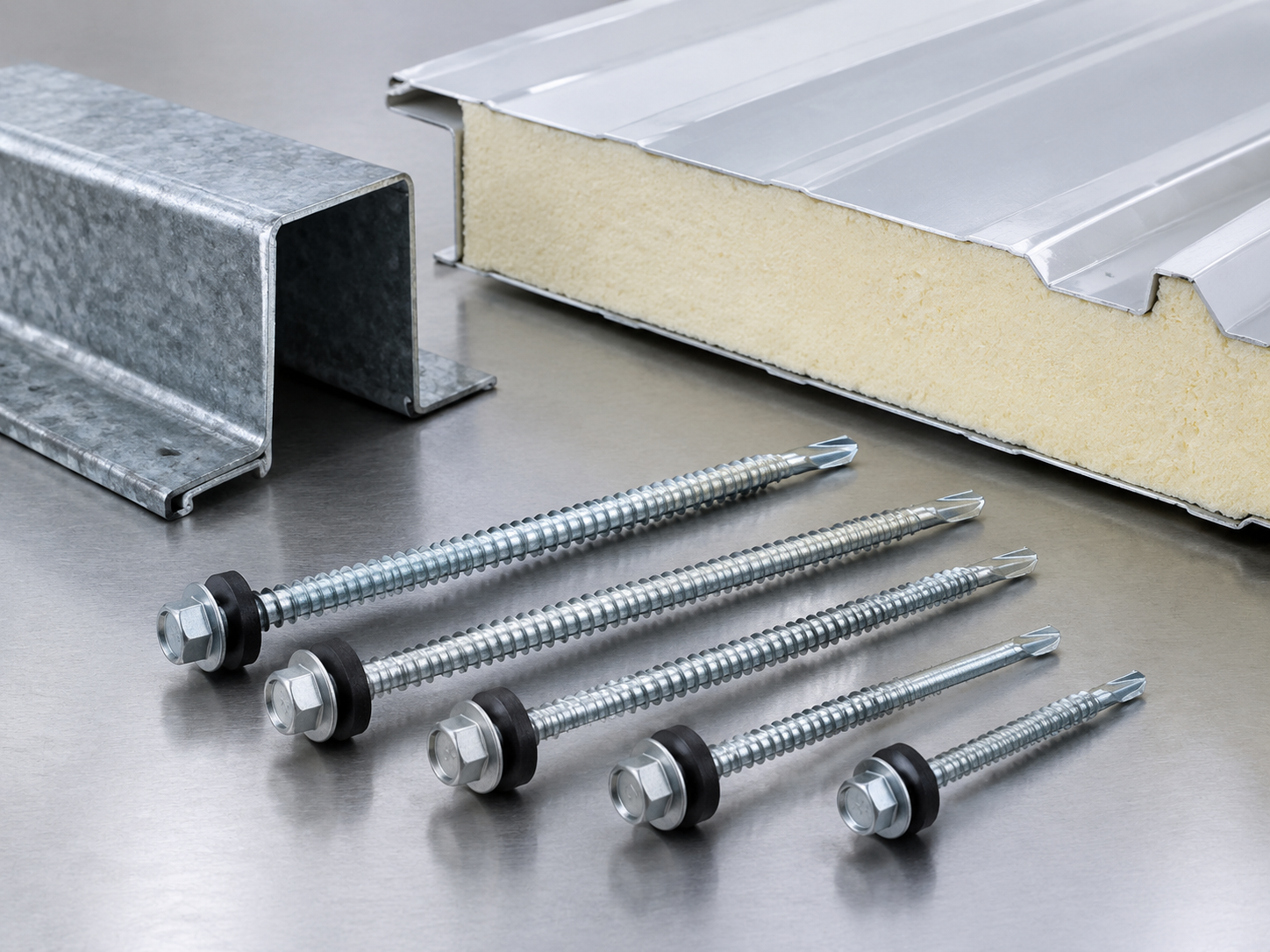
The required screw length must cover the complete connection path: the outer facing, insulation core, inner facing, installation accessories, and the effective fixing depth in the steel purlin.
Screw Length = Total Sandwich Panel Thickness + Additional Component Thickness + Required Steel-Substrate Engagement
The key is not to use a fixed standard size, but to ensure that thread engagement occurs in the intended steel substrate. If the screw passes through the sandwich panel but does not achieve sufficient engagement in the steel purlin, the connection may later loosen, vibrate, or provide insufficient pull-out performance.
Longer sandwich panel screws are not automatically better. Excessive screw projection can interfere with internal layouts and increase the risk of accidental contact during installation or maintenance. The right choice balances reliable fixing with an appropriate finished length.
ScrewTrade offers Sandwich Panel Screws in carbon steel and stainless steel options, with catalog sizes covering 4.0–12.0 mm diameters and 16–150 mm lengths. These options support different sandwich panel and steel structure applications. Final dimensions should always be selected according to panel thickness, substrate conditions, and installation details.
Step 3: Match the Self-Drilling Point to Steel Purlin Thickness
The main advantage of a self-drilling screw is that its drill point creates the hole while the threads form the connection. For sandwich panel installation, the drilling capability of the self-drilling point must match the thickness of the steel purlin.
If the drill point is not suitable for the steel substrate, common issues include:
- Overheating or premature wear of the drill point
- Unstable drilling speed
- Oversized holes
- Insufficient thread engagement
- Screw slipping or misalignment
- Local deformation of the metal panel
Thin steel purlins and heavier steel structures require different self-drilling point capabilities. For thicker steel, increasing the screw diameter alone is not enough. Buyers should also assess the drill point type, effective drilling capacity, and compatible installation tools.
Where substrate thickness, steel strength, or installation conditions fall outside normal project conditions, a trial installation should be completed first. This helps verify self-drilling screw penetration, hole quality, and thread engagement before full-scale installation.
Step 4: Protect Connection Points with EPDM Sealing Washers
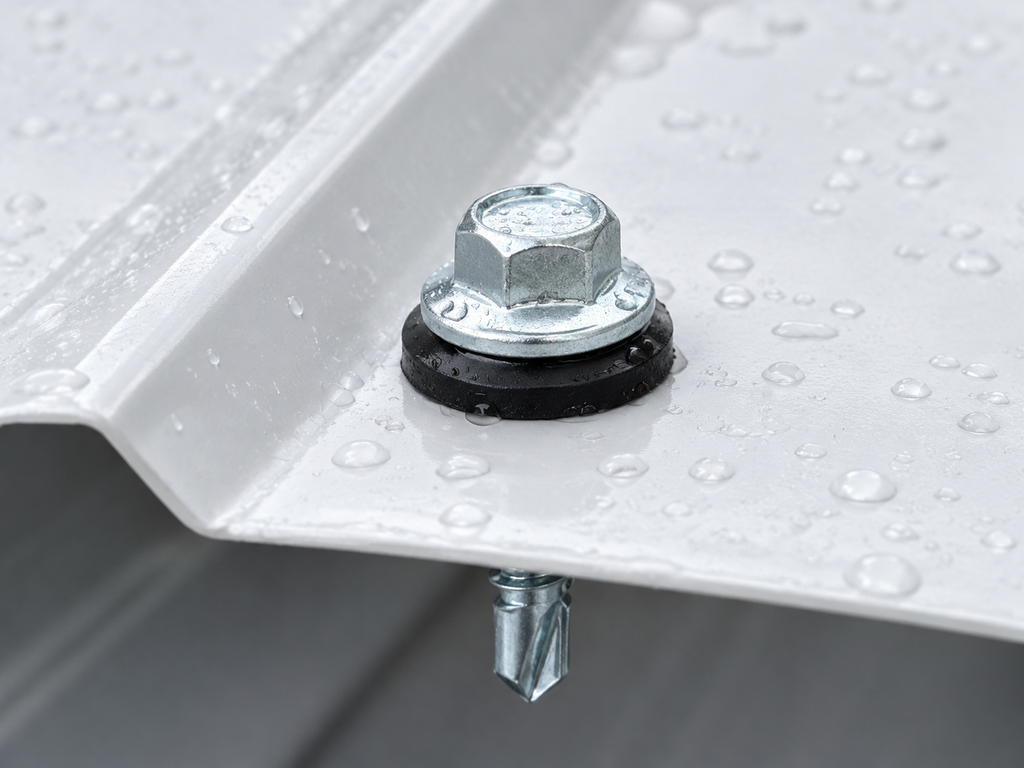
For roofing and exterior wall systems, the EPDM sealing washer is an essential part of the waterproof performance of a sandwich panel screw. Once a screw penetrates the panel, the connection point becomes a potential path for water ingress. A properly compressed EPDM sealing washer forms a continuous seal around the screw head.
Two installation mistakes should be avoided:
- Insufficient tightening: the EPDM sealing washer does not fully contact the panel surface, allowing water to enter around the fastener.
- Over-tightening: the EPDM sealing washer is excessively compressed, which may cause distortion, cracking, edge lifting, or reduced long-term elasticity.
The correct installation condition is a uniformly seated EPDM sealing washer, a screw installed perpendicular to the panel, and no visible panel indentation. A reliable sealing solution supports not only short-term waterproofing, but also helps prevent insulation moisture absorption, metal-panel corrosion, and unnecessary maintenance costs.
Step 5: Select Corrosion-Resistant Fasteners for Outdoor Projects
Outdoor sandwich panel screws must also be selected according to the corrosion environment. Standard humid conditions, coastal salt-spray exposure, and industrial atmospheres place different requirements on carbon steel, stainless steel, zinc plating, and other corrosion-resistant coatings.
- Carbon steel screws with an appropriate surface treatment can be suitable for many standard applications.
- Stainless steel screws are appropriate where higher long-term corrosion resistance is required.
- Bi-metal self-drilling screws can be considered where stainless-steel corrosion resistance and steel-drilling performance are both needed.
- For roofing systems, the EPDM sealing washer, screw material, and panel coating should be evaluated together to avoid performance mismatch.
ScrewTrade's Sandwich Panel Screws are available in carbon steel and stainless steel options, with specifications, finishes, dimensions, and packaging that can be discussed according to project requirements. This supports bulk procurement and project-based supply planning.
Common Installation Issues and Practical Solutions

Misaligned Screws
When a sandwich panel screw is not installed perpendicular to the panel, the EPDM sealing washer is loaded unevenly and may fail to seal correctly. Keep the driving tool stable and allow the self-drilling point to position itself properly before full engagement.
Panel Indentation
Panel indentation is often caused by excessive installation torque. Tighten the screw enough for the EPDM sealing washer to seal, but avoid over-compressing it.
Poor Drill Point Penetration
This may indicate that the drill point does not match the steel purlin thickness. It can also result from inappropriate tool speed, pressure, or steel surface conditions. Do not force continuous installation; review the self-drilling screw specification and substrate conditions.
Water Leakage at Fastening Points
Check whether the screw is perpendicular, whether the EPDM sealing washer remains intact, whether the panel has deformed, and whether overlapping areas have been properly sealed. Replacing the fastener with a longer screw alone will not solve leakage caused by poor installation practice or sealing failure.
Sandwich Panel Screw Procurement and Installation Checklist
Before submitting an inquiry or placing an order, confirm:
- Total sandwich panel thickness
- Steel purlin thickness
- Roofing or wall-cladding installation location
- Required screw length
- Required self-drilling point type
- Whether an EPDM sealing washer is required
- Carbon steel, stainless steel, or bi-metal screw material requirements
- Zinc plating, coating, or other corrosion-protection requirements
- Screw head style, color, and packaging requirements
- Expected purchasing quantity and delivery schedule
Conclusion: Match Every Sandwich Panel Screw to the Real Project
ScrewTrade is a B2B supplier focused on industrial fasteners, providing dependable sandwich panel screw solutions for roofing, wall cladding, steel structures, and insulated-panel installation projects. We understand that procurement is not simply about buying a screw. The right solution requires screw length, self-drilling point, steel-purlin engagement, EPDM sealing washers, and corrosion resistance to work together within one installation system.
Whether your project involves different sandwich panel thicknesses, heavier steel substrates, outdoor waterproofing requirements, or bulk purchasing needs for material, finish, dimensions, and packaging, our team can help clarify the key specifications and offer carbon steel, stainless steel, and customized Sandwich Panel Screws solutions.
Do not wait until installation is complete to deal with leakage, screw slipping, or insufficient fixing strength. Send ScrewTrade your sandwich panel thickness, steel purlin thickness, application environment, and estimated order quantity today to receive practical selection support and a project-focused quotation.

Related News
Other news you might be interested in

Why Self-Drilling Screws Fail to Drill: A Substrate and Installation Checklist
When a self-drilling screw spins against steel without making progress, the purchasing decision becomes urgent: should the installer change the tool settings, should the buyer order a different screw, or should the supplier investigate the batch?A useful diagnosis starts by identifying exactly where drilling stops. Record the material at that point, check the selected screw against the assembly, and then compare installation conditions. This approach gives buyers a clearer basis for deciding what to change and what evidence to request.

Bulk Self-Drilling Screws: An RFQ Checklist for U.S. Importers and Distributors
When sourcing bulk self-drilling screws, a unit price is only useful if you know exactly what it covers. Two quotations may appear to describe the same product while differing in dimensions, coating, packaging, or delivery conditions. For U.S. importers and distributors managing several SKUs, those differences can make supplier comparisons difficult. A clear request for quotation—an RFQ—helps suppliers understand your requirements and gives your purchasing team a consistent basis for reviewing their offers. This checklist explains what to include, which details need confirmation, and how to turn an initial inquiry into a specification that both buyer and supplier can review.
Want to know more?
Get in touch with us for more information about our services and products.