

Strategic Fastener Sourcing for 2026: Mitigating Risks and Maximizing ROI in Self-Drilling Screw Supply

Han Congming
AuthorWith experience in screw and fastener manufacturing and sales, we operate our own production facility with stable large-scale capacity. We are specialists in self-drilling screws, drywall screws, chipboard screws, machine screws, bolts, and customized fasteners for construction and industrial applications.
Introduction: The Hidden Cost of Fastener Failures
When a single self-drilling screw snaps during installation, the consequences extend far beyond the immediate inconvenience. According to a 2025 Fastener Technology International report, self-drilling screw breakage in thin-gauge steel applications remains a persistent challenge—leading to production downtime that cascades into missed deadlines, compromised safety records, and costly rework. For the screw importer or screw distributor, these failures carry a heavier burden: damaged equipment reputation, strained buyer-supplier relationships, and warranty claims that erode margins. Every defective fastener that reaches the jobsite represents not just a product failure, but a systemic breakdown in the B2B screw sourcing process.
The question for procurement professionals heading into 2026 is no longer whether to source strategically—it's how to build a supply chain resilient enough to prevent these hidden costs before they materialize. This means moving beyond transactional purchasing toward partnerships defined by verifiable quality, adherence to the ISO fastener standard framework, and logistics precision that keeps production lines moving.
Industry Trends Shaping the Fastener Market in 2026
The global screws and fasteners market is on a trajectory to reach $161.8 billion by 2034, propelled by sustained demand from construction and automotive sectors. For the screw wholesaler and B2B screw sourcing professional, this growth signals both opportunity and complexity. Deloitte's 2026 Manufacturing Outlook reinforces a cautiously optimistic picture, pointing to increased capital investment in supply chain resilience as manufacturers seek to insulate themselves from the disruptions that characterized earlier years.
Among the most practical developments gaining traction is mixed container loading—an approach that allows a screw importer to consolidate multiple fastener specifications within a single shipment, reducing per-unit freight costs and smoothing inventory replenishment cycles. Similarly, OEM screw packaging has moved from a value-added option to an expectation among distributors who want their branding on every box without managing secondary packaging operations. A China fastener supplier capable of executing both strategies under one roof is increasingly positioned as a strategic asset rather than a transactional vendor.
Quality Assurance: Standards, Coatings, and Testing
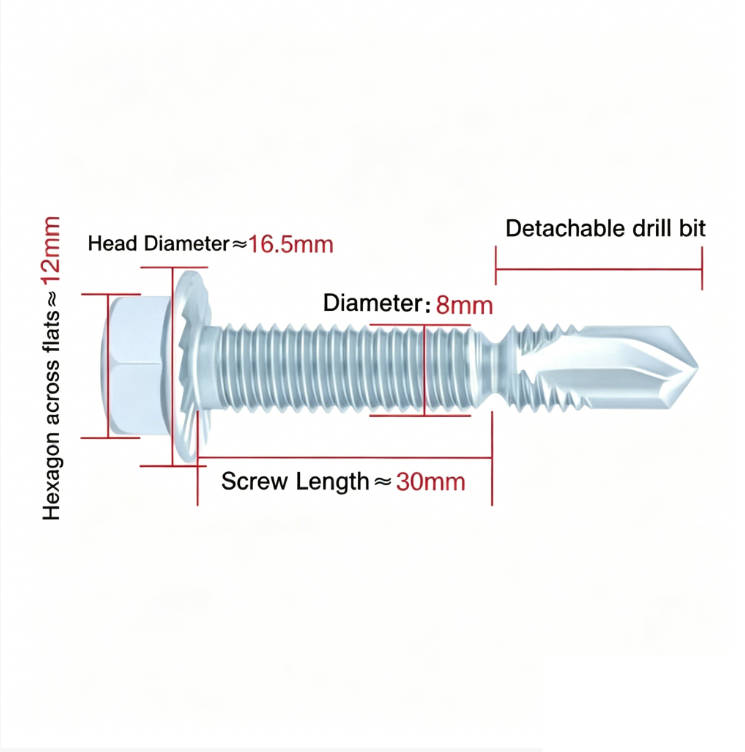
Procurement teams can no longer afford to treat quality assurance as a checkbox exercise. The ISO fastener standard framework and specification benchmarks like DIN 7504 for self-drilling screws establish the baseline for dimensional accuracy, mechanical performance, and installation reliability. A fastener manufacturer that maintains rigorous specification matching support across every production batch reduces the likelihood of field failures that trace back to tolerance drift or material substitution. This is particularly critical when sourcing carbon steel screw and stainless steel screw variants that must perform across different environmental conditions.
Corrosion resistance separates a dependable fastening system from one that deteriorates prematurely. Specifications for Ruspert coated screw finishes, HDG screw (hot-dip galvanized) treatments, and zinc plated screw options must be evaluated against documented performance testing reports—particularly salt spray test results that quantify endurance in marine, industrial, and high-humidity environments. Cold heading and thread rolling processes further enhance tensile strength and fatigue resistance, ensuring that a drill point screw maintains its cutting geometry and structural integrity even in high-stress applications involving thick substrates or repetitive loading.
Innovative Product Solutions for Modern Fastening Challenges
Addressing specific application demands requires product engineering that goes beyond generic catalog offerings. The Hex Flange Head SDS with EPDM Washer exemplifies this approach—designed as a metal to metal screw and roofing screw solution that delivers leak-proof performance through the combination of an integrated sealing washer and a serrated bearing surface. Batch-to-batch consistency in EPDM bonding and hex flange dimensional control ensures that installers encounter predictable driving behavior on every bulk screw order.
For mixed-material assembly, the Flat Head Self Drilling Screw 4.2mm 35mm functions as an effective wood to metal screw, providing controlled countersinking and reduced head protrusion in thin steel and timber substrates. Its compact profile suits applications where clearance constraints would rule out bulkier fasteners. The Truss Head Self Drilling Screw, meanwhile, offers a wider bearing surface that distributes clamping force across softer materials—a design advantage that supports process stability during high-volume installation and makes it a preferred choice for screw distributor inventories serving HVAC and light-gauge framing markets.
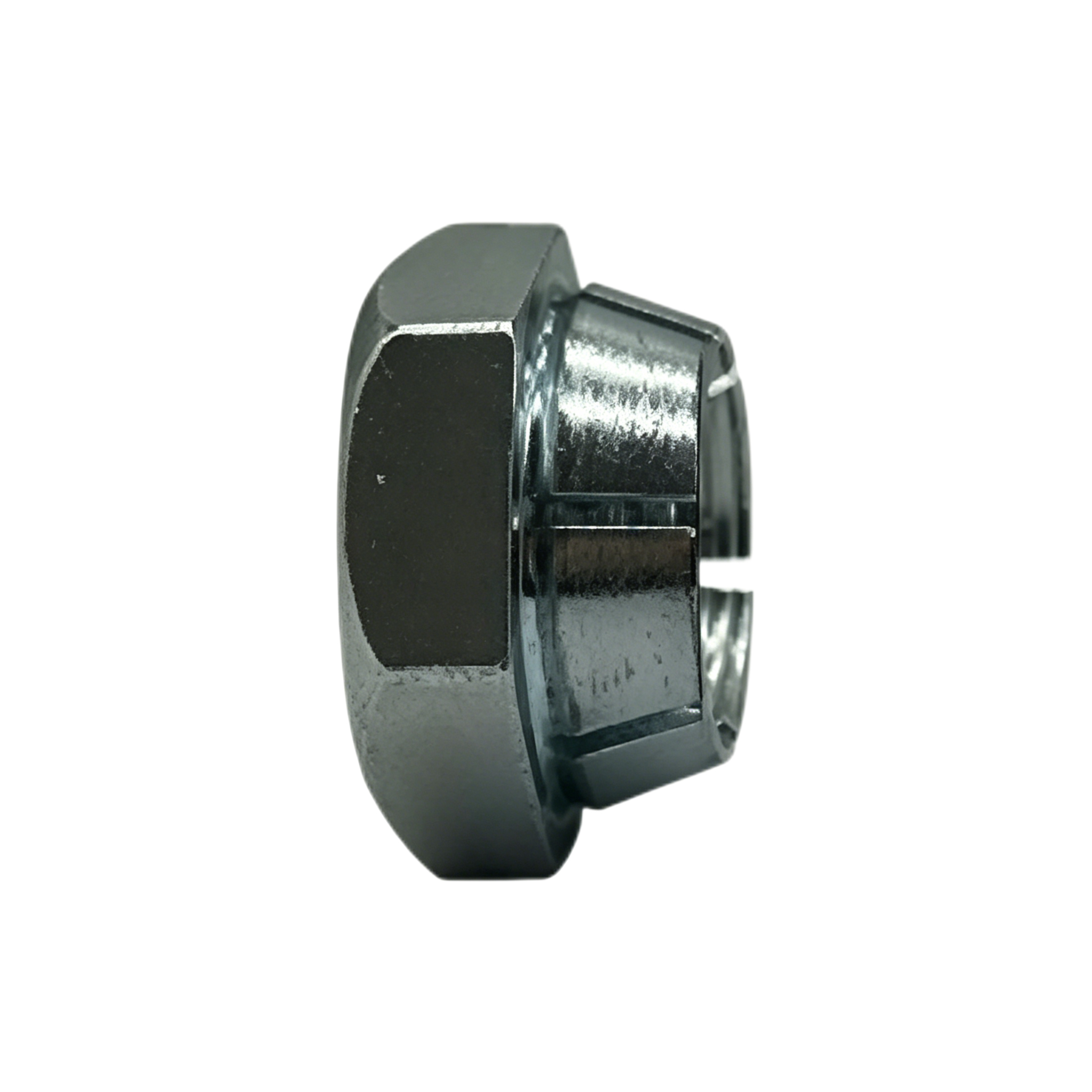
Where vibration threatens joint integrity, the Never Loosen Nut employs a patented anti-loosening mechanism that maintains clamp load without supplemental locking compounds or secondary fasteners. For structural applications that demand both speed and precision, the self drilling screw focus extends to the Drill Twist-Shear Bolt—an industry-first design that combines one-step drilling with controlled shear fastening, eliminating the separate drilling and tensioning steps that traditionally slow down steel erection workflows. These solutions move the conversation beyond simply sourcing a tek screw or self-tapping screw to specifying the right engineered fastening system for the job.
Sourcing and Logistics Best Practices for B2B Buyers
Operational efficiency in B2B screw sourcing hinges on understanding the commercial and logistical variables that determine landed cost. Standard self-drilling screw orders placed with a China fastener supplier typically range from 50,000 to 500,000 pieces, with lead times spanning four to six weeks depending on coating specifications and production slot availability. Buyers who negotiate MOQ flexibility and transparent production schedules position themselves to balance working capital constraints with inventory coverage requirements.
Shipping strategy directly impacts unit economics: consolidating orders through LCL or FCL arrangements requires precise coordination to avoid demurrage charges and customs delays. Equally important is the completeness of export documentation—certificates of origin, mill test reports, and compliance declarations must be accurate and audit-ready before containers depart. A supplier with proven supplier delivery execution capabilities and integrated production and qc processes reduces the administrative burden on the screw importer while minimizing the risk of customs holds. Combined with OEM screw packaging and mixed container loading, these logistics efficiencies transform the supply chain from a cost center into a competitive lever.
Real-World ROI: Data and Success Stories
The financial case for strategic sourcing becomes tangible when measured against operational outcomes. One screw distributor documented a 35% reduction in fastener-related downtime after transitioning to a supplier whose production was governed by certified ISO fastener standard protocols and DIN 7504 compliance—eliminating the intermittent quality fluctuations that had previously disrupted their customers' assembly lines. The savings materialized not from unit price negotiation, but from the elimination of rework, expedited shipping, and end-user dissatisfaction.
In the field, a commercial roofing contractor achieved 20% faster installation rates after adopting a roofing screw with optimized drill point geometry validated through documented salt spray test results. The improved penetration speed and consistent sealing performance translated directly into labor savings and reduced call-backs. Deloitte's 2026 manufacturing outlook corroborates these findings, indicating that manufacturers investing in quality-centric fastener sourcing strategies realize 15–20% lower total cost of ownership when accounting for procurement, installation, and lifecycle maintenance costs.
Conclusion: Secure Your Supply Chain with a Trusted Partner
The fastener sourcing decisions made in 2026 will determine operational performance for years to come. Prioritizing verifiable compliance with ISO fastener standard requirements, selecting application-engineered products over generic alternatives, and structuring logistics for efficiency rather than convenience form the foundation of a resilient supply strategy. Whether your requirements center on carbon steel screw volumes or specialized stainless steel screw specifications, working with a fastener manufacturer that integrates production, quality assurance, and export documentation under one quality management system reduces fragmentation and accountability gaps.
Related News
Other news you might be interested in
Why Self-Drilling Screws Fail to Drill: A Substrate and Installation Checklist
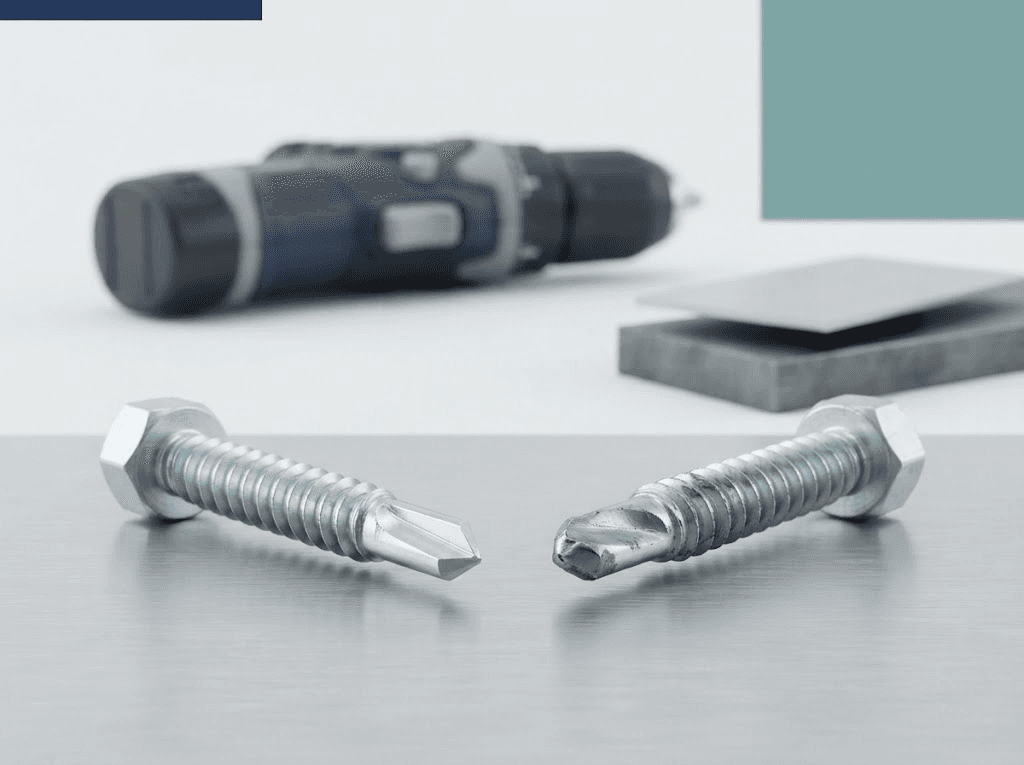
When a self-drilling screw spins against steel without making progress, the purchasing decision becomes urgent: should the installer change the tool settings, should the buyer order a different screw, or should the supplier investigate the batch?A useful diagnosis starts by identifying exactly where drilling stops. Record the material at that point, check the selected screw against the assembly, and then compare installation conditions. This approach gives buyers a clearer basis for deciding what to change and what evidence to request.
Bulk Self-Drilling Screws: An RFQ Checklist for U.S. Importers and Distributors
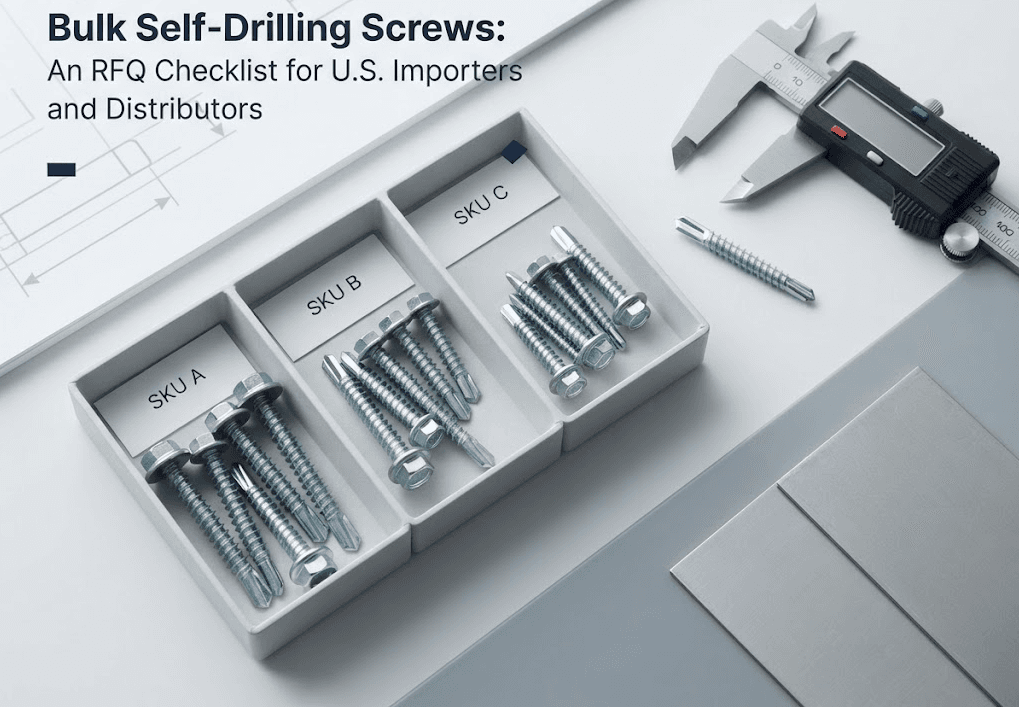
When sourcing bulk self-drilling screws, a unit price is only useful if you know exactly what it covers. Two quotations may appear to describe the same product while differing in dimensions, coating, packaging, or delivery conditions. For U.S. importers and distributors managing several SKUs, those differences can make supplier comparisons difficult. A clear request for quotation—an RFQ—helps suppliers understand your requirements and gives your purchasing team a consistent basis for reviewing their offers. This checklist explains what to include, which details need confirmation, and how to turn an initial inquiry into a specification that both buyer and supplier can review.
Want to know more?
Get in touch with us for more information about our services and products.