
Strategic Sourcing for Self-Drilling Screws: Mitigating Supply Chain Risks and Ensuring Quality in 2026

Han Congming
AuthorWith experience in screw and fastener manufacturing and sales, we operate our own production facility with stable large-scale capacity. We are specialists in self-drilling screws, drywall screws, chipboard screws, machine screws, bolts, and customized fasteners for construction and industrial applications.
Introduction: The Hidden Costs of Fastener Failures
When self‑drilling screws snap in thin‑gauge steel, the ripple effects go far beyond a single bent fastener. Industry reports, including recent Fastener Technology International coverage, have directly linked such breakage to days of production downtime, field rework, and eroding trust between screw distributor teams and their end‑customers. For B2B buyers and screw wholesaler operations, the challenges compound quickly: inconsistent batch quality, shipments that drift past agreed lead times, and export documentation that lacks the detail needed to clear customs smoothly or verify material origins.
The right sourcing strategy changes the equation. This article lays out a focused roadmap for procuring high‑performance fasteners — from self‑tapping screw assemblies to advanced Ruspert coated screw variants — while keeping supply chain volatility in check and protecting your return on investment.
2026 Market Trends and Growth Projections
The global screw and fastener market is on a trajectory to reach $161.8 billion by 2034, propelled by sustained demand in construction, metal building systems, and infrastructure. A positive manufacturing outlook for 2026, echoed by Deloitte Insights, points to rising capital expenditure — making dependable supply networks more valuable than ever. Already, imports of stainless steel screw products have surpassed 3.8 billion units, with a clear shift toward corrosion‑resistant coatings like Ruspert coated screw finishes and HDG screw (hot‑dip galvanized) alternatives. For any screw importer or fastener manufacturer watching these numbers, the message is unambiguous: 2026 will reward sourcing partnerships that deliver both capacity and technical consistency, not just volume.
Quality Standards That Define Reliable Fasteners
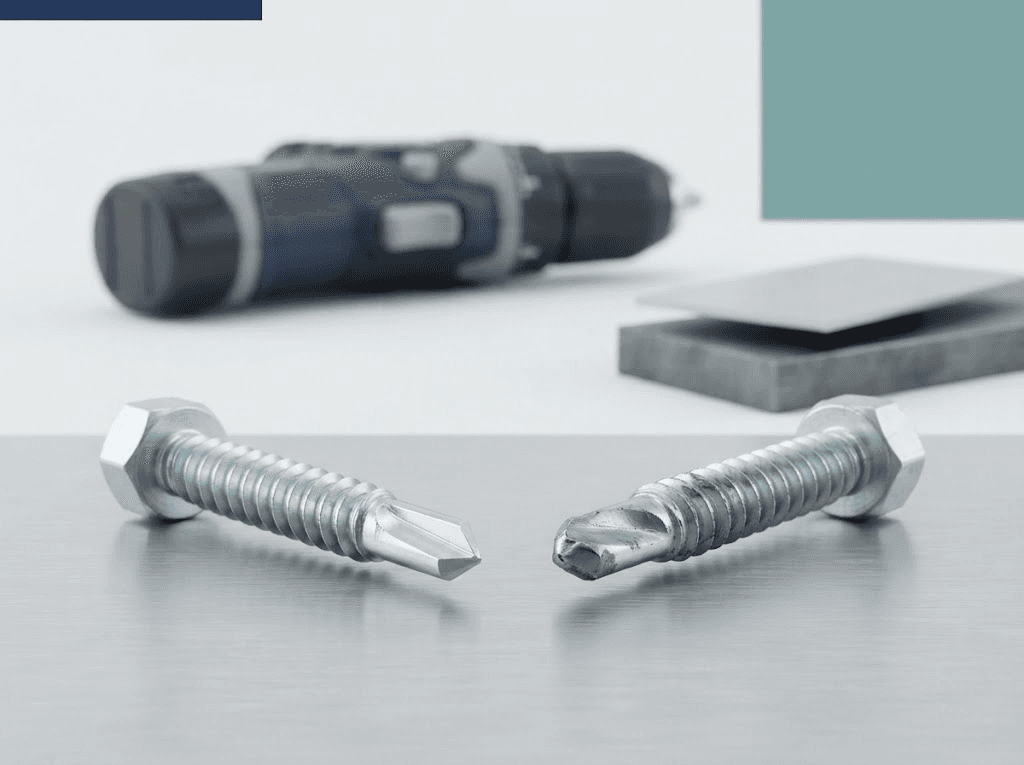
Specifications are the backbone of every high‑stakes fastening job. ISO fastener standard frameworks and the widely referenced DIN 7504 for self‑drilling screws establish dimensional consistency, thread geometry, and mechanical performance thresholds that separate engineered reliability from commodity variability. Equally important is understanding drill point classification — from #1 through #5 — because that single geometry determines the gauge of steel a drill point screw can penetrate. Whether you are joining thin metal decking or anchoring timber to structural steel, getting this match right prevents costly on‑site failures. For precise guidance, leverage our specification matching support to cross‑reference your application requirements with the correct point style and material.
Coating durability is another non‑negotiable. Buyers specifying zinc plated screw or carbon steel screw with surface treatments for exterior exposure should demand salt spray certification — a minimum 72‑hour corrosion resistance is the pragmatic baseline for outdoor metal‑to‑metal connections. Validate these claims with independent data; our clients routinely request and review performance testing reports that quantify how a fastener’s coating holds up in simulated weather conditions before a single container leaves the factory.
Product Solutions for Professional Fastening Distribution
Discerning buyers build their bulk orders around products engineered for predictable, repeatable results. Here are several proven options that integrate seamlessly into professional supply chains:
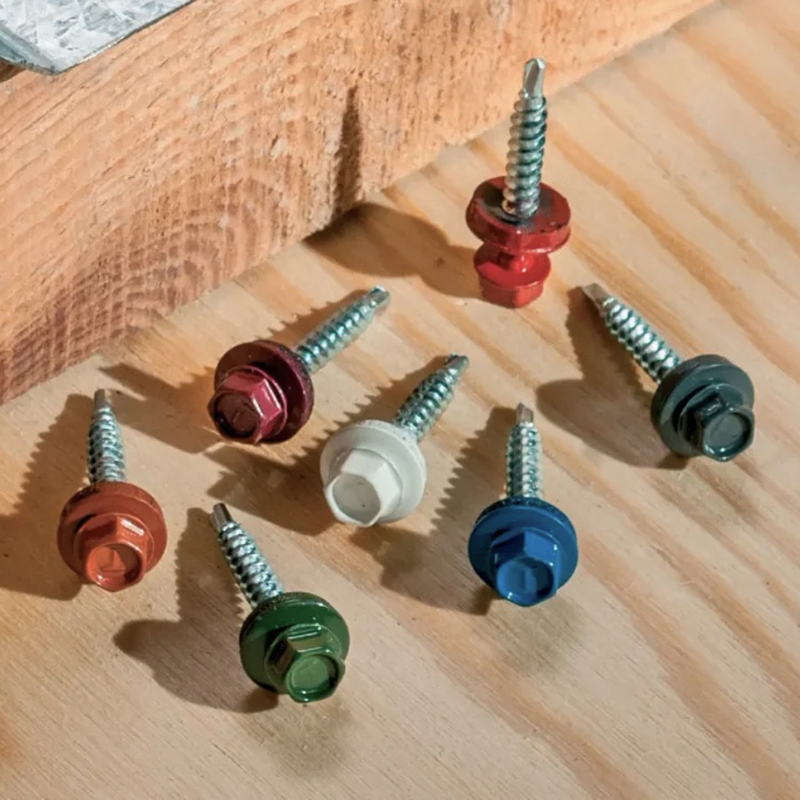
- PVC Hex Cap for Self-Drilling Screws: Combines a resilient top‑coat with stable process‑side assembly. Frequently chosen for standing‑seam roofing screw systems and metal cladding where weather resistance and long‑term aesthetics matter.
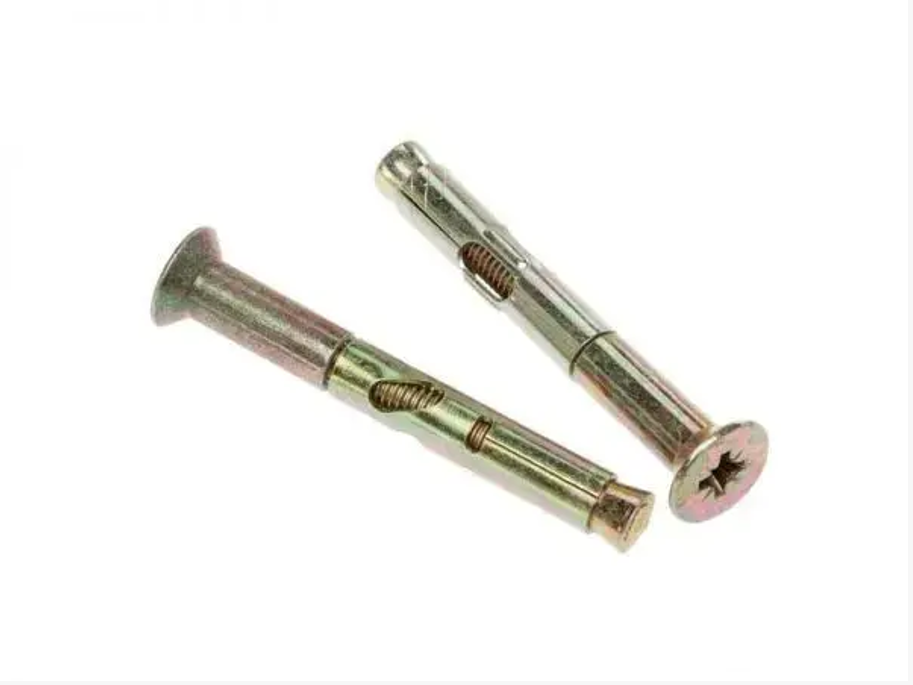
- Countersunk Sleeve Anchor Yellow Zinc Plated: Delivers reliable batch‑to‑batch consistency in masonry anchoring, simplifying inventory for anyone handling both metal to metal screw and base‑material fastening.
- Farmer Screws for Metal Roofing: Purpose‑engineered with sharply defined points and integrated hex washer head screw geometry that speeds installation on agricultural and commercial roofing projects.
- Hexagon Head Self Drilling Screws (zinc plated): A versatile self‑drilling screw for general metal assembly; offered in bulk screw order volumes with consistent plating thickness.
- Stainless Steel Hexagon Socket Cylindrical Head: Provides high tensile strength for heavy‑duty structural assemblies where stainless steel screw integrity is non‑negotiable.
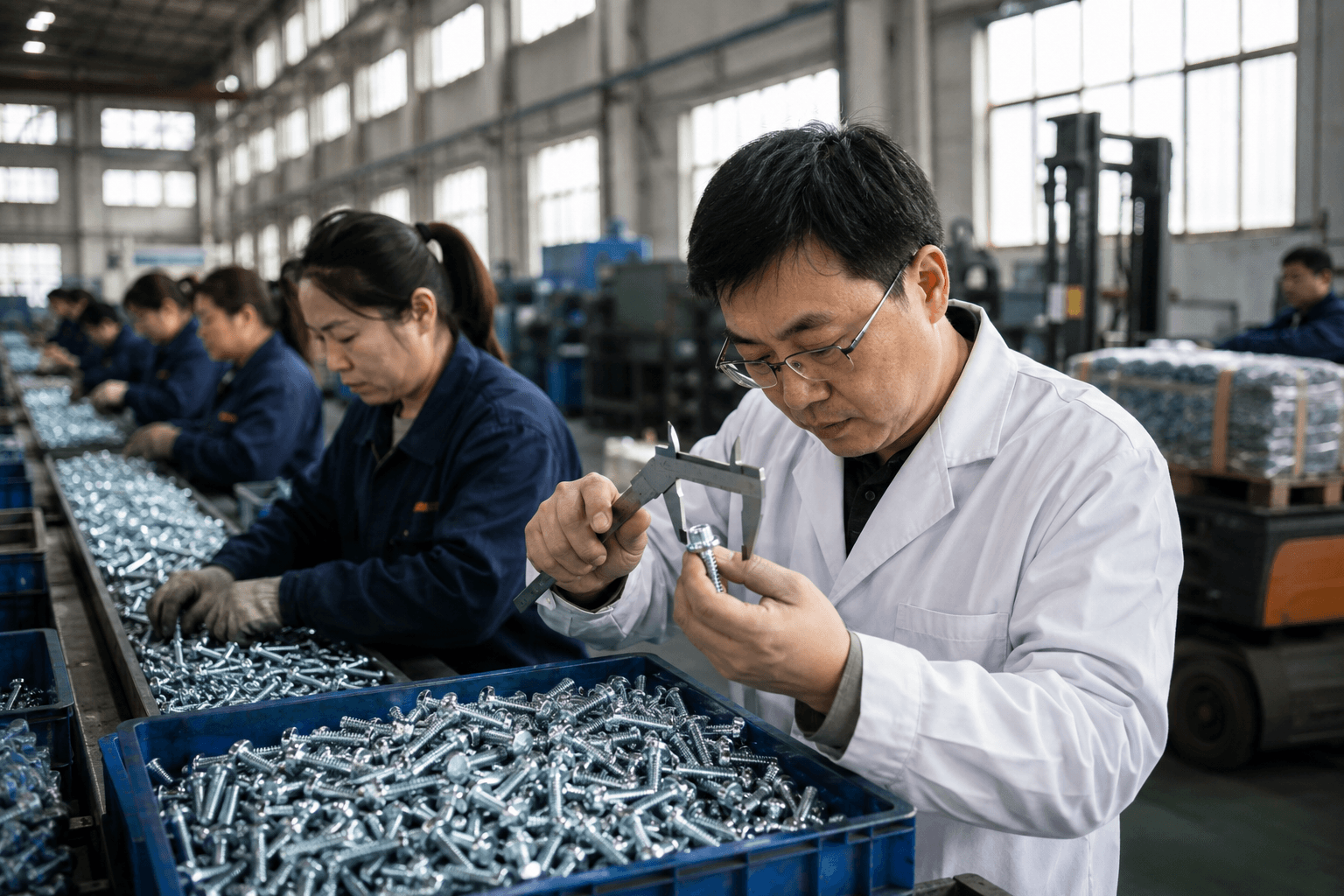
Underpinning every product line is our approach to integrated production and QC. By linking in‑line dimensional checks with final visual and mechanical inspection, we help eliminate the off‑spec fasteners that cause headaches for screw distributor networks and jobsite supervisors alike.
Sourcing Best Practices for B2B Importers
Smart procurement goes far beyond comparing price per thousand. When engaging a China fastener supplier, start by pinning down ISO and DIN certifications — ask for batch‑level test certificates, not just factory‑level declarations. That diligence protects against non‑conforming tek screw shipments that look right but underperform under load.
On the logistics side, freight efficiency often separates profitable inventory turns from warehouse bloat. Use mixed container loading (LCL or FCL) to combine your hex washer head screw, roofing screw, and self‑tapping screw lines into shared shipments, reducing per‑unit landed cost. Equally important is packaging: insist on OEM screw packaging with clear SKU labels, inner‑box counts, and batch traceability codes — the operational payoff shows up directly in picking accuracy and return‑process clarity.
Finally, negotiate MOQ flexibility and confirmed lead times with the same rigor you apply to unit pricing. For custom drill point screw configurations or hybrid wood to metal screw orders, a supplier’s willingness to adapt minimums and commit to delivery windows is a strong signal of supply‑chain maturity. Our own supplier delivery execution track record demonstrates how clear forecasting and production scheduling remove the usual guesswork from B2B screw sourcing.
Social Proof: Success Stories and ROI Data
The results speak through the data. One screw distributor serving the commercial roofing sector reduced field fastener failures by 40% after converting to carbon steel screw fasteners with a certified Ruspert coated screw finish — a move that cut warranty claims and rework calls in a single season. In a separate project, a construction firm trimmed metal deck installation time by 25% by switching to self‑drilling screw lines with #3 drill points, eliminating pre‑pilot operations on thin‑gauge profiled sheets. As our team member Emily Robertson often points out, when sourcing decisions hinge on reliable technical data rather than catalog descriptions, each specification improvement feeds straight into the bottom line.
Deloitte’s 2026 manufacturing outlook reinforces this urgency, projecting a 5.6% expansion that will stretch supply chains that aren’t built on verified quality. The pattern is clear: resilient sourcing strategies now prevent margin erosion later.
Ready to align your next bulk screw order with a supply partner that delivers the documentation, coating certifications, and lead‑time transparency your business depends on? Contact us to discuss your requirements, request samples, or receive a tailored quote with complete export documentation.
Related News
Other news you might be interested in
Why Self-Drilling Screws Fail to Drill: A Substrate and Installation Checklist
When a self-drilling screw spins against steel without making progress, the purchasing decision becomes urgent: should the installer change the tool settings, should the buyer order a different screw, or should the supplier investigate the batch?A useful diagnosis starts by identifying exactly where drilling stops. Record the material at that point, check the selected screw against the assembly, and then compare installation conditions. This approach gives buyers a clearer basis for deciding what to change and what evidence to request.
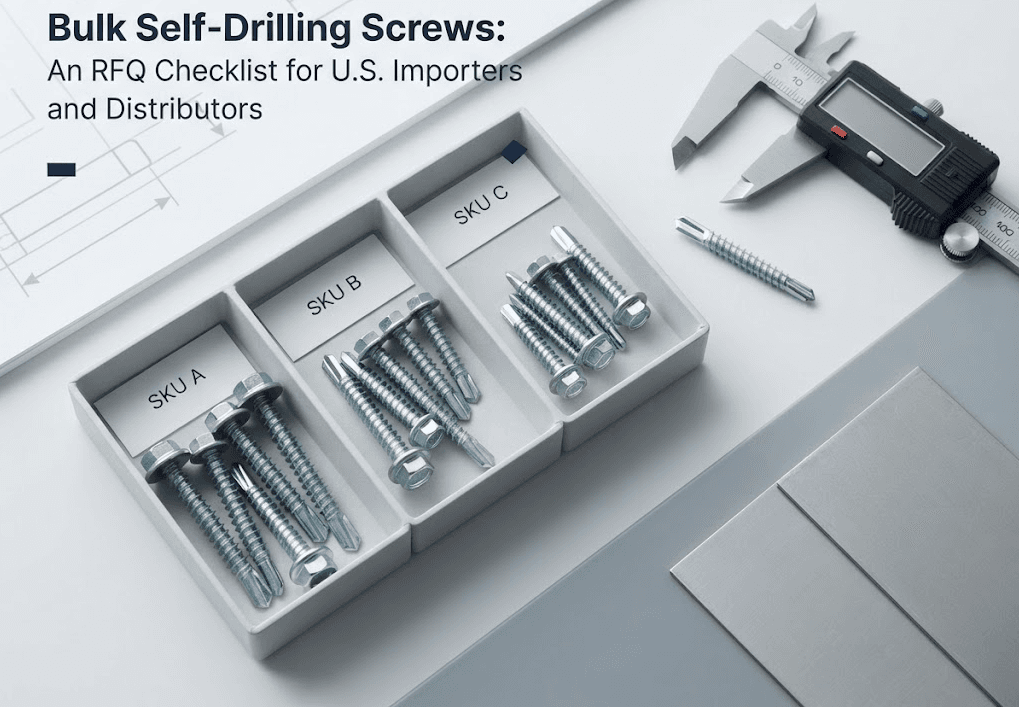
Bulk Self-Drilling Screws: An RFQ Checklist for U.S. Importers and Distributors
When sourcing bulk self-drilling screws, a unit price is only useful if you know exactly what it covers. Two quotations may appear to describe the same product while differing in dimensions, coating, packaging, or delivery conditions. For U.S. importers and distributors managing several SKUs, those differences can make supplier comparisons difficult. A clear request for quotation—an RFQ—helps suppliers understand your requirements and gives your purchasing team a consistent basis for reviewing their offers. This checklist explains what to include, which details need confirmation, and how to turn an initial inquiry into a specification that both buyer and supplier can review.
Want to know more?
Get in touch with us for more information about our services and products.