

The 2027 Fastener Demand Map: Data Centers, Energy and Industrial Projects

Han Congming
AuthorWith experience in screw and fastener manufacturing and sales, we operate our own production facility with stable large-scale capacity. We are specialists in self-drilling screws, drywall screws, chipboard screws, machine screws, bolts, and customized fasteners for construction and industrial applications.
The 2027 fastener outlook is not a broad recovery. It is a map of project pockets—and the strongest pockets are data centers, energy and selected industrial work.
The direction is already visible in late-2026 company results. Hilti reported local-currency sales growth of 5.9% in the first eight months of 2026, with double-digit growth in the Americas and Asia Pacific, while describing traditional construction as soft. LISI’s aerospace sales rose 14.3% in the first nine months, but its automotive sales fell 5.2%. Bossard’s third-quarter sales grew 12%, helped by data-center demand in the Americas and semiconductor and electronics expansion in Asia.
Those are not three versions of the same story. They are three different demand signals. For fastener buyers, the useful question for 2027 is not “Is the market growing?” It is “Which project type is moving into procurement, and which fastening assembly does it actually need?”
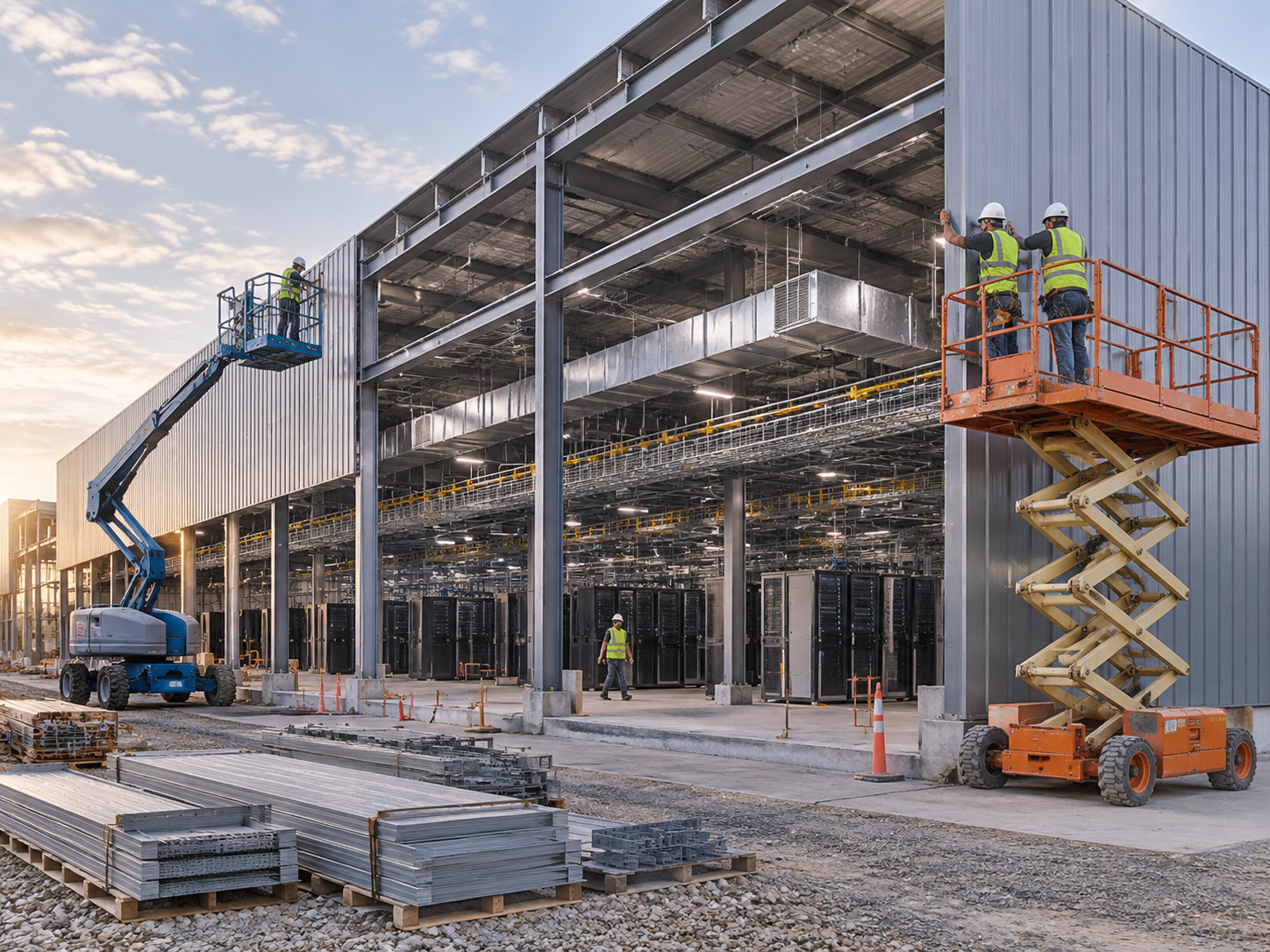
The map is narrower than the headline
Hilti’s first eight months of 2026 show where the growth is coming from. Sales rose 12.2% in the Americas, 10.8% in Asia Pacific and 16.9% in the Middle East and Africa, but only 0.5% in Europe. The company said energy and data-center projects were attracting large investment while the traditional construction market remained soft.
LISI adds a sharper split. Group revenue for the first nine months reached €1.41 billion, up 8%. Aerospace revenue rose 14.3% to €1.09 billion and accelerated 22.5% in the third quarter. Automotive revenue fell 5.2% to €407.1 million, with a 7.4% decline in the third quarter. Global light-vehicle registrations fell 5% in the quarter, including an 18% drop in China.
Bossard shows the regional side of the same shift. Third-quarter sales rose 12% to CHF 296.1 million. The Americas grew 10.2%, Asia grew 31.7% and Europe grew 6.7%. Bossard cited demand from the data-center ecosystem in the Americas, the “Make in India” initiative and capacity expansions in Malaysia’s semiconductor and electronics sectors.
The North American distributor data points in the same direction, but with a supply warning. The seasonally adjusted Fastener Distributor Index was 63.3 in October 2026, marking the 18th consecutive month of expansion. Sixty-three percent of respondents reported sales above seasonal expectations, and 63% expected better conditions in six months. Yet 47% reported slower supplier deliveries, 23% described inventories as too low, and 83% reported higher prices than a year earlier.
That combination—strong demand, tight inventory and slower delivery—is the operating background for 2027. It does not mean every fastener category will grow. It means buyers will compete for the specifications and delivery slots tied to the projects that are actually moving.
Data centers: visible demand, but not one product
Data centers are the most visible demand pocket, but “data-center fastener” is not a specification. The demand appears across several different assemblies.
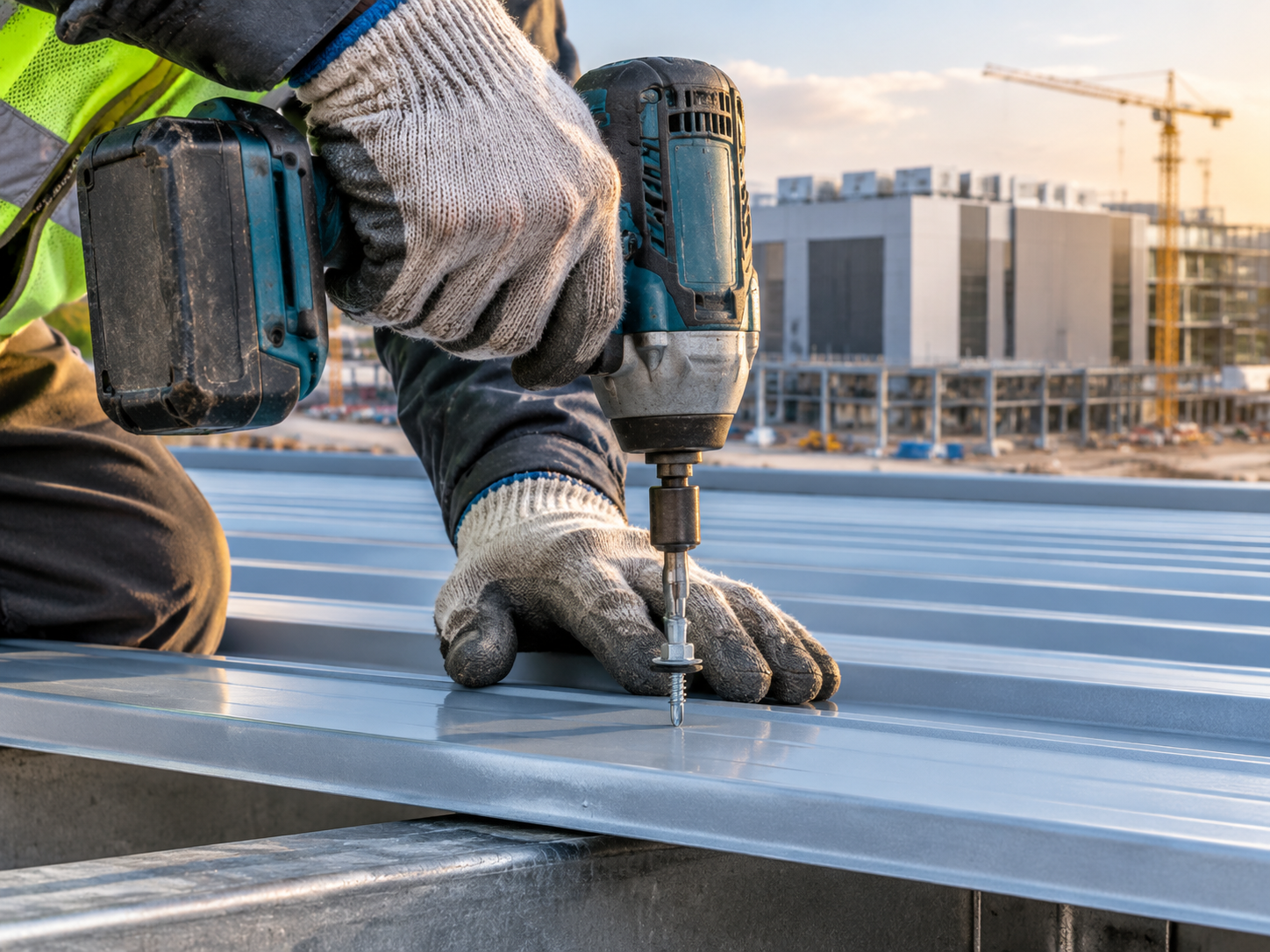
The building envelope may use metal roof and wall panels, sandwich panels and sealing washers. Interior fit-out may use light-gauge steel framing, ceilings, equipment screens and access panels. Mechanical and electrical areas may use cable-tray and conduit supports, HVAC supports, cabinet frames and equipment enclosures. Outdoor or roof-mounted equipment adds corrosion, sealing and service-access requirements.
Self-drilling screws can fit some of these connections, particularly light-gauge steel, sheet-metal assemblies and non-structural supports. They do not replace structural bolts, engineered seismic connections, fire-rated assemblies or the project’s specified fastening schedule. The project specification still decides the substrate, coating, washer, spacing and approval path.
Project stage matters as much as project type. A data center that is under construction may release orders within weeks. A project that is awarded but not released may need samples and submittals first. A project still in planning may disappear, change scope or move to another region. Buyers should ask for the stage, the awarded package and the expected release date before treating a pipeline as demand.
Energy: the second leg of the same buildout
Energy is not a separate story from data centers. Data centers need power, and power projects need the same kinds of fastening-intensive construction: generation equipment, transmission and distribution infrastructure, substations, control buildings, cable support, enclosures and metal building envelopes.
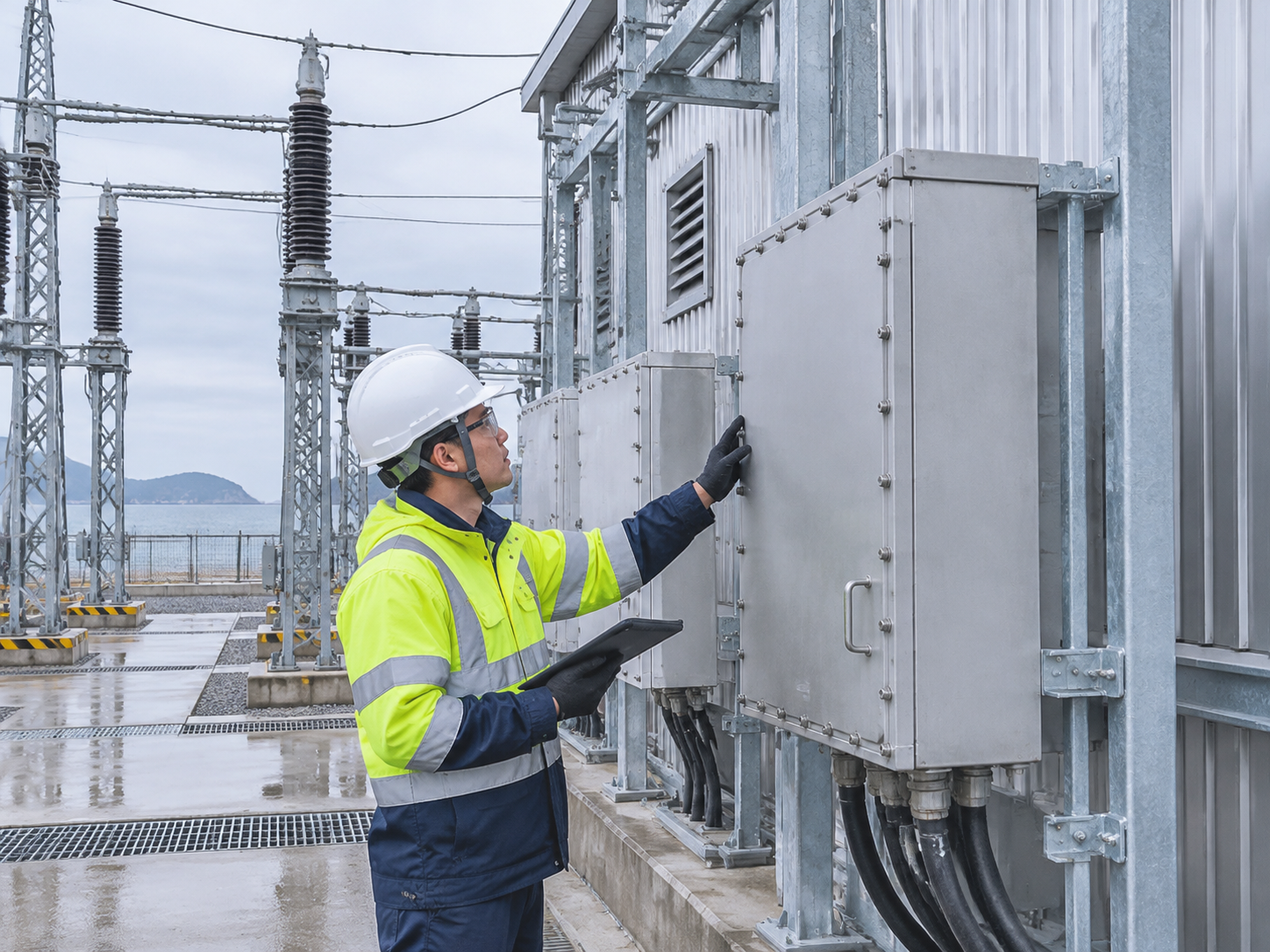
Hilti’s comments about energy investment are a demand signal, not a product recommendation. The fastener opportunity depends on the package. A substation building, a gas-turbine enclosure, a battery-storage compound and a renewable-energy project do not use the same connection details. Corrosion exposure, fire and safety requirements, equipment vibration and maintenance access all change the specification.
Energy projects also tend to be document-heavy. Buyers may need material certificates, coating data, batch traceability, packaging labels and project submittals before the first shipment. A supplier that can quote a screw but cannot support the documentation package is not yet a project supplier.
Industrial projects: stronger than residential, not uniform
The industrial side of the map is broader than data centers. Bossard’s Americas and Asia growth shows that manufacturing, electronics and electrical supply chains are still investing. The Fastener Distributor Index adds evidence from the channel: respondents cited record bookings, new business and growth tied to construction and data centers.
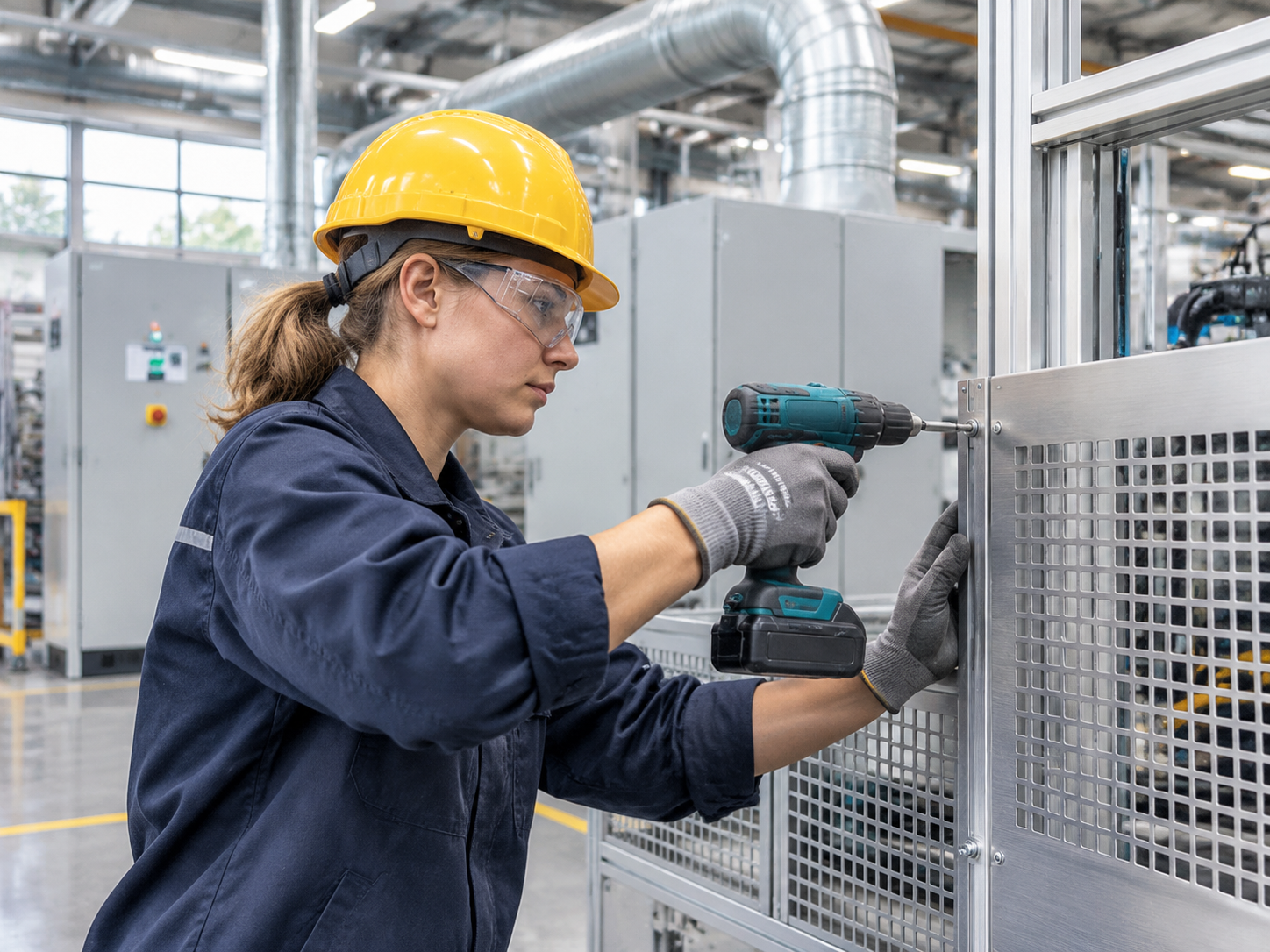
LISI’s aerospace result shows the high-value end of the same trend. Aerospace demand is strong, but it is not a direct market for standard self-drilling screws. It is a reminder that “industrial” covers very different levels of precision, certification and traceability. A supplier should not use an aerospace growth headline to promote a construction screw.
The practical industrial opportunities for self-drilling and self-tapping fasteners are more specific: light-gauge steel frames, machine guards, access panels, HVAC and duct supports, cable-tray brackets, electrical enclosures, shelving and warehouse fit-out. These applications still need the correct point, thread, length, coating and washer. The difference is that the buyer often has a drawing, a line schedule and a maintenance requirement, not just a catalog request.
Where the map is weak
The weak side of the map is equally important. Hilti described traditional construction as soft. LISI’s automotive decline and the 18% drop in China light-vehicle registrations show that automotive cannot be treated as a growth engine for 2027. General residential and commercial construction does not have the same visible project pull as data centers and energy.
That does not mean replacement and retrofit demand disappears. Metal roofs, industrial maintenance and building repairs still generate fastener orders. But those are replacement-driven purchases, not evidence of a broad new-build cycle. A distributor that builds inventory around a general “construction recovery” assumption may end up with the wrong SKUs.
The 2027 demand map
| Segment | Late-2026 signal | Where fasteners fit | What the buyer should confirm |
|---|---|---|---|
| Data centers | Hilti and Bossard cite data-center investment; distributor respondents cite data-center demand | Light-gauge framing, cable-tray and conduit supports, HVAC, equipment enclosures, metal roof/wall, EPDM washers | Project stage, substrate and thickness, exposure, fire/smoke requirements, submittal and batch documents |
| Energy and power | Hilti cites energy investment; data-center growth requires power infrastructure | Equipment anchoring, cable support, enclosures, metal buildings, pipe and duct supports | Package scope, corrosion class, equipment vibration, project specification and inspection requirements |
| Industrial and electronics | Bossard Americas +10.2%, Asia +31.7%; distributor bookings and new business | Light steel, guards, access panels, HVAC, electrical enclosures, shelving and fit-out | Drawing, line schedule, coating, washer, packaging and replenishment frequency |
| Aerospace and high-value industrial | LISI aerospace +14.3%, Q3 +22.5% | Precision fasteners and assembly components, not standard construction screws | Material, process, traceability, qualification and customer-approved specification |
| Residential, general commercial and automotive | Hilti says traditional construction is soft; LISI automotive -5.2%; China registrations -18% | Limited pull for broad standard-screw inventory; replacement and retrofit only where specified | Do not build a broad inventory case on a general recovery headline |
What buyers should do now
The response to this map is not “buy more of everything.” It is to build SKU clusters around the project types that are moving and to qualify each project before committing inventory.
Start with the project stage. Ask whether the package is in planning, awarded, released for procurement or already under construction. Then ask for the fastening assembly, not just the screw description: substrate, total thickness, indoor or outdoor exposure, coating, washer, head style, installation tool and required documents.
Use mixed-SKU replenishment rather than one safety-stock number. A data-center package, an energy enclosure and an industrial fit-out project may all use self-drilling screws, but not the same diameters, lengths, washers or coatings. A distributor that applies one inventory rule across all three will either run out of the fast movers or carry too much of the slow ones.
Expect more branch-level service from distributors. Multi-branch consolidation and VMI programs put more emphasis on fill rate, packaging, labels, replenishment data and urgent branch support. A supplier that can only quote a factory price may be compared unfavorably with one that can support the distributor’s stock and service model.
Finally, keep the evidence package with the quote. Material certificates, dimensional reports, coating specifications, batch traceability, packaging and labeling, and applicable test reports matter more in project work than a generic “corrosion-resistant” claim. If a document is not available, say so before the customer discovers the gap.
Tariffs change cost, not demand
Trade policy is a separate map. The U.S. Trade Representative’s November 2026 proposal to add Section 301 tariffs of 15%–40% on imports from 14 economies—including proposed rates of 20% for China and 35% for Vietnam—could change sourcing and landed cost. It does not change the number of fasteners a data center, substation or industrial building needs.
That distinction matters for planning. A tariff change may push a buyer to qualify a second origin, renegotiate a price or adjust an Incoterm. It does not create a new project or make a slow project start faster. Keep the demand forecast and the landed-cost model separate, and confirm the final tariff treatment with the importer of record or a trade professional.
Conclusion: plan by project, not by headline
The 2027 fastener market is not a single rising line. It is a set of project pockets. Data centers, energy, industrial electronics and aerospace show the clearest demand signals. Residential construction, general commercial work and automotive remain weak. The suppliers that benefit will be those that can match the application, document the batch and replenish the right SKU mix—not those that treat “data center” or “energy” as a universal product claim.
If you are preparing a 2027 project package, send the application, substrate, exposure, target quantity and required documents. ScrewTrade can help review the fastening assembly and identify which product family needs to be confirmed before quoting or sampling.
Related News
Other news you might be interested in

What Is a Bi-Metal Screw and Why Does Aluminum Roofing Need One?
a bi-metal screw is one fastener made from two metals with different jobs. In roofing, the common construction is a stainless steel head and body with a hardened carbon steel drill point and lead thread. The stainless section resists corrosion on the exposed roof; the hardened point drills the steel purlin, girt or frame. Aluminum roofing often calls for this combination when an aluminum panel is fixed directly to a steel substructure, because the panel is soft and corrosion-resistant, but the screw still has to drill steel and survive the weather. Bi-metal is not a guarantee: the stainless grade, point capacity, coating, washer and aluminum-to-steel detail still have to be specified.
Why Hex Washer Head Screws Are the Go To Choice for Steel Structures?
Steel structures are held together by a hierarchy of connections: primary frame members designed for moment and shear, secondary members that carry the envelope, and thousands of small attachments that keep panels, brackets and services in place.Hex washer head screws live mostly in that third group, and at the boundary of the second. That is why they appear everywhere on a steel job while still not being a universal structural fastener.
Want to know more?
Get in touch with us for more information about our services and products.