
What is self tapping screw?

Han Congming
AuthorWith experience in screw and fastener manufacturing and sales, we operate our own production facility with stable large-scale capacity. We are specialists in self-drilling screws, drywall screws, chipboard screws, machine screws, bolts, and customized fasteners for construction and industrial applications.
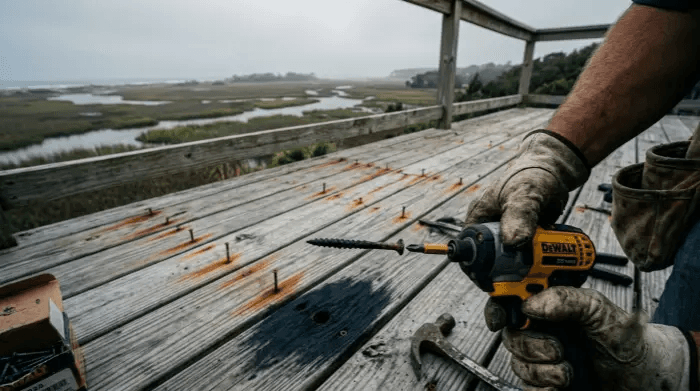
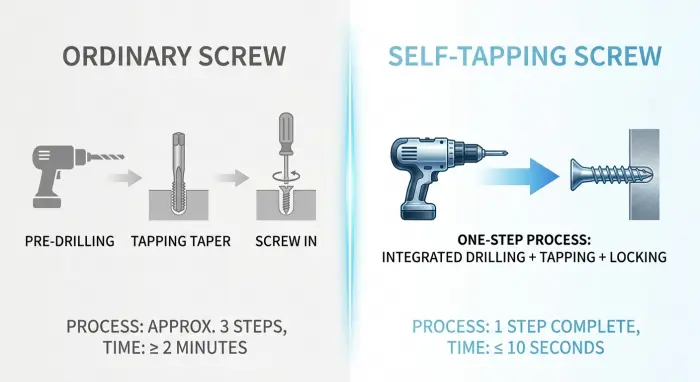
Different from ordinary machine screws, self-tapping screws are designed with a tapered thread-forming point that cuts or deforms mating threads in a pre-drilled pilot hole. During installation, the screw is driven into a pre-drilled pilot hole and forms mating threads by displacing or cutting the surrounding material, locking the connection tightly in one step, locking the connection tightly in one step. This unique working principle effectively shortens construction cycles and reduces manual operation errors. Whether for large-scale engineering projects or small batch product assembly, self-tapping screws can significantly improve overall working efficiency, which is why they are widely adopted across various industries worldwide.
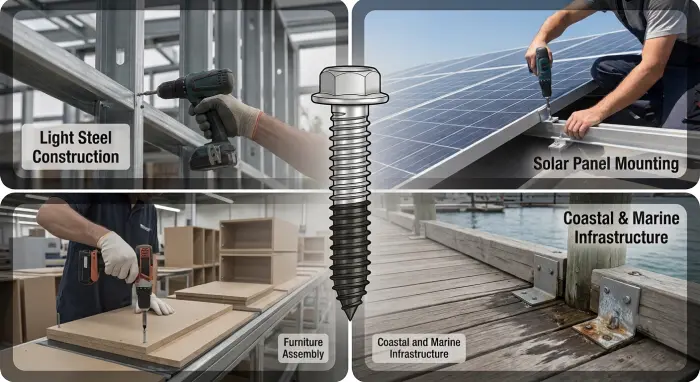
The practical value of self-tapping screws is reflected in their strong environmental adaptability and stable fastening performance. Common application scenarios cover indoor daily assembly, light steel structure fixation, outdoor building construction, solar equipment installation and coastal engineering projects. In humid, high-salt and long-term exposed environments, high-quality self-tapping screws can resist loosening, corrosion, and structural degradation over extended service life, ensuring the long-term stability of structural connections. Different material specifications and structural designs also enable the product to adapt to diverse material hardness and installation requirements.
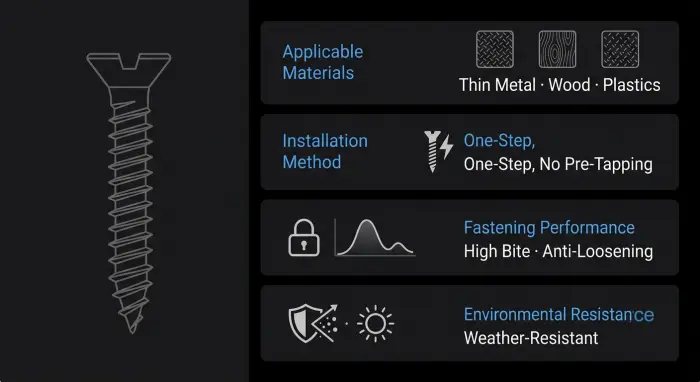
| Key Parameter | Standard Self-Tapping Screw Features | Applicable Materials |
| Installation Method | No pre-tapping required; a pilot hole is recommended for most applications | Pre-drilled metal, plastic, wood, and fiber composites |
| Fastening Performance | High thread engagement and clamping force, anti-loosening thread design | Solid wood, density board, plastic parts |
| Environmental Resistance | Basic corrosion-resistant and weather-resistant properties | Indoor & conventional outdoor scenarios |
| Service Life | Stable connection for long-term daily use | General assembly and construction projects |
In practical industrial applications, the quality difference of self-tapping screws directly affects project safety and service life. Inferior products often suffer from insufficient drilling force, thread slipping, easy corrosion and short service life, which may lead to structural loosening and subsequent maintenance costs. Therefore, choosing high-standard self-tapping screws is the key to guaranteeing assembly quality and project durability for manufacturers and engineering contractors
Related News
Other news you might be interested in
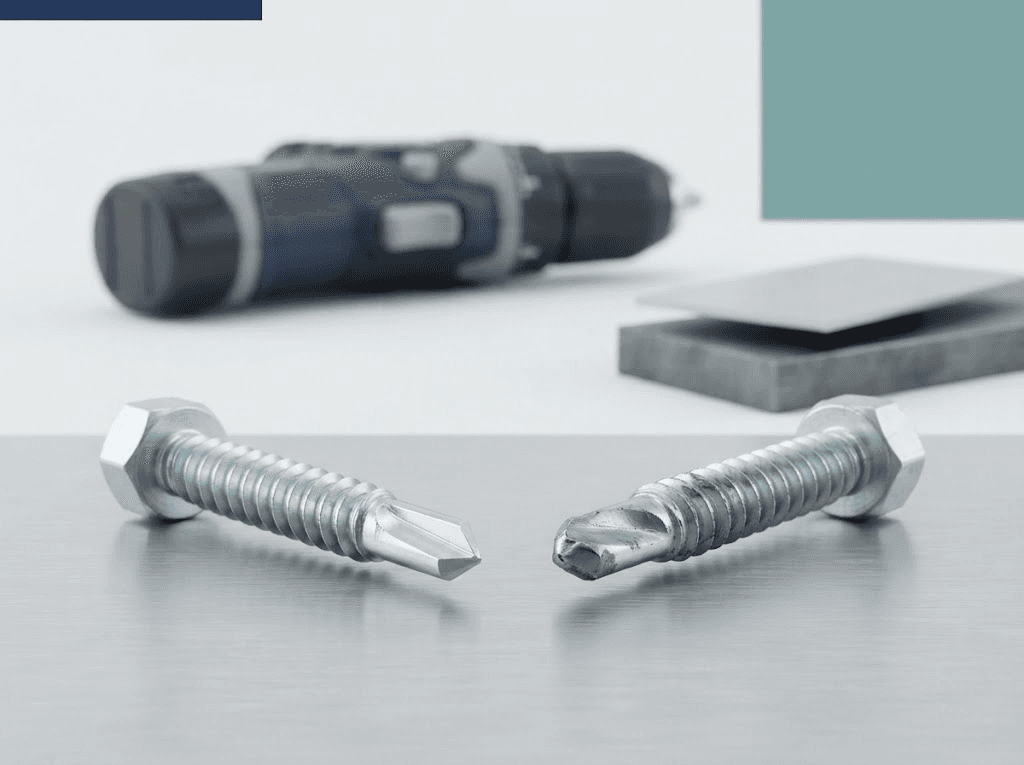
Why Self-Drilling Screws Fail to Drill: A Substrate and Installation Checklist
When a self-drilling screw spins against steel without making progress, the purchasing decision becomes urgent: should the installer change the tool settings, should the buyer order a different screw, or should the supplier investigate the batch?A useful diagnosis starts by identifying exactly where drilling stops. Record the material at that point, check the selected screw against the assembly, and then compare installation conditions. This approach gives buyers a clearer basis for deciding what to change and what evidence to request.
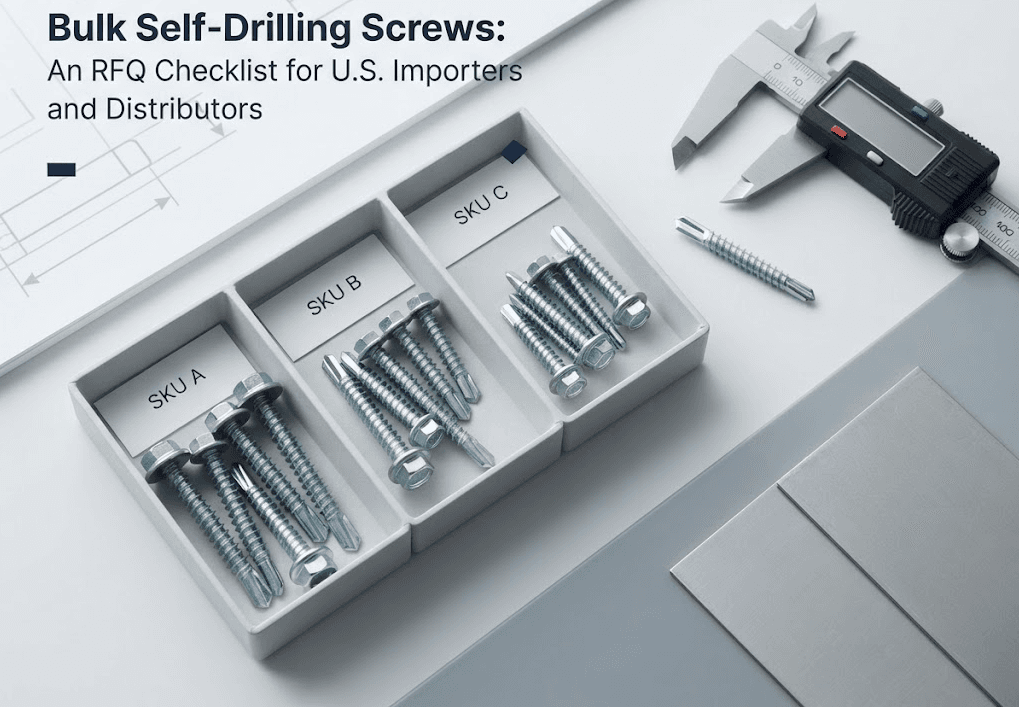
Bulk Self-Drilling Screws: An RFQ Checklist for U.S. Importers and Distributors
When sourcing bulk self-drilling screws, a unit price is only useful if you know exactly what it covers. Two quotations may appear to describe the same product while differing in dimensions, coating, packaging, or delivery conditions. For U.S. importers and distributors managing several SKUs, those differences can make supplier comparisons difficult. A clear request for quotation—an RFQ—helps suppliers understand your requirements and gives your purchasing team a consistent basis for reviewing their offers. This checklist explains what to include, which details need confirmation, and how to turn an initial inquiry into a specification that both buyer and supplier can review.
Want to know more?
Get in touch with us for more information about our services and products.