
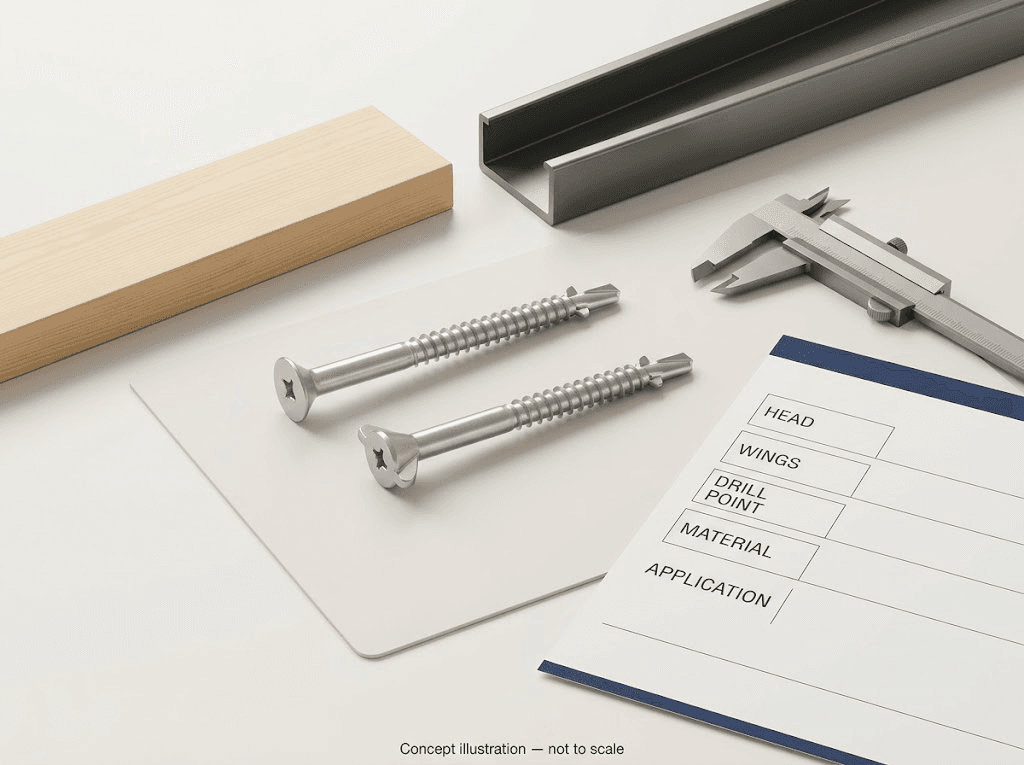
Winged Self-Drilling Screws for Wood-to-Steel: When Do You Need Them?

Han Congming
AuthorWith experience in screw and fastener manufacturing and sales, we operate our own production facility with stable large-scale capacity. We are specialists in self-drilling screws, drywall screws, chipboard screws, machine screws, bolts, and customized fasteners for construction and industrial applications.
Screws can penetrate through wooden boards and drill into steel without creating the expected connection. If the threads are connected to the wood before drilling and tapping the steel, the board may not be able to be tightly pulled onto the frame. Choosing another screw with the same diameter and longer body may not necessarily solve this problem.
Winged self tapping screws are a suitable choice for connecting wood and steel. Before the screws are joined to the steel, their wings leave gaps in the wood. The purchasing decision is whether the gap is suitable for your assembly and whether the specific fasteners are designed for the materials and thickness involved.
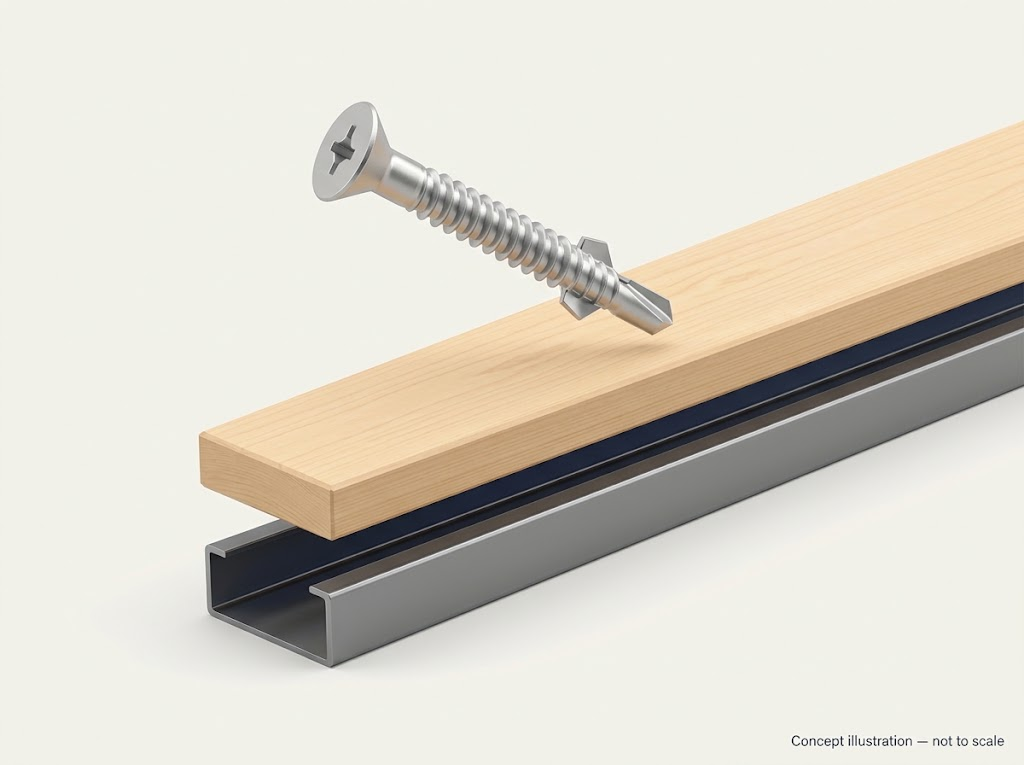
What are wings actually used for?
On the winged wood to steel screw, the small protrusion near the drill tip makes the wood channel wider than the thread. This allows the screw to pass through the wood without relying on the thread engagement there. The design of the wing is to break upon contact with suitable steel, allowing the tip and threads to complete the fastening of the steel side.
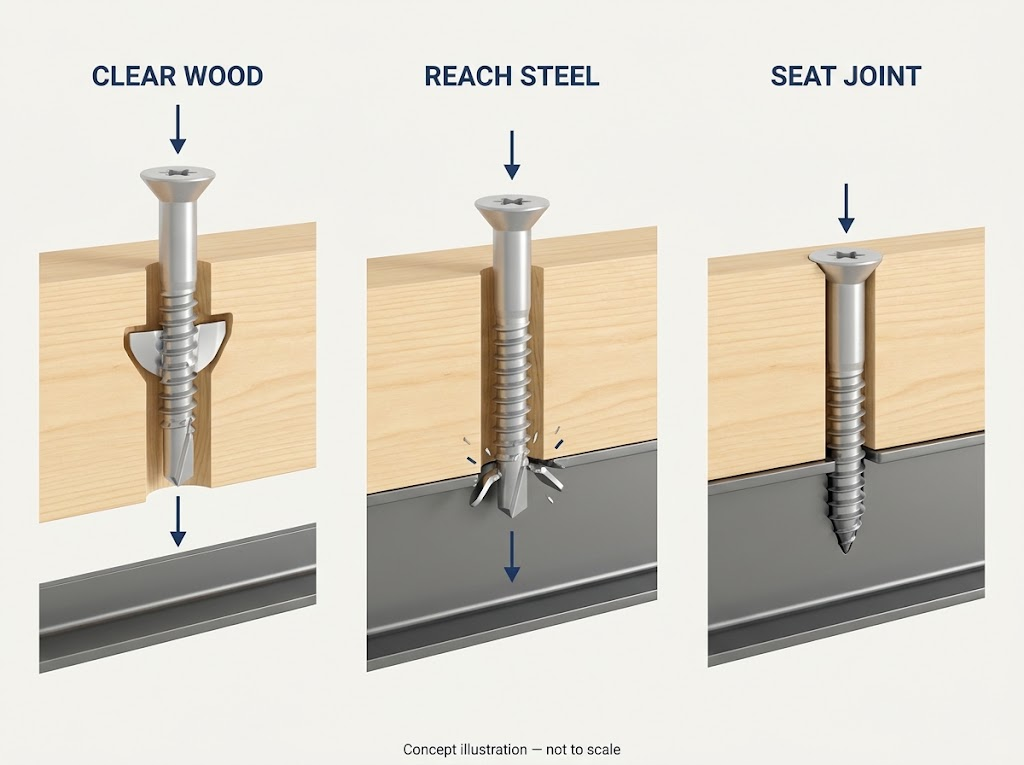
This sequence helps the head pull the wood towards the steel support. Simpson Strong Tie described the operation of TBG wood on steel screws; EJOT described the similar drilling and separation actions of its WDLS fasteners. These are recorded product applications, not universal specifications for every winged screw.
Wings, drill tips, threads, and heads perform different tasks. Relying solely on countersunk holes cannot identify wood steel screws, and the wing profile cannot determine their drilling ability.
When should wing screws be considered?
When wooden components must be fixed to steel and the chosen fastening method requires clearance through the wood, and screws are anchored in the steel, consider using winged self drilling screws.
The important starting point is the cross-section of the joint. Identify wood or panels, supporting steel, and any intermediate layers. Then inquire if the proposed screws for this combination have been recorded. Manufacturers offer different wood metal fasteners with varying head styles, connection ranges, and drilling capabilities; Merely relying on category names cannot identify the correct project.
For buyers who compare countersunk self tapping screws with wing blades, a flat head may also be a requirement. Confirm how the proposed leader will serve on the actual board of directors. Don't think that choosing a countersunk hole shape can establish an acceptable finished connection.
A useful purchasing question is:
Does this screw meet our requirements for sheet metal, steel brackets, and head fixation? What product information supports this suggestion?
When are wings the wrong choice criteria?
Wood to wood joints and steel to steel joints have different fastening tasks. For both cases, choose a documented fastener instead of a winged wood to steel screw simply because its diameter and length appear suitable.
Special care is required for connecting structural wooden boards. The gap passing through the panel will affect the way the load is transmitted through the connection. In Simpson Strong Tie's testing of specific wood and cold-formed steel shear wall components, wing screws produced lower component hardness than non wing screws. This discovery applies to the testing configuration; This is a reason to follow the specified connection design, rather than claiming that all wing screws are not suitable for structural engineering.
For load-bearing connections of structural sheaths or other designs, the required fastener specifications and connection evidence should be obtained before considering replacement. Based solely on this observation, a neatly installed screw is not a validated structural substitute.
What should buyers confirm before placing an order?
For wood to steel self drilling screws, record the following information based on the supplier's exact part number.
| Selection point | Information to confirm |
|---|---|
| Timber or panel | Material description, thickness and any relevant treatment or surface layer |
| Steel support | Material specification, thickness and any additional steel layers in the drilling path |
| Attachment range | Whether the complete assembly fits the fastener’s documented clamping or attachment range |
| Drilling capability | The proposed item’s permitted substrate range, rather than an assumption based on screw diameter |
| Head and drive | Required head seating, available clearance and compatible driver |
| Exposure | Indoor or outdoor conditions and any project requirements for the complete material combination |
| Connection requirements | Applicable drawings, performance evidence and restrictions on substitutions |
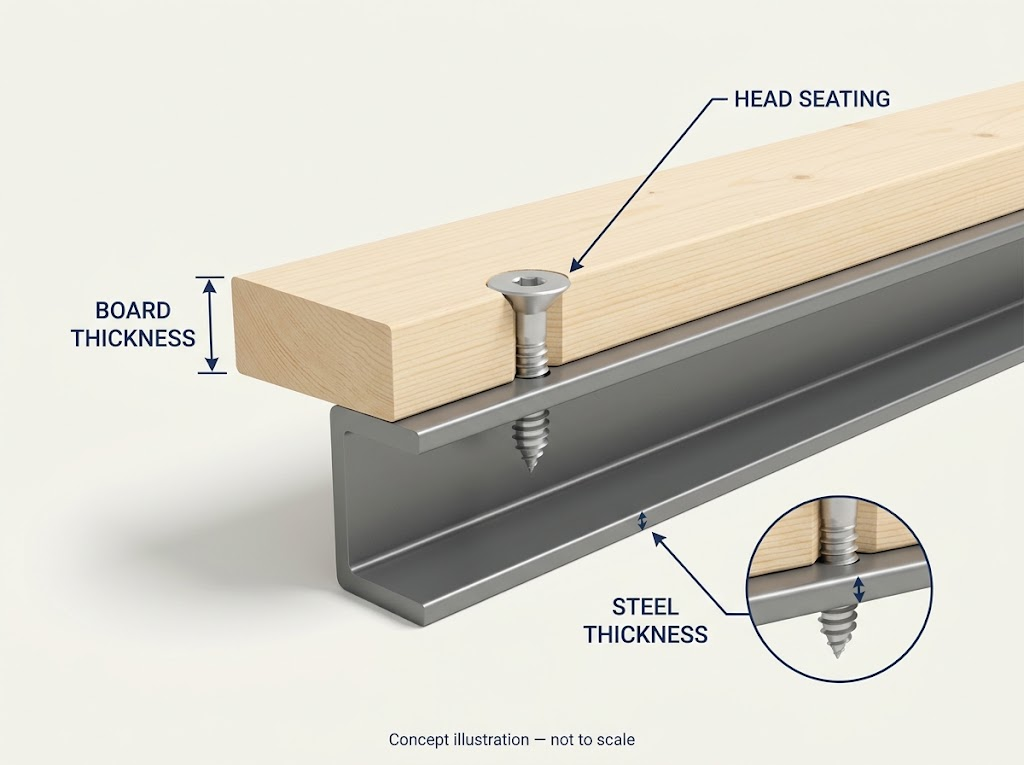
Maintain a separation between drilling capacity and attachment thickness. The thickness of steel that can be drilled at a point is different from the thickness of material that can be connected by screws. ITW Buildex has listed these as separate fields in its wood to metal series, while EJOT has released separate clamping ranges and drilling restrictions for its WDLS products.
Request drawings and installation instructions for the quoted project. Do not use thickness limitations, screw lengths, or tool settings from other manufacturers as acceptance criteria for the proposed supply.
How to check for suggested alternative solutions?
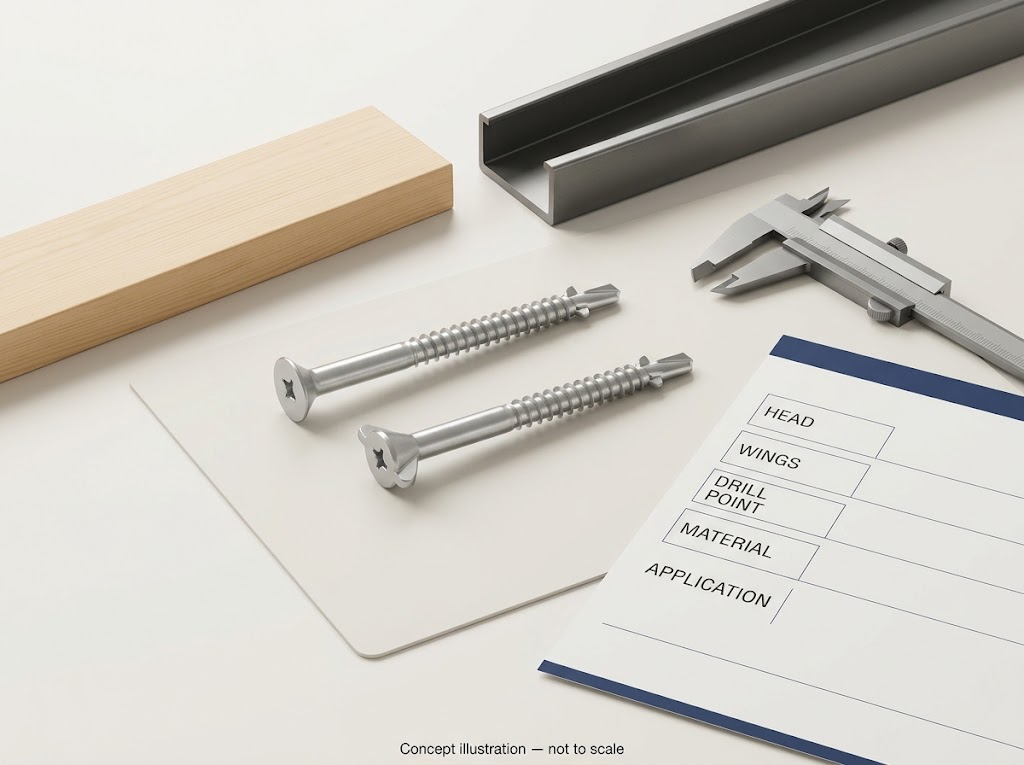
When suppliers propose alternative solutions, compare the complete specifications before comparing prices. Record changes in head, wing geometry, drill tip, threads, materials, surface treatment, and application scope.
If application testing is required, please discuss its purpose and acceptance conditions with the technical review personnel. Use the expected sheet metal and steel, determine the intended screws, and follow their installation instructions. Record whether the assembled seats meet the requirements and retain photos and samples for review.
Focus the inspection on procurement decisions: Does the proposed project match the expected assembly? Satisfactory installation tests cannot replace the required connection calculations, evaluation documents, or other performance evidence.
Send the connection details along with your query
The investigation into the "winged Tek screws" has left important questions. Provide suppliers with connection diagrams or clear cross-sections, plate and steel details, required head styles, usage environments, quantities, and any specified performance requirements.
The product catalog of ScrewTrade includes a product listed as ribbed and winged countersunk self drilling screws. Use this list as a starting point for discussing the required configurations, and then ask which available projects and support information match your application.
Send ScrewTrade your connection details and quantity by size. Before approving bulk orders, it is required to confirm the proposed screw references, application restrictions, and related product documentation.
Related News
Other news you might be interested in
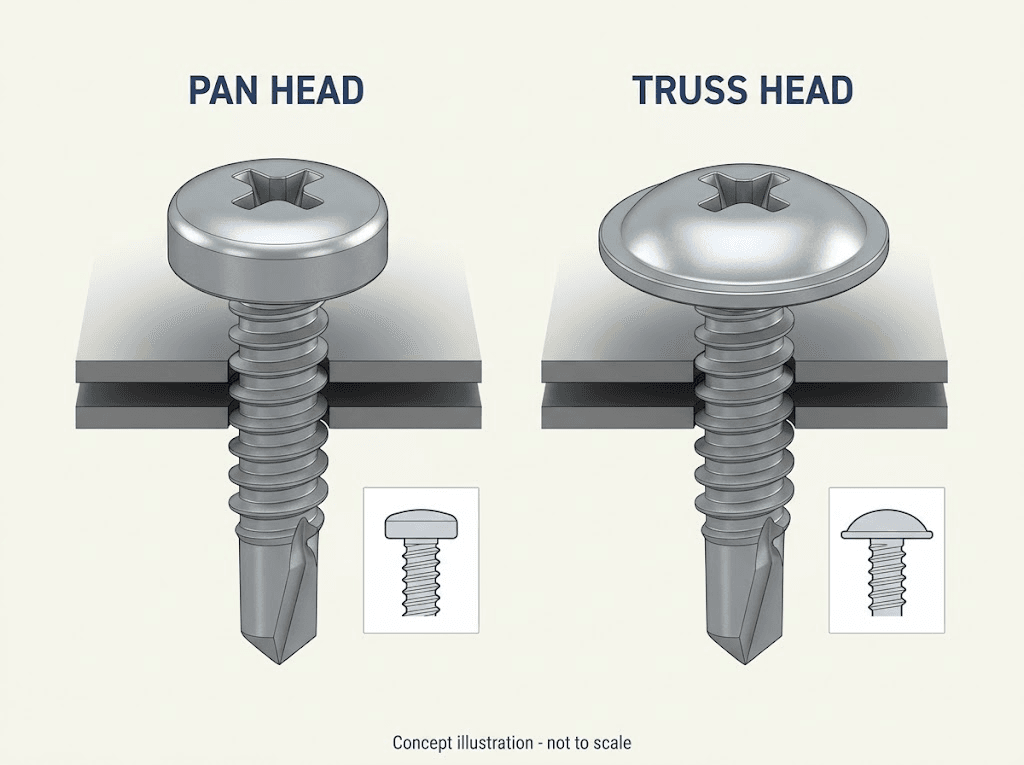
Pan Head vs. Truss Head Self-Drilling Screws: Choosing the Head for Sheet-Metal Assemblies
Two self-drilling screws can have the same nominal diameter and length but fit a sheet-metal assembly differently. One head may sit comfortably beside a folded edge, while the other overlaps it. A screw that clears the panel may still interfere with the cover fitted above it. For buyers comparing pan head and truss head self-drilling screws, the useful question is: which head fits the joint, bears on the intended surface and leaves room for assembly and service? Answer that question before approving a substitute or placing a bulk order.
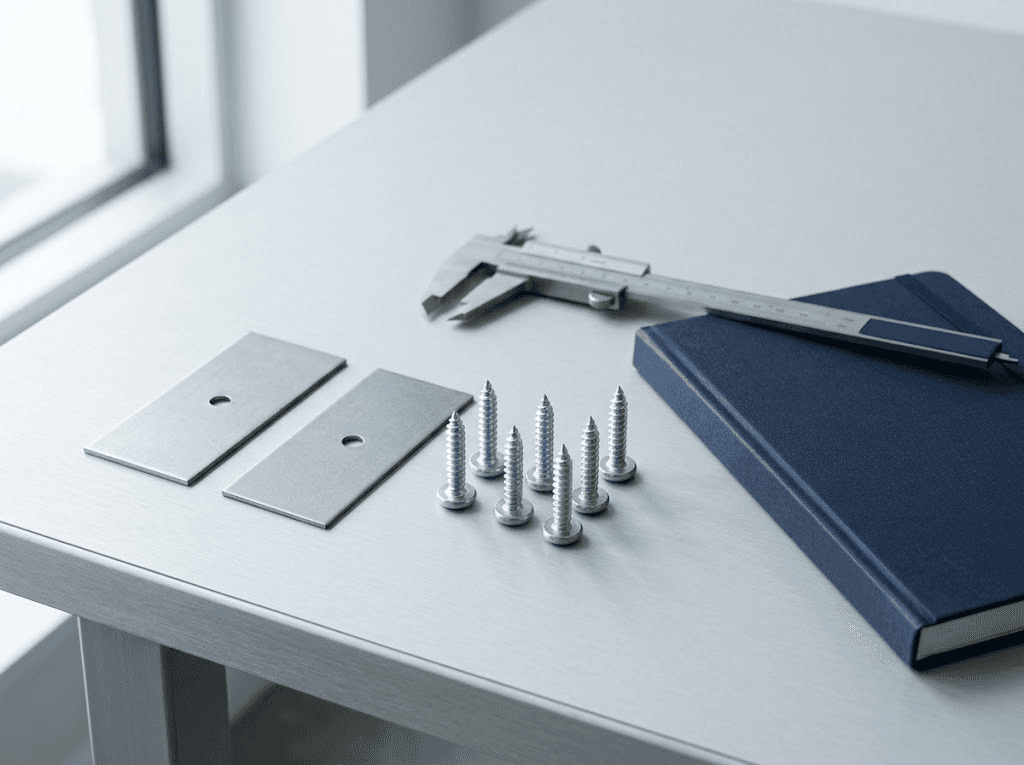
Self-Tapping Screws for Metal: A Pilot-Hole and Trial-Assembly Checklist
A self-tapping screw for metal is not fully specified by its diameter and length. Before placing a production order, the buyer needs to know whether the proposed screw, prepared hole, sheet material, and installation process work together.That becomes especially important when a sample is difficult to drive, a screw spins before the parts are clamped, or two suppliers recommend different pilot-hole sizes. The next step is to establish what each recommendation assumes and test the proposed combination under agreed conditions.This checklist helps purchasing, engineering, and quality teams prepare the application details, compare supplier recommendations, and record a trial assembly before approving bulk supply.
Want to know more?
Get in touch with us for more information about our services and products.