
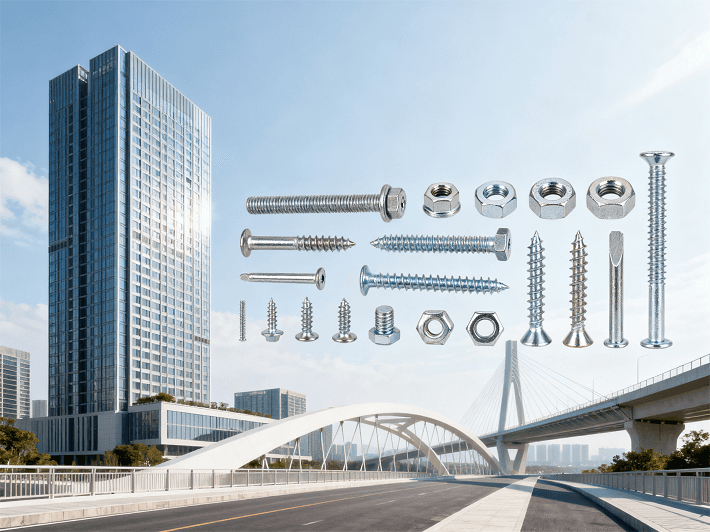
اختيار براغي البناء المناسبة لمشاريع البناء الحديثة

Han Congming
الكاتبلدينا خبرة في تصنيع وبيع البراغي والمثبتات، وندير منشأة إنتاج خاصة بنا بقدرة إنتاجية مستقرة على نطاق واسع. نحن متخصصون في براغي الحفر الذاتي، وبراغي الجدران الجافة، وبراغي ألواح الخشب، والبراغي الميكانيكية، والمسامير، والمثبتات المخصصة لتطبيقات البناء والصناعة.
Modern building projects are increasingly moving from traditional on-site construction toward prefabricated, modular, and system-based construction. With the development of light-gauge steel structures, metal building envelopes, sandwich panels, and building mechanical systems, screws are no longer simple connection components. They have become essential to structural safety, waterproofing, construction efficiency, and service life.
For this reason, construction screws should be selected according to the building system, material combination, engineering requirements, installation conditions, and supply chain capabilities—not simply according to price or a single dimensional specification.
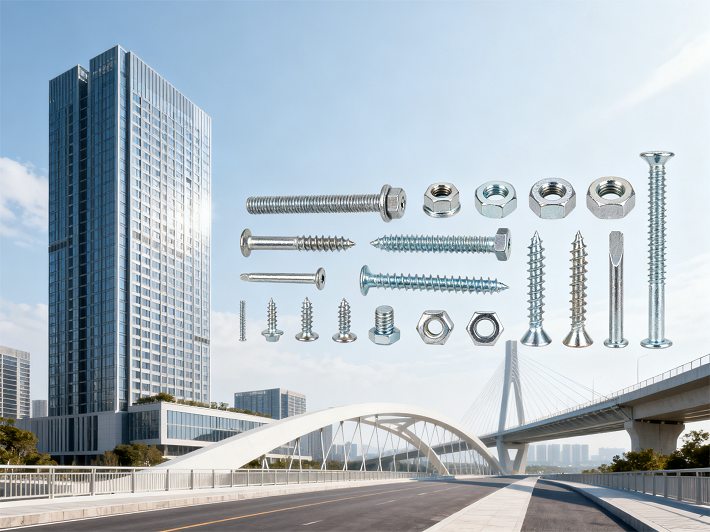
What New Requirements Does the Modern Construction Industry Have for Fastening Systems?
The Development of Prefabricated, Modular, and Light-Gauge Steel Buildings
The development of prefabricated, modular, and light-gauge steel buildings requires building components to maintain a high level of consistency between factory production and on-site installation. Fasteners must provide stable dimensions, reliable drilling performance, and high installation efficiency.
In these projects, construction fasteners, building fastening systems, and structural fastening systems must support not only basic connections but also high-volume construction, standardized installation, and rapid assembly.
In light-gauge steel framing, even small dimensional deviations can affect component positioning, connection strength, and subsequent envelope installation.
The Requirements of Building Envelope Systems for Connection Strength, Waterproofing, and Durability
Modern roofs, walls, and façades perform multiple functions, including wind resistance, weather protection, thermal insulation, and appearance. Once a connection fails, it may cause loose metal panels, water penetration, moisture damage to insulation, or failure of the building envelope.
Therefore, architectural fasteners must provide connection strength, sealing performance, corrosion resistance, and long-term weatherability. For metal roofing and exterior wall projects, metal roofing fasteners and metal cladding fasteners should be selected according to panel thickness, substrate structure, and local climate conditions.
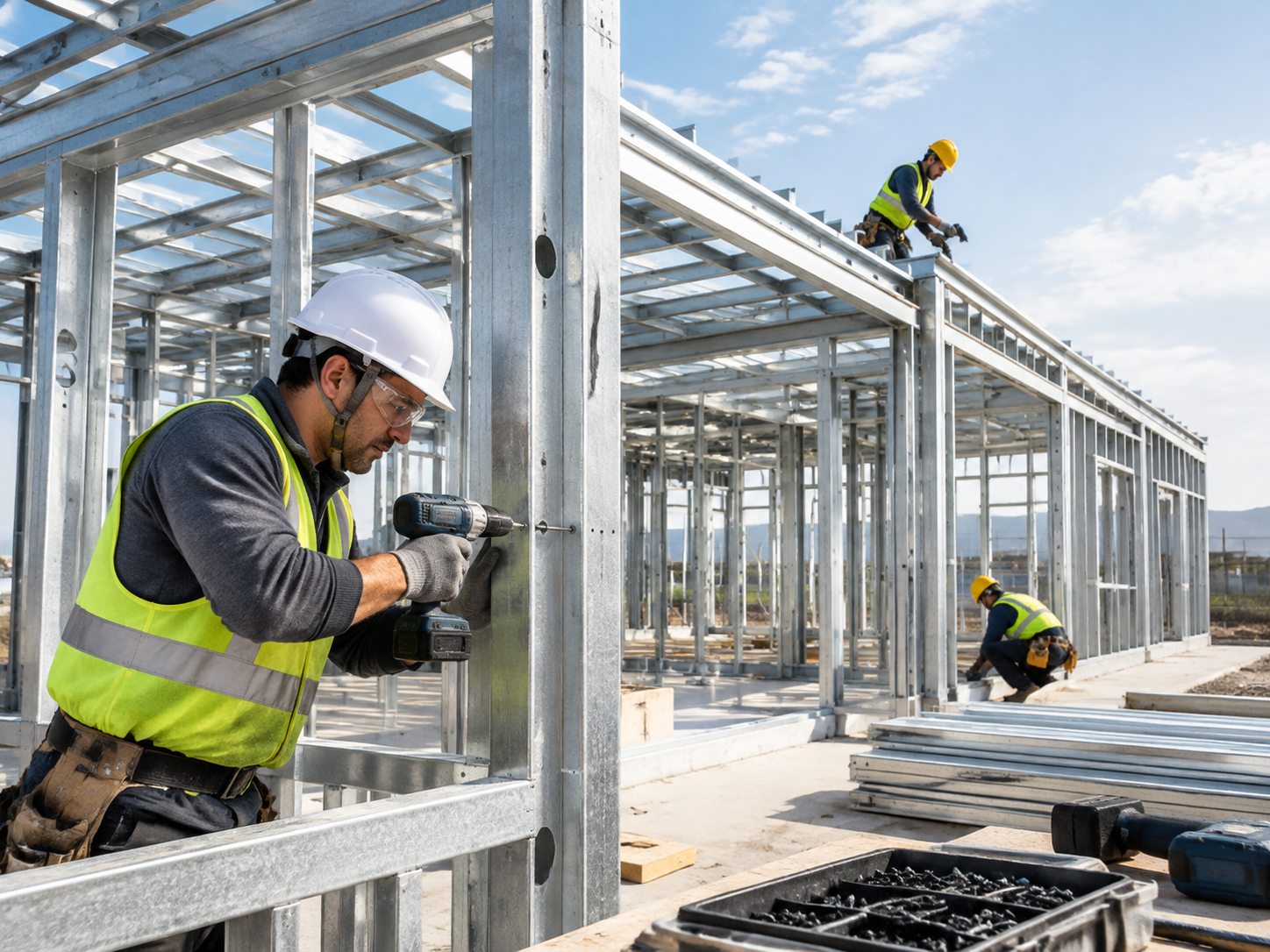
From Purchasing Individual Screws to Complete Fastening System Solutions
Building projects should not normally purchase only one type of screw. Instead, they should develop a complete fastening solution based on the connection materials, installation tools, washers, coatings, and installation methods.
For example, roof installation involves not only metal roofing fasteners, but also sealing washers, corrosion-resistant coatings, screw length, and installation torque. For steel structures and sandwich panel projects, screws, substrates, and installation tools should be evaluated as an integrated system. This reflects the system-based nature of building fastening systems.
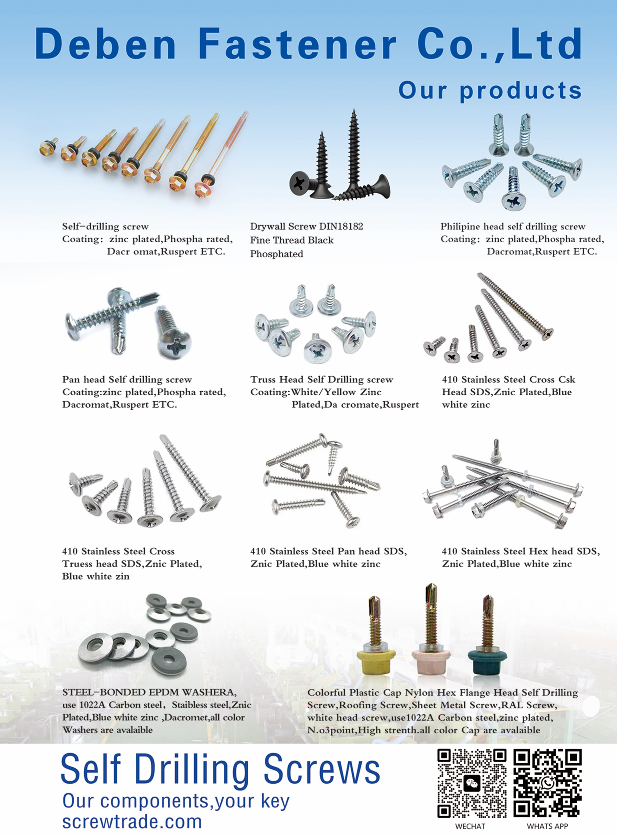
Relevant solutions can be matched through self-drilling screws and other fastening categories according to the specific application.
Main Connection Requirements in Different Building Systems
Steel Structures and Light-Gauge Steel Framing
Steel structures and light-gauge steel framing generally require high tensile, shear, and vibration resistance. When connecting steel sheets, the drill point and thread form should be selected according to the steel thickness to avoid drilling failure or insufficient thread engagement.
In light-gauge steel projects, steel construction fasteners, light gauge steel screws, and steel framing screws should be evaluated for drilling efficiency, connection stability, and consistency during high-volume installation. For thicker steel, the drill point grade and actual penetration capability of the self-drilling screw must also be verified.
Metal Roofing and Metal Wall Systems
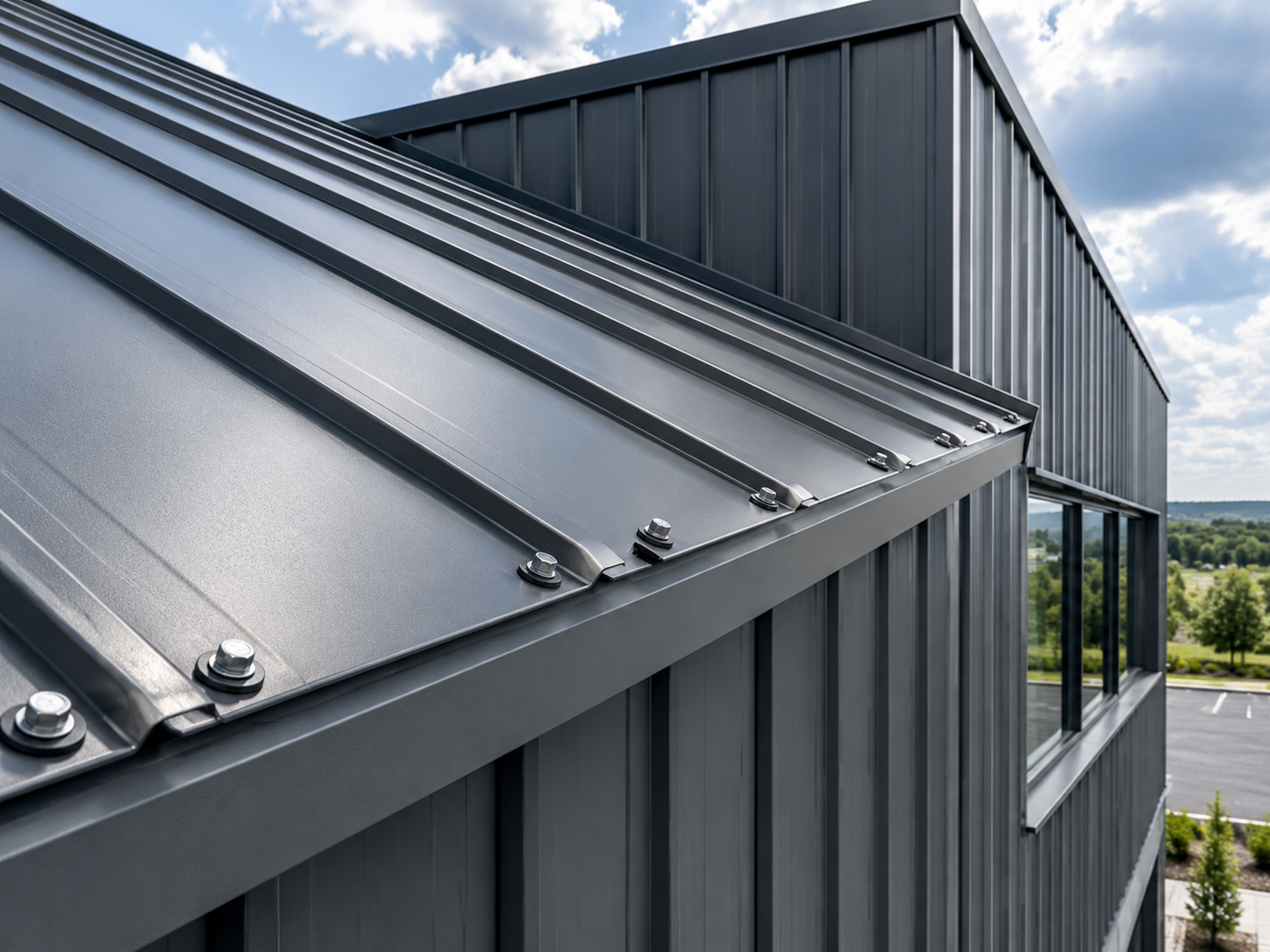
Metal roofing and wall systems usually cover large areas and contain many connection points. They are also exposed to rain, ultraviolet radiation, and temperature changes for extended periods. Selection must therefore consider not only fastening strength but also waterproofing, wind resistance, and corrosion resistance.
Metal roofing fasteners and metal cladding fasteners should be selected according to the metal panel type, purlin or wall girder material, and project environment. For metal-to-metal connections, metal-to-metal fasteners should be evaluated carefully. For metal panels installed over wood substrates, suitable metal-to-wood fasteners are required.
The ScrewTrade guide to metal roofing fasteners places metal-to-metal, metal-to-wood, and sandwich panel fastening within the same engineering selection framework.
Sandwich Panels and Prefabricated Buildings
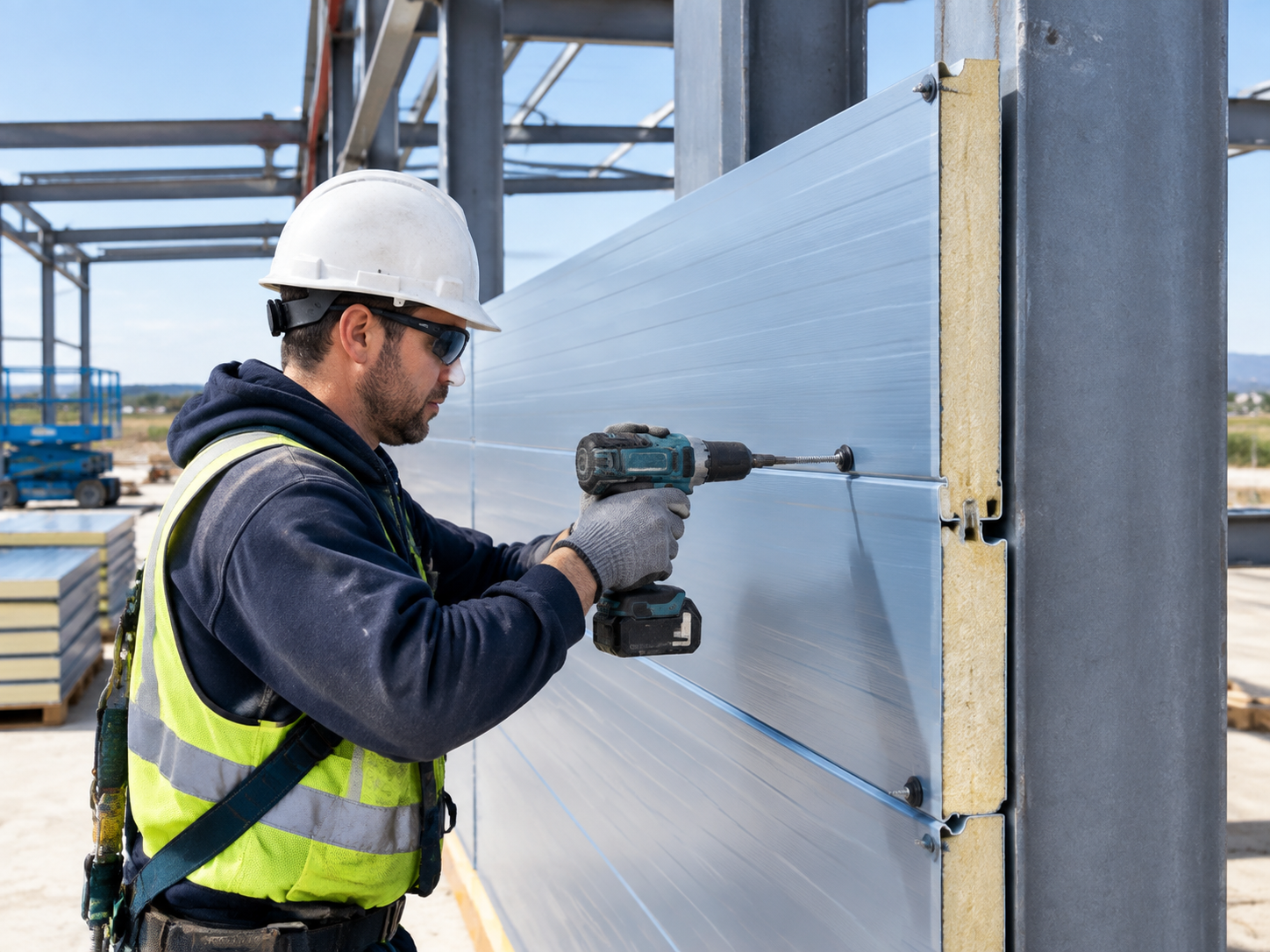
Sandwich panel buildings have strict requirements for screw length, drill point penetration, and sealing performance. Screws must pass through the panel face and insulation core while achieving sufficient engagement with the steel structure, without excessively compressing or deforming the panel.
Sandwich panel fasteners should be selected according to panel thickness, substrate steel thickness, and connection position. For cold-storage facilities, factories, and warehouses, water penetration, condensation, and thermal bridging at connection points must also be considered.
In practical projects, sandwich panel screws should be evaluated according to length, material, and sealing configuration.
HVAC, Ductwork, and Metal Deck Systems
HVAC and ductwork systems generally use relatively thin metal sheets and contain many connection points in confined installation spaces. Fasteners must provide rapid drilling, stable thread engagement, and limited sheet deformation.
HVAC fasteners, HVAC sheet metal screws, and ductwork screws are commonly used for ducts, ventilation equipment, and metal enclosures. Metal deck projects require a suitable fastening method according to the panel overlap position and connection direction.
In practical installation, HVAC sheet metal screws should match the duct thickness, installation tools, and available working space.
Metal-to-Wood Hybrid Structures
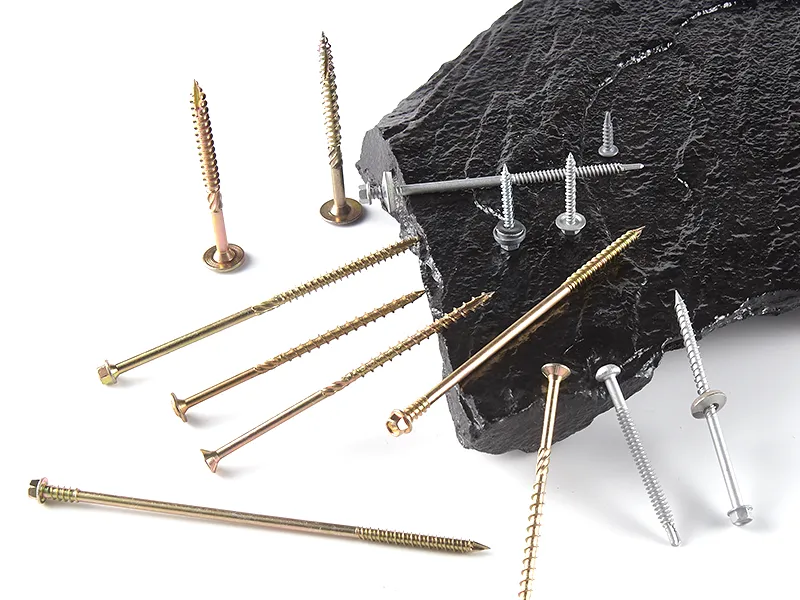
In roof renovation, residential construction, and some prefabricated buildings, metal panels are often fastened to wood substrates. This type of connection has different load conditions and thread engagement requirements from metal-to-metal fastening.
Metal-to-wood fasteners and metal-to-wood screws should be selected according to wood density, metal sheet thickness, and screw length. If the screw is unsuitable for the wood substrate, the connection may suffer from insufficient engagement, loosening, or reduced pull-out resistance over time.
Key Engineering Factors in Construction Screw Selection
Connected Materials and Material Thickness
The first step in selection is to identify the connected materials, including steel, aluminum, wood, sandwich panels, and thin metal sheets. Different materials affect drilling difficulty, thread formation, and connection strength.
For example, metal-to-metal screws are suitable for steel-to-steel connections, while metal-to-wood screws must penetrate the metal and then achieve stable engagement in the wood. For thin metal sheets, sheet metal screws are often more appropriate, but they should still be tested according to the sheet thickness and actual load requirements.
ScrewTrade’s guide to sheet metal screws also emphasizes that suitability cannot be judged only by screw diameter and length.
Tensile, Shear, Wind, and Vibration Requirements
Building connections do not only withstand static tensile loads. They may also be exposed to wind loads, shear forces, mechanical vibration, and temperature changes. Roofing and wall systems require particular attention to pull-out resistance and long-term connection stability.
In structural applications, screw diameter alone cannot determine performance. Material strength, thread engagement length, the number of connected layers, and substrate thickness must also be considered. For steel construction, structural steel screws should be selected according to the engineering loads and applicable construction requirements.
Installation Efficiency and Site Conditions
Large building projects often require repeated installation of thousands of fasteners. Drilling speed, tool compatibility, packaging, and ease of on-site handling can therefore have a direct impact on total project cost.
Self-drilling screws can reduce the need for pre-drilling and are suitable for many metal panel and steel connection applications. Self-tapping screws, however, may be more suitable when pilot holes have already been prepared or when the material is relatively thin.
The final choice should be based on the substrate and installation conditions rather than the assumption that self-drilling screws are always more efficient.
Waterproofing, Sealing, and Long-Term Maintenance Requirements
For roofing, exterior wall, and sandwich panel projects, screw connection points are potential leakage points. The screw head, washer, installation pressure, and panel surface condition all affect sealing performance.
If the washer is too loose, water may enter through the connection. If it is over-compressed, the washer may be damaged or the metal panel may deform. Waterproofing design should therefore be considered together with waterproof roofing fasteners, sealing washers, and installation procedures.
Humidity, Salt Spray, and Corrosive Conditions at the Project Location
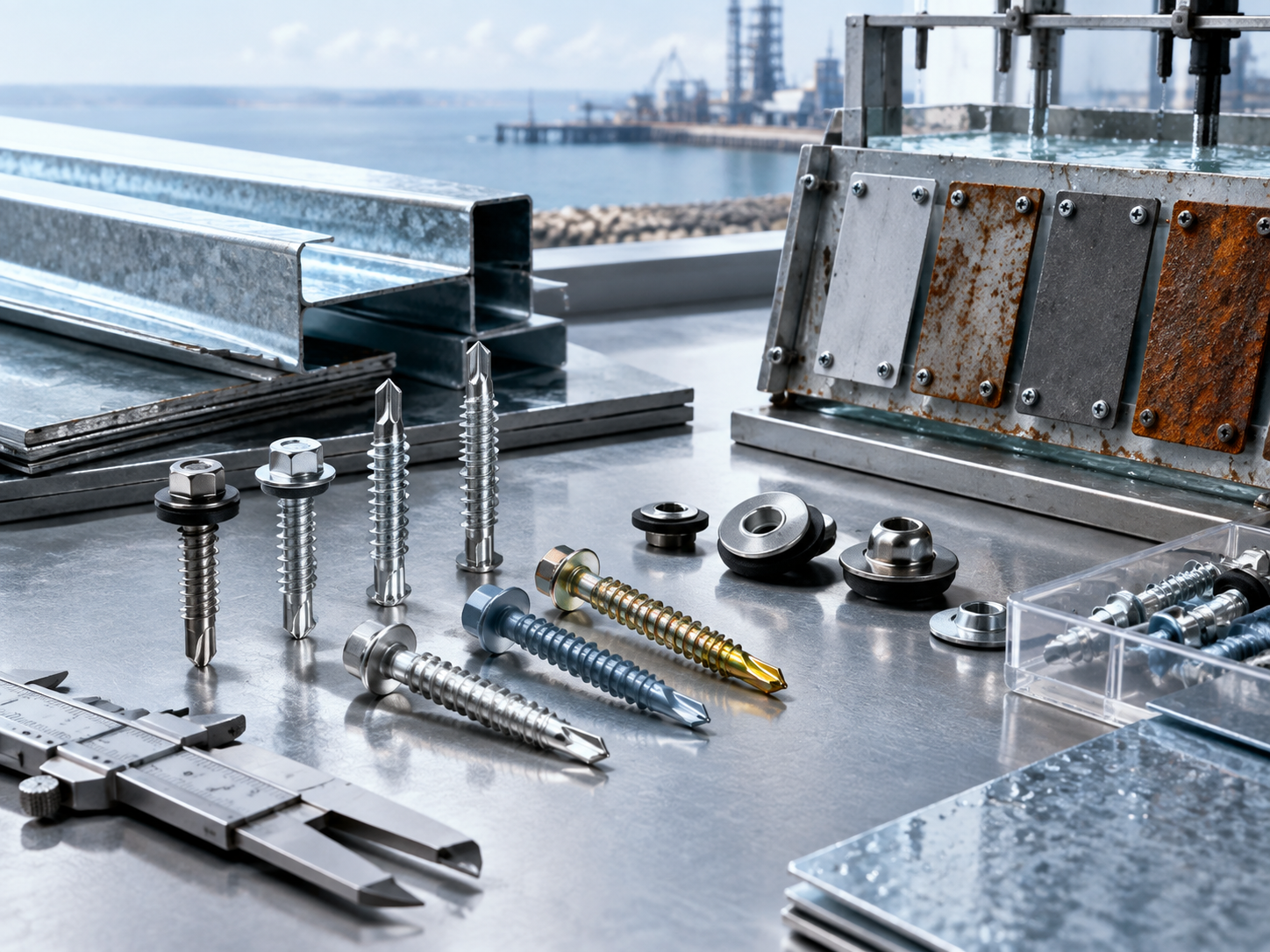
Fastener materials and coatings must match the building environment. Indoor projects, general outdoor projects, coastal buildings, and industrial facilities have different corrosion-resistance requirements.
In high-humidity, salt-spray, or chemically corrosive environments, corrosion-resistant fasteners, stainless steel, or bi-metal solutions should be evaluated. Selection should not be based solely on the purchase price of ordinary carbon steel fasteners.
How Materials and Corrosion Resistance Affect Building Service Life
Differences Between Carbon Steel, Galvanized Steel, Stainless Steel, and Bi-Metal Fasteners
Carbon steel fasteners generally provide good strength and cost efficiency for ordinary environments. Galvanized steel improves basic corrosion resistance and is suitable for many standard outdoor building applications.
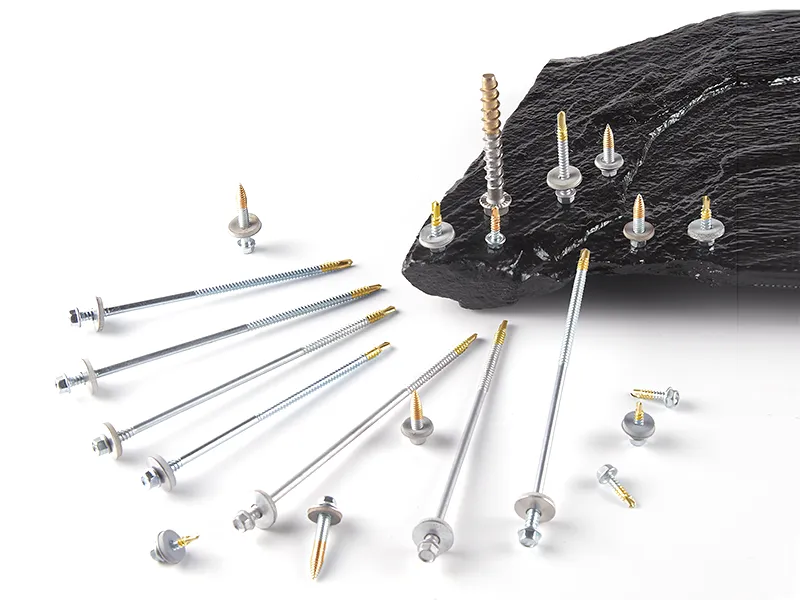
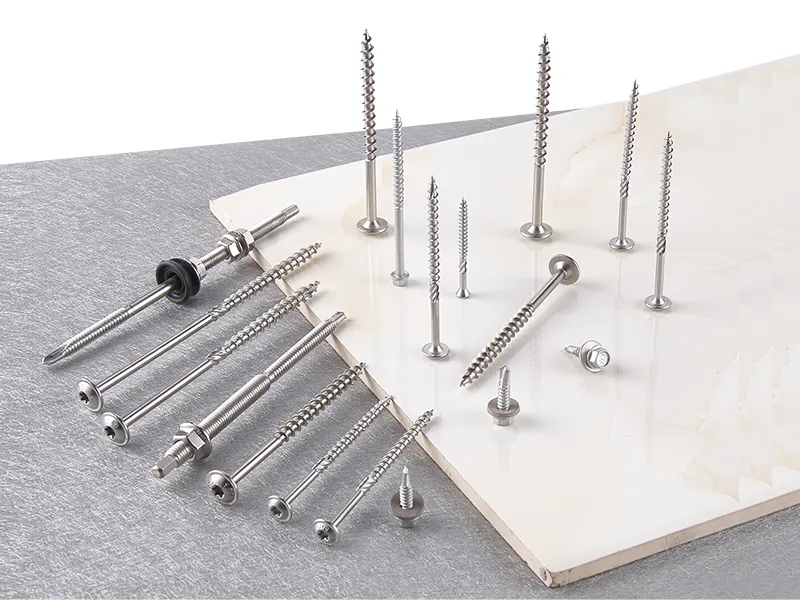
Stainless steel fasteners are more suitable for humid, coastal, and corrosive environments, while bi-metal self-drilling screws combine a stainless steel body with a high-strength drill point to balance corrosion resistance and drilling performance.
Applications of 410 Stainless Steel and 304 Stainless Steel
410 stainless steel generally offers high hardness and good mechanical strength, making it suitable for applications requiring drilling and connection strength. 304 stainless steel provides stronger overall corrosion resistance and is better suited to humid environments or projects with higher durability requirements.
Selection should not be based only on the stainless steel grade. Substrate material, environmental corrosion level, installation tools, and expected service life must also be considered. For stainless steel building fasteners, material and drill point performance should be verified together.
Applications of Ruspert, Dacromet, and Other Coatings
Ruspert and Dacromet coatings can improve the corrosion resistance of steel fasteners while meeting different requirements for appearance and service life.
However, coatings cannot replace proper material selection. For long-term outdoor exposure, strong salt spray, or contact between dissimilar metals, Ruspert coated screws, Dacromet fasteners, and stainless steel options should be compared as part of an overall corrosion strategy.
Corrosion Selection for Coastal, High-Humidity, and Industrial Buildings
Coastal buildings must address salt spray and moisture, while industrial buildings may be exposed to chemical gases, dust, and condensation. These projects should include corrosion risk in the building life-cycle cost rather than comparing only the initial purchase price.
Coastal construction fasteners and corrosion-resistant roofing fasteners generally require higher-grade materials, coatings, and sealing solutions. Where necessary, sample testing and environmental compatibility testing should be carried out.
Electrochemical Corrosion Risks Between Fasteners and Building Materials
When incompatible metals come into direct contact, electrochemical corrosion may occur, causing premature failure of the fastener or surrounding panels. Project teams must therefore consider the compatibility of the screw material, roofing material, coating, and washer.
For metal roofing and exterior wall systems, the selection of corrosion-resistant construction fasteners should also account for dissimilar-metal contact, standing water, cut edges, and coating damage.
Fastening Solutions for Typical Building Projects
Steel Structures and Light-Gauge Steel Framing: Connection Strength and Drilling Capability
Steel structure and light-gauge steel framing projects should select structural steel screws or steel framing screws according to steel thickness, the number of connected layers, and the required load performance.
For thin steel, rapid self-drilling solutions may be suitable. For thicker steel, the drill point grade and effective thread engagement length must be verified carefully.
Metal Roofing and Walls: Waterproofing, Wind Resistance, and Corrosion Resistance
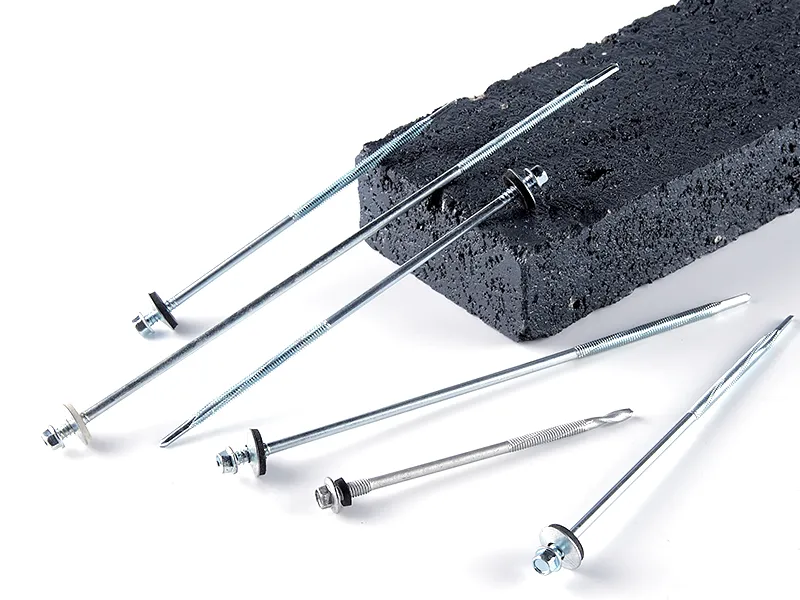
Metal roofing and wall projects should evaluate connection strength, waterproof sealing, and weather resistance together. In addition to choosing suitable metal roofing fasteners, the washer, coating, and installation torque must also be matched.
In high-wind and coastal areas, pull-out resistance and corrosion resistance are equally important. The decision should not be based only on whether the screw can drill into the substrate quickly.
Sandwich Panel Buildings: Screw Length, Penetration, and Sealing
Sandwich panel projects should determine screw length according to the panel thickness and the position of the steel substrate. Sandwich panel screws must be long enough to pass through the panel and engage the substrate while maintaining effective sealing.
For cold-storage and high-humidity buildings, condensation and water penetration at the connection points should also be minimized. Where necessary, the screw, washer, and panel system should be tested together.
HVAC Systems: Thin-Sheet Fastening and Installation Efficiency
HVAC projects often require a large number of rapid connections. HVAC sheet metal screws and ductwork screws should provide consistent drilling performance and convenient on-site installation.
During thin-sheet installation, the screw must not excessively compress or deform the sheet. At the same time, insufficient thread engagement can lead to loosening. The screw head and tool should be selected according to duct thickness and available installation space.
Metal Deck and Roof Overlaps: Distinguishing Side Lap Screws from Stitching Screws
Metal deck and roof panel overlaps require application-specific fastening solutions. Metal deck sidelap screws are mainly used for side-lap connections, while stitching screws are generally used to join adjacent metal sheets.
Correctly distinguishing side lap screws from stitching screws helps prevent incorrect connection placement, panel deformation, and water penetration at the overlap. Screw specifications should also be confirmed according to panel thickness, the number of overlapping layers, and project wind loads.
Quality and Supply Chain Requirements for Construction Fasteners
Consistency of Dimensions, Threads, and Drill Points
Building projects often require large quantities of fasteners with identical specifications. Any variation between production batches may affect installation efficiency and connection reliability.
Therefore, a construction fastener manufacturer should be able to consistently control screw diameter, length, thread accuracy, drill point geometry, and head dimensions rather than providing only a qualified sample batch.
Traceability of Materials, Coatings, and Production Batches
The material, coating, and heat-treatment process of construction fasteners directly affect connection strength and service life. Suppliers should provide basic material information, production batch details, and quality inspection records.
For a building fastener supplier, clear quality documentation and batch traceability are important requirements for entering the supply chain of large construction projects.
Sample Testing and Batch Purchase Verification
Sample testing can help project teams confirm whether a screw is suitable for a specific substrate. However, one qualified sample does not prove that every production batch will perform identically.
Before bulk purchasing, drilling speed, installation torque, pull-out resistance, sealing performance, and coating durability should be verified. The results should become part of fastener quality control.
Delivery and Customization Requirements for Large Building Projects
Large projects often require stable delivery, standardized packaging, color matching, and customized specifications. Suppliers must also coordinate production and inventory according to the construction schedule to reduce the risk of project delays.
As a result, the supply capabilities of bulk construction fasteners and custom construction fasteners have become important parts of construction procurement evaluation. Project teams can also refer to ScrewTrade’s Fastener News & Technical Insights for information related to materials, installation, and purchasing.
Common Fastener Selection Errors and Industry Trends
Focusing Only on Price Instead of Life-Cycle Cost
Low-cost fasteners may reduce the initial purchase price, but corrosion, leakage, loosening, or rework can significantly increase the total project cost later.
Modern construction projects should evaluate life-cycle cost by balancing purchase price, installation efficiency, maintenance frequency, and expected building service life.
Ignoring the Substrate, Thickness, and Operating Environment
The same screw cannot be used for every building application. Ignoring steel thickness, wood substrates, salt-spray exposure, or sandwich panel construction may result in drilling failure, insufficient connection strength, or premature corrosion.
Using General-Purpose Screws for Specialized Building Systems
General-purpose products are not always suitable for steel structures, sandwich panels, HVAC systems, or roof overlaps. For applications with structural or waterproofing requirements, high-performance building fasteners should be selected according to the building system.
Ignoring Corrosion, Waterproofing, and Batch Consistency
Fastener failure is rarely caused by a single factor. Material incompatibility, insufficient sealing, coating damage, and production variation can all contribute to failure.
Project teams should therefore evaluate materials, corrosion protection, sealing, and supply chain quality together.
Trends in Bi-Metal, High-Corrosion-Resistance, and Modular Building Fasteners
The construction fastener industry will continue to move toward higher corrosion resistance, faster installation, and system-based supply. Bi-metal construction fasteners can balance mechanical strength and corrosion resistance, while modular building fasteners are well suited to prefabricated and modular construction.
At the same time, building projects are placing increasing importance on low maintenance, material compatibility, and supply chain stability. For suppliers, providing fastening solutions for low-maintenance building systems will be more valuable than simply selling individual screws.
Related News
Other news you might be interested in

لماذا تفشل براغي الحفر الذاتي في الحفر: قائمة فحص للركيزة والتركيب
عندما يدور برغي حفر ذاتي ضد الفولاذ دون إحراز تقدم، يصبح قرار الشراء ملحًا: هل يجب على المُثبِّت تغيير إعدادات الأداة، أم يجب على المشتري طلب برغي مختلف، أم يجب على المورد فحص الدفعة؟ يبدأ التشخيص المفيد بتحديد المكان الذي يتوقف فيه الحفر بالضبط. سجّل المادة عند تلك النقطة، وتحقق من البرغي المحدد مقابل التجميع، ثم قارن ظروف التركيب. يمنح هذا النهج المشترين أساسًا أوضح لاتخاذ قرار بشأن ما يجب تغييره وما الأدلة التي يجب طلبها.

براغي الحفر الذاتي بالجملة: قائمة مراجعة لطلب عروض الأسعار للمستوردين والموزعين الأمريكيين
عند شراء براغي الحفر الذاتي بالجملة، يكون سعر الوحدة مفيدًا فقط إذا كنت تعرف بالضبط ما يغطيه. قد يبدو عرضا سعرين وكأنهما يصفان نفس المنتج بينما يختلفان في الأبعاد أو الطلاء أو التغليف أو شروط التسليم. بالنسبة للمستوردين والموزعين الأمريكيين الذين يديرون عدة وحدات تخزين، يمكن أن تجعل هذه الاختلافات مقارنة الموردين صعبة. يساعد طلب عرض أسعار واضح—RFQ—الموردين على فهم متطلباتك ويمنح فريق المشتريات لديك أساسًا ثابتًا لمراجعة عروضهم. تشرح قائمة المراجعة هذه ما يجب تضمينه، وما هي التفاصيل التي تحتاج إلى تأكيد، وكيفية تحويل الاستفسار الأولي إلى مواصفات يمكن لكل من المشتري والمورد مراجعتها.
Want to know more?
Get in touch with us for more information about our services and products.