

Optimizing Self-Drilling Screw Sourcing: A Strategic Guide for B2B Importers

Han Congming
AuthorWith experience in screw and fastener manufacturing and sales, we operate our own production facility with stable large-scale capacity. We are specialists in self-drilling screws, drywall screws, chipboard screws, machine screws, bolts, and customized fasteners for construction and industrial applications.
The High Cost of Compromising on Fastener Quality
Every line stoppage caused by a snapped self-drilling screw on thin-gauge steel is a direct hit to your operational budget. A 2025 Fastener Technology International report confirms that breakage consistently triggers unplanned downtime—a risk no screw importer can afford when margins are tight and deadlines fixed. Beyond immediate repair costs, the real damage lies in delayed shipments, strained contractor relationships, and the cascading expense of emergency reorders. For B2B buyers managing international supply chains, inconsistent fastener quality is a strategic vulnerability, not just a nuisance.
As a screw distributor or screw wholesaler, you face additional pressures: lead-time volatility, unpredictable minimum order quantities, and complex export documentation that varies by port. Receiving a shipment of roofing screws that fail a basic salt spray test after three months of waiting is a familiar frustration. This guide delivers concrete procurement tactics and supplier evaluation methods proven to reduce failure rates and streamline bulk screw order fulfillment across continents. With the global fastener market now valued at $161.8 billion, the opportunity to capture real ROI by sourcing strategically has never been clearer.
Understanding Key Fastener Types and Standards for Global Sourcing
Not all screws are interchangeable, and misjudging a type or standard can invite field failures. The self-drilling screw, often called a tek screw, is foundational. Unlike a self-tapping screw that needs a pre-drilled hole, a true drill point screw bores and taps its own hole in one motion. For timber-to-steel connections, a wood to metal screw with a wing section prevents splitting. In metal framing, a metal to metal screw with fine threads delivers secure lap-joint connections. Large-diameter roofing screws with EPDM washers are essential for corrugated sheet installations. Specialty heads like the hex washer head screw offer better torque transfer and a flanged bearing surface that resists pull-through—critical for building envelopes.
Internationally, compliance with ISO fastener standard and DIN 7504 ensures your fasteners mate correctly with tooling and materials across markets. A China fastener supplier that strictly adheres to these norms, backed by specification matching support, eliminates guesswork. Coating selection is equally critical: a zinc plated screw suits interior or mild environments, while a Ruspert coated screw bonds a zinc-aluminum flake base with a ceramic topcoat for up to 1,000 hours of salt spray resistance. For coastal or chemical exposure, an HDG screw (hot-dip galvanized) or a stainless steel screw is mandatory. Cost-conscious projects often specify a carbon steel screw with tailored plating. And to build a seamless brand identity, forward-thinking importers use OEM screw packaging—small boxes, plastic tubs, or barcoded cartons—to turn standard self-drilling screws into retail-ready products.
Mitigating Supply Chain Risks Through Strategic Sourcing
Deloitte’s 2026 Manufacturing Industry Outlook names supply chain resilience as the top operational priority for industrial firms. For screw importers, resilience means building a qualified supplier base that delivers predictable lead times and consistent coil stock. Relying on a single, unvetted source for bulk screw orders invites havoc when production fires or port strikes hit. Evaluate potential fastener manufacturer partners not just on price, but on their ability to hold buffer inventory of your high-rotation SKUs and scale output without sacrificing quality. A manufacturer that handles everything in-house—from wire drawing and cold heading to thread rolling and final coating—eliminates sub-supplier delays that plague trading companies. This depth of integrated production and qc locks in dimensional accuracy long before the fasteners reach your container.
Logistics optimization is another lever. Instead of waiting for a full container of one type, negotiate mixed container loading to combine pallets of roofing screws, hex washer head screws, and drill point screws in a single shipment. This reduces per-unit freight cost while maintaining inventory agility. Quality risks—from hydrogen embrittlement after electroplating to under-tempered shanks—must be managed before shipment. Require batch-level heat treatment records and coating thickness reports. A supplier with proven supplier delivery execution metrics will consistently meet your delivery windows, making you the reliable screw wholesaler in your region.
Quality Assurance: From Salt Spray Tests to Drill Point Grades
Installation failures often stem from a mismatch between the drill point screw’s cutting geometry and the steel thickness. Drill point grades #1 through #5 define this capability: a #3 point drills and taps 0.036" to 0.210" steel, while a #5 point tackles up to 0.500". Specifying the correct grade—and verifying it through incoming inspection—immediately reduces broken tips that stall assembly lines. Designs like the Flat Head Self Drilling Screw 4.2mm 35mm with cut-resistant flutes prevent workpiece damage in thin sheet metal, while the Csk Head Cushioned Tooth Anti Skid Self Drilling Screw integrates a serrated bearing surface that resists vibration loosening in ductwork and cladding. These are engineered solutions, not generic components, validated through repeated installation sequences.
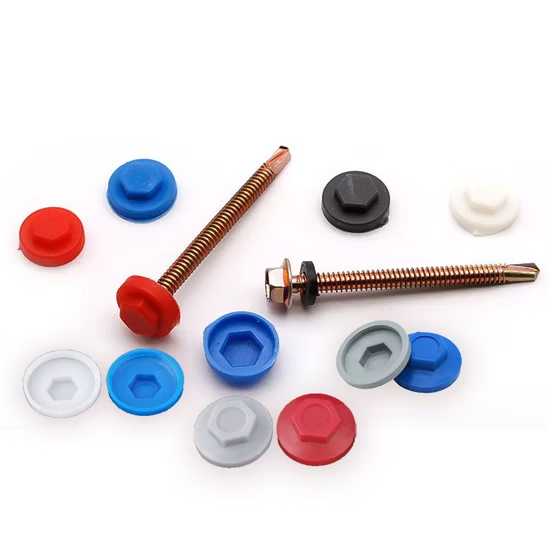
Corrosion resistance must be proven, not assumed. A salt spray test per ISO 9227 demonstrates whether a coating’s real-world endurance matches its datasheet. For a zinc plated screw, the benchmark is typically 72 to 120 hours to white rust, whereas an HDG screw should withstand 500+ hours with no base metal corrosion. Demand performance testing reports that include tensile strength (ISO 898-1 for carbon steel screws) and surface hardness (HV 0.3 minimum at the core). In corrosive environments, an HDG Structural Washer distributes clamp load without breaking coating continuity, and a PVC Hex Cap snaps over the driver recess of roofing screws, sealing the penetration against water ingress. These accessories elevate a standard fastener into a system that installers trust and specifiers specify repeatedly.
Leveraging Market Trends to Stay Competitive
The Screws and Fasteners Market Research Report 2034 projects the sector reaching $161.8 billion, driven by sustained infrastructure investment and advanced manufacturing. This expansion rewards distributors who diversify beyond commodity SKUs. The push toward high-strength, lightweight assemblies, highlighted in the Positive Manufacturing Outlook for 2026, creates demand for fasteners like the countersunk sleeve anchor yellow zinc plated—a high-expansion anchor that delivers reliable holding in concrete with a flush finish. Similarly, farmer screws for metal roofing, with their proprietary thread pitch and reamer tip, address a niche that big-box retailers overlook, allowing you to capture loyal commercial accounts in the agricultural and pole barn sectors.
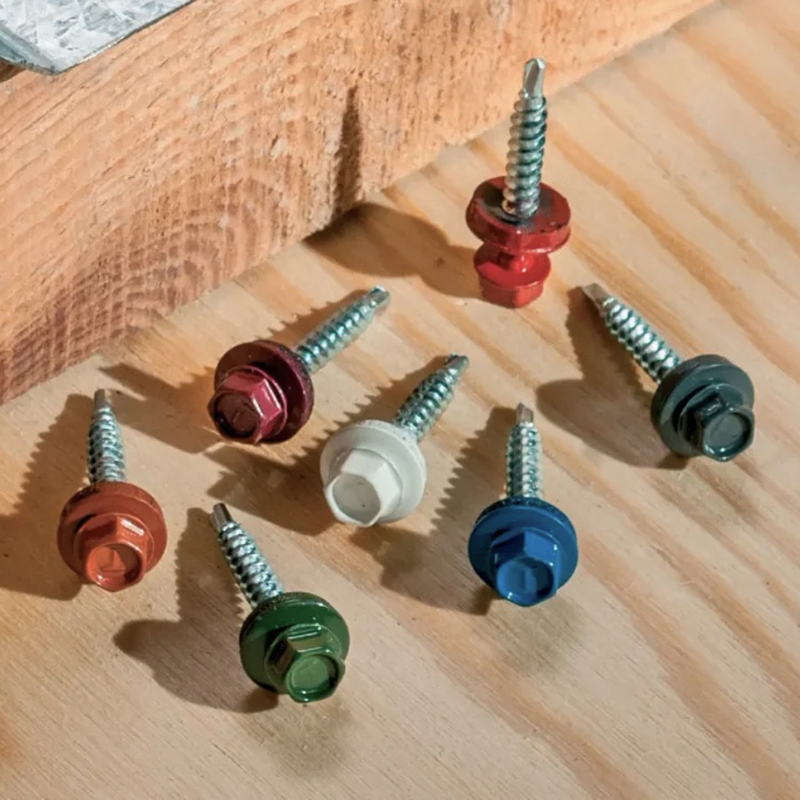
Specifiers for green-rated buildings increasingly mandate finishes aligned with low-VOC and high-recycled-content criteria. A Ruspert coated screw, with its tri-layer system free of hexavalent chromium and lasting decades without maintenance recoating, supports these environmental documentation requirements. An HDG screw produced from recycled carbon steel further strengthens the material reuse narrative. By making these differentiated products part of your standard line card—and backing them with verified coating data—you position your company as a future-proof screw distributor that helps contractors meet both structural and sustainability codes without a premium cost penalty.
Building a Partnership with a Trusted Fastener Manufacturer
Transactional sourcing delivers self-drilling screws at a price; strategic partnership delivers a supply chain asset. The most agile importers select a fastener manufacturer that aligns with their growth trajectory—one that offers flexible MOQs when launching a new territory, provides OEM screw packaging to build brand equity, and schedules mixed container loading to keep inventory balanced. A recent case illustrates this: a mid-sized screw distributor in Northern Europe was losing three to five project days per year due to inconsistent DIN 7504 compliance from a fragmented supplier base. After consolidating sourcing to a single China fastener supplier that applies strict batch traceability and publishes full mill certificates, that distributor cut installation downtime by 40% within 18 months. Foundation SKUs—Countersunk Sleeve Anchor Yellow Zinc Plated for hollow-core slab fastening and Hex Washer Head Screw for structural purlin connections—began arriving with identical head marking codes and consistent plating gloss, reducing installer re-training time to zero.
When a supply relationship operates at this level, the conversation shifts from price negotiation to market co-development. A manufacturer that invests in self drilling screw focus will proactively suggest thread geometry refinements for your regional steel grades, or create custom point cuts that reduce driving torque by 12%—saving your customers labor hours. This is where competitive moats are built. To explore how a structured partnership can remove variability from your fastener procurement, start with a no-obligation assessment of your current spec sheets and consumption data. Our team can prepare a detailed cross-reference of your high-volume items against ISO and DIN norms, including coating upgrade paths you may not have considered.
Conclusion: Secure Your Supply Chain with Strategic Sourcing
Reliable B2B screw sourcing doesn’t happen by accident. It rests on three pillars: precise adherence to international standards, supplier processes that embed quality into core manufacturing stages, and long-term partnerships that treat each shipment as a building block rather than a transaction. With the global fastener industry poised for sustained expansion, now is the time to align with a manufacturer that not only meets your current specifications but brings advanced coatings, mixed-container flexibility, and application-specific product knowledge to the table. The roofing screws, metal to metal screws, and custom-packaged fasteners you source today determine the reputation you build tomorrow. Reach out now to discuss a sample pack of self-drilling screws tailored to your key steel thicknesses and coating requirements, and receive a customized export documentation guide that simplifies your next shipment.
Related News
Other news you might be interested in
Why Self-Drilling Screws Fail to Drill: A Substrate and Installation Checklist
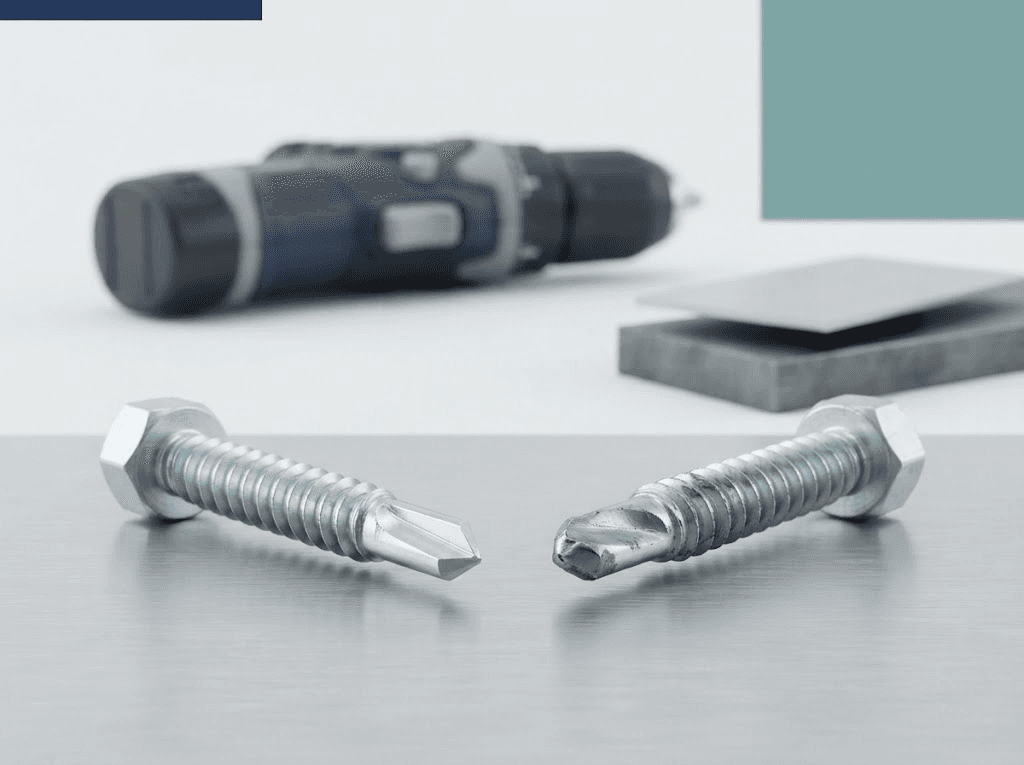
When a self-drilling screw spins against steel without making progress, the purchasing decision becomes urgent: should the installer change the tool settings, should the buyer order a different screw, or should the supplier investigate the batch?A useful diagnosis starts by identifying exactly where drilling stops. Record the material at that point, check the selected screw against the assembly, and then compare installation conditions. This approach gives buyers a clearer basis for deciding what to change and what evidence to request.
Bulk Self-Drilling Screws: An RFQ Checklist for U.S. Importers and Distributors
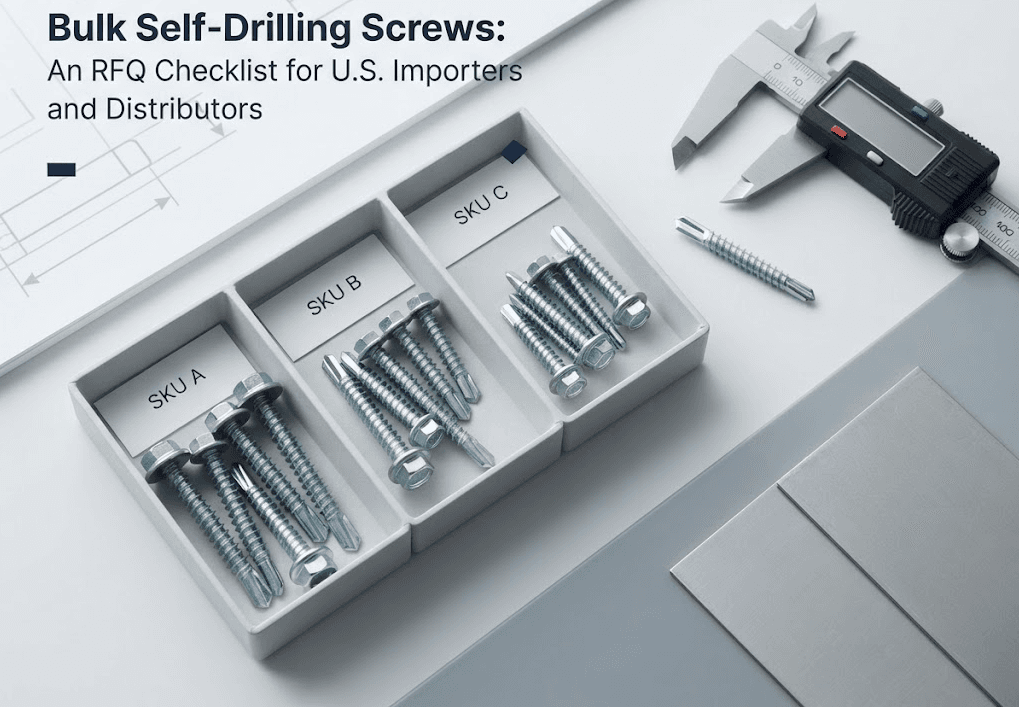
When sourcing bulk self-drilling screws, a unit price is only useful if you know exactly what it covers. Two quotations may appear to describe the same product while differing in dimensions, coating, packaging, or delivery conditions. For U.S. importers and distributors managing several SKUs, those differences can make supplier comparisons difficult. A clear request for quotation—an RFQ—helps suppliers understand your requirements and gives your purchasing team a consistent basis for reviewing their offers. This checklist explains what to include, which details need confirmation, and how to turn an initial inquiry into a specification that both buyer and supplier can review.
Want to know more?
Get in touch with us for more information about our services and products.