
Strategic B2B Fastener Sourcing: Mitigating Supply Chain Risks and Maximizing ROI with High-Quality Self-Drilling Screws

Han Congming
AuthorWith experience in screw and fastener manufacturing and sales, we operate our own production facility with stable large-scale capacity. We are specialists in self-drilling screws, drywall screws, chipboard screws, machine screws, bolts, and customized fasteners for construction and industrial applications.
Introduction: The High Stakes of Fastener Procurement
Global supply chain disruptions have reshaped how manufacturers and distributors approach B2B screw sourcing. What was once a routine category purchase now demands rigorous scrutiny—every bulk screw order placed without proper due diligence carries measurable financial and operational risk. A single shipment of subpar self-drilling screw products can cascade into assembly line stoppages, failed inspections, and compromised customer relationships that take years to rebuild.
Inconsistent quality across batches, gaps in ISO fastener standard compliance, and lead times that stretch far beyond projections are not anomalies—they are systemic pain points that procurement teams navigate daily. When a zinc plated screw order arrives without proper export documentation, the downstream impact ripples through customs clearance, project timelines, and ultimately, your bottom line. For any screw importer or screw distributor, these are not hypothetical scenarios but recurring challenges that demand a structured response.
This guide outlines actionable strategies to transform fastener procurement from a vulnerability into a competitive advantage—through strategic supplier selection, rigorous quality assurance protocols, and supply chain architecture designed for resilience.
The True Cost of Inconsistent Fastener Quality
When a metal to metal screw fails in the field, the immediate replacement cost is merely the surface of the problem. Field failures triggered by substandard drill point screw performance generate warranty claims, mobilise rework crews, and erode the reputation you have spent years building. These are not abstract risks—they compound quickly across large-scale construction and manufacturing projects where fastener integrity is non-negotiable.
Non-compliance with DIN 7504 standards creates an additional layer of exposure. For companies exporting finished assemblies or reselling fasteners into regulated markets, missing certification can block export documentation entirely, stranding inventory and delaying payments. A screw wholesaler serving multiple geographies must treat compliance as a prerequisite, not an afterthought.
The hidden costs are equally damaging. A self-tapping screw with inconsistent drill point geometry slows installation, increasing labour costs and frustrating crews on site. A carbon steel screw that fails salt spray testing well before its specified service life introduces corrosion risks that undermine structural integrity. Even minimum order quantity (MOQ) penalties—imposed when suppliers enforce rigid volume requirements—can inflate carrying costs and strain working capital for bulk screw order planning.
The global fastener market, valued at $88.39 billion in 2023, continues to expand, yet 23% of procurement professionals report quality-related delays as a recurring obstacle. For businesses sourcing at scale, these delays are not merely inconvenient—they are a direct threat to margin and market position.
Key Quality Standards for Global Fastener Sourcing
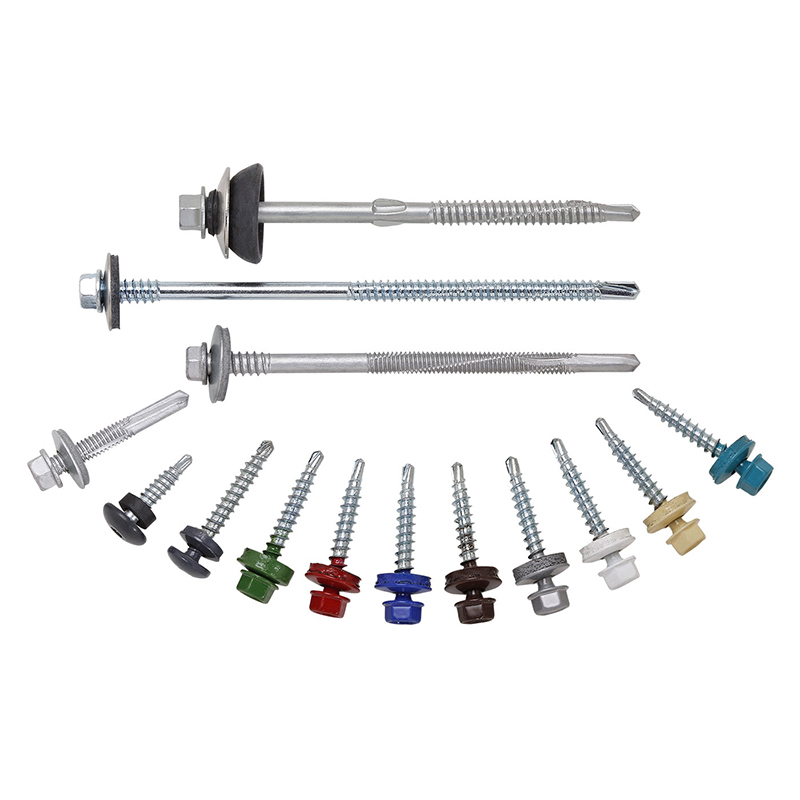
For any fastener manufacturer or procurement team managing international supply chains, standards are the language of trust. ISO fastener standard frameworks—specifically ISO 898—define the mechanical properties that govern tensile strength, yield stress, and hardness for steel fasteners. DIN 7504 provides the specific dimensional and performance criteria for self-drilling screw products, including drill point geometry, thread form, and driving torque requirements that directly affect installation efficiency.
Corrosion resistance is validated through standardised testing. The salt spray test (ASTM B117) remains the benchmark for assessing how coatings perform under aggressive environmental exposure. Whether specifying a zinc plated screw for interior applications, a Ruspert coated screw for enhanced durability, or an HDG screw for extreme outdoor conditions, documented test results provide the objective evidence procurement teams need. Performance testing reports should be requested at the quotation stage and verified against lot shipments—not accepted on trust.
Heat treatment and thread rolling processes determine whether a drill point screw performs consistently across grades #1 through #5, covering light-gauge sheet metal through heavy structural steel. Without controlled hardening and precise rolling, even a correctly specified tek screw can underperform. For roofing screw applications where water ingress and wind uplift are constant threats, process control is inseparable from product reliability. When evaluating suppliers, specification matching support becomes essential—aligning your application requirements with the correct material grade, coating system, and point configuration before production begins.
Certification documentation—mill certificates, heat treatment records, plating thickness reports—must accompany every shipment intended for export. A screw importer navigating customs in multiple jurisdictions knows that paperwork delays are indistinguishable from product delays. The supplier's ability to deliver complete, accurate documentation on schedule is as critical as the fasteners themselves.
Product Spotlight: Self-Drilling Screws for Metal-to-Metal and Roofing Applications
Applications drive specification, and specification drives sourcing decisions. Across metal construction, roofing, and structural assembly, specific self-drilling screw configurations address distinct performance requirements. The following products represent engineered solutions where design, material selection, and manufacturing consistency intersect to reduce procurement risk. For a deeper dive into the engineering behind these fasteners, self drilling screw focus examines drill point design and application matching in detail.
Csk Head Cushioned Tooth Anti Skid Self Drilling Screw: Engineered for metal cladding applications where vibration resistance is paramount, this configuration integrates a cushioned tooth profile beneath the countersunk head that resists loosening under dynamic loads. Batch-to-batch hardness consistency ensures installation crews do not encounter variable driving behaviour—a common frustration with less controlled production. For procurement teams, predictable performance translates directly into controlled procurement cost and reduced site complaints.
Farmer Screws for Metal Roofing: These roofing screw fasteners are produced with specific attention to thread engagement in thin-gauge steel profiles. Dependable batch consistency means the installer can work at speed without adjusting tool settings between boxes—a practical engineering consideration that reduces labour variance. For distributors serving agricultural and light industrial construction, consistent quality supports repeat business without the overhead of constant quality interventions.
Hex Flange Head SDS with EPDM Washer: The combination of a hex flange driving head and a bonded EPDM washer creates a weather-tight seal essential for metal to metal screw applications in roofing and siding. The integrated washer compresses uniformly during installation, and the self-drilling point eliminates the need for pre-punched holes. This configuration is widely specified where water ingress prevention is a contractual requirement.
Stainless Steel Hexagon Socket with Cylindrical Head STS: For exposed structural applications, a stainless steel screw delivers inherent corrosion resistance without reliance on surface coatings alone. The hexagon socket drive provides positive tool engagement in overhead and confined-space installations, and the cylindrical head profile suits architectural metalwork where appearance matters alongside mechanical performance.
Truss Head Self Drilling Screw: The broad bearing surface of the truss head distributes clamping force across a wider area, making it versatile for general metal fastening where substrate thickness varies. Balancing durability and process stability, this configuration is frequently selected by screw wholesaler buyers who need a single SKU to serve multiple end-use scenarios without compromising on reliability.
Optimizing Procurement: From MOQ to Mixed Container Loading
Strategic procurement extends beyond selecting the right fastener—it requires structuring orders and logistics to minimise total cost of ownership. MOQ management is a negotiation discipline, not a concession. For repeat orders, flexible minimum quantities can reduce inventory holding costs without sacrificing unit economics. A China fastener supplier with in-house cold heading capacity and buffer stock for fast-moving items—including tek screw, hex washer head screw, and common roofing screw configurations—can offer lead time advantages that rigid, make-to-order competitors cannot match.
Mixed container loading (LCL and FCL consolidation) transforms freight economics for importers managing diverse SKU portfolios. Combining zinc plated screw, self-tapping screw, HDG screw, and Ruspert coated screw products in a single shipment optimises container utilisation and reduces per-unit freight costs. This approach is particularly effective for screw distributor businesses that need to maintain broad inventory without carrying excessive stock depth in any single line. Supplier delivery execution becomes the critical variable—the logistics strategy is only as strong as the supplier's ability to consolidate, document, and dispatch accurately.
Lead time reduction is achieved through production planning alignment. When a fastener manufacturer schedules cold heading, threading, heat treatment, and plating based on forecasted demand rather than reacting to discrete orders, the entire supply chain benefits. For bulk screw order programmes, synchronising your procurement calendar with the supplier's production cycles eliminates the bottlenecks that create premium freight charges and missed deadlines.
Customization and OEM Packaging Solutions
Brand differentiation and supply chain efficiency increasingly depend on customisation capabilities. OEM screw packaging—including private labelling, custom SKU barcodes, and pre-configured kitting—enables screw distributor and screw wholesaler businesses to present products under their own brand identity while maintaining the cost advantages of direct sourcing. This is not merely cosmetic; it supports inventory management systems, retail shelf presentation, and end-user recognition.
Coating customisation addresses specific environmental and regulatory requirements. A Ruspert coated screw may be specified for high-corrosion environments where standard zinc plating is insufficient. HDG screw products suit heavy industrial and marine exposure. Stainless steel screw variants—across multiple grades—provide solutions where coating integrity over the product lifetime cannot be inspected or maintained. The ability to tailor coating systems to match specific salt spray test requirements ensures that the fastener performs as specified for its entire service life.
Engineering collaboration supports new project development. When a wood to metal screw application requires modified drill point geometry or a custom thread pitch, working directly with a fastener manufacturer that maintains integrated production shortens the development cycle. Integrated production and QC means design changes flow directly into production tooling and quality control checkpoints, reducing the lag between specification and sampling that frustrates many procurement initiatives.
Consider the experience of a European screw wholesaler serving construction and metal fabrication sectors. By standardising certification requirements and consolidating multiple SKUs through mixed container loading from a single China fastener supplier, they reduced supply chain risk exposure by 30% over an 18-month period. The combination of predictable documentation, consistent quality, and optimised logistics transformed their fastener category from a persistent headache into a reliable revenue stream.
Conclusion: Partner with a Trusted Fastener Manufacturer
Consistent quality, on-time delivery, and accessible technical expertise form the foundation of successful B2B screw sourcing. When a self-drilling screw meets DIN 7504 specifications, arrives with complete export documentation, and performs as expected on site, the procurement function delivers measurable value to the organisation—reducing project risk, controlling total cost, and protecting the relationships that sustain long-term business.
Our support model spans the full procurement cycle: from ISO fastener standard compliance and test certification to OEM screw packaging and optimised mixed container loading logistics. Whether you require a carbon steel screw with zinc plating, a Ruspert coated screw for aggressive environments, or a stainless steel screw for structural exposure, we deliver the documentation, consistency, and supply chain reliability that professional buyers demand.
Ready to secure your supply chain? Request your self-drilling screw quote today, including mixed container loading options, OEM packaging, and full certification documentation. Our team will provide a tailored sourcing solution to meet your exact specifications and delivery timeline.
Related News
Other news you might be interested in
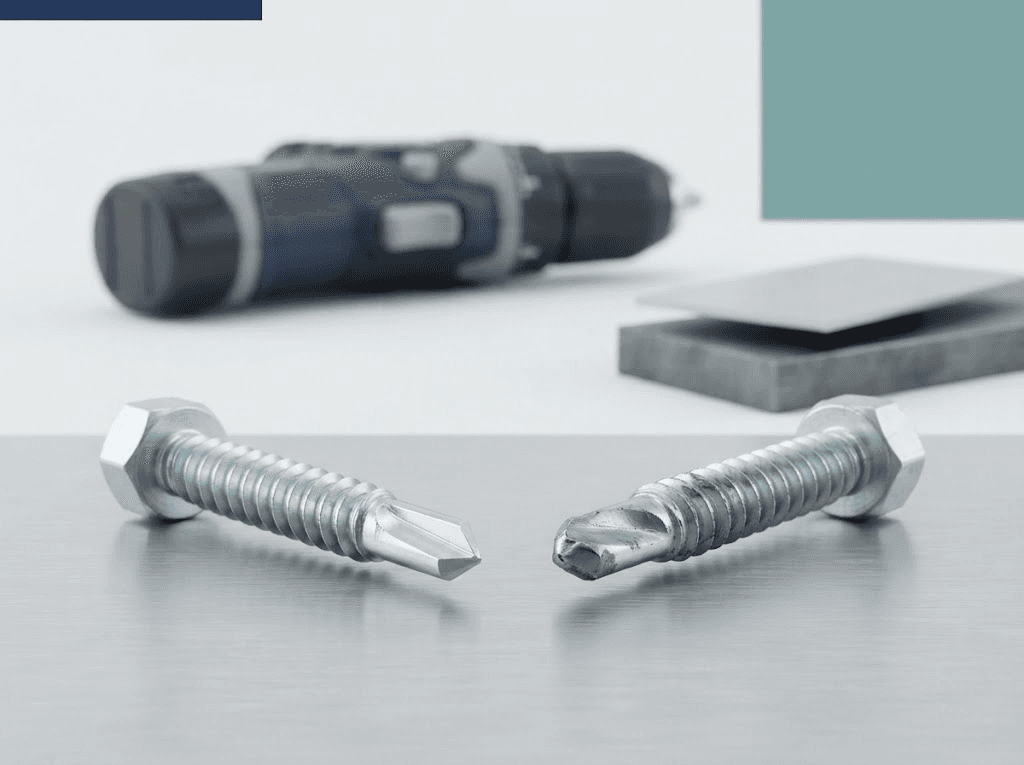
Why Self-Drilling Screws Fail to Drill: A Substrate and Installation Checklist
When a self-drilling screw spins against steel without making progress, the purchasing decision becomes urgent: should the installer change the tool settings, should the buyer order a different screw, or should the supplier investigate the batch?A useful diagnosis starts by identifying exactly where drilling stops. Record the material at that point, check the selected screw against the assembly, and then compare installation conditions. This approach gives buyers a clearer basis for deciding what to change and what evidence to request.
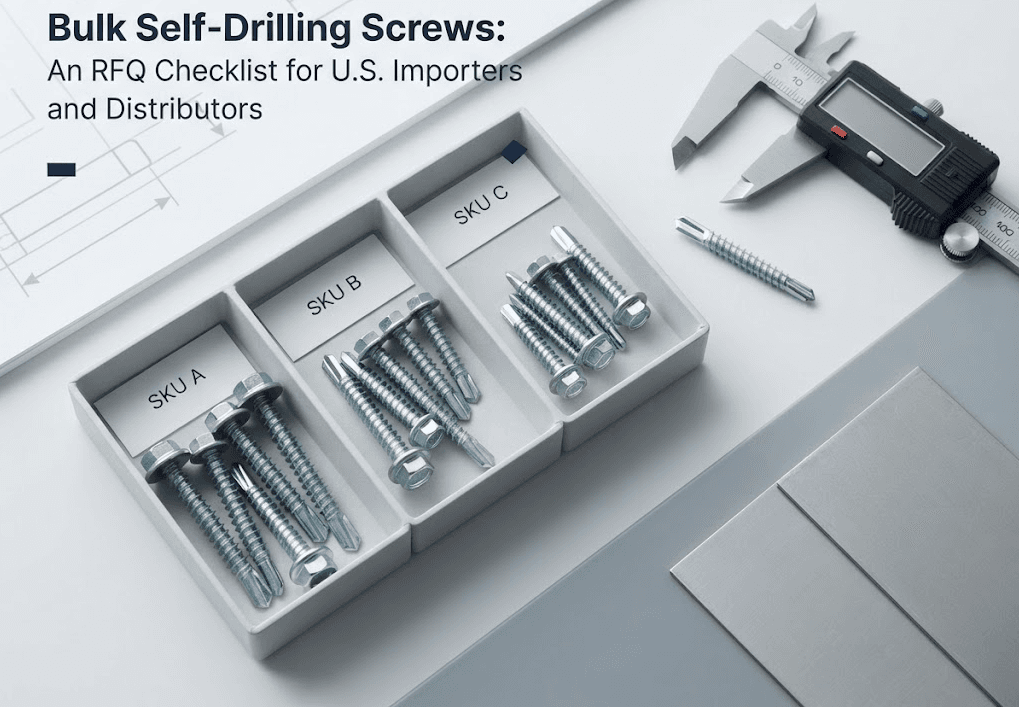
Bulk Self-Drilling Screws: An RFQ Checklist for U.S. Importers and Distributors
When sourcing bulk self-drilling screws, a unit price is only useful if you know exactly what it covers. Two quotations may appear to describe the same product while differing in dimensions, coating, packaging, or delivery conditions. For U.S. importers and distributors managing several SKUs, those differences can make supplier comparisons difficult. A clear request for quotation—an RFQ—helps suppliers understand your requirements and gives your purchasing team a consistent basis for reviewing their offers. This checklist explains what to include, which details need confirmation, and how to turn an initial inquiry into a specification that both buyer and supplier can review.
Want to know more?
Get in touch with us for more information about our services and products.