
Fasteners Are More Than Just Hardware: 10 Key Factors for Choosing the Right Fastener

Han Congming
AuthorWith experience in screw and fastener manufacturing and sales, we operate our own production facility with stable large-scale capacity. We are specialists in self-drilling screws, drywall screws, chipboard screws, machine screws, bolts, and customized fasteners for construction and industrial applications.
Fasteners are more than just hardware; they are crucial for keeping everything from buildings and cars to planes and machinery securely together. Choosing the right fastener is incredibly important because it greatly affects your project’s safety, effectiveness, and longevity. Each fastener has its own role and should be selected based on its use, environmental conditions, and the materials it holds together.
Choosing the wrong fastener can lead to serious issues, including structural failures, increased downtime, and higher maintenance costs. ScrewTrade provides fastening solutions for industrial, structural, roofing, and sheet-metal applications. Here are some key factors to help you choose the best fastener for the job.
1. Purpose and Functionality
First, consider how the fastener will be used. Will it be adjusted often, or is it intended to be a permanent fixture? Frequent adjustments require a durable fastener, such as one made from solid metal. A lighter material, such as plastic, may be suitable where the fastener will not be adjusted frequently.
2. Assess the Environmental Conditions
The right fastener largely depends on the environment in which it will be used. Factors such as temperature, humidity, chemical exposure, vibration, and UV light can all affect fastener performance and longevity.
For outdoor or demanding environments, choose materials that can withstand moisture, temperature fluctuations, and chemical exposure. Various metal and non-metal materials are also available for indoor use and less demanding applications.
3. Select the Right Fastener Type
Fasteners are available in a wide range of types, including bolts, screws, nuts, washers, rivets, anchors, inserts, rods, clips, and pins. Each type has variations designed to meet different mechanical and structural requirements.
- Bolts: Threaded fasteners that generally require a nut to join two or more components. Common styles include hex, carriage, and eye bolts.
- Screws: Threaded fasteners driven directly into materials such as plastic, metal, or wood. Common types include self-drilling screws, machine screws, and wood screws.
- Nails: Non-threaded fasteners typically used to join items through friction. Types include common, finishing, roofing, sinker, and brad nails.
- Nuts: Used with bolts to form a strong connection. Examples include hex, lock, and wing nuts. For vibration-prone or safety-critical applications, an anti-loosening lock nut may be appropriate.
- Washers: Flat, thin discs placed beneath the heads of nuts or bolts. They help distribute pressure and protect against surface damage and loosening. Common types include flat, lock, sealing, cushioning, and countersunk washers.
- Pins: Cylindrical fasteners that fit into holes to prevent relative motion between components, such as dowel pins and cotter pins.
- Anchors: Permanently attach fixtures to concrete, masonry, or drywall.
- Rivets: Permanently join materials by clamping them from the front and back. Types include blind rivets, solid rivets, tubular rivets, push-in rivets, and drive-pin rivets.
4. Choose the Right Material
Selecting the right fastener material is critical to ensuring reliable performance under expected conditions. The material should match both the mechanical demands and environmental conditions of the application.
Common fastener materials include:
- Steel
- Stainless steel
- Brass
- Bronze
- Aluminum
- Copper
- Nylon
- Plastic
For projects requiring corrosion resistance and long-term stability, 304 stainless steel self-drilling screws can be a suitable option.
5. Consider the Coating
Coatings do more than improve appearance. They can also extend the service life of fasteners by improving corrosion resistance. Common fastener coatings include:
- Zinc: Provides good corrosion resistance in wet environments.
- Galvanizing: Offers rust and corrosion protection for steel fasteners.
- Chrome: Adds a shiny finish and strong corrosion resistance.
- Specialty coatings: Used for industrial applications requiring additional protection against friction and environmental exposure.
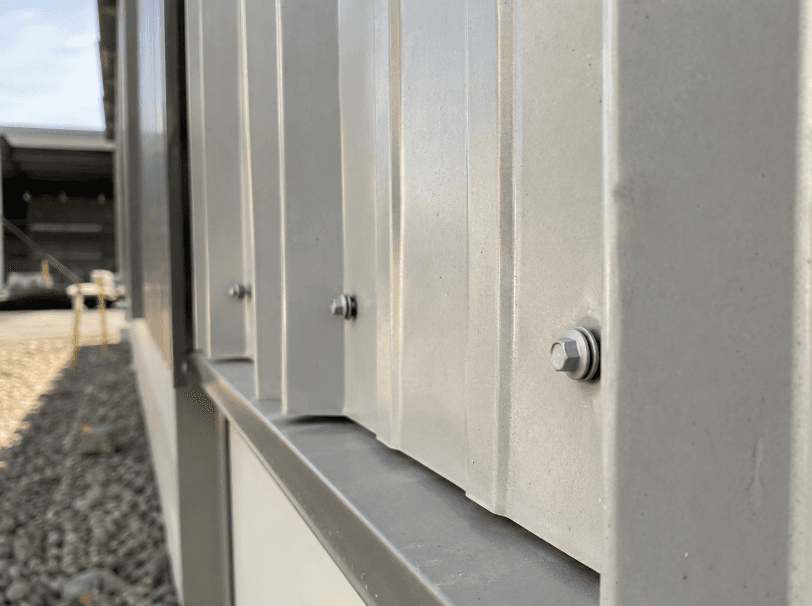
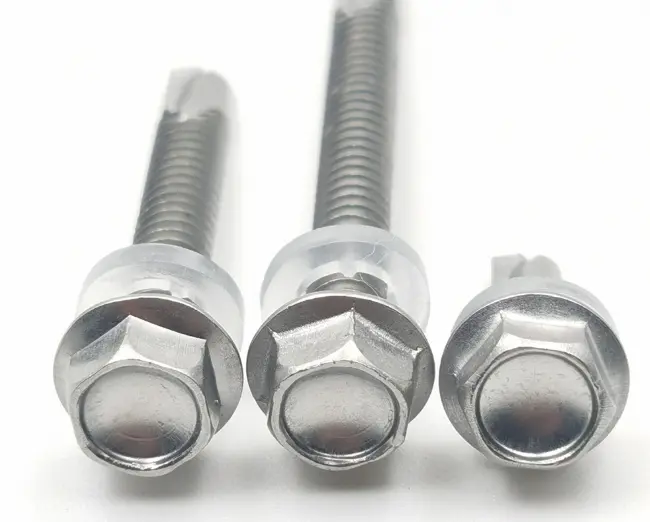
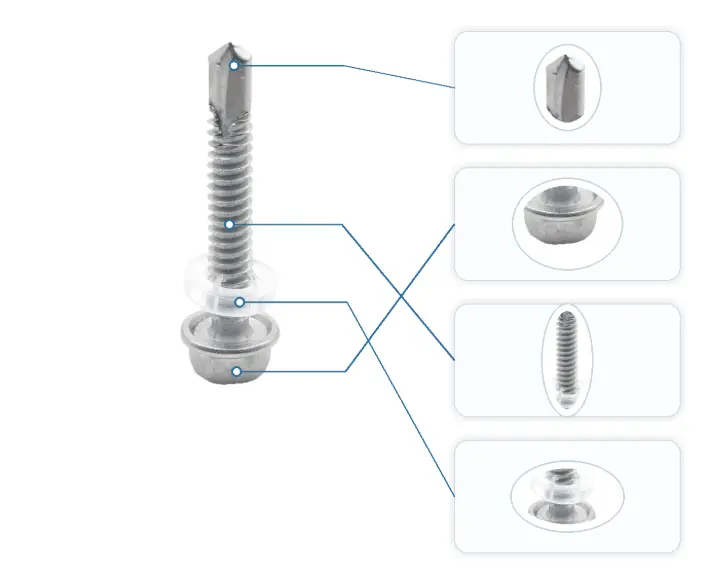
For example, zinc-plated hex-head self-drilling screws provide basic corrosion protection while allowing efficient installation on thin steel sheets and metal fittings.
6. Pick the Right Drive Type
When selecting a fastener, it is important to consider the drive type because it determines the tools and force required for installation. Common drive types include:
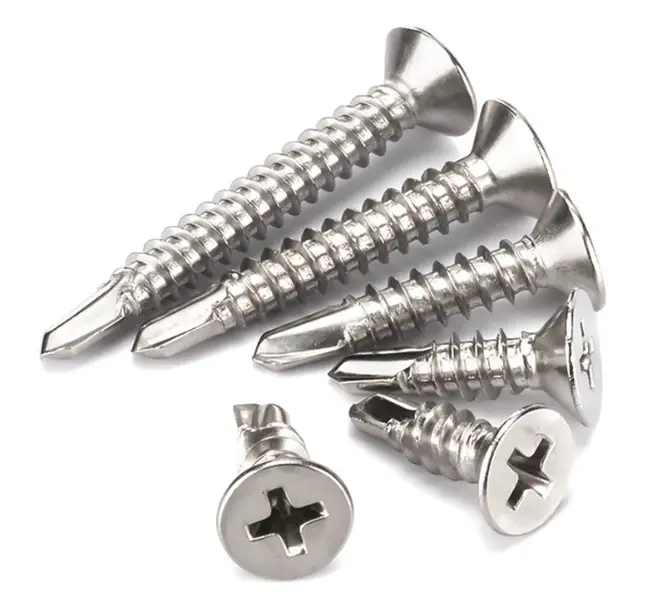
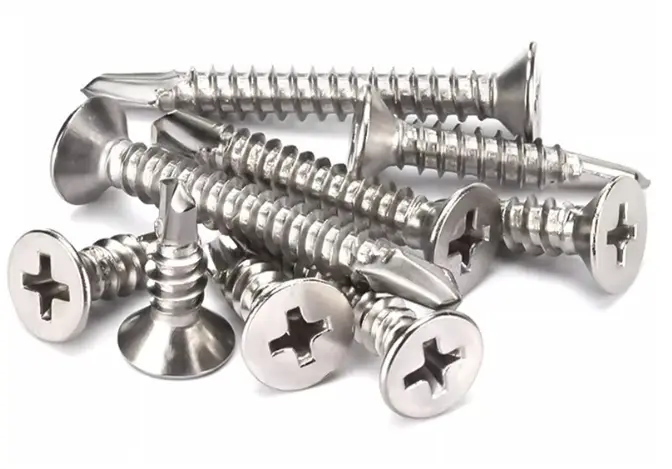
- Phillips drive: Features a cross-shaped recess for a secure connection. Flat-head Phillips self-drilling screws are suitable where a relatively smooth finished surface is needed.
- Flathead or slotted drive: Typically used when less torque is required.
- Torx drive: Uses a six-point star design that allows higher torque with less slipping.
- Hex drive: Requires an Allen key or hex driver and is frequently used in furniture assembly and space-limited applications.
- Square drive: Provides greater torque resistance and helps reduce stripping.
- One-way drive: Designed for permanent installation in one direction and commonly used in security fixtures.
7. Determine the Correct Size
Choosing the right size and type of fastener helps ensure correct installation. Accurately measure thread size and pitch with a thread gauge or calipers to ensure compatibility with the corresponding nut or hole.
The fastener length should suit the thickness of the materials being joined. It is also important to select the appropriate fastener shape and head style based on the project’s specific accessibility and torque requirements. Make sure the fastener fits within the available space while allowing sufficient clearance for installation tools.
For outdoor metal-roofing projects, carbon steel farmer screws for metal roofing are designed to provide secure fastening and waterproof sealing.
8. Check Compatibility
Consider several factors to ensure fastener compatibility. First, determine whether the fasteners can handle the expected loads and maintain a secure connection. You should also make sure the fasteners fit properly with the joint types and configurations within the structure.
Compatibility between fasteners and the materials they join is essential for a reliable connection. Environmental conditions should always be considered, as corrosion-resistant and weather-resistant fasteners can improve long-term durability.
To avoid galvanic corrosion, which occurs when dissimilar metals come into contact and accelerate deterioration, select fasteners made from the same or similarly resistant materials as the main structure. For instance, stainless steel fasteners should be used with stainless steel components to help prevent rust in harsh environments.
Selecting the right fasteners and applying proper lubrication can also help prevent galling, where high friction and pressure cause metals to fuse together.
9. Review Industry Standards
Fasteners are often designed to meet specific industry standards for dimensions, strength ratings, and material quality. Familiarize yourself with ASTM, ISO, and ANSI standards to ensure that the selected fastener is suitable for the application.
10. Plan for Maintenance
Consider how the fastener will be maintained. Will it require regular tightening? Is it located in an easy-to-access area? Addressing these questions early can save time and reduce costs later.
Choosing the right fastener involves more than selecting the nearest screw or bolt. It requires careful assessment of use, environment, type, material, coating, drive style, size, compatibility, and applicable standards. By considering each of these factors, you can help ensure your project is secure, long-lasting, and ready to meet environmental demands.
For product selection support, custom specifications, or bulk-order inquiries, contact ScrewTrade.
Conclusion
Choosing the right fastener means matching the type, material, coating, drive, size, and performance requirements to the application and environment.
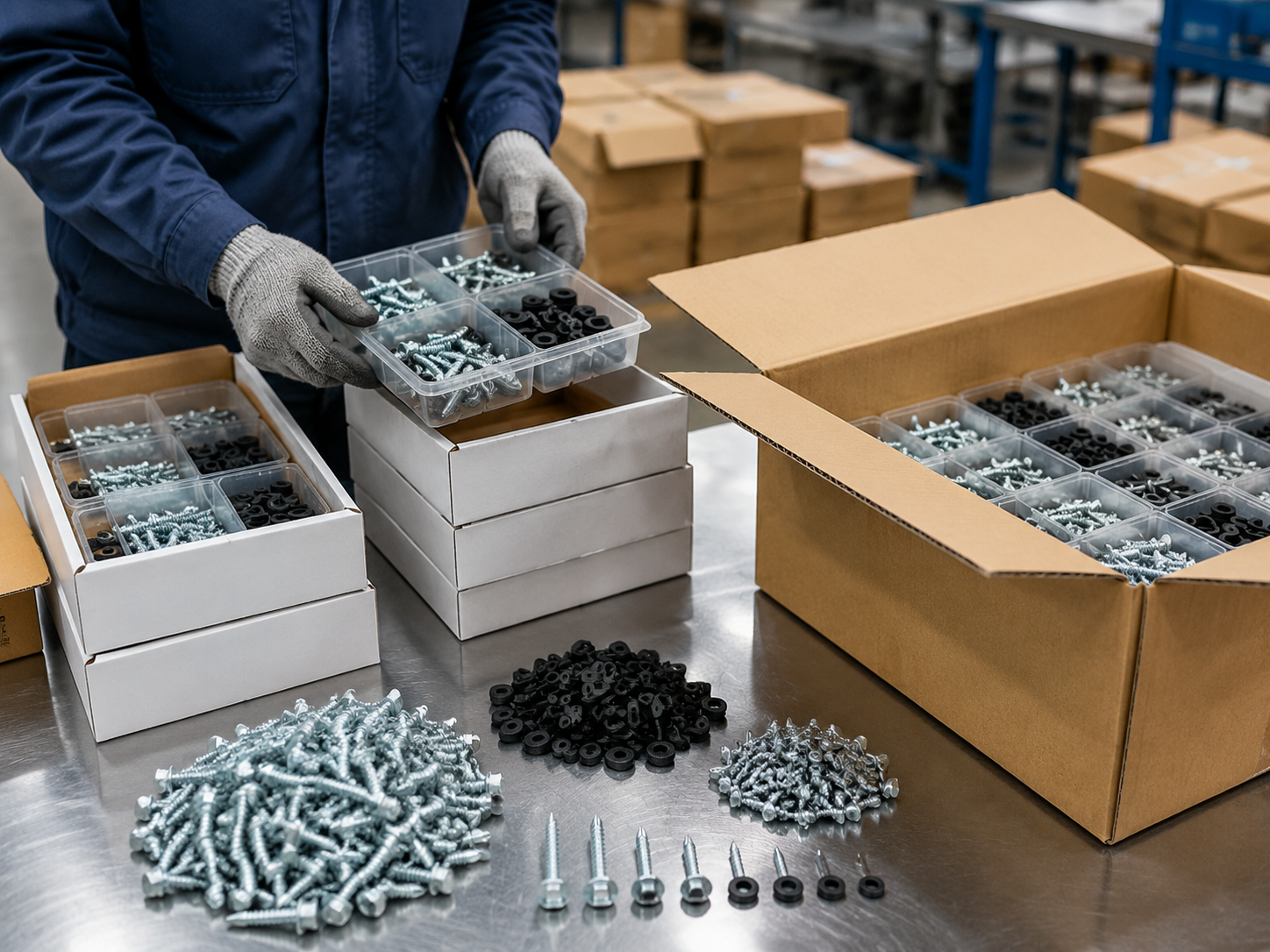
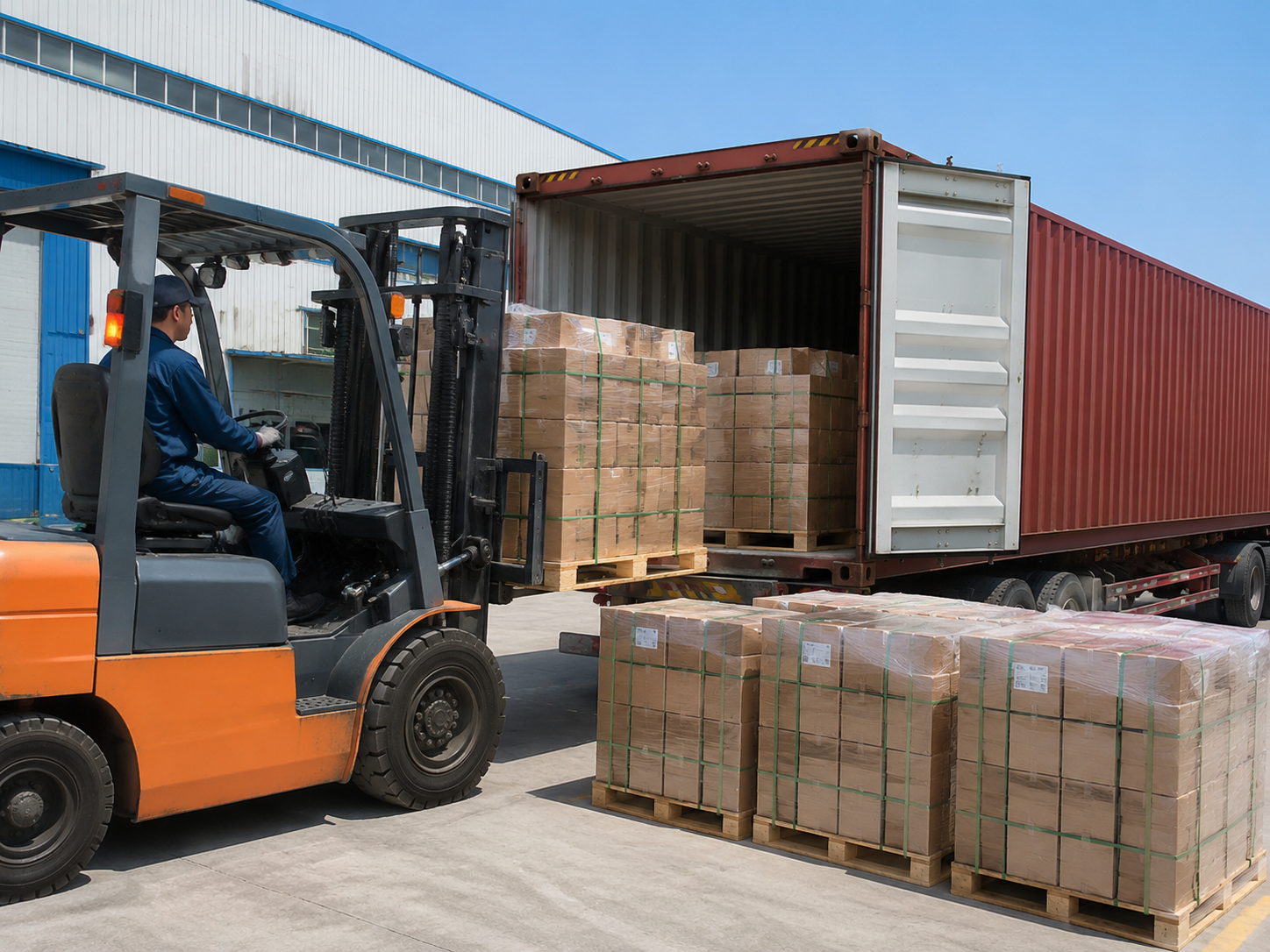
ScrewTrade supplies Tek screws, self-drilling screws, metal roofing screws, and related fastening products. We help buyers solve specification-matching, corrosion-resistance, installation, and bulk-sourcing challenges with practical product recommendations, quality control, and customization support.
Avoid costly selection mistakes. Send us your drawing, required specifications, or application details, and contact ScrewTrade for a tailored solution and quote.
Related News
Other news you might be interested in
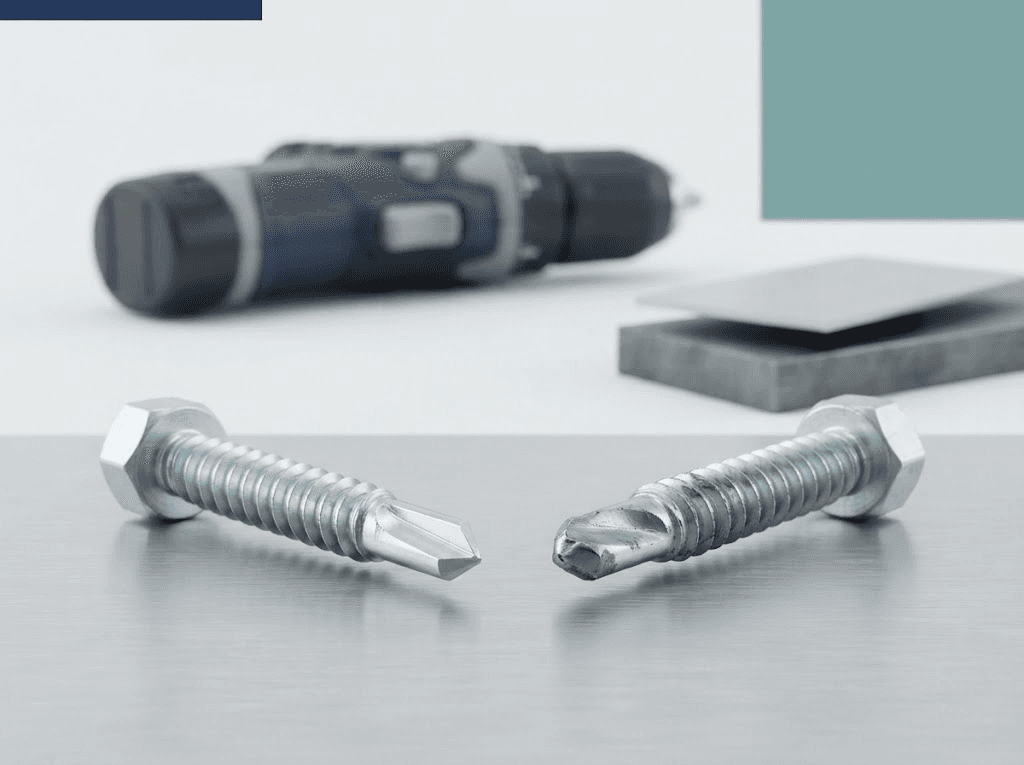
Why Self-Drilling Screws Fail to Drill: A Substrate and Installation Checklist
When a self-drilling screw spins against steel without making progress, the purchasing decision becomes urgent: should the installer change the tool settings, should the buyer order a different screw, or should the supplier investigate the batch?A useful diagnosis starts by identifying exactly where drilling stops. Record the material at that point, check the selected screw against the assembly, and then compare installation conditions. This approach gives buyers a clearer basis for deciding what to change and what evidence to request.
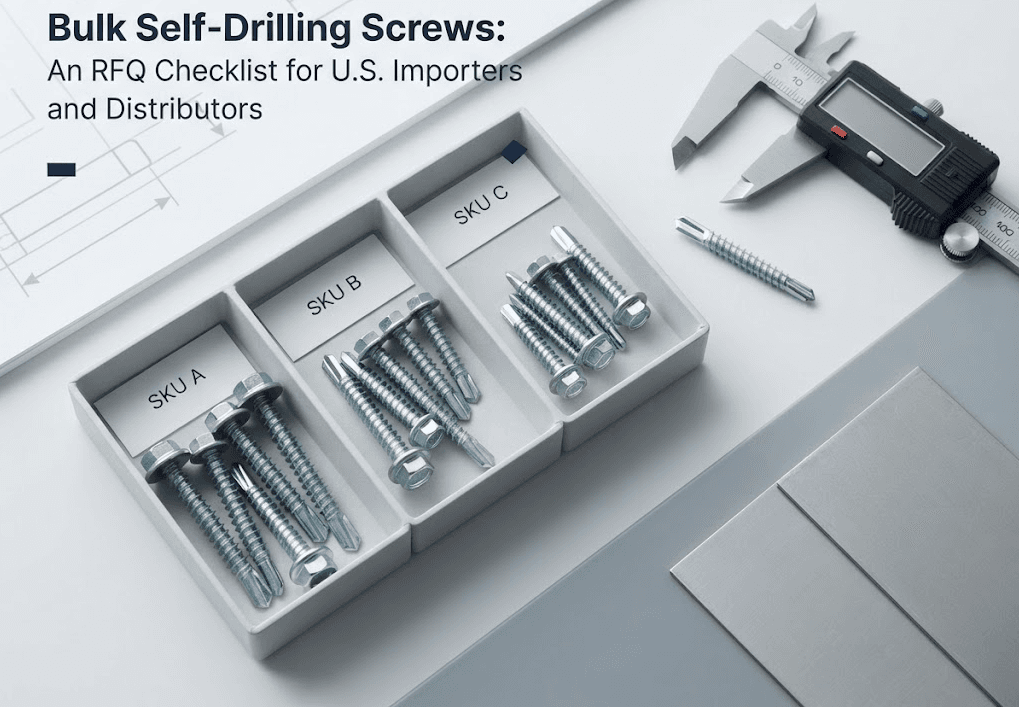
Bulk Self-Drilling Screws: An RFQ Checklist for U.S. Importers and Distributors
When sourcing bulk self-drilling screws, a unit price is only useful if you know exactly what it covers. Two quotations may appear to describe the same product while differing in dimensions, coating, packaging, or delivery conditions. For U.S. importers and distributors managing several SKUs, those differences can make supplier comparisons difficult. A clear request for quotation—an RFQ—helps suppliers understand your requirements and gives your purchasing team a consistent basis for reviewing their offers. This checklist explains what to include, which details need confirmation, and how to turn an initial inquiry into a specification that both buyer and supplier can review.
Want to know more?
Get in touch with us for more information about our services and products.