
Strategic B2B Fastener Sourcing: Reducing Costs, Ensuring Quality, and Securing Global Supply Chains

Han Congming
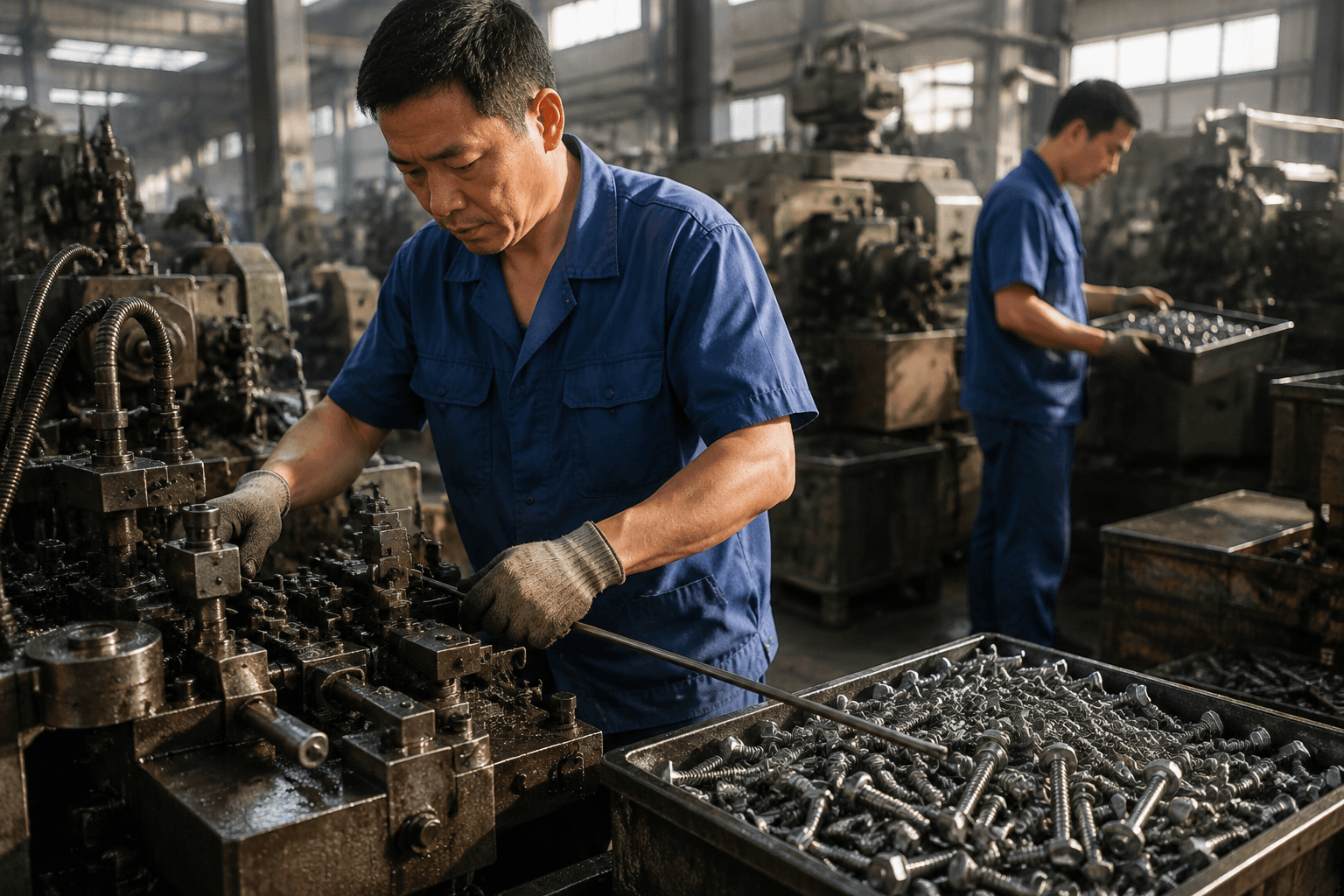
AuthorWith experience in screw and fastener manufacturing and sales, we operate our own production facility with stable large-scale capacity. We are specialists in self-drilling screws, drywall screws, chipboard screws, machine screws, bolts, and customized fasteners for construction and industrial applications.
Introduction: The Hidden Costs of Inconsistent Fastener Quality
A single fastener failure doesn't just halt a production line—it triggers cascading costs from emergency downtime to structural recalls that erode hard-won reputation. In global construction and industrial manufacturing, where margins are tight and timelines unforgiving, inconsistent component quality is a risk you can't afford. Recent surveys reveal that 42% of manufacturers experience quality-related disruptions rooted in unreliable fastener supply, a sobering statistic that underscores the shift from transactional purchasing to strategic B2B screw sourcing. Whether you're a screw distributor, screw wholesaler, or OEM procurement lead, the path to resilience starts with a systematic sourcing approach. This article maps the priorities: from validating material certifications to structuring bulk screw order strategies that protect your supply chain without inflating inventory costs.
2026 Manufacturing Outlook: Why Fastener Sourcing Is Critical for Resilience
Deloitte's 2026 Manufacturing Industry Outlook signals that supply chain agility has become the new non-negotiable, with fastener availability emerging as a decisive bottleneck. The demand for self-drilling screws and application-specific fasteners—driven by growth in metal roofing, automotive lightweighting, and infrastructure renewal—clashes with fragmented supplier bases. Meanwhile, reshoring and nearshoring trends are reshaping lead times; the days of casual offshore ordering are over. For B2B buyers, this means that a strategic partnership with a qualified China fastener supplier is no longer a cost play alone—it's a lever for supply continuity. The right fastener manufacturer combines deep production capacity with the logistics agility to absorb demand spikes, making the difference between project delays and on-time completion. By aligning with suppliers who understand both mixed container loading and export compliance, you transform procurement from a vulnerability into a competitive asset.
Key Quality Standards: ISO, DIN, and Beyond for Global Compliance
Consistency across shipments depends on hard specifications, not promises. When evaluating a fastener manufacturer, core benchmarks like the ISO fastener standard and DIN 7504 for self-tapping screws provide a framework for mechanical reliability. For corrosion-prone applications, simply calling a screw “coated” isn't enough. A Ruspert coated screw or HDG screw must undergo verified salt spray testing to confirm its resistance profile; we routinely reference independent performance testing reports that demonstrate over 1,500 hours of protection. Beyond the product itself, meticulous export documentation—including material certificates, dimensional reports, and batch-specific test data—is what keeps your shipments moving through customs without costly holds. For screw importer operations, this paper trail isn't bureaucracy; it's assurance that the zinc plated screw or stainless steel screw arriving at the dock meets the exact spec you ordered.
Matching Fastener Types to Application Needs: From Self-Drilling to Structural
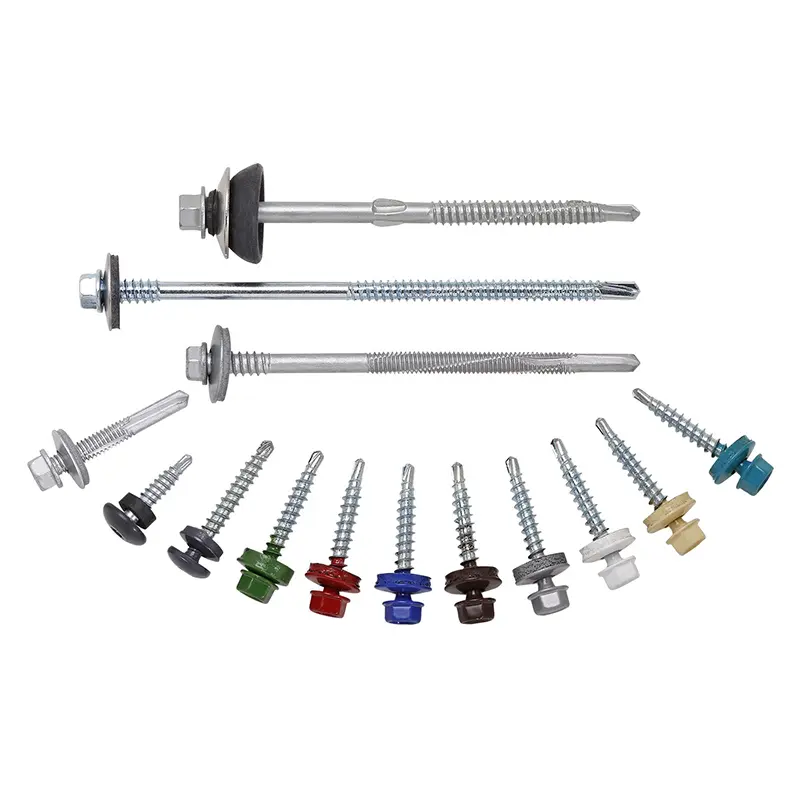
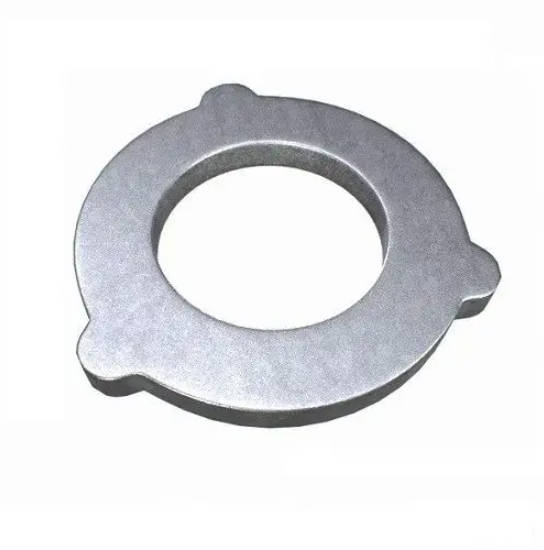
Procurement precision starts with application-specific selection. Self-drilling screws (tek screws) eliminate the separate drilling operation, cutting labor on metal to metal screw and wood to metal screw assemblies. For distributors serving professional trades, the Truss Head Self Drilling Screw 2 balances durability and process stability, minimizing stripping in high-torque installations. In exposed environments, roofing screw performance hinges on engineered weather resistance: farmer screws for metal roofing deliver leak-proof reliability under high-wind loads, while Hex Flange Head Sds With EPDM Washer 12 ensures a durable weathertight seal. For structural connections, the Structural Washer Product distributes clamping force across heavy-duty joints, preventing pull-through. Where corrosion is the primary threat—chemical plants, coastal installations—the Stainless Steel Hexagon Socket With Cylindrical Head Sts offers sustained integrity. And PVC Hex Cap for self-drilling screw assemblies protects exposed points from moisture ingress, extending service life in roofing and cladding systems. Each choice directly affects installed cost, call-back rates, and warranty exposure, making specification matching support a crucial step before committing to a bulk screw order.
Smart Procurement Strategies: From Bulk Orders to Mixed Container Loading
Smarter buying doesn't mean sacrificing flexibility. Bulk screw orders via FCL (full container load) slash per-unit costs, but a rigid single-SKU strategy ties up working capital. Mixed container loading (LCL) allows you to combine multiple fastener types—carbon steel screws, stainless steel screws, and HDG screws—within one shipment, achieving volume freight rates while keeping lower MOQ items in stock. OEM screw packaging and custom labeling further differentiate your brand without capital investment, turning a commodity into a recognizable line item. When negotiating lead times (typically 4–8 weeks), insist on process transparency: cold heading, thread rolling, and heat treatment parameters must align with your application’s mechanical requirements. Drill point grading (#1 through #5) is a prime example—selecting the correct grade for steel thickness prevents on-site mismatch and rework. This is where supplier delivery execution becomes the measure of a partner’s reliability; consistent, accurately labeled shipments eliminate receiving headaches.
Real ROI: Case Studies in Cost Reduction and Supply Chain Reliability
One construction OEM transitioned its B2B screw sourcing to a certified China fastener supplier with fully documented ISO compliance and saw an 18% reduction in fastener costs while eliminating field quality issues within two quarters. A large screw distributor serving the timber and roofing market achieved 30% faster project completion by standardizing on self-tapping screws with an optimized hex washer head screw design, reducing installation torque variation. In corrosive environments, a switch to Ruspert coated screws proved its value: third-party testing confirmed salt spray resistance beyond 1,500 hours, far outperforming conventional zinc plating and virtually eliminating premature rust claims. Furthermore, a mixed container strategy bundling carbon steel screw, stainless, and HDG fasteners into consolidated LCL shipments reduced a procurement group's freight costs by 15% without sacrificing SKU availability. These outcomes aren't exceptions—they're the direct result of treating fastener supply as an engineered component of your cost structure, not a spot buy.
How to Choose a Reliable China Fastener Supplier for Long-Term Partnership
Vetting a China fastener supplier requires going beyond the website. Start by verifying certifications: ISO 9001 and adherence to DIN 7504 or equivalent standards indicate system rigor, but request actual sample testing for tensile strength and coating performance. An integrated production and QC process—from cold heading through thread rolling, heat treatment, and automatic optical sorting—directly correlates with batch-to-batch uniformity, as detailed in our integrated production and qc overview. Logistics expertise is equally critical: the partner should handle export documentation accurately and offer LCL/FCL consolidation to major global ports. Beyond production and shipping, value-added capabilities like OEM screw packaging, technical guidance for drill point screw selection, and responsive self drilling screw focus support signal a supplier that behaves like an extension of your procurement team. Long-term partnerships are built on this depth, not on transactional price quotes.
Conclusion: Secure Your Supply Chain with Strategic B2B Sourcing
The window to de-risk your fastener supply is open now. By auditing current suppliers against documented quality benchmarks, application-fit specifications, and logistics execution, you can lock in the dual advantages of cost efficiency and operational resilience. Whether your need is for high-performance roofing screws, specialized self-drilling screws, or structural assemblies, the right manufacturing partnership converts procurement from a cost center into a strategic asset. To discuss your specific requirements and receive a customized sourcing proposal for your next bulk screw order or mixed container loading program, contact our team.
Related News
Other news you might be interested in
Why Self-Drilling Screws Fail to Drill: A Substrate and Installation Checklist
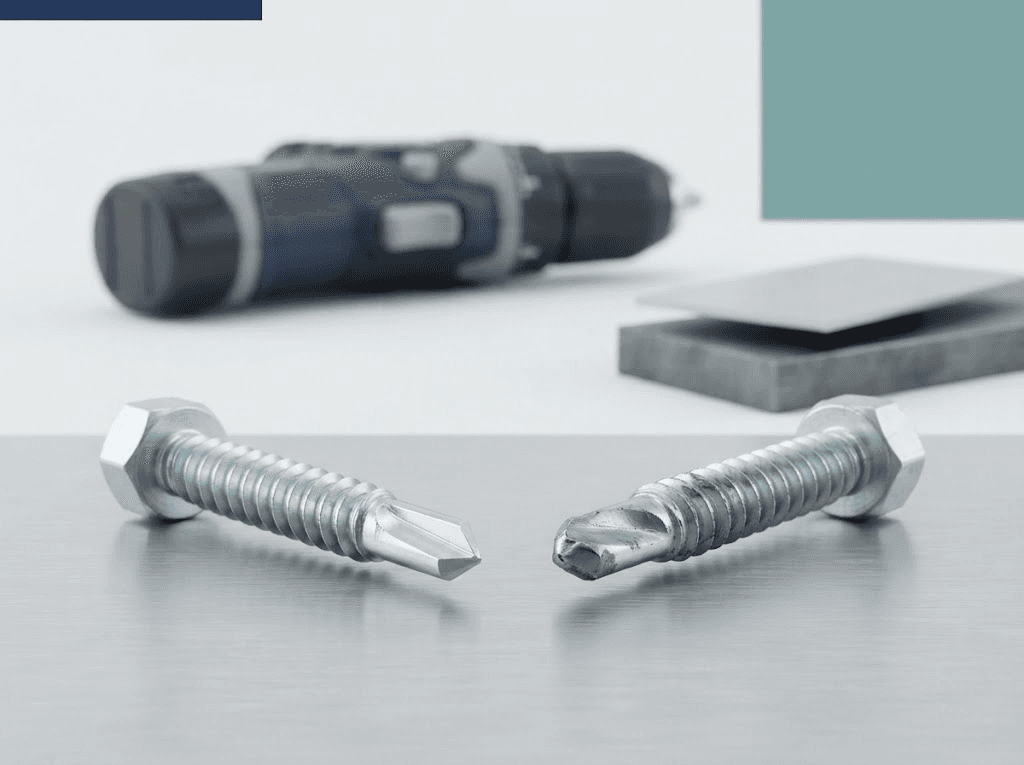
When a self-drilling screw spins against steel without making progress, the purchasing decision becomes urgent: should the installer change the tool settings, should the buyer order a different screw, or should the supplier investigate the batch?A useful diagnosis starts by identifying exactly where drilling stops. Record the material at that point, check the selected screw against the assembly, and then compare installation conditions. This approach gives buyers a clearer basis for deciding what to change and what evidence to request.
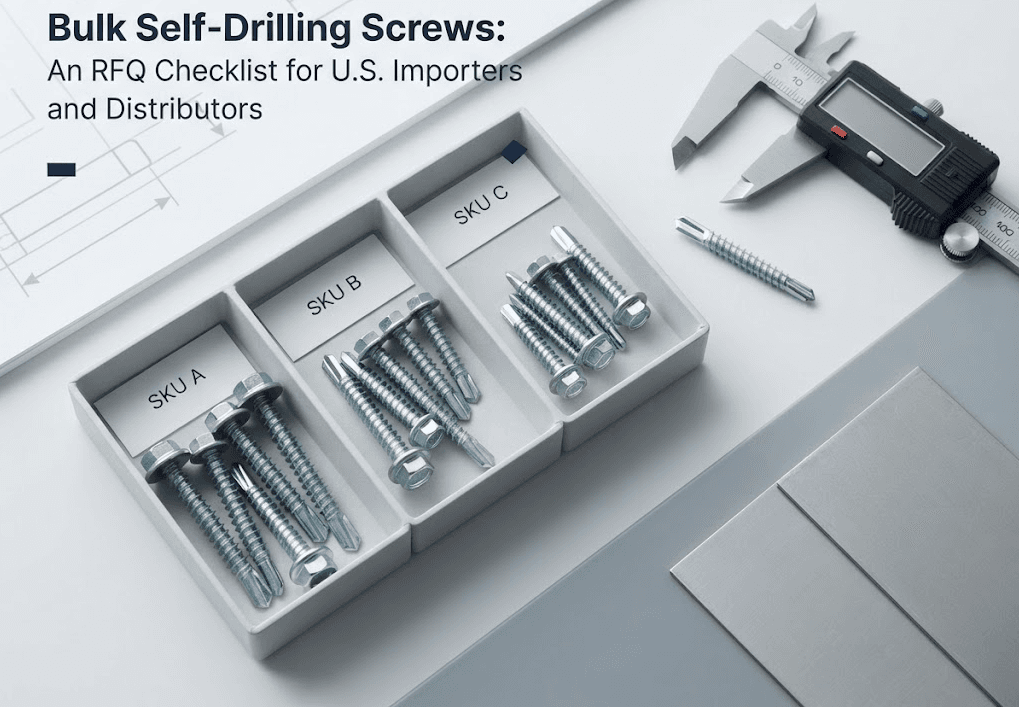
Bulk Self-Drilling Screws: An RFQ Checklist for U.S. Importers and Distributors
When sourcing bulk self-drilling screws, a unit price is only useful if you know exactly what it covers. Two quotations may appear to describe the same product while differing in dimensions, coating, packaging, or delivery conditions. For U.S. importers and distributors managing several SKUs, those differences can make supplier comparisons difficult. A clear request for quotation—an RFQ—helps suppliers understand your requirements and gives your purchasing team a consistent basis for reviewing their offers. This checklist explains what to include, which details need confirmation, and how to turn an initial inquiry into a specification that both buyer and supplier can review.
Want to know more?
Get in touch with us for more information about our services and products.