
Fastener News & Technical Insights
Industry trends, buyer know-how, and practical guidance for self-drilling screws, roofing fasteners, and related fastening systems.
Categories
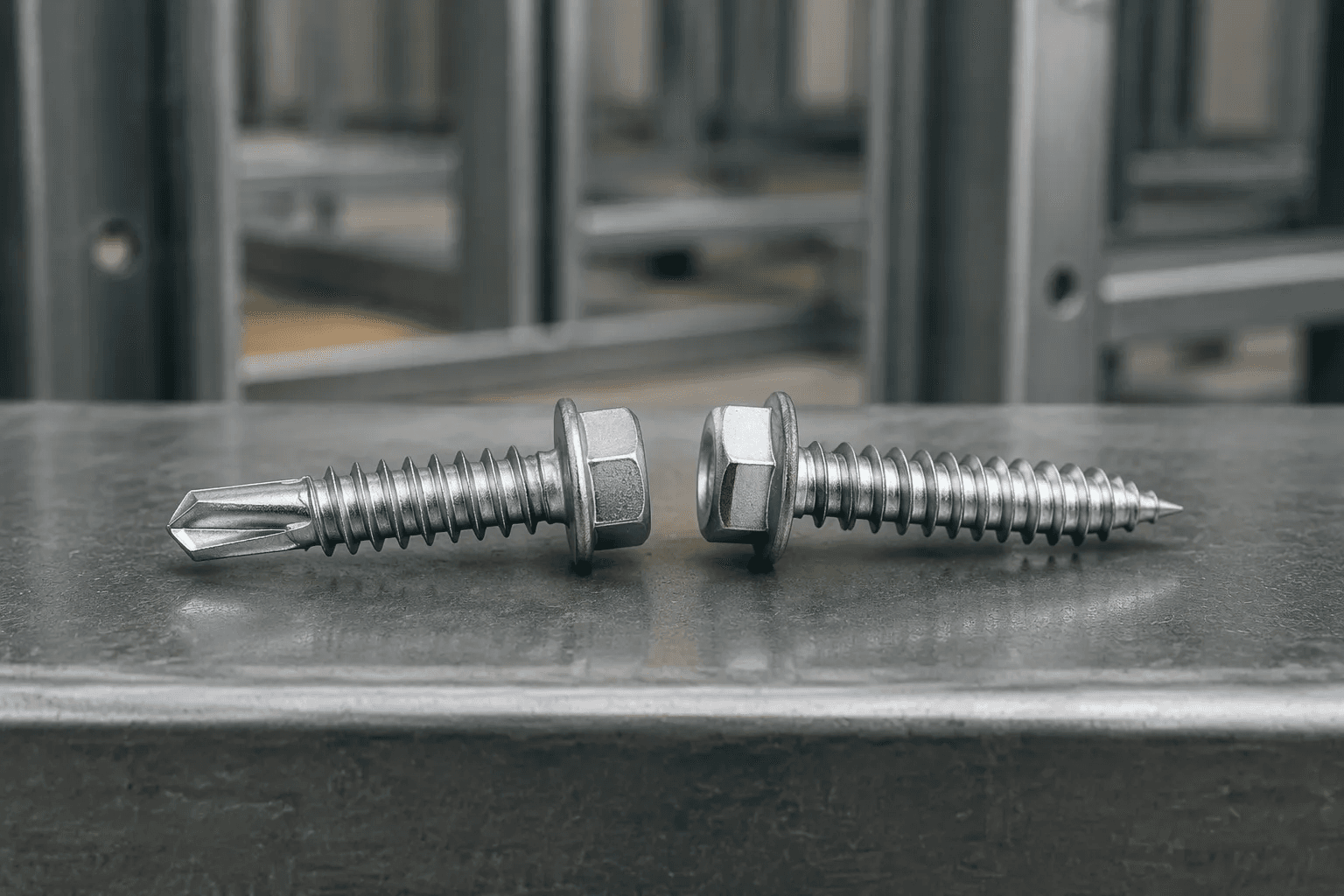
What Is a Fastener? Types, Functions and Industrial Uses
A fastener is a hardware component that mechanically joins or secures parts. Common examples include screws, bolts, nuts and rivets; washers are supporting components used in many fastening assemblies. Some connections can be dismantled by removing threaded fasteners, while others, such as riveted joints, normally require the fastener to be destroyed during removal. In industrial work, identifying a fastener means more than recognizing its shape. The useful questions are what it connects, how the connection carries load, and which dimensions, materials and installation conditions make it suitable. A roofing screw, a pipe-support U-bolt and a foundation anchor all secure parts, but they do different jobs.
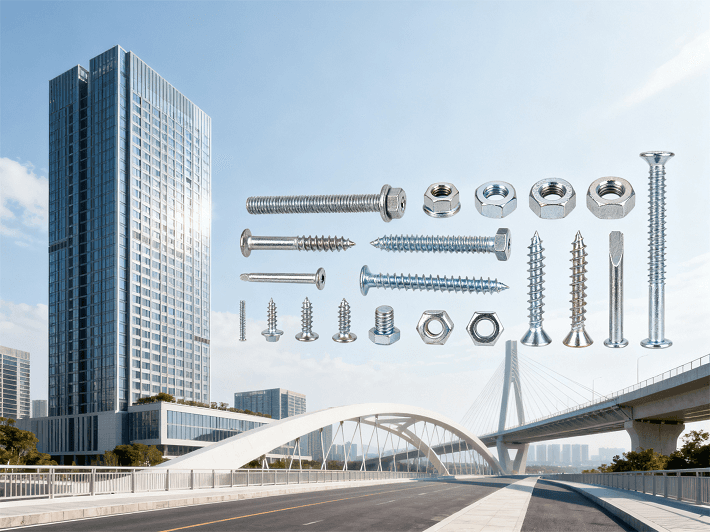
Choosing the Right Construction Screws for Modern Building Projects
Modern building projects are increasingly moving from traditional on-site construction toward prefabricated, modular, and system-based construction. With the development of light-gauge steel structures, metal building envelopes, sandwich panels, and building mechanical systems, screws are no longer simple connection components. They have become essential to structural safety, waterproofing, construction efficiency, and service life. For this reason, construction screws should be selected according to the building system, material combination, engineering requirements, installation conditions, and supply chain capabilities—not simply according to price or a single dimensional specification.
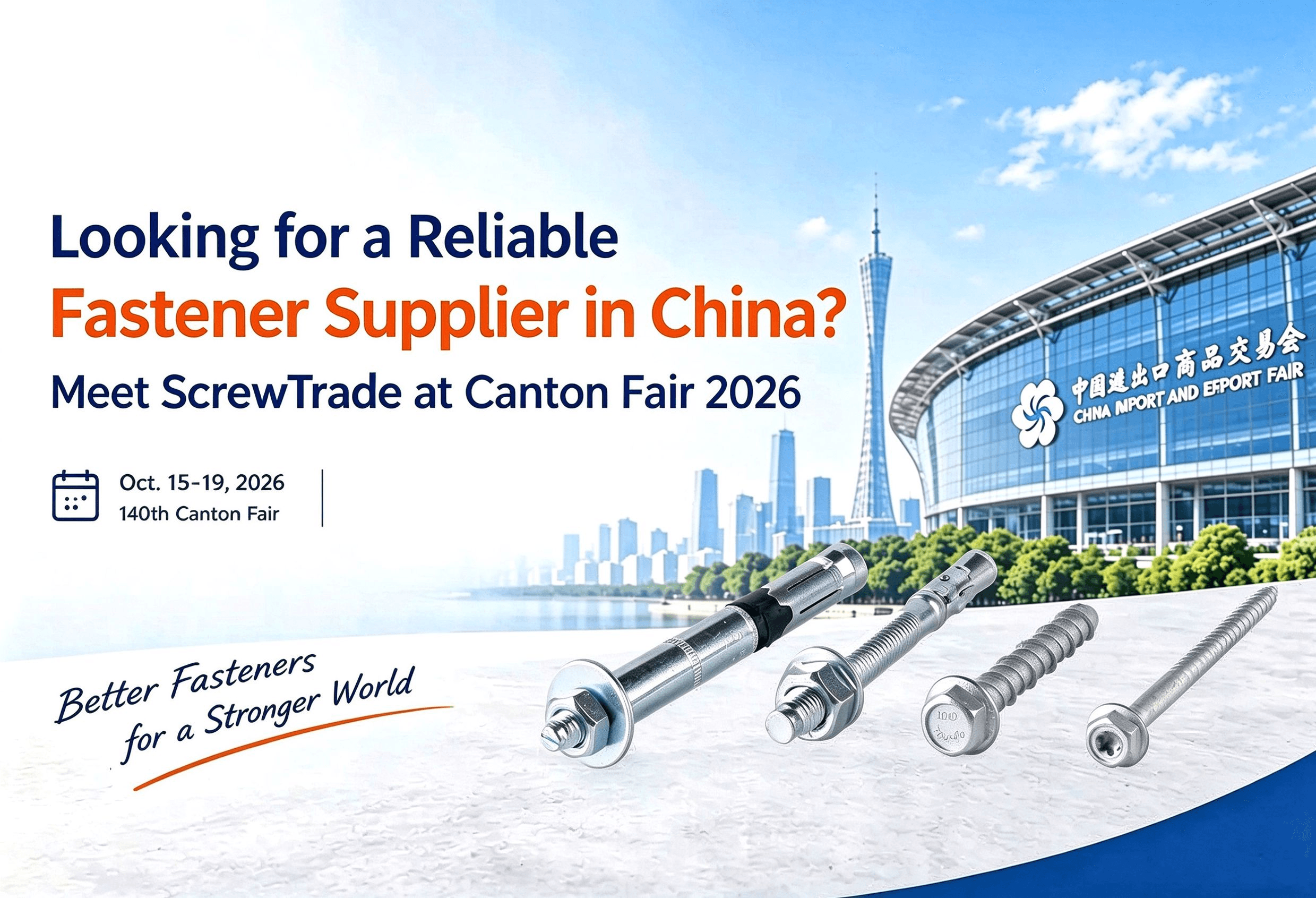
China’s Industrial Fasteners at the 140th Canton Fair: From Standard Screws to Custom Fasteners, Industry Trends and Sourcing Opportunities
The 140th China Import and Export Fair, also known as the Canton Fair, will take place in mid-October 2026. As an important platform connecting Chinese manufacturers with global markets, the fair is expected to attract buyers from countries and regions around the world. Its industrial manufacturing, hardware, machinery and basic components, and building materials sections will also provide overseas buyers with opportunities to find Chinese suppliers.
Self-Drilling Screws for Light-Gauge Steel Structures: Drill Point Selection, Thread Engagement, and Pull-Out Performance
With the development of prefabricated buildings, modular construction, and lightweight steel housing, light-gauge steel structures and cold-formed thin-walled steel structures are increasingly used for walls, roofs, partitions, and building envelope systems. Compared with heavy steel members, light-gauge steel components generally have thinner walls, lower self-weight, and a larger number of connection points. As a result, fasteners must provide sufficient strength while also supporting fast, continuous, and standardized installation.
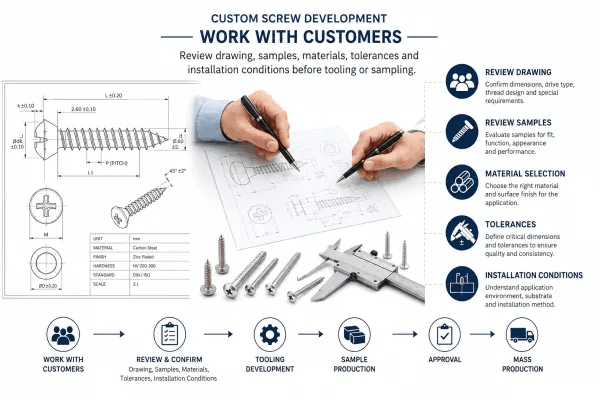
Thread-Forming Self-Tapping Screws vs. Thread-Cutting Screws: Choosing the Right Fastener for Sheet Metal Assemblies
In modern sheet metal manufacturing, fasteners are no longer treated as simple connection components. The material, thickness, hole type, installation method, and service environment of the sheet metal all affect connection reliability. When a joint does not use a nut or a pre-tapped internal thread, thread-forming screws and thread-cutting screws represent two different fastening approaches.
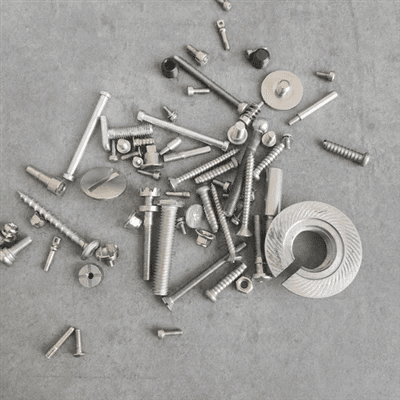
Self-Tapping Screws with Washers: Reliable Fastening Solutions for Modern Construction
As metal roofing, wall panels, light-gauge steel structures, and prefabricated construction continue to expand across industrial facilities, commercial buildings, and infrastructure projects, construction fasteners are no longer merely connection components. They have become an important factor in system durability, installation efficiency, and long-term maintenance costs. In high-humidity, coastal, high-wind, and high-temperature-variation environments, the ability of a fastener to maintain stable clamping force and reliable sealing directly affects the service life of roofing and building envelope systems.

Hex Washer Head Self Drilling Screws: Accurate Size Chart and Buying Guide
Choosing the wrong hex washer head self drilling screw can cost you more than just the fastener – it can lead to roof leaks, corroded panels, and structural failures that show up years after the job is done.I’ve been manufacturing these screws for over 20 years. The difference between a screw that holds for 25 years and one that fails in 5 isn’t the steel – it’s the washer, the drill point, and the coating. Here’s what actually matters when you’re buying in bulk for roofing, steel framing, or construction.
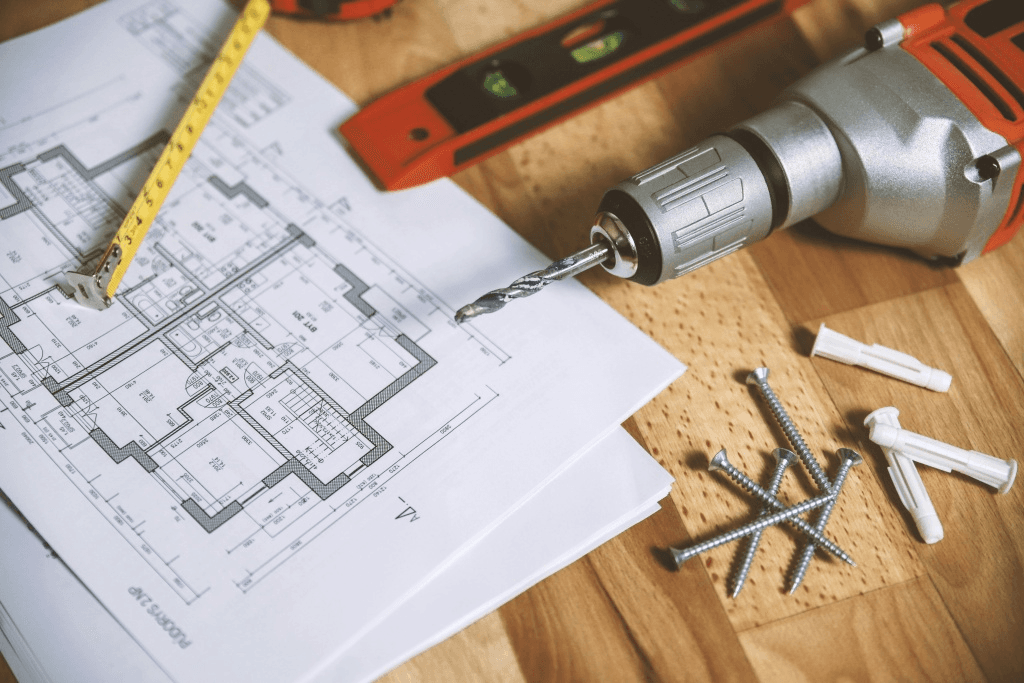
Self-Drilling Screw Installation Torque: How to Prevent Overdriving, Thread Stripping, and Seal Failure
In metal roofing, wall-cladding, light-gauge steel, and steel-to-steel applications, the quality of a self-drilling screw joint is not determined merely by whether the screw penetrates the material. Correct installation torque determines whether threads engage properly, whether the joint develops sufficient clamp load, and whether a connection with an EPDM washer remains weather-tight over time.
Fastener Grades and Strength Classes: How to Select Bolts, Nuts, and Screws for Industrial Applications
Across manufacturing, energy, transportation, construction, and equipment maintenance, industrial fasteners are not merely low-value commodities. They are fundamental components that determine joint reliability, equipment uptime, and project accountability. The industry's focus on fastener grades reflects a shift from asking whether parts can connect materials to asking whether a connection is verifiable, traceable, and capable of carrying long-term risk.